
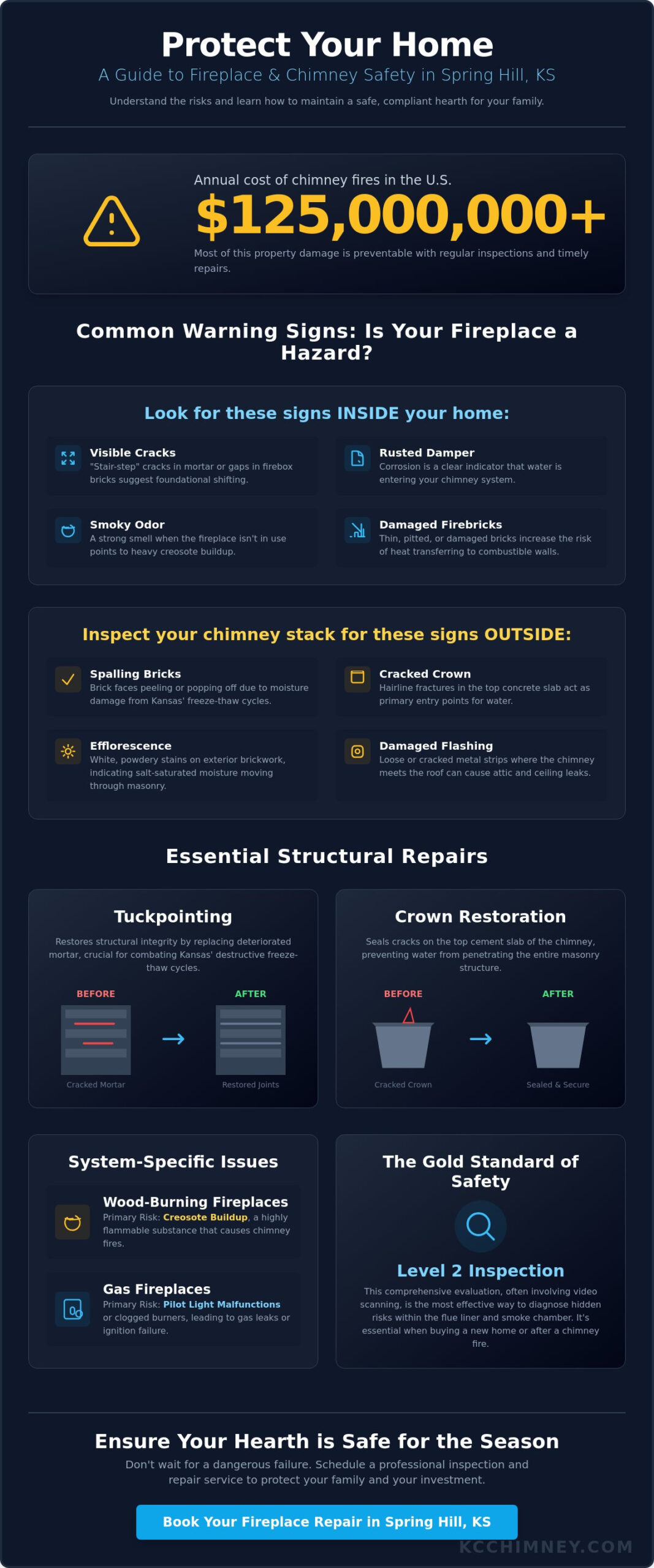
Did you know that chimney fires cause over $125 million in property damage across the United States every single year? Most homeowners just want to enjoy a warm fire without worrying about hidden hazards or confusing building codes. If you’re wondering whether your hearth is truly safe for the season, you aren’t alone. Finding expert fireplace repair Spring Hill KS is about more than just fixing a crack; it’s about protecting your family and ensuring your home meets the latest 2018 International Residential Code standards.
We’ll help you identify critical safety risks and discover the best restoration solutions for the unique masonry found in our community. This guide explains how to defend your chimney against the brutal Kansas freeze-thaw cycles and stay compliant with the 2024 NFPA 211 standard. We will walk through essential services like tuckpointing and crown repair so you can enjoy a safe, functional hearth for years to come. You’ll gain a clear understanding of what’s broken and how to fix it without the stress of messy contractors or technical guesswork.
Key Takeaways
- Identify subtle indicators of damage, such as firebox cracks or rusted dampers, to prevent hazardous structural failures before the burning season.
- Discover how professional tuckpointing and crown restoration protect your chimney masonry from the destructive freeze-thaw cycles unique to the Kansas climate.
- Learn why a Level 2 safety inspection is the most effective way to diagnose hidden risks when scheduling fireplace repair Spring Hill KS.
- Understand the distinct maintenance needs for wood-burning and gas systems, including how to address creosote buildup or pilot light malfunctions.
- Gain peace of mind by learning how to verify industry certifications and local expertise to ensure your hearth restoration meets the highest safety standards.
Common Signs Your Spring Hill Fireplace Needs Professional Repair
Identifying the early warning signs of a failing hearth is the first step toward maintaining a safe home. Many Spring Hill homeowners don’t realize that a fireplace is a complex system of interconnected chimney components that must work in harmony. When one part fails, it often leaves a visible trail. For instance, if you see white, powdery staining on your exterior brickwork, you’re looking at efflorescence. This isn’t just a cosmetic issue; it’s a sign that salt-saturated moisture is moving through your masonry. Over time, this moisture leads to spalling, where the faces of your bricks begin to peel or pop off entirely. This is a common precursor to needing professional fireplace repair Spring Hill KS to restore structural integrity.
Drafting issues are another significant red flag. If smoke enters your living room instead of exiting the flue, you have a dangerous ventilation failure. This could be caused by a simple blockage, a layer of creosote, or a more complex structural issue within the liner. Ignoring these signs increases the risk of carbon monoxide exposure and chimney fires. Watch for these specific indicators during your next inspection:
- Visible Cracks: Look for gaps in the firebox bricks or the mortar joints.
- Rusted Dampers: Rust indicates that water is entering the system, often through a cracked crown or missing cap.
- Moisture at the Base: Dampness in the firebox after a Kansas thunderstorm suggests a leak that needs immediate sealing.
- Odor: A strong, smoky smell when the fireplace isn’t in use often points to heavy creosote buildup.
Visual Inspection: What to Look for Inside the Firebox
Inside the firebox, look for “stair-step” cracks in the mortar joints. These patterns suggest that the foundation of your hearth is shifting or settling. You should also inspect the firebricks themselves. If they seem thin or have deep pits, they can’t insulate your home from extreme heat as effectively. This increases the risk of heat transfer to combustible wall studs behind the masonry. A functional throat damper should open and close smoothly. If it’s stuck or shows signs of heavy corrosion, it’s failing to protect your home’s energy efficiency and safety.
Exterior Warning Signs on Spring Hill Chimneys
Step out into your yard and look up at the stack. The chimney crown, which is the concrete slab at the very top, often develops hairline fractures due to the intense Kansas freeze-thaw cycles. These cracks are primary entry points for water. You should also check the flashing, the metal strip where the chimney meets your roof line. If it’s loose or the sealant is cracked, you’ll likely find moisture damage in your attic or at the base of your hearth. Finally, if you see moss or vegetation growing from the masonry, you have deep moisture penetration. When these symptoms appear, seeking a qualified specialist for fireplace repair Spring Hill KS is the safest move for your household.
Structural Masonry Repairs: Tuckpointing and Crown Restoration
Kansas winters don’t just feel cold; they physically attack your home’s exterior. In Spring Hill, the masonry on your chimney faces a relentless cycle of freezing and thawing. Bricks are porous, meaning they soak up moisture from rain and snow. When the temperature drops, that water turns to ice and expands, creating internal pressure that can shatter mortar joints from the inside out. This degradation is why structural fireplace repair Spring Hill KS often begins with a process called tuckpointing. By replacing the weak points in your chimney’s skeleton, we stop the cycle of decay before it reaches the interior of your home.
Tuckpointing is the specialized process of removing deteriorated mortar and replacing it with fresh, high-quality material. It’s a precision task that requires technical mastery. Many homeowners try a DIY approach with store-bought mortar, but this often leads to premature failure. Standard mortar might have a compression strength that’s too high for older Spring Hill bricks, causing the bricks themselves to crack instead of the joints. Proper restoration requires a specific balance between durability and flexibility to ensure the structure remains stable under thermal stress and shifting soil conditions.
The Tuckpointing Process for Spring Hill Homes
Matching the existing aesthetic is crucial for maintaining your home’s curb appeal and property value. We focus on duplicating the specific mortar color and composition used in Spring Hill’s original housing stock. Our process includes grinding out old joints to a precise depth to create a strong mechanical bond for the new mortar. Once the joints are restored, applying a breathable, professional-grade water repellent helps prevent future moisture intrusion without trapping damaging vapor inside the brickwork. This protective layer is essential for surviving the humid Kansas summers and icy winters.
Chimney Crown Repair vs. Full Replacement
Your chimney crown acts as the first line of defense for your entire masonry system. It’s a sloped concrete slab designed to shed water away from the bricks and flue. If the crown is cracked, water flows directly into the internal structure, causing rapid decay. Small hairline fractures can often be fixed with a high-performance crown sealant. However, if the concrete is crumbling or missing large chunks, a full replacement is necessary to meet NFPA 211 safety standards. By utilizing advanced chimney repair Kansas City techniques, we ensure your crown provides a watertight seal that lasts for decades. If you notice debris on your hearth, it’s time to schedule a professional fireplace repair Spring Hill KS evaluation to catch these issues before they become costly emergencies.
Gas vs. Wood Fireplace Repairs: Addressing System-Specific Issues
Choosing between wood and gas isn’t just about the atmosphere; it’s about understanding how each system fails over time. Many Spring Hill homes feature traditional wood-burning hearths that provide high heat but require constant vigilance against creosote. This highly flammable byproduct of wood combustion can coat your flue and lead to devastating chimney fires if not professionally swept. On the other hand, modern gas units offer convenience but rely on intricate mechanical components that wear out. Deciding whether to invest in a restoration for an old wood burner or switch to a gas fireplace insert is a common crossroad for local homeowners.
Safety risks also extend to the utility flues found in modern Spring Hill construction. These flues often vent gas water heaters or furnaces alongside the fireplace. If the masonry is compromised, carbon monoxide can seep into your living spaces instead of exiting the home. To determine which components need attention, professionals follow the standardized levels of chimney inspection. This structured approach ensures that every valve, liner, and joint is verified for safety before you light your first fire of the season. Expert fireplace repair Spring Hill KS involves more than just a quick sweep; it’s a mechanical and structural health check.
Troubleshooting Gas Fireplace Performance
If your gas fireplace shuts off unexpectedly, the culprit is often a worn thermocouple or a dirty oxygen depletion sensor (ODS). These safety features are designed to cut the gas flow if they detect a lack of heat or low oxygen levels. Over time, dust and soot can clog these sensors, causing the pilot light to flicker or fail. For a deeper dive into technical diagnostics, you can reference our specialized gas fireplace repair guide. Regular cleaning of the glass and burner ports prevents soot buildup and ensures a clean, efficient burn.
Wood Fireplace Structural Integrity
Wood fireplaces face extreme thermal stress that can create “hot spots” within the chimney. In many older Spring Hill homes, the original clay tile liners have cracked or shifted due to age and moisture. A cracked liner is a major fire hazard because it allows heat to reach the combustible framing of your house. When repairs are needed, modern stainless steel chimney relining offers a permanent solution. These liners are durable, easier to clean, and provide a seamless path for smoke and gases to exit. This upgrade is a primary focus of fireplace repair Spring Hill KS when restoring the safety of a legacy wood-burning hearth.
The Professional Inspection: Why a Level 2 Evaluation is Essential
A basic chimney sweep removes soot, but it doesn’t tell you if the structure is safe. Think of a Level 2 inspection as a medical scan for your home. We use specialized internal video cameras to travel up the flue, capturing high-resolution footage of every joint and liner tile. This technology allows us to find hidden fire hazards, such as internal gaps or thin spots in the masonry, that a flashlight simply can’t reach. For homeowners seeking reliable fireplace repair Spring Hill KS, this evaluation provides the data needed to make informed decisions about your hearth’s health based on visual facts rather than guesswork.
A Level 2 inspection is mandatory during property transfers or when you change your heating system, such as switching from wood to a gas insert. It’s also required after an event that might have damaged the chimney, like a chimney fire or a severe Kansas storm. Your final report should be detailed. It must include photo evidence of the flue’s interior, a checklist of all accessible components, and a clear summary of any code violations or safety concerns. This level of thoroughness is the industry standard for protecting your investment and your family.
NFPA 211 Standards and Your Safety
The 2024 edition of the NFPA 211 standard dictates exactly how these inspections must be performed. These national safety codes ensure that every technician follows a rigorous protocol to protect your home. Visual-only inspections often miss up to 70% of critical chimney flaws because the damage is hidden behind the walls. By following these standards, a professional fireplace repair inspection identifies structural weaknesses before they lead to a house fire. It’s the most effective way to guarantee your hearth meets modern safety requirements and provides lasting warmth.
Real Estate Inspections in Spring Hill
If you’re buying a home in Spring Hill, a standard home inspection isn’t enough. Most general inspectors only look at the exterior and the firebox. They don’t have the equipment to verify the integrity of the flue. Demanding a specialized chimney look before closing can save you from thousands of dollars in unexpected repairs. A failed inspection report provides critical leverage in home negotiations, allowing you to request repairs or a price reduction. Investing in a Level 2 evaluation is a vital step for any homeowner considering fireplace repair Spring Hill KS before putting their property on the market. You can book a Level 2 safety inspection today to ensure your new investment is safe for the winter.
Choosing the Right Fireplace Repair Partner in Spring Hill, KS
Selecting a technician to work on your home is a decision that impacts your family’s safety for years. In our area, local knowledge is a non-negotiable requirement. Spring Hill sits on the expansive clay soils of Johnson County. These soils shift with moisture levels, which can put unique stress on a chimney’s foundation. When combined with the Kansas freeze-thaw cycles we discussed earlier, it’s clear that your repair partner must understand these regional challenges. A contractor from outside the area might miss the subtle signs of soil-related settling that lead to recurring cracks in your masonry.
Technical authority is just as vital as local roots. You should always verify that your technician holds a current certification from the Chimney Safety Institute of America (CSIA). This isn’t just a badge; it’s a commitment to rigorous industry standards and ongoing education. While some competitors rely on their long history in the business, current certification ensures your fireplace repair Spring Hill KS is performed using the most modern safety protocols. This distinction is what separates a high-integrity professional from a general laborer.
Quality masonry restoration is a custom craft, and pricing should reflect that. Be wary of “flat-rate” quotes for structural repairs. Every chimney in Spring Hill has a different history of weathering and usage. A professional will provide a detailed estimate based on the specific depth of tuckpointing needed or the complexity of a crown restoration. Best Chimney Services prioritizes this level of thoroughness, ensuring that every project is an investment in your home’s longevity. Our team is also committed to a mess-free process, using high-powered vacuums and drop cloths to keep your living room pristine during the restoration.
Questions to Ask Your Repair Technician
- Do you provide a written warranty on masonry labor? A reputable partner stands behind their craft with clear, written terms.
- Are you insured for high-roof chimney work? Standard general liability may not cover specialized heights; verify their specific coverage.
- Can you provide references from other Spring Hill projects? Local neighbors can vouch for a technician’s reliability and work ethic.
Schedule Your Spring Hill Hearth Evaluation
Timing is everything when it comes to fireplace maintenance. Most homeowners wait until the first cold snap in October to call for help, leading to a massive “Fall rush” that can delay your project for weeks. Scheduling your evaluation in the spring or summer ensures you have your choice of dates and plenty of time for mortar to cure before the frost hits. To prepare for our visit, simply clear a small area around the hearth and stop using the fireplace 24 hours in advance. If you’re ready to secure your home’s safety, contact Best Chimney Services for your Spring Hill repair quote and let our local experts restore your peace of mind.
Secure Your Hearth for the Seasons Ahead
Maintaining a safe and functional fireplace requires more than a simple annual sweep. It’s about proactive care, from identifying hairline crown fractures to ensuring your flue meets the latest safety standards. By investing in professional fireplace repair Spring Hill KS, you protect your property from the structural damage caused by Kansas winters and the hidden risks of chimney fires. A Level 2 inspection is the only way to truly verify the integrity of your system before the first cold snap arrives.
Our team has been serving Spring Hill and Johnson County since 2012. As A+ rated local masonry experts with CSIA Certified Technicians, we prioritize your family’s peace of mind above all else. We don’t just fix chimneys; we ensure they serve as a reliable heart for your home for decades to come. Don’t leave your safety to chance this year. Schedule Your Spring Hill Fireplace Inspection Today and enjoy the warmth of your hearth with complete confidence. We look forward to helping you keep your home safe and comfortable.
Frequently Asked Questions
How much does a typical fireplace repair cost in Spring Hill, KS?
Costs vary significantly based on the severity of the damage and the specific materials required for the restoration. Minor masonry fixes or component replacements are generally more affordable than structural overhauls like chimney relining. Since every home in our community has a unique history, we recommend a professional inspection to receive an accurate, site-specific estimate. Checking with local providers for current labor rates is the best way to plan your budget.
Can I use my fireplace if I see small cracks in the brick?
You should have any visible cracks evaluated by a professional before lighting your next fire. Even small hairline fractures in the firebox or mortar can allow extreme heat to reach combustible wall studs behind the masonry. These gaps also provide an entry point for moisture, which accelerates structural decay during the winter. Prioritizing safety ensures that a minor fireplace repair Spring Hill KS doesn’t turn into a major fire hazard.
How long does a tuckpointing repair usually last in Kansas weather?
High-quality tuckpointing typically lasts between 15 and 25 years when performed by a skilled technician using the correct mortar composition. However, the intense humidity and rapid freeze-thaw cycles in Spring Hill can shorten this lifespan if the masonry isn’t properly maintained. Applying a breathable water repellent after the repair helps protect the new joints from moisture penetration and salt damage, extending the durability of the restoration.
Do you offer gas fireplace repair near me in Spring Hill?
Yes, we provide specialized services for gas systems, including the installation of gas fireplace inserts and mechanical troubleshooting. Our technicians address common issues like pilot light failures and worn thermocouples to ensure your system operates safely and efficiently. Whether you need a simple cleaning or a full system upgrade, we focus on maintaining the rigorous safety standards required for gas appliances in Johnson County homes.
What is the difference between a chimney sweep and a fireplace repair?
A chimney sweep is a maintenance process focused on removing soot and creosote buildup from the flue. In contrast, fireplace repair Spring Hill KS involves fixing structural or mechanical defects within the system. This includes tasks like crown repair, tuckpointing, or replacing a cracked chimney liner. While a sweep keeps the vent clear, repairs ensure the entire structure is sound and meets current building codes.
Is a permit required for chimney masonry repair in Spring Hill?
Permits are generally required for structural repairs, relining, or new installations according to the 2018 International Residential Code adopted by Johnson and Miami Counties. Minor maintenance or cosmetic tuckpointing might not require one, but it’s essential to verify requirements with the local building department. Licensed contractors must be registered with the county licensing program to ensure all work meets current safety and electrical standards.
How do I know if my chimney liner is cracked?
Most liner cracks are invisible to the naked eye and can only be detected during a Level 2 inspection using internal video cameras. You might notice small shards of clay tile on the floor of your firebox, which is a clear sign of liner degradation. Because a compromised liner can lead to carbon monoxide leaks or chimney fires, professional video documentation is the only reliable way to confirm the internal flue’s integrity.
What happens if I ignore a leaky chimney crown?
Ignoring a cracked crown allows water to flow directly into the internal masonry of your chimney. This leads to rapid spalling, where bricks begin to crumble and fall apart due to internal water pressure. Over time, moisture will destroy the mortar joints, rot the adjacent roof structure, and potentially damage your home’s interior ceiling. Prompt crown repair is a cost-effective way to prevent these expensive structural failures.