
If you’re seeking an estimate to rebuild the top of a chimney in Bucyrus, the key question is whether the damage is limited to a small area or requires a more extensive rebuild. Chimney height and the severity of the damage also affect the scope of work.
A clear estimate should spell out the proposed work and its costs so you know what is included. Masonry labor and materials are part of the picture, along with demolition and debris disposal if damaged masonry must be removed. Chimney access and the condition of the crown, brickwork, and mortar joints can also shape the project.
This guide explains what to look for in an estimate, which factors can change the scope, and when damage may call for crown repair or tuckpointing instead of rebuilding the stack. You’ll get a practical overview of key line items and questions to address before work begins.
Key Takeaways
- Compare the scope of work in an estimate, since a limited repair and a rebuild above the roofline are different projects.
- Chimney height, roof access, and the extent of masonry damage can all affect labor and project requirements.
- Look for separate descriptions of masonry materials, demolition, and debris disposal so you can understand what the estimate covers.
- Damage to the crown or mortar joints may point to a focused repair rather than rebuilding the entire chimney top.
- Chimney sweeping can help address routine chimney maintenance, while damaged masonry calls for repair work suited to the condition.
How much does a chimney rebuild cost?
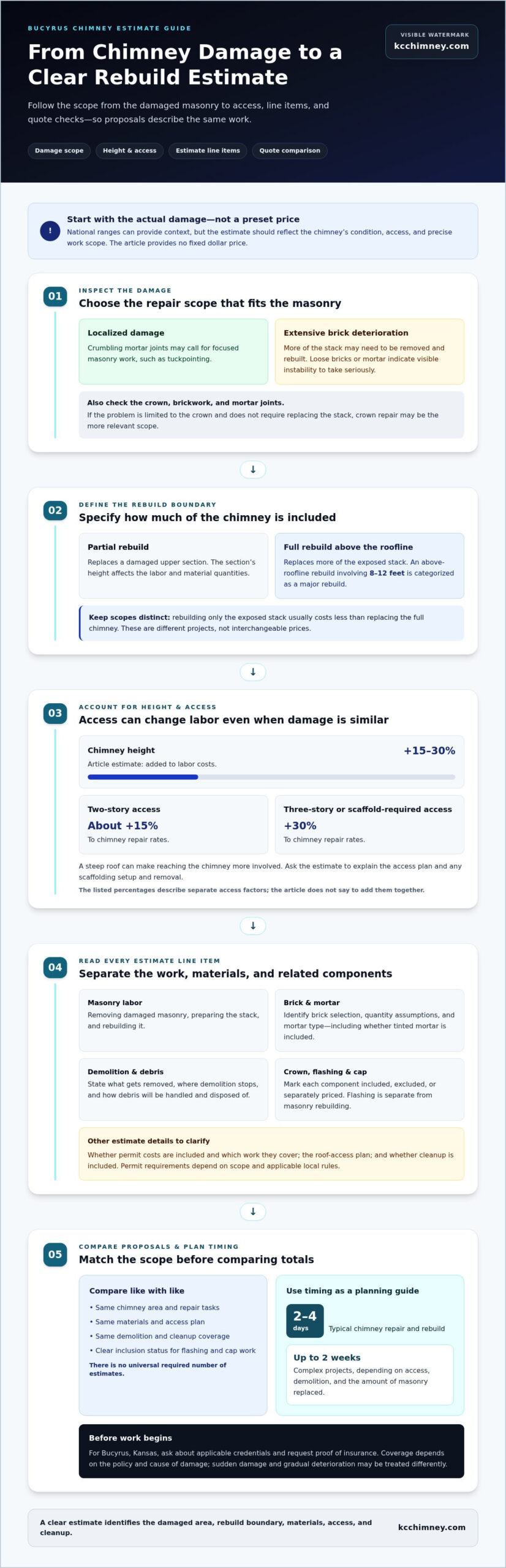
For an estimate to rebuild a chimney top in Bucyrus, Kansas, focus on the damage, height, roof access, and the precise work included. National ranges can provide context, but the estimate should reflect the condition and scope of your chimney.
Damage, Height, and Access Factors
Damage determines whether the work involves a localized repair or a larger rebuild. Crumbling mortar joints may call for focused masonry work, while extensive brick deterioration can require removing and rebuilding more of the stack.
Height and access affect labor even when the damaged area is similar. Chimney height adds 15 to 30% to labor costs. Two-story access adds about 15% to chimney repair rates, while three-story or scaffold-required access adds 30%. A steep roof can make reaching the chimney more involved.
Delaying repairs can allow water to enter open joints and worsen masonry deterioration. Loose bricks or mortar can also fall onto the roof or ground, so take visible instability seriously.
Labor, Materials, and Scaffolding
Labor covers removing damaged masonry, preparing the stack, and rebuilding it. An estimate should distinguish labor from materials, since brick type, mortar, and the size of the rebuild affect the work required.
Scaffolding is an access expense, not a masonry material. The estimate should explain the roof-access plan and include setup and removal if applicable. For Bucyrus, Kansas, ask about applicable credentials and request proof of insurance before work begins.
A typical chimney repair and rebuild takes 2-4 days. Complex projects can take up to 2 weeks, depending on access, demolition, and the amount of masonry being replaced.
Estimate Inclusions and Contractor Quotes
A detailed estimate describes labor, brick and mortar materials, the damaged area, and the planned installation. It should also say whether flashing is included, since roof-to-chimney flashing is separate from masonry rebuilding—a detail that professional installation teams like United Roofing & More! emphasize when coordinating chimney work with roof replacement. Demolition and cleanup should be clear line items, including how removed debris will be handled.
Compare written estimates by matching the work scope, materials, access plan, flashing, and cleanup. There is no universal required number of estimates; comparisons are most useful when proposals describe the same work. Check that each covers the same chimney area and repair tasks.
Permits, Timing, and Insurance
Permit requirements for a Bucyrus, Kansas, chimney project depend on the scope and applicable local rules. Ask the estimate to state whether permit costs are included and which work they cover.
Homeowners insurance coverage depends on the policy and the cause of damage. Sudden damage and gradual deterioration may be treated differently, so review the policy language for the specific event. Rebuild timing depends on demolition, access, and masonry scope; a typical repair and rebuild takes 2-4 days, while complex projects can take up to 2 weeks.
Full chimney rebuild costs above the roofline
Rebuilding only the exposed chimney stack usually costs less than replacing the full chimney. The estimate depends on how much masonry needs replacement and whether the crown, flashing, or cap also needs attention.
Full and Partial Rebuild Scope
A partial rebuild replaces a damaged upper section, while a full rebuild above the roofline replaces more of the exposed stack. The distinction matters because the scope, material quantities, and labor change with the height of the section being rebuilt.
A full above-roofline rebuild involving 8-12 feet is categorized as a major rebuild.
These ranges describe different scopes, not interchangeable prices. A repair near the lower end may cover a smaller area, while extensive deterioration can require a larger rebuild. A cost calculator can help organize initial assumptions, but it cannot assess concealed damage or determine the exact amount of masonry needed.
Crown, Flashing, and Cap Work
The crown, flashing, and cap are separate components around the chimney top, and repairing or replacing them can add distinct work to an estimate. Their condition matters because a rebuilt stack still needs these components addressed if they are damaged.
Ask the estimate to identify each component as included, excluded, or separately priced. That makes it easier to compare proposals with the same rebuild boundary. For a crown problem that does not require replacing the stack, professional crown repair may be the more relevant scope to discuss.
Material choice also affects the estimate. Matching existing brick and mortar can influence sourcing and installation time, especially when the visible chimney uses older materials.
Ask how much of the stack each proposal covers, where demolition stops, and whether flashing and cap work are included. A clear scope lets you compare like with like instead of choosing by total alone. It also reduces the risk of an omitted component becoming a separate cost once work begins. For property managers and business owners managing commercial structures, commercial roofing professionals such as Buckeye Roofing & Restoration emphasize similar itemized clarity when evaluating roof flashing and restoration scopes.
Estimating masonry labor and materials
A masonry estimate separates labor from the materials needed to rebuild the chimney structure. For Bucyrus homeowners, that breakdown helps explain how the damaged section, brick selection, mortar matching, and roof access shape the scope. A written estimate should identify the area to be rebuilt and the material assumptions behind its total.
Brick selection can significantly affect material costs. The quantity depends on the dimensions and shape of the section being replaced, as well as how much existing masonry must be removed. Matching older brick may also affect sourcing and color choices.
Mortar is another material decision. Ask the contractor to specify whether the estimate includes tinted mortar, standard mortar, or another material. That detail makes proposals easier to compare.
Labor depends on the work sequence, not just the number of bricks. Removing unstable masonry, preparing the remaining structure, rebuilding courses, and finishing joints each require time. Brickmasons, blockmasons, and stonemasons in the United States had a median wage of $29.56 per hour in May 2025. That wage figure is not a contractor’s billed rate; project labor also reflects scope and access.
A useful inspection records visible damage and defines the rebuild boundary before estimating material quantities. For example, an assessment may distinguish bricks that need replacement from sound masonry that can remain. The estimate should explain how the chimney’s condition affects demolition and installation instead of treating every chimney top as identical.
Keep masonry and flue work distinct in the estimate. The exterior brick stack and fireplace flue serve different functions, so rebuilding the outside masonry does not automatically include liner work. If a stainless liner is part of a separate scope, its materials and installation should be listed apart from brick and mortar.
Before comparing totals, review each estimate for the same basic details:
- The dimensions and boundaries of the masonry section being rebuilt.
- The assumed brick type, quantity, and mortar color or specification.
- The labor tasks, including removal, preparation, rebuilding, and finishing.
- Whether inspection findings change the work described in the estimate.
These details help show whether differences come from material choices, labor scope, or the chimney’s condition. Clear itemization also makes changes easier to understand if concealed damage appears during demolition.
Included demolition and debris disposal
Demolition removes damaged masonry so the chimney top can be rebuilt on a sound base. The demolition boundary matters: removing loose bricks above the roofline differs from taking down a larger section. The disposal description should explain how workers will collect and remove brick, mortar, and other debris.
Ask the estimate to identify what will be removed and what will remain. For example, it may describe removing spalled bricks while preserving sound masonry below. If mortar joints have failed across a wider area, more material may need to be removed before rebuilding or repointing. A clear scope helps explain why estimates for the same chimney can differ.
Demolition can also reveal damage that wasn’t visible from outside. The condition of the chimney’s interior may affect whether the estimate remains focused on exterior masonry or needs a separate inspection and scope. A Level 2 chimney inspection uses a camera to show the flue liner and interior condition. That distinction helps prevent exterior demolition and flue work from being treated as one undefined task.
Debris handling should be described separately from masonry installation. Check whether the estimate includes gathering demolition waste, carrying it from the roof, and removing it from the property. These tasks depend on roof access and the work area, so a steep roof or scaffold setup can change the handling plan. A line item makes cleanup responsibilities clear.
Damage patterns can help explain the proposed demolition boundary. A stack leaning off plumb is a reason to consider rebuilding rather than repairing. By contrast, localized mortar deterioration may call for repointing instead of removing the entire top. Chimney repair costs depend on the repair type, damage severity, and chimney height, so the estimate should connect its demolition scope to observed conditions.
Use these estimate details to understand the planned work:
- The masonry area scheduled for removal and the point where demolition stops.
- Whether unstable bricks, spalling, or failed joints are included in the scope.
- How debris will be collected, moved from the roof, and disposed of.
- Whether interior or flue inspection is included as a distinct task.
These descriptions help distinguish necessary removal from optional repairs. For instance, a proposal for a leaning stack should explain why rebuilding is included, while a localized joint repair should identify the affected area. Needing a second chimney repair within a year is a reason to consider the cost of a rebuild. Clear documentation helps show whether demolition addresses the cause or only visible symptoms.
Before accepting an estimate, compare the cleanup details alongside the rebuild scope. If one proposal includes debris disposal and another lists only masonry work, their totals do not represent the same completed job. The same applies if flashing, crown work, or an interior inspection appears in only one scope. Specific inclusions make the proposed work easier to understand.
Rebuilding the chimney stack above the roofline
A rebuild above the roofline replaces masonry that can no longer provide a stable stack. The work must account for the roof opening, remaining chimney structure, and height of the damaged section. The estimate should explain the rebuild boundary and why that scope fits the observed damage.
A stack leaning off plumb is a reason to consider rebuilding rather than repairing. Widespread brick deterioration or deep cracks can also indicate damage beyond localized tuckpointing. Structural chimney rebuilds and partial rebuilds should be handled by a professional. The decision depends on whether sound masonry remains below the damaged area and can support the rebuilt section.
Before work starts, the estimate should distinguish exterior masonry from the chimney liner. The liner serves the flue, while the stack forms the masonry exterior above the roofline. A rebuild does not automatically mean liner replacement. If liner damage is identified, chimney relining is a separate scope; liner installation for wood-burning appliances is governed by NFPA 211.
The crown also needs to suit the rebuilt stack. Brown Chimney says a new chimney crown should have a minimum 1-inch drip-edge overhang. That overhang helps direct water away from the masonry face. The estimate can identify whether crown work is included, along with any flashing or cap work required by the project. Keeping each component visible clarifies what the stated scope covers.
Review these details in a proposed rebuild:
- The height and boundaries of masonry being removed and replaced.
- Whether the existing structure below the roofline remains part of the plan.
- How the crown, flashing, and cap relate to the rebuilt stack.
- Whether cracks or signs of liner damage require separate work.
A defined scope also helps explain the project timeline. Major chimney rebuilds above the roofline can take three to five days. Height, roof access, demolition needs, and the amount of masonry being replaced affect the work sequence. Mortar also needs suitable time to cure, so the estimate should describe the planned work rather than imply that every repair follows the same schedule.
If cracks, leaning, or failing masonry have made the stack unstable, arrange a professional assessment before treating the issue as routine tuckpointing. A chimney inspection for rebuild planning can help clarify whether the concern involves the masonry, crown, or flue.
Best Chimney Services: Chimney Sweeping
Best Chimney Services provides chimney sweeping to help homeowners maintain a cleaner fireplace and chimney system. Sweeping addresses routine creosote and soot buildup; it does not replace masonry work when the chimney top is cracked, leaning, or deteriorated. A damaged crown may call for crown repair, while a flue problem may require chimney relining. Matching the service to the issue keeps routine maintenance separate from structural repair.
If your chimney needs ongoing care after the rebuild estimate, or you have concerns about buildup inside the flue, chimney sweeping may be a useful next step. For a damaged crown, ask about crown repair instead. Contact Best Chimney Services or visit kcchimney.com to discuss your chimney needs.
Take the Next Step Toward a Safer Chimney
Use your estimate as a planning tool, not just a total. Before approving work, make sure the scope matches the condition you’ve observed and accounts for the parts of the chimney that matter to your home. A clear decision can help you plan the next stage of chimney care with greater confidence.
If you’re arranging an estimate to rebuild the top of a chimney in Bucyrus, Best Chimney Services can help with related chimney needs. Services include chimney sweeping and chimney relining, as well as gas fireplace inserts for homeowners considering a different fireplace setup. The right next step depends on whether your concern involves routine maintenance, the flue, or fireplace equipment.
Contact Best Chimney Services today to discuss your chimney needs. A thoughtful plan starts with understanding the condition of your system and choosing care that fits your home.
Frequently Asked Questions
Do I need a full rebuild or just a brick replacement?
One or a few damaged bricks may need replacement, while widespread failure can call for rebuilding a larger section. Check whether surrounding mortar remains firm and whether nearby bricks are loose, cracked, or displaced. A leaning stack is a stronger structural warning than an isolated chipped brick. An inspection can establish whether the damage is confined to one area or affects the chimney’s stability.
How do contractors estimate a chimney repair job?
An assessment identifies the damage, repair scope, chimney height, and access needs. For a useful comparison, check that each written estimate describes the same work area and distinguishes labor, materials, flashing, demolition, and cleanup. For example, one estimate may include crown work while another covers only brickwork. A clear scope helps explain different totals without treating the proposals as equivalent.
Is debris disposal extra?
Debris disposal is included only when the estimate says so. Review whether the written scope covers gathering removed brick and mortar, carrying debris from the roof, and hauling it away. If cleanup appears as a separate line item, compare it across estimates. This helps clarify who handles demolition waste and whether the quoted work leaves debris on the property.
What is the average cost to rebuild the top of a chimney in Bucyrus, Kansas?
A Bucyrus-specific average can’t be stated from the available cost ranges. An estimate to rebuild the top of a chimney in Bucyrus, Kansas, should reflect the actual damage, scope, and access rather than assume a national figure is a local quote.
How much does chimney crown replacement or rebuilding cost in Bucyrus, Kansas?
The cost depends on whether the crown needs localized repair or complete replacement, as well as access and the work involved. A crown-only project differs from rebuilding the surrounding chimney stack, so make sure the estimate identifies which masonry and components it covers. For a Bucyrus, Kansas, property, use an itemized scope to understand the proposed work. Crown repair can address crown damage without automatically including a full stack rebuild.
What factors affect the cost of rebuilding a chimney top, such as height, materials, and damage?
Damage severity determines the scope, while height and roof access affect the work needed to reach the chimney. Brick selection matters too: matching historic or specialty masonry can involve different materials than standard brick. A steep roof, extensive removal, or separate crown and flashing work can add tasks to the estimate. Compare each proposal’s assumptions about materials and project boundaries before weighing its total.
What are signs that a chimney top needs rebuilding rather than repair?
A chimney stack leaning off plumb, widespread spalling, loose bricks, or extensive mortar failure can indicate a structural problem rather than a small repair. Localized deterioration may suit tuckpointing or individual brick replacement; broad damage across the stack calls for a closer assessment of stability. Cracks alone don’t establish the scope needed, so note their location and whether surrounding masonry has shifted or weakened.
How can I find licensed, insured chimney repair contractors near Bucyrus, Kansas?
Ask for proof of insurance and verify applicable credentials from professionals like Best Chimney Services before work begins.