
A clean-looking fireplace doesn’t show whether the flue is clear or the chimney is in good condition. A chimney inspection and cleaning combo in Overland Park combines an assessment of the system with sweeping when soot, creosote, debris, or a blockage calls for cleaning. The National Fire Protection Association recommends annual chimney inspections.
Choose a professional who explains the findings and any work needed, so you know what to do next. This guide explains what an inspection and cleaning can cover, signs of buildup or blockage, and how to assess customer reviews. It also outlines inspection levels and what can help determine the right next step for your chimney.
Key Takeaways
- Learn which visible warning signs can point to chimney blockage or buildup, and what to pay attention to before using your fireplace.
- Understand how soot, creosote, ash, and debris are addressed during chimney sweeping.
- See how Level 1 and Level 2 inspections differ, including when camera tools help assess the flue.
- Use customer reviews to look for practical details about communication, inspection findings, and the cleaning experience.
Chimney sweeping and creosote removal
In Overland Park, chimney sweeping removes soot, ash, creosote, and debris from the chimney system. Combined with an inspection, cleaning helps identify buildup and other conditions that may affect fireplace use.
Soot, Ash, Creosote, and Debris Removal
A chimney sweep clears deposits from the flue and other accessible parts of the chimney system. This can include loose soot, ash, creosote, and debris that may restrict the passage of smoke. Leaves or nesting material can obstruct the flue, while residue can cling to its interior. After cleaning, ask what was removed and whether any areas still need attention, such as damaged masonry or a liner concern.
Creosote Buildup and Fire Hazards
Creosote is a byproduct of burning wood that can collect inside the flue. This residue is highly flammable, so buildup can increase the risk of a chimney fire. Sweeping removes deposits, while an inspection assesses the chimney and fireplace system. Ask for a plain-language explanation of where creosote was found, whether cleaning addressed it, and whether the inspection identified damage or another concern. The flue’s condition matters, not just what is visible from the fireplace opening.
Combo Service Inclusions
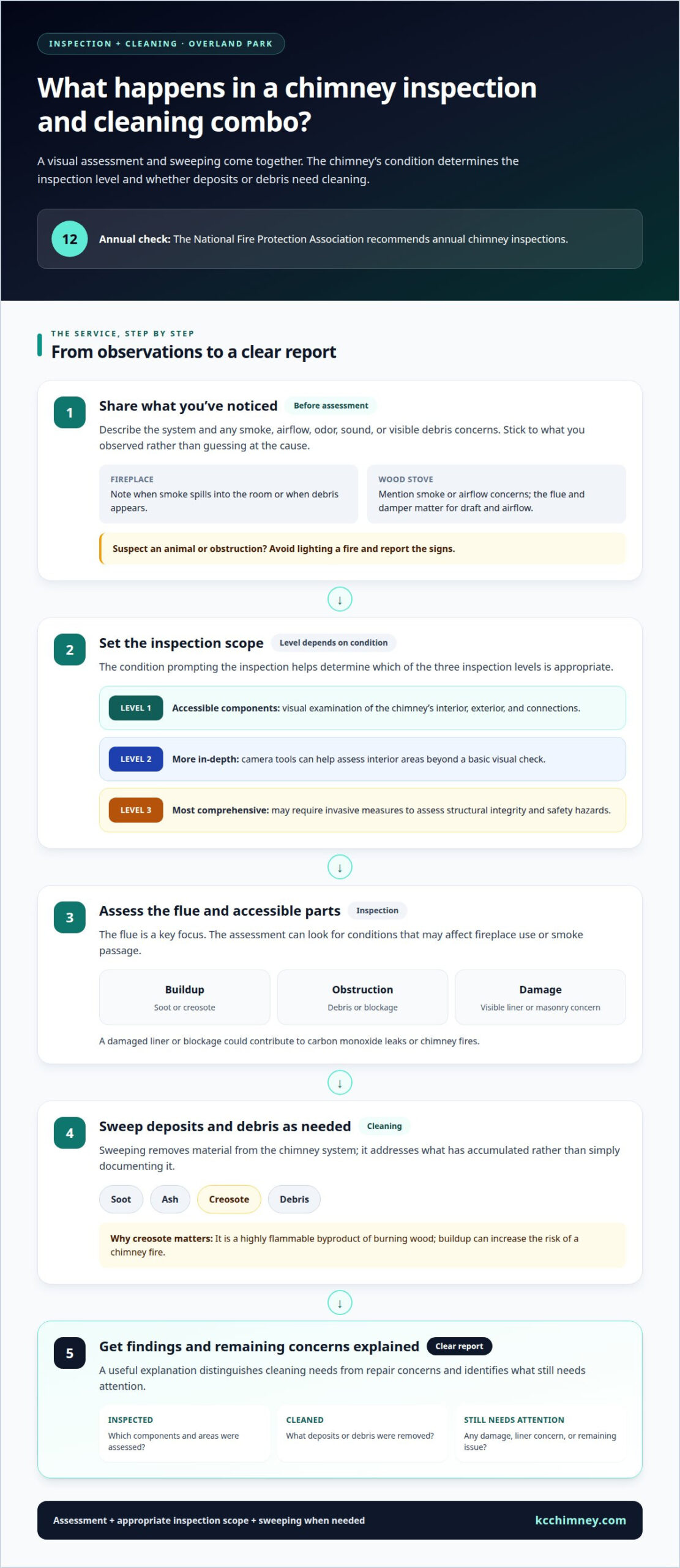
A chimney inspection and cleaning combo in Overland Park brings a visual assessment and sweeping together. A Level 1 inspection examines accessible chimney components, including the interior, exterior, and connections. A Level 2 inspection is more in-depth and can use camera tools to assess areas that a basic visual check may not show. The inspection level and cleaning work should match the chimney’s condition and intended fireplace use. The National Fire Protection Association recommends annual chimney inspections, which can help homeowners plan maintenance before using the fireplace.
Signs of chimney blockages or buildup
Changes in smoke movement, unusual odors, or visible material near the fireplace can point to a flue problem. Note what you observe while using the fireplace and share it during a professional chimney inspection.
Blockages and Debris
Leaves, twigs, and other debris can collect in the flue and restrict the path smoke needs to exit. An intact chimney cap helps keep debris out. From the ground, look for a missing, loose, or visibly damaged cap, but don’t climb onto the roof. A professional can inspect the chimney interior and determine whether debris needs removal or another condition needs attention.
Animal Entry and Blockages
A missing or damaged cap can also let animals enter and become trapped. Scratching sounds, movement near the fireplace, or nesting material are worth reporting, but they don’t confirm what is inside the flue. Avoid lighting a fire if you suspect an animal or obstruction. An inspection can locate the blockage and guide safe removal without pushing material deeper into the chimney.
Before arranging service, note when the sign appeared and whether it changes during fireplace use. For example, record if smoke spills into the room only after the fire starts, or if you see debris near the hearth even when the fireplace is cold. These details help a chimney professional focus the assessment. A Level 1 inspection checks accessible components; camera tools may be used during a Level 2 inspection for a closer look inside the flue.
Keep your observation factual: describe the odor, sound, or visible material rather than guessing at its cause. If the chimney cap is missing or damaged, chimney cap installation can help limit future entry by animals and debris. An honest inspection report should distinguish a confirmed blockage from signs that need further assessment.
What does a chimney inspection and cleaning combo include?
A combo combines an assessment of the chimney and fireplace with sweeping when deposits or debris need removal. The inspection level and the system’s condition determine what the visit covers.
A Level 1 inspection visually examines accessible components, including the chimney’s interior, exterior, and connections. The flue is a key focus because an inspection can identify blockages, creosote buildup, or liner damage. Those conditions could contribute to carbon monoxide leaks or chimney fires. Cleaning addresses accumulated soot, ash, creosote, and debris rather than simply documenting their presence.
During the appointment, the work may involve these distinct tasks:
- Assess accessible chimney parts and connections.
- Look inside the flue for deposits, obstruction, or visible damage.
- Sweep soot, ash, creosote, and debris from the chimney system as needed.
- Explain inspection findings and distinguish cleaning needs from repair concerns.
A Level 2 inspection adds an in-depth assessment using tools such as cameras. This can help examine interior areas beyond a basic visual check. There are three inspection levels in the guidance described for chimneys. Level 3 is the most comprehensive and may require invasive measures to assess structural integrity and safety hazards. The condition prompting the inspection helps determine which level is appropriate.
For a wood stove, the flue and damper also matter. Inspecting both helps assess draft and airflow, which affect how smoke moves through the chimney. Clear explanations of the findings help homeowners understand whether the concern involves buildup, a blockage, or damage that needs attention.
Before the appointment, note whether the system serves a fireplace or wood stove, and describe any smoke or airflow concerns. These details help focus the assessment on how you use the system. A useful report identifies what was inspected, what cleaning addressed, and any remaining concerns.
Which Overland Park chimney companies offer inspection-and-cleaning combo deals?
In Overland Park, distinguish a combined inspection-and-cleaning appointment from a promotional “combo deal.” The first describes work performed together; the second suggests a special offer. Compare the scope: what the inspection covers, what cleaning includes, and how the findings are explained.
Look for clear descriptions of inspection levels and cleaning tasks. A Level 1 inspection examines accessible components, while a Level 2 inspection uses tools such as cameras for a more in-depth assessment. Cleaning addresses soot, creosote, ash, or debris when present. A description that names these steps helps you understand what the appointment is designed to do, rather than relying on the word “combo” alone.
Customer reviews can add useful context about the service experience. Look for specific comments about communication, cleanup, explanations of findings, and whether the work matched the stated scope. For example, a review describing a camera inspection and clear explanation provides more detail than a star rating alone. Reviews reflect individual experiences, but they don’t replace a clear service description.
Before scheduling, identify your fireplace type and explain any smoke, odor, or airflow concerns. Compare those details with the inspection and cleaning scope. The National Fire Protection Association recommends annual chimney inspections, which homeowners can factor into regular maintenance. Chimneys have three inspection levels, and the appropriate assessment depends on what needs examination.
A “deal” is most useful when its included work is clearly explained. Check whether the description separates inspection from sweeping, explains how findings are shared, and notes when a more detailed assessment may be needed. This helps Overland Park homeowners compare the actual scope of a combo appointment without assuming every offer includes the same work.
Best Chimney Services: Chimney Sweeping
Best Chimney Services provides chimney sweeping for homeowners who need soot, creosote, ash, or debris removed from their chimney system. Schedule sweeping when an inspection identifies deposits or when cleaning is due as part of fireplace maintenance. If the inspection finds a damaged flue liner, chimney relining can address that separate concern. Crown repair is available when the chimney crown needs attention.
A clear inspection report connects the findings to the next step, whether that is sweeping or discussing a repair. Best Chimney Services also offers gas and wood fireplace inserts for homeowners considering a change to their fireplace setup.
For help with chimney sweeping or related chimney concerns, contact Best Chimney Services.
Plan the Next Step for Your Fireplace
Use your inspection findings to plan practical next steps instead of guessing about each concern. When arranging a chimney inspection and cleaning combo in Overland Park, note the fireplace’s recent use and any changes you’ve noticed. These details help focus the conversation on your system’s condition and the work it needs.
Best Chimney Services offers chimney sweeping for cleaning needs and chimney relining when the flue requires attention. Gas fireplace inserts are also available for homeowners considering a different fireplace setup. The right next step depends on the findings, whether they involve routine upkeep, a liner issue, or a fireplace update.
Bring your questions and inspection findings together, then choose a clear path forward. Contact Best Chimney Services to discuss your chimney needs, and take the next step toward a well-cared-for home.
Frequently Asked Questions
How long does a chimney cleaning appointment take?
Most chimney cleaning and inspection appointments take between one and two hours. Timing can vary with chimney access, system condition, and whether a camera assessment is needed. Before the visit, clear the hearth area and note recent fireplace use or smoke issues. These details help the technician focus the assessment and explain relevant findings.
How often should a chimney be swept?
Best Chimney Services recommends chimney cleaning at least once per year, especially before winter. A pre-season appointment gives homeowners time to address cleaning needs before regular fireplace use begins. If you burn wood often, keep track of use and changes in smoke movement or fireplace performance between visits. These observations can help guide your maintenance discussion.
How much does a chimney inspection and cleaning combo cost in Overland Park, KS?
The price depends on the chimney’s condition, access, inspection level, and the cleaning or repair work needed. Best Chimney Services provides transparent pricing with no hidden fees. When requesting a quote, describe your fireplace type and any known concerns so the estimate can reflect the work involved.
What types of chimney inspections are available, and when is a Level 2 inspection needed?
Chimney inspections are grouped into three levels. A Level 2 inspection provides a more in-depth assessment and may use camera equipment to examine the flue. It’s worth considering when a concern calls for a closer look beyond accessible components, such as suspected hidden damage. A Level 3 inspection is the most comprehensive and may involve invasive assessment.
How often should homeowners in Overland Park have their chimney inspected and cleaned?
Plan for an inspection and cleaning at least once per year, ideally before the main heating season. The National Fire Protection Association recommends annual chimney inspections, and Best Chimney Services advises cleaning at least once per year. For homeowners in Overland Park, Mission Hills, Stilwell, Bucyrus, and Spring Hill, arranging seasonal maintenance before regular fireplace use can make planning easier.
What factors affect chimney inspection and cleaning prices in Overland Park?
Price can reflect the chimney’s condition, how readily the technician can access it, the inspection level, and the amount of cleaning required. Separate work, such as relining or crown repair, can also affect the project scope. A clear description of your fireplace and any known concerns helps establish which work belongs in the estimate.