
A chimney nest can do more than block the flue: it can disrupt draft and leave debris behind. For chimney cleaning for townhomes in Mission Hills, KS, arrange an annual chimney evaluation. The National Fire Protection Association recommends annual evaluations of chimneys, fireplaces, and vents. A professional sweep can assess whether cleaning is needed as part of fireplace maintenance.
Removing visible nesting material may seem like enough, but creosote buildup, hidden flue damage, or smoke spilling into the room can also affect fireplace safety and performance. These problems may not be visible from the hearth.
This guide explains when to schedule a sweep, how nests and creosote affect a chimney, and what changes in smoke or ventilation may signal. It also covers what a thorough service can involve and how townhome layouts, shared walls, and separate flues affect an inspection. Knowing what to watch for helps you plan the right next step before lighting a fire.
Key Takeaways
- Plan an annual chimney evaluation; the National Fire Protection Association recommends evaluating chimneys, fireplaces, and vents annually.
- In townhomes with multiple fireplaces, consider each fireplace and its flue separately because their condition can differ.
- Nests can obstruct a flue, while creosote buildup can become harder to remove as it thickens. Learn which warning signs call for a closer look.
- Smoke entering another fireplace may point to deterioration between flues. Stop using the affected fireplace until the problem is assessed.
- A sweep can clean the chimney and identify concerns such as buildup or liner damage, helping you determine the right next step.
How Often Should Mission Hills Homeowners Schedule a Chimney Sweep?
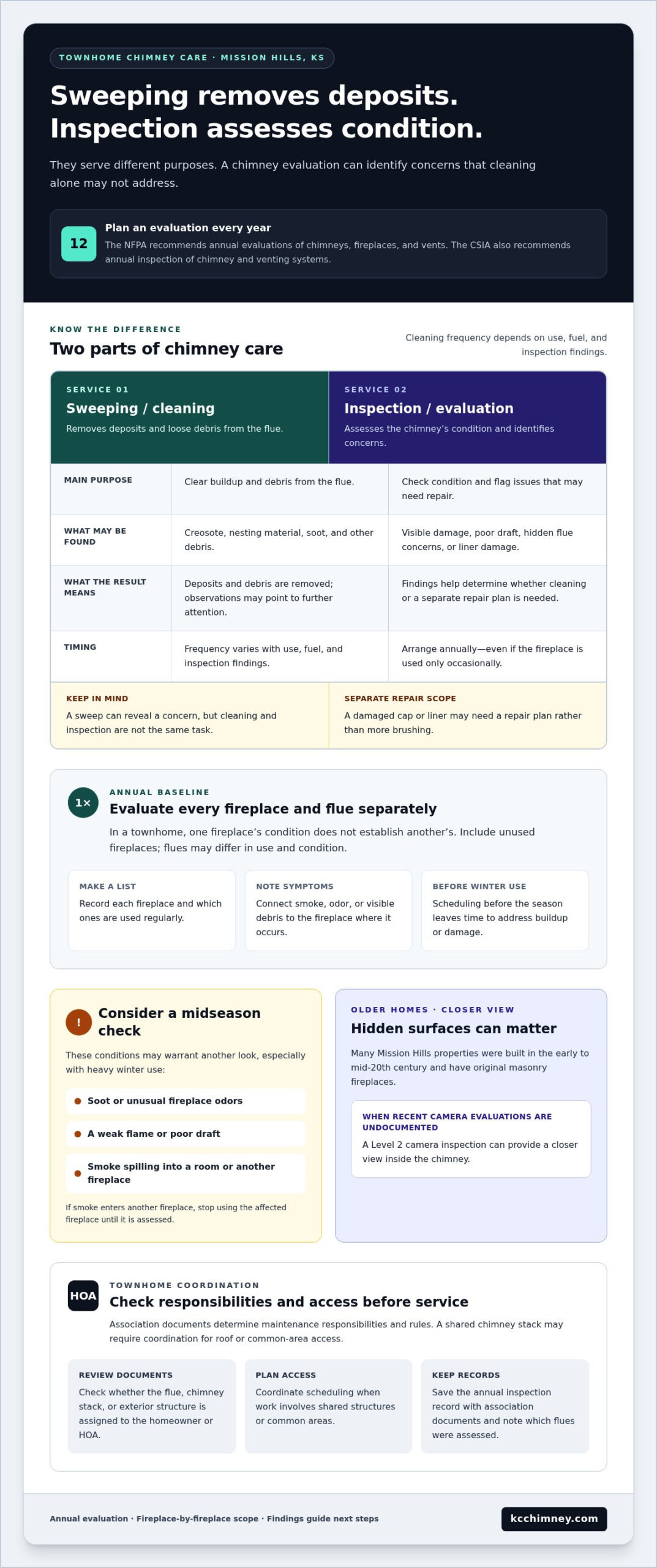
Schedule a chimney evaluation annually, even if you use the fireplace only occasionally. The National Fire Protection Association recommends annual evaluations of chimneys, fireplaces, and vents. The Chimney Safety Institute of America also recommends an annual inspection of chimney and venting systems. If you burn fires through winter, arranging service before the season gives you time to address buildup or damage before regular use.
Townhomes need a fireplace-by-fireplace approach. Mission Hills homes may have several fireplaces, each connected to a flue with its own condition. Inspecting one fireplace does not establish the condition of another. List every fireplace, note which ones you use, and arrange an evaluation of each flue. Include unused fireplaces rather than assuming they need no attention.
Cleaning and inspection serve different purposes. Sweeping removes deposits and debris from the flue; inspection assesses its condition and identifies concerns that may need repair. A sweep can look for creosote, nesting material, visible damage, and signs of poor draft. Cleaning frequency depends on factors such as use, fuel, and inspection findings. Heavy winter use, soot, unusual odors, or a weak flame may warrant a midseason check.
Older Mission Hills homes deserve careful attention to the chimney’s hidden surfaces. Many properties in the area were built in the early to mid-20th century and have original masonry fireplaces. If a home lacks documented recent camera evaluations, a Level 2 camera inspection can provide a closer view inside the chimney.
Townhome maintenance responsibilities depend on the association’s governing documents and the location of each chimney component. Review the maintenance provisions to see whether the flue, chimney stack, or exterior structure is assigned to the homeowner or HOA. Coordinate access and scheduling when work involves a shared structure.
Mission Hills HOA rules for fireplace use and chimney care are set out in each association’s governing documents. Review the rules on permitted use, maintenance responsibilities, and access to shared areas before scheduling work. Keep the annual inspection record with those documents so owners and the HOA can track which fireplaces and flues were assessed.
Finding chimney sweeps serving Kansas City and nearby areas
For chimney service in Mission Hills, look for a clear process covering the fireplace, flue, and visible chimney components. When arranging service, describe the home accurately: townhome, number of fireplaces, fuel type, and any recent smoke or draft concerns. For example, mention if one fireplace is used regularly while another is idle. This context helps define the inspection and cleaning scope.
Service-area language matters across the Kansas City metro. Confirm that the work is intended for Mission Hills, Kansas, and explain any townhome access or HOA coordination needs. A shared chimney stack may require planning around access to the roof or common areas. Give the service team the unit location and relevant entry instructions, without assuming that a neighbor’s fireplace shares the same flue or condition.
Before scheduling, make a short record of what you’ve noticed. Include smoke entering the room, a persistent fireplace odor, visible soot, or an animal nest near the chimney opening. Note which fireplace shows each symptom and when it occurs, such as at startup or after the fire is established. These details help focus the visit and distinguish a cleaning request from a concern that may need inspection or repair.
Ask for a written estimate that explains the work included and the factors affecting the scope. Chimney service pricing depends on the chimney’s condition, access, deposits, and whether inspection findings point to repair; the price is given after a quote request. A clear estimate separates cleaning from additional work, such as relining or replacing a damaged cap. Review warranty terms in writing, including what work they cover and any stated limits. Don’t assume a warranty applies to every cleaning or repair.
Emergency availability also varies by service. If smoke spills into the home or another fireplace, stop using the affected fireplace and arrange an assessment. Don’t treat a routine cleaning appointment as a response to an active chimney fire. Describe the immediate condition clearly when seeking help, and use emergency services for an active fire.
For a local next step, review chimney sweeping and inspection details and note the fireplaces or symptoms you want assessed. Whether the request involves one fireplace or several, a defined scope makes it easier to understand the work, findings, and any recommended repair before proceeding.
Chimney cleaning and sweeping in Mission Hills
Townhome chimney care works best when the visit is planned around each fireplace, its fuel, and its use. A clear scope distinguishes routine sweeping from concerns that may need closer inspection.
Townhome Chimney Cleaning Services
For chimney cleaning for townhomes in Mission Hills, KS, list your fireplaces and note which ones are used regularly. Consider each flue separately, since use and condition can differ within the same home. Tell the technician about smoke, odors, or visible debris so the visit can address the specific concern.
Ask what the service covers inside the flue and what observations will be recorded. Sweeping removes deposits and loose debris, and may reveal conditions that need further attention. For example, a damaged chimney cap or liner may need a separate repair plan rather than more brushing. Clear documentation connects each finding to the fireplace it serves.
Certified Sweep Technicians
A certification helps homeowners understand a technician’s training and professional credentials. Ask which certification the technician holds and how the visit will document each fireplace and flue. In a townhome, careful identification matters because separate fireplaces or units may have distinct flues.
During the appointment, expect an explanation of the work completed and any conditions found. A useful record identifies the fireplace, describes the observation, and distinguishes cleaning from recommended repairs. Keep the notes with prior service records so future technicians can compare changes rather than rely on memory.
Scheduling a Chimney Sweep
Schedule service before regular fireplace use, and allow time to discuss findings before lighting the next fire. When arranging chimney cleaning for townhomes in Mission Hills, KS, share the number of fireplaces, fuel types, and any history of draft trouble. Mention shared roof or exterior access if the technician may need to reach common areas.
If a concern develops during winter, describe exactly when it happens. Smoke at startup differs from smoke that continues after the fire is established. Note which fireplace is affected and whether another works normally. These details help direct attention to the right flue.
Hiring a Chimney Sweep
Before the visit, move fragile items away from the hearth and gather prior inspection notes. Identify every fireplace in use, including those that have remained idle. This helps confirm the requested scope and keeps findings for separate flues from being confused.
Review the work plan before service begins. It should identify the fireplaces included, explain what sweeping covers, and describe how additional concerns will be reported. If a repair is recommended, ask for the affected component and reason in writing. This record helps you consider the next step.
Creosote, nests, and damaged flue liners
Creosote, nesting material, and liner damage can each affect a chimney differently. Understanding the distinctions helps you know what a sweep may find inside.
Creosote Buildup and Fire Risks
Creosote forms inside a chimney and can range from flaky to glazed. Stage one is light and flaky, making it the easiest stage to remove and the least threatening. Stage two is harder and tar-like, so removal requires more aggressive brushing and specialized tools. Stage three is thick, glazed buildup that is difficult to remove and most likely to ignite during use.
That progression matters during winter, when regular fireplace use can leave deposits to assess during a sweep. In the United States, fireplaces and chimneys are attributed to 25,000 fires every year. This figure underscores why creosote condition deserves attention, rather than judging a flue only by what’s visible from the hearth. A sweep can identify the deposit’s stage and determine the appropriate removal approach.
Mission Hills homes with original masonry fireplaces may have flues with different histories and conditions. An inspection should connect each finding to the fireplace it serves. Glazed creosote is different from loose soot: its hardened surface calls for specialized tools. The finding should guide the cleaning plan before the fireplace is used again.
Soot and Creosote Removal
Soot and creosote are not the same. Soot is loose residue, while creosote can harden into a tar-like coating or glazed layer. Sweeping removes deposits from the flue, but the method depends on what the technician finds. For example, stage two creosote requires more aggressive brushing than the light, flaky deposits of stage one.
Nests create a separate concern: material lodged in a flue can obstruct the passage and disrupt smoke movement. A sweep should check for debris and assess the flue, not simply brush around a blockage. Chimney caps help protect chimneys and flues from weather exposure, so a missing or damaged cap may allow more outdoor debris to enter.
Flue liners also need attention. Moisture in natural-gas exhaust can contribute to deterioration of clay flue liners serving furnaces and water heaters. If an inspection identifies liner damage, cleaning alone will not address it; chimney relining may be appropriate. Document the affected flue and understand the recommended work before using the connected appliance.
Smoke backup and ventilation problems
Smoke entering a room points to a draft problem that needs attention before another fire. In a Mission Hills townhome, note which fireplace is affected, when smoke appears, and whether another fireplace behaves differently. These details help distinguish a cold flue at startup from a blockage or another chimney condition requiring assessment. Keep residents away from the affected fireplace while the cause is evaluated.
Pay attention to the pattern. Smoke that spills into a room only at startup may have a different trigger from smoke that continues during regular burning. Record whether the damper is open, whether the fireplace has been unused, and whether outdoor conditions have changed. Don’t keep burning wood to test a fireplace that repeatedly sends smoke inside. A note about the timing gives the inspector useful context.
Pay close attention if smoke appears in another fireplace. This can indicate deterioration in the brick dividing two flues within a chimney stack. Don’t use the affected fireplace until it has been assessed. In a townhome with separate fireplaces, identify both openings and tell the inspector which one was active. A problem between flues needs attention to the chimney structure, not just an adjustment at the hearth.
A cold flue can interfere with the initial upward movement of smoke. One described warming method is to hold a lit, rolled newspaper near the open damper for a minute or two. Keep the paper clear of the fireplace and surrounding materials, and don’t use this method to dismiss continuing smoke backup. If smoke persists after startup, stop using that fireplace and arrange an assessment.
Other observations can help explain the problem. A weak flame, unusual odor, soot near the opening, or smoke that changes direction can point to different draft concerns. Note each symptom separately rather than grouping several fireplaces together. For example, record whether the living-room fireplace smokes at startup while the upstairs fireplace drafts normally. This comparison can help locate the affected flue.
Keep the home safe by treating repeated smoke entry as a reason to pause fireplace use, not as a nuisance to mask. Don’t close off the room and continue burning. If smoke appears in another fireplace, report that specific detail because a deteriorated dividing brick may be involved. If you notice an active fire outside the firebox, leave the home and call emergency services.
For persistent smoke backup or a change in draft, schedule a chimney assessment before using the affected fireplace again. Share the symptom, the fireplace location, and whether another opening showed smoke. That focused information helps direct attention to the right flue and its condition.
Best Chimney Services: Chimney Sweeping
Best Chimney Services provides chimney sweeping for Mission Hills homeowners dealing with soot, creosote, or debris in fireplace flues. Schedule a sweep as part of regular chimney care or when smoke, unusual odors, or visible buildup raise concern. If an inspection identifies a damaged liner, chimney relining can address that separate issue. The right next step depends on the fireplace and flue condition, not simply how often the hearth is used.
For a townhome visit, share which fireplaces you use and describe any draft or smoke symptoms. That information helps focus the service on the right flues and concerns. Contact Best Chimney Services or visit kcchimney.com to discuss chimney sweeping for your home.
Plan Your Next Fireplace Season with Confidence
Make chimney care part of your home-maintenance routine rather than treating each visit as a one-off. Keep a simple record of each fireplace, fuel type, prior findings, and completed work. In a townhome, share relevant notes with the HOA when a repair involves a common structure, and keep a copy for future reference. This record supports informed decisions and helps explain changes in smoke, draft, or fireplace use.
If you’re planning an upgrade as well as maintenance, consider how your fireplace needs fit the way you use your home. Best Chimney Services offers chimney sweeping, relining, and gas fireplace inserts, connecting routine care with options for an aging or changed system. A conversation about chimney cleaning for townhomes in Mission Hills, KS can help identify a practical next step based on your home’s condition and plans.
Contact Best Chimney Services today to discuss care for your fireplace. A thoughtful plan can make your next season feel more settled.
Frequently Asked Questions
Can Animals Nesting in a Chimney Create Problems Beyond Just Blocking the Flue?
Yes. Nesting material can collect in the flue, hold debris, and contribute to odors inside the home. An animal may also leave material in areas that aren’t visible from the fireplace opening. If you hear movement or notice nesting activity near the chimney, avoid disturbing it yourself. Arrange an assessment to determine whether the flue is obstructed and whether debris or damage needs attention before fireplace use.
How Do I Know If My Chimney Needs Cleaning?
Look for soot or flaky deposits around the fireplace opening, persistent fireplace odors, and changes in how smoke moves during a fire. These signs don’t show how much buildup is higher inside the flue. Note which fireplace has the symptom and whether it occurs at startup or throughout use. A professional evaluation can determine whether deposits need removal or another chimney concern is affecting performance.
How Does Creosote Progress Through Stages, and When Does It Become a Serious Problem?
Creosote progresses from light, flaky stage one deposits to harder, tar-like stage two and thick, glazed stage three buildup. Stage one is easiest to remove; stage two calls for more aggressive brushing and specialized tools. Stage three is difficult to remove and most likely to ignite during use. If you see shiny, glazed material inside the flue, stop using that fireplace until its condition is assessed.
How Often Should Fireplace Maintenance Be Done?
Schedule fireplace maintenance annually. Best Chimney Services’ guidance is: “Annually.” The National Fire Protection Association recommends annual evaluation of chimneys, fireplaces, and vents. Arrange the visit before regular winter use, so there’s time to address inspection findings before relying on the fireplace. For townhomes, keep separate records for each fireplace, including the date of service and any notes about its condition or maintenance needs.
What Does a Professional Chimney Sweep Actually Cover During a Residential Visit?
A residential visit can include cleaning deposits from the flue and assessing the chimney’s condition. Best Chimney Services uses specialized brushes and video camera equipment to identify internal hazards. Before the visit, list the fireplaces and fuel types in your home, then describe any unusual odor or draft change. Ask that findings be tied to the specific fireplace or flue, especially if the home has multiple fireplaces.
How Much Does Chimney Sweeping Cost in Mission Hills, Kansas?
The price depends on the case and is given after a quote request. Factors include the number of fireplaces, chimney access, deposits, inspection findings, and whether the work involves cleaning alone or a repair. Best Chimney Services provides transparent, itemized estimates with no hidden fees. Share the number of fireplaces and any known concerns when requesting a quote, so the proposed scope can reflect the work your home needs.
How Often Should a Townhome Chimney Be Cleaned and Inspected?
Arrange a chimney evaluation annually, and plan cleaning according to the flue’s condition and use. Consider each fireplace separately, since flues in the same townhome may have different use histories. Keep a record of the fireplace served, work completed, and concerns noted. If the HOA maintains shared chimney components, include relevant records in maintenance coordination between the homeowner and association.
What Does a Professional Chimney Inspection and Cleaning Include?
Cleaning removes deposits and debris, while inspection evaluates the fireplace and chimney for concerns that cleaning alone won’t correct. Video equipment can help reveal internal conditions, and findings can identify whether further work is needed. For example, a damaged liner calls for a different response than loose soot. Ask for a clear record of which flue was assessed and what work was performed, particularly if several fireplaces serve the home.