
A screened chimney cap can deter wildlife, but it can’t guarantee animals will stay out. A chimney animal screen in Spring Hill should fit the flue properly, helping keep animals, birds, rain, and tree debris out while covering the flue opening.
It’s reasonable to want a lasting barrier, especially if you’ve heard movement overhead or found signs in the firebox. Droppings, nesting material, feathers, or unusual noises can point to an animal in the chimney. If an animal or nest may be in the flue, don’t light a fire until the chimney has been cleared and inspected.
This guide explains how a screened cap helps protect the chimney, what signs to look for, and what can affect the scope of screen service. You’ll also learn why fit and condition matter and what to expect when arranging professional chimney care in Spring Hill.
Key Takeaways
- A screened cap can reduce animal entry, but its fit and condition affect how well it protects the flue.
- Learn which clues in the firebox may point to wildlife and why identifying an animal matters before addressing the blockage.
- Service costs depend on the work involved, including access, cap condition, and whether cleaning or repairs are needed.
- Compare screen options by how their material and mesh suit the chimney, airflow needs, and likely animal intrusions.
- Chimney sweeping can help address debris and buildup; Best Chimney Services can help when the chimney needs professional cleaning.
Does a screened chimney cap really keep animals out for good?
A screened chimney cap helps deter animals, but damage, a poor fit, or an opening can weaken its protection. A chimney animal screen in Spring Hill works best when the screen, cap, and flue opening fit together and remain clear.
In Spring Hill, Kansas, assess the chimney top and firebox as parts of the same system. Look for loose mesh above and nesting material, feathers, or droppings below. These signs can indicate whether wildlife has entered and whether debris may be blocking the flue.
Animal Damage and Screen Repairs
Look for bent mesh, loose fasteners, nesting material, feathers, droppings, or scratches near the firebox. These clues can indicate animal entry and show whether the screen, cap, or surrounding chimney needs attention. A damaged screen may need repair or replacement; a distorted cap may need repair or a new installation.
Animal-related damage can extend beyond the screen. Check for displaced cap sections, debris in the flue, and damage around the crown. A copper chimney cap may need repair if its attachment or panels are damaged, while widespread deterioration may make replacement practical. Custom chimney cap repairs should suit the chimney opening and existing assembly.
Screened Caps and Standalone Screens
A screened chimney cap combines a cover over the flue with a barrier at the opening. A standalone screen adds a barrier without replacing the whole cap. The cap-and-screen assembly also helps keep out rain and tree debris, while a separate screen may suit an otherwise sound cap. Compare fit, condition, and airflow before choosing.
Permit requirements for a chimney screen in Spring Hill, Kansas, depend on the work and applicable local building requirements. Replacing damaged mesh differs from replacing or altering the cap assembly. Identify the proposed work before installation so the requirements for that project can be determined.
Inspect the screen during chimney maintenance and after storms, animal activity, or visible damage. Look for loose attachments, corrosion, clogged mesh, and gaps around the flue. A blocked or damaged screen can interfere with ventilation, while a correctly fitted, clear screen allows exhaust to pass through. If an animal or nest may be inside, don’t light a fire until the chimney has been cleared and inspected.
Choosing a Chimney Screen Installer
Choose a chimney professional who can assess the flue opening, cap, crown, and screen as one assembly. Ask for a repair plan that distinguishes screen replacement from cap repair or full replacement. A loose mesh panel on a sound cap, for example, calls for a different approach than a badly damaged copper cap or a custom-sized opening.
During installation, the screen should sit securely without obstructing the flue. The work should address observed damage, animal entry points, and debris that needs removal. A careful assessment links the repair to the chimney’s actual condition instead of treating every damaged screen as the same job.
Chimney animal screen service costs
The scope of animal-screen work depends on the condition of the screen, cap, and flue, as well as the work needed to reach and repair them. A quote should account for the specific chimney and repair needs rather than treating every screen job as a simple replacement.
What affects the service price?
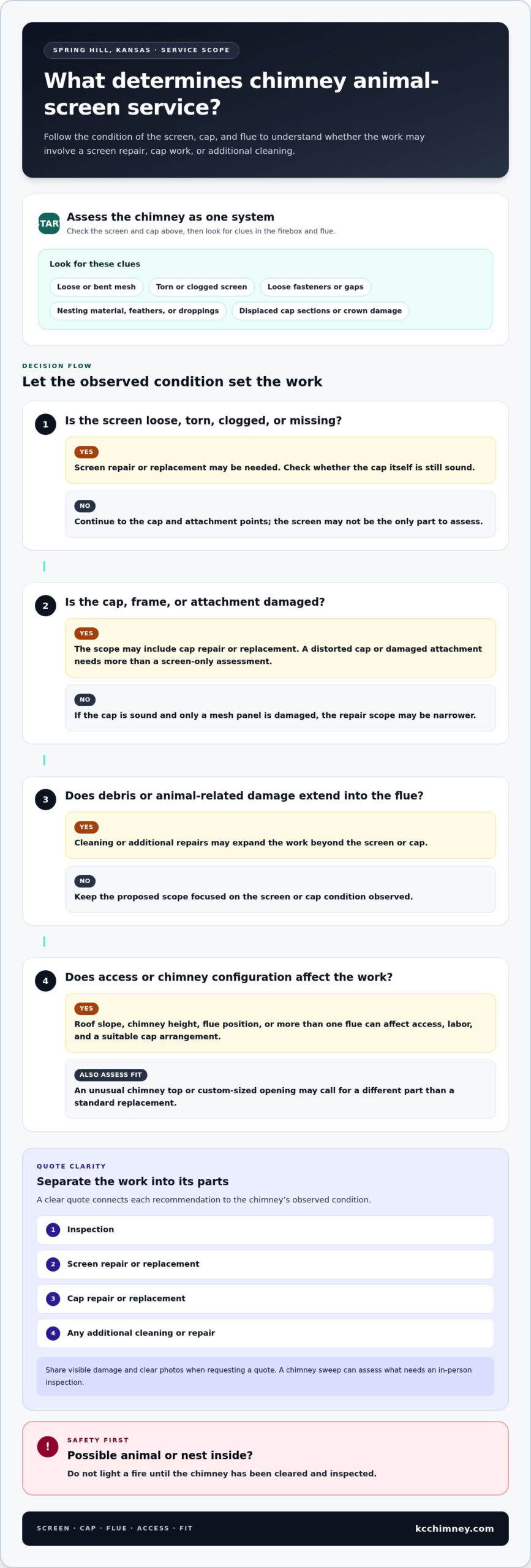
First, a chimney sweep assesses whether the screen is loose, torn, clogged, or missing. A secure cap with one damaged screen panel calls for different work than a bent cap, failed fasteners, or damage around the flue opening. The amount of repair or replacement needed is a key factor in the work.
Access matters, too. The roof’s slope, chimney height, and flue position can affect the work needed to reach the cap safely. A chimney with more than one flue may need a different cap arrangement than a single-flue chimney. These details help determine the labor and suitable replacement parts.
Material and fit also affect the scope. A standard replacement may differ from a custom cap made for an unusual chimney top. If the existing cap needs repair rather than replacement, the technician must assess whether its frame and attachment points can support the work. Each condition affects the materials and time involved.
Screen replacement or broader chimney work?
A screen-only repair addresses the barrier while leaving a sound cap in place. If the cap itself is damaged, replacement may involve removing the old assembly and fitting a new one. If debris or animal-related damage extends into the flue, cleaning or additional repairs can expand the work beyond the screen.
For example, a loose mesh panel on a stable cap suggests a narrower repair scope. A crushed cap, blocked flue, and damaged attachment points involve several separate tasks. Describe visible damage and share clear photos when requesting a quote. A chimney sweep can then assess what needs an in-person inspection.
How to understand a quote
Ask for the quote to distinguish inspection, screen repair, cap replacement, and any additional work. That makes it easier to see what drives the proposed scope. Best Chimney Services provides transparent pricing with no hidden fees. The work depends on access, screen and cap condition, material, fit, and any related cleaning or repair.
Once the chimney is safe to use, routine chimney sweeping service can address soot and debris that affect the flue. Keep the quote focused on the actual chimney, not a generic screen price. A clear scope connects the recommended work to the observed condition and the parts that need attention.
Keeping birds, squirrels, raccoons, and other animals out of chimneys
A properly sized chimney cap with an animal screen helps block birds, squirrels, raccoons, and other wildlife while allowing ventilation. Screens are also recommended for furnace chimney flues, where birds and squirrels are common intruders and raccoons sometimes enter. The barrier must fit the flue opening and remain clear to do its job.
Watch for signs before using the fireplace
Listen for movement in the flue and check the firebox for feathers, droppings, nesting material, or twigs. A squirrel may leave nesting debris, while a bird may flutter or call above the damper. These clues can indicate an animal or nest inside, not just debris caught on the cap.
Don’t light a fire if an animal or nest may be in the chimney. Heat and smoke can put the animal at risk, and a blockage can prevent exhaust from venting normally. Keep the damper closed if it can be operated safely, and arrange to have the flue cleared and inspected before using the fireplace again.
Choose a cap that protects without blocking airflow
An animal-guard cap covers the flue opening with screening while leaving a path for exhaust. It also helps keep out rain and tree debris. A loose, damaged, or clogged screen can undermine these functions, so check the visible cap for sagging mesh, gaps, corrosion, or accumulated leaves.
Regular cap maintenance can help limit blockages and support airflow for a fireplace or heating appliance. During maintenance, remove debris from the screen and look for signs of animal access. If the screen is bent or the cap no longer fits securely, repair or replacement may be needed to restore a close fit around the flue.
Handle nests and other obstructions carefully
Not every obstruction should be removed immediately. In Spring Hill, protected chimney swift nestlings are left until they have fledged before the nest is cleared. An active wasp colony is treated before chimney work begins. First identify what is inside, rather than disturbing a nest or attempting removal.
After the animal is out, have the flue checked for remaining nesting material, damage, or blockages. A chimney professional can inspect the cap and screen, clear debris, and identify openings that need repair. This matters after a raccoon enters as well as after a bird nests, because the chimney needs to be clear and properly ventilated before use resumes.
Regular chimney cap maintenance can help protect a home from debris, moisture, and animal intrusions while supporting fireplace or heating-appliance efficiency. A properly sized, screened chimney cap helps deter animals from entering, making it important to keep the cap maintained and correctly fitted.
Which chimney companies install animal screens in Spring Hill?
In Spring Hill, choose chimney service that includes cap installation and flue assessment, not just pest control. The work may include measuring the flue, selecting a compatible screened cap, securing the assembly, and checking that exhaust can pass through. Ask for the proposed work to address the cap and screen together.
Match the work to the chimney
Start with the condition of the existing cap. A company that installs caps should distinguish a screen repair from a full cap replacement. Intact metal with a torn mesh panel, for example, needs a different solution than a loose cap or an uncovered flue.
Share useful details before scheduling an assessment: the number of flues, visible cap damage, and any debris or signs of animals. Photos from the ground can help describe the issue, but they don’t replace an on-site look at the chimney opening. The work description should say whether measuring, installation, and a fit check are included.
Look for a complete inspection process
A screen is only one part of the chimney top. Ask how the service assesses the cap’s attachment, flue opening, and surrounding crown. A careful assessment can reveal whether water entry, loose components, or accumulated debris also need attention. A damaged chimney cover can affect the broader fireplace system, so the quote should identify related concerns rather than addressing the mesh alone.
For a furnace flue, the proposed screen must suit the appliance’s venting needs. Screens help keep birds and squirrels, and sometimes raccoons, from entering furnace chimney flues. The selected cap should protect the opening while allowing proper ventilation.
Clarify the written scope
Before work begins, review the written description of the repair or installation. It should state whether the existing cap stays, which parts will be replaced, and how the fit will be checked. If the chimney has multiple flues, confirm that the proposed assembly accounts for each opening rather than assuming one screen covers the entire top.
Also clarify how discovered obstructions will be handled. Protected chimney swift nestlings are left until they fledge before a nest is cleared, and an active wasp colony is treated before chimney work. These situations affect the work sequence. A clear plan identifies the screen task, related cap work, and next steps if inspection reveals additional damage.
Chimney caps should be installed on all chimneys to help prevent rainwater damage and keep birds and animals from entering.
What materials and mesh sizes are best for a chimney animal screen?
The right screen balances three needs: resisting damage, blocking likely intruders, and allowing smoke or appliance exhaust to vent. Material, opening size, flue dimensions, and the existing cap all matter. A screen that blocks wildlife but restricts airflow is not suitable for that chimney.
Choose material for the cap and exposure
Metal screens are common because they hold their shape and attach to a chimney cap. Stainless steel resists rust, while galvanized steel has a protective zinc coating. Copper screens can coordinate with a copper cap, but the material should suit the existing assembly and its exposure to weather.
Check the whole cap, not just the mesh. A sturdy screen attached to a corroded frame, for example, may not stay secure. A professional assessment should consider the cap’s metal, attachment points, flue opening, and visible wear. Mixing materials can also affect the assembly’s appearance and performance over time.
Match mesh openings to the animal risk
Mesh size refers to the size of each opening, not the overall screen dimensions. Smaller openings can block smaller animals and debris, but may collect leaves, soot, and other material more readily. Larger openings allow more open space but may leave gaps that smaller wildlife can exploit.
Consider the likely intruder and the chimney’s use. A screen for a furnace flue must preserve the appliance’s venting path. A fireplace cap also needs enough open area for exhaust. The right opening size depends on those requirements and the cap design, so don’t choose mesh by appearance alone.
Check fit, airflow, and upkeep
Measure the flue and cap before selecting a replacement. The screen should cover the opening without gaps, sit firmly in its frame, and remain accessible for cleaning. A poorly fitted panel can loosen, while clogged mesh can restrict ventilation. During chimney maintenance, inspect for bent wires, corrosion, debris, and loose fasteners.
Spring Hill homeowners comparing screen options should weigh durability, cleaning needs, and proper venting. Ask how the recommended material and mesh opening suit the flue, cap, and signs of animal entry. A custom fit may be needed if the chimney top has unusual dimensions or multiple flues.
For a secure fit matched to your chimney, schedule chimney cap installation and have the screen and cap assessed together.
Best Chimney Services: Chimney Sweeping
Best Chimney Services provides chimney sweeping to help homeowners address soot and debris inside the flue. If wildlife has entered, wait until the animal or nest is cleared and the chimney is safe to use before lighting a fire. Sweeping can then help remove buildup, while an inspection can identify concerns such as flue damage or a deteriorated crown.
Turn to Best Chimney Services for chimney care after an animal incident or to have the flue assessed during routine maintenance. If an inspection reveals liner damage, chimney relining may be appropriate; crown damage may call for crown repair. The recommended work depends on the chimney’s condition, not simply on the presence of a screen.
For help with chimney sweeping, contact Best Chimney Services.
Make Your Next Chimney Check Count
A well-fitted chimney animal screen in Spring Hill is one part of caring for the whole fireplace system. Note any movement, debris, or visible damage, then share those observations during your chimney appointment. Clear details help focus the assessment on the areas that need attention.
Best Chimney Services offers Chimney Sweeping to address buildup, Chimney Relining for liner needs, and Gas Fireplace Inserts for homeowners considering a fireplace upgrade. The right service depends on your home’s condition and your goals. Start with the concern that brought you here, whether it’s animal entry, a dirty flue, or a fireplace that needs attention.
When you’re ready to discuss your chimney, contact Best Chimney Services today. A clear next step can help you protect your fireplace and feel more confident about using it.
Frequently Asked Questions
What is a chimney animal screen and how does it work?
A chimney animal screen is a barrier fitted over the flue opening, often as part of a chimney cap. It helps keep wildlife and debris out while leaving a route for smoke or appliance exhaust. In Spring Hill, choose a screen that fits the chimney opening and suits its use. A loose, clogged, or poorly matched screen can compromise protection or ventilation.
How much does chimney animal screen installation cost in Spring Hill?
Best Chimney Services provides transparent pricing with no hidden fees. The work depends on the chimney, roof access, flue dimensions, existing cap condition, and whether the job involves screen repair, replacement, or related cleaning. Replacing damaged mesh on a sound cap, for example, differs from fitting a new cap to an unusual chimney top. A clear quote should describe the proposed work.
What types of animals can enter an unscreened chimney in Spring Hill?
Birds and squirrels are common chimney intruders, and raccoons can also enter. Other wildlife may take advantage of an open flue, especially when the chimney offers shelter. Look for clues such as feathers, nesting debris, or movement sounds, but don’t reach into the flue to identify an animal. The animal’s presence and the chimney’s shape affect how it can be safely removed.
How can I tell whether an animal is trapped in my chimney, and what should I do?
Scratching, fluttering, calls from the flue, or new debris in the firebox can suggest an animal is inside. Don’t light a fire or try to pull the animal out through the fireplace opening. Keep people and pets away from the firebox, note where you hear movement, and arrange professional clearing and inspection before using the chimney again. An active nest may require careful handling.