
A liner that fits the chimney isn’t automatically right for the stove. A Bucyrus chimney liner for a wood stove should be insulated and meet UL-1777, with a diameter that matches or slightly exceeds the stove outlet while still fitting inside the existing chimney. Have a certified chimney sweep inspect the chimney before installation and the completed liner afterward.
It’s understandable to consider a do-it-yourself installation, especially when liner kits come with several parts. But choosing the right diameter and kit is only part of the job: the existing flue shape, chimney height, and appliance connection also matter.
This guide explains when professional installation makes sense, how to size a liner from the stove outlet, and how to distinguish kits for wood stoves from those for other appliances. You’ll also learn what common kit components do and which chimney conditions can affect fit, so you can plan the project with a clearer understanding.
Key Takeaways
- Understand why an insulated liner is recommended for a wood stove and when professional installation is the safer route.
- Use the stove outlet and the existing chimney’s available space to guide liner diameter selection.
- Learn how chimney height, flue shape, and appliance type affect which liner kit components and configuration fit.
- See when chimney sweeping or relining can help address buildup, fit concerns, or an aging flue.
Can I install a stainless steel chimney liner myself, or do I need a professional?
A stainless steel liner can be installed in an existing masonry chimney, including one serving a wood stove. The key is choosing a liner that fits both the flue and appliance, then installing its connections and top components correctly. Have a chimney professional inspect the existing chimney before installation and the completed work afterward. These inspections can reveal damage or fit problems that aren’t obvious from the fireplace opening.
For a solid-fuel appliance such as a wood stove, use an insulated liner meeting UL-1777. Insulation helps reduce creosote buildup and improve draft. An uninsulated liner lacks that added thermal protection, so it isn’t the equivalent choice for this application. NFPA 211 covers chimneys, fireplaces, vents, and solid-fuel appliances. Its scope underscores why the liner installation needs to suit the complete venting system, not just the stove outlet.
Pre-insulated chimney liner kits include insulation as part of the liner assembly. They can be simpler to handle than separate liner and insulation components, but still require correct sizing, routing, and connections. A kit may include a liner, top plate, chimney cap, and appliance adapter or stove connector. Every component must suit the existing chimney and the wood stove’s flue collar.
Professional installation is the prudent route if the chimney has offsets, a damaged flue, or difficult roof access. An experienced installer can assess these conditions, fit the liner, and connect the stove without guesswork. A do-it-yourself installation may involve lifting a long liner, working at the chimney top, and securing components inside a narrow flue. If the liner kinks, doesn’t fit, or connects poorly, the system may not draft as intended. For a Bucyrus chimney liner for a wood stove, treat inspection, insulation, and the final connector fit as one coordinated project.
Matching liner diameter to the stove outlet
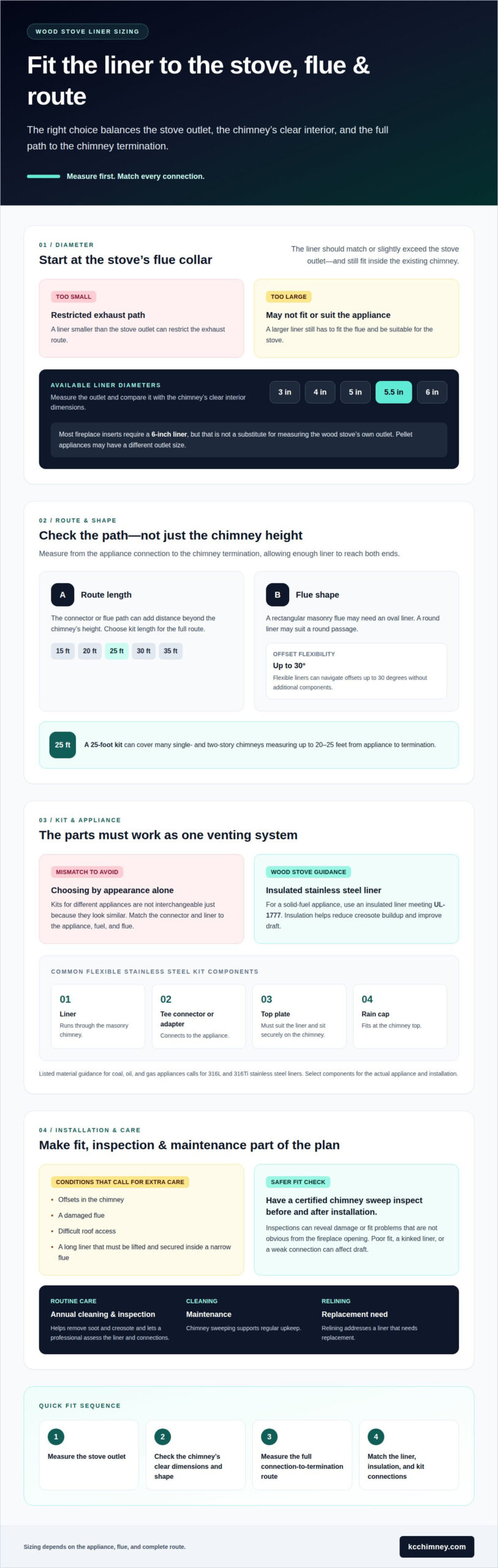
Start with the wood stove’s exhaust opening, often called its flue collar. The liner diameter should match or slightly exceed that opening while still fitting inside the existing chimney. A liner that’s too small can restrict the exhaust path; one that’s too large may not fit the flue or suit the appliance. Measure the outlet opening and compare it with the chimney’s clear interior dimensions before selecting a liner.
Available liner diameters include 3, 4, 5, and 6 inches, plus half sizes such as 5.5 inches. Most fireplace inserts require a 6-inch liner, but that figure isn’t a substitute for the wood stove’s own outlet measurement. A pellet appliance may have a different exhaust opening, so don’t transfer a wood stove measurement to a pellet stove. Use the appliance’s specified outlet size as the starting point.
Kit lengths commonly include 15, 20, 25, 30, and 35 feet. Choose length by measuring the route from the appliance connection to the chimney termination, allowing enough liner to reach both ends. The chimney’s height alone may not capture the full distance if the connector or flue path adds length. A 25-foot kit can cover many single- and two-story chimneys measuring up to 20 to 25 feet from appliance to termination.
Fit also depends on the flue’s shape. A rectangular masonry flue may need an oval liner, while a round liner may suit a round passage. The top plate must sit securely on the chimney and suit the liner diameter. Before installing a kit, compare the stove outlet, chimney opening, route length, and termination layout. These measurements help narrow the options instead of relying on a common size. If an existing chase cover is damaged, that is a separate issue from liner diameter and may also need attention to protect the chimney top.
Chimney liner kits for wood stoves and other appliances
A standard flexible stainless steel kit commonly includes a liner, a tee connector or appliance adapter, a top plate, and a rain cap. Together, these parts create a continuous route from the appliance through the masonry chimney and out above its top. Check that the connector suits the appliance and that the liner shape can pass through the existing flue.
For a wood stove, kit selection starts with its fuel and venting needs. An insulated liner meeting UL-1777 is recommended for solid-fuel appliances. Flexible liners can navigate offsets up to 30 degrees without additional components. A rectangular masonry flue may require a flexible round liner to be reshaped into an oval profile for fit. Kits for different appliances aren’t interchangeable by appearance alone. Coal, oil, and gas appliances require 316L and 316Ti stainless steel liners, according to the listed material guidance.
NFPA 211 covers chimneys, fireplaces, vents, and solid-fuel appliances. For a Bucyrus installation, this standard is relevant to the venting system; local permit requirements should be addressed during project planning.
For wood stove liners, the stated recommendation is an insulated liner meeting UL-1777. A warranty is a separate matter from the liner’s rating, and its terms should be understood independently.
An unlined or improperly sized chimney can contribute to poor draft and creosote buildup. Insulation helps reduce creosote and improve draft, while correct sizing helps the liner fit both the appliance and existing flue.
Plan for annual chimney liner cleaning and inspection to remove soot and creosote. An inspection also lets a professional assess the liner and its connections. Chimney sweeping supports routine maintenance, while relining addresses a liner that needs replacement. The right kit depends on the appliance, fuel, flue shape, and route, not simply the masonry chimney’s appearance.
What type of chimney liner is best for a wood stove: stainless steel or another material?
For a wood stove, stainless steel is a practical liner choice because 304L stainless steel is intended primarily for wood-burning applications. The right selection still depends on the appliance, existing chimney, and liner fit. A material suited to another fuel shouldn’t be selected simply because it looks similar or fits the flue.
Start with the stove’s fuel. The listed guidance identifies 304L stainless steel for wood-burning applications, while 316L and 316Ti stainless steel liners are specified for venting coal, oil, or gas appliances. Those grades aren’t interchangeable labels. Matching the liner material to the appliance’s fuel is part of choosing a complete venting system, alongside diameter, length, insulation, and connection components.
For a solid-fuel appliance such as a wood stove, the liner should be insulated and meet UL-1777. That detail matters because the choice isn’t only between stainless steel and another material. It also involves selecting a liner assembly suited to the chimney and stove. A flexible liner may help with a masonry flue that has an offset, while an oval shape may be needed where a round liner won’t fit.
The masonry and liner serve different roles. Masonry forms the chimney structure; the liner provides the passage for exhaust. A damaged or unsuitable flue may make relining a better solution than relying on the existing passage alone. The chimney’s condition, appliance outlet, and flue shape all influence the finished installation.
Choose the liner by confirming fuel, material, insulation, and fit as a connected set of decisions. For help assessing a wood-stove chimney and selecting a suitable relining approach, schedule chimney relining.
Best Chimney Services: Chimney Sweeping
Best Chimney Services helps maintain wood stove venting systems with chimney sweeping and replace liners through chimney relining. Choose sweeping when soot and creosote need removal; consider relining when the existing liner is damaged, unsuitable, or no longer fits the appliance. A professional chimney inspection can identify the flue’s condition and help determine which service is appropriate.
Regular maintenance also includes checking the chimney top. A damaged crown may need crown repair, while a missing or damaged cap may call for chimney cap installation. These issues are separate from liner diameter, but each can affect the chimney’s condition.
For help with your wood stove chimney, contact Best Chimney Services.
Plan the Next Step for Your Chimney
A Bucyrus chimney liner for a wood stove is part of a larger system, so connect the liner decision with your home’s heating plans. Consider whether you intend to keep using the current stove or are weighing a different fireplace setup. That choice can shape the work ahead and help align the project with how you want to heat your home.
Before arranging service, gather the stove’s make and model, any installation paperwork, and details about changes to the chimney or fireplace. These details provide a practical starting point for discussing the project. If you’re considering a different appliance, Best Chimney Services also installs gas fireplace inserts.
For help deciding what comes next for your chimney and fireplace, contact Best Chimney Services. A clear conversation can help you move forward with a plan that fits your home and heating goals.
Frequently Asked Questions
How do I know what size chimney liner kit I need?
Choose a kit by comparing the stove’s flue collar, the chimney’s usable interior, and the full route to the termination. For example, a 6-inch stove outlet points toward a liner of matching or slightly larger diameter, provided it fits the existing flue. Then select a length that reaches from the appliance connection to the chimney top, accounting for the route.
Should I choose an insulated or uninsulated chimney liner kit?
For a wood stove, choose an insulated liner that meets UL-1777. Insulation helps limit creosote buildup and supports draft in a solid-fuel venting system. A pre-insulated kit combines liner and insulation in one assembly; the installer still needs to confirm its fit through the flue and its connection to the stove. Uninsulated options don’t provide that added thermal protection.
What chimney liner size is required for a wood stove in Bucyrus, Ohio?
There isn’t one diameter for every wood stove in Bucyrus. The liner size follows the stove’s exhaust opening, then must fit within the chimney’s interior. For example, a stove with a 5-inch outlet calls for a liner matching or slightly exceeding that opening, if the flue can accommodate it. The appliance and chimney measurements together determine the suitable size.
How do you measure a chimney for a wood stove liner?
Measure the stove outlet diameter, the chimney’s clear interior width and shape, and the route from the appliance connection to the termination. For a rectangular flue, record both interior dimensions, since a round liner may need an oval profile to fit. Include the connector path when measuring the length. These measurements help establish the liner diameter and shape, as well as the kit length.
What building codes and permits apply to wood stove chimney liners in Bucyrus, Ohio?
NFPA 211 covers chimneys, fireplaces, vents, and solid-fuel appliances. Local permit requirements should be addressed during project planning, and a certified chimney sweep should inspect the chimney before installation and the completed work afterward.