
A single winter in Kansas City can do more damage to your chimney than a decade of use if your mortar joints are failing. Most homeowners in Johnson and Miami counties look at a few hairline cracks and wonder if the chimney tuckpointing cost in Kansas City will break their budget or if they’re facing a total structural collapse. It’s stressful to watch your masonry slowly crumble while worrying about being overcharged for a service you don’t fully understand. You want to protect your home’s integrity without overpaying for unnecessary work.
Understanding the variables behind these masonry repairs is the first step toward a restoration that lasts. This guide clarifies the factors that influence your project for 2026, helping you distinguish between a simple repointing job and a full masonry rebuild. We’ll break down the labor factors involved, explain why our local freeze-thaw cycle makes precision tuckpointing vital, and show you how to find a specialist who prioritizes your home’s safety. By the end, you’ll have a clear roadmap for budgeting and the confidence to choose a long-term solution for your masonry.
Key Takeaways
- Learn how the total repair area and chimney height directly influence your chimney tuckpointing cost in Kansas City for 2026.
- Identify the critical signs that indicate you need a surgical tuckpointing repair before minor mortar cracks turn into a costly full rebuild.
- Understand why the Kansas City freeze-thaw cycle requires specialized masonry techniques to protect your home’s interior from moisture.
- Discover how a professional Level 2 inspection provides the technical data needed to create an accurate and honest repair budget.
- See why hiring a dedicated chimney specialist ensures the integrity of your flue liner and meets the highest safety standards.
What is Chimney Tuckpointing and Why is it Essential in KC?
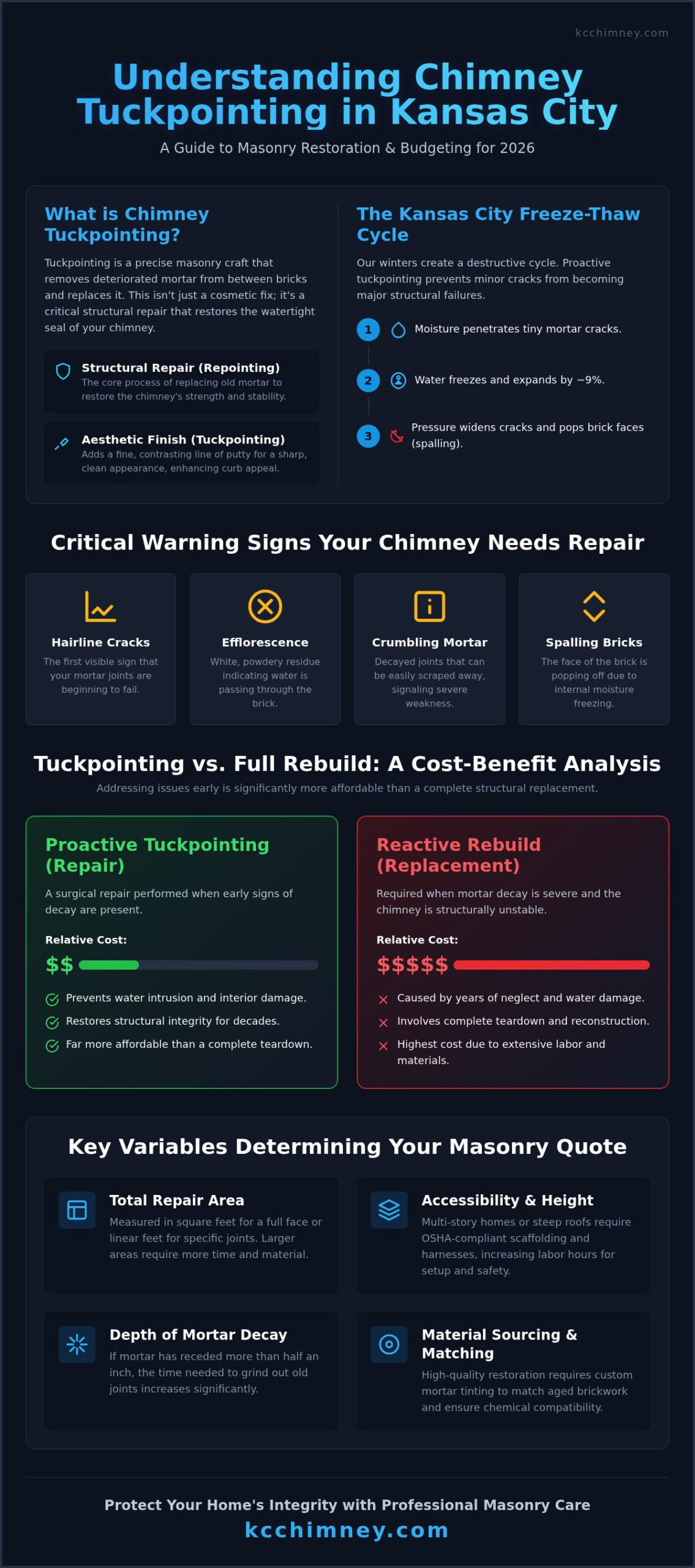
Mortar is the sacrificial element of your chimney. It’s designed to be softer than the brick so that it absorbs the stress of thermal expansion and house settling. What is Tuckpointing exactly? It’s the surgical process of grinding out that old, decayed mortar and replacing it with fresh material. We use a color-matched mortar that blends with your existing brick, then apply a thin, contrasting “tuck” line to create the appearance of a perfectly straight joint. This isn’t just about aesthetics; it’s about creating a watertight seal that protects your home’s interior from heat and moisture.
Kansas City presents a unique challenge for masonry because of our heavy clay soils. These soils expand and contract significantly with moisture levels, causing foundations to shift. This movement puts immense pressure on your chimney’s structure. When combined with our high humidity and 100-degree summer days, your mortar joints can’t help but develop hairline fractures. If you’ve started noticing white powdery residue (efflorescence), crumbling joints, or loose bricks, it’s time to evaluate your repair options. Many homeowners begin researching the chimney tuckpointing cost in Kansas City once these visible signs of decay threaten the chimney’s stability.
Tuckpointing vs. Repointing: Knowing the Difference
While people use these terms interchangeably, they serve different purposes. Repointing is the purely structural repair where we replace the old mortar to restore the chimney’s strength. Tuckpointing is a premium finish that includes the structural benefits of repointing but adds the aesthetic “tuck” line for a high-end look. In Johnson and Miami counties, we often find that a combination of both is necessary. We restore the integrity of the joint first and then provide the finish that brings back your home’s original curb appeal.
The Role of the Midwest Freeze-Thaw Cycle
Water is the primary enemy of your masonry. During a typical KC winter, moisture seeps into those tiny hairline cracks in your mortar. When the temperature drops, that water freezes and expands by approximately 9%. This internal pressure is enough to crack the mortar further or cause “spalling,” which is when the actual face of the brick pops off. If these joints remain open, a single winter can allow enough water intrusion to rot your internal framing or damage the flue liner. Proactively managing the chimney tuckpointing cost in Kansas City is far more affordable than waiting until the damage requires a complete masonry teardown.
The Variables That Determine Your Masonry Quote
Pricing for masonry work isn’t a one-size-fits-all calculation. Your specific chimney tuckpointing cost in Kansas City depends on several technical factors that our technicians evaluate during a site visit. We typically look at the total area of repair, which might be measured in square feet for a full chimney face or linear feet for individual failing joints. While a simple ranch-style chimney might be straightforward, many homes in Johnson and Miami counties feature complex designs that require more intensive labor hours to restore correctly. Beyond the surface area, the depth of the mortar decay also plays a role. If the mortar has receded more than half an inch, the preparation time for grinding out the old joints increases, adding to the total labor dedicated to your project.
Accessibility and Scaffolding Requirements
Safety is our baseline. A multi-story chimney on a historic home in Mission Hills or a steep roof in Leawood requires significantly more preparation than a low-profile ranch stack. We must factor in the time and equipment needed for OSHA-compliant scaffolding and roof harnesses. If your chimney sits on a steep slope or is partially blocked by mature trees and power lines, the labor hours will increase. These setups aren’t just about convenience; they’re essential for ensuring our masonry team has a stable platform to perform precision work without compromising the structural integrity of your roof. The location of the chimney, whether it’s on the side of the house or perched at the peak, also dictates how we move materials and debris, which influences the daily workflow.
Material Sourcing and Color Matching
Matching the aesthetic of older KC neighborhoods like Brookside takes a specialized eye. We don’t just use a standard gray mortar mix. High-quality restoration involves custom mortar tinting to ensure the new joints blend seamlessly with your aged brickwork. Following the NPS guidelines on repointing, we prioritize using mortar that’s compatible with the original materials to prevent future cracking. Using a mix that’s too hard for historic brick can actually cause the brick faces to shatter. We use high-strength, weather-resistant mixes that are specifically engineered to withstand the Midwest’s humidity. This level of detail ensures your investment lasts for decades rather than just a few seasons. If you want to see exactly what your masonry needs, we recommend starting with a Level 2 Inspection to identify hidden gaps before they become major expenses.
Tuckpointing vs. Rebuilding: A Cost-Benefit Analysis
Deciding between tuckpointing and a full rebuild is a matter of timing and structural integrity. If you catch mortar decay while it’s still superficial, the chimney tuckpointing cost in Kansas City is a manageable maintenance investment that protects your home for decades. However, every masonry structure eventually hits a “Point of No Return” where the internal bond between the bricks is lost. Ignoring a repair that costs a few thousand dollars today often results in a $10,000 rebuild later. While tuckpointing replaces the external sacrificial mortar, it cannot stabilize a chimney that has already begun to lean or crumble from within. It’s the difference between a surgical restoration and a complete replacement.
We use specialized Level 2 video inspections to determine the internal health of your masonry before recommending a path forward. This high-definition equipment allows our technicians to see gaps in the flue liner and internal brickwork that are invisible from the ground. In competitive markets like Overland Park, proactive masonry maintenance offers a significant return on investment. A chimney that looks pristine and passes a rigorous safety check is a major selling point for any property. Conversely, a chimney with visible “stair-step” cracking or crumbling joints can lead to failed home inspections and significantly reduced offers when it’s time to sell.
Signs Your Chimney Requires a Partial or Full Rebuild
While maintaining your home’s exterior is essential for a good first impression, interior upgrades are just as important for long-term value; you can learn more about Global Stone LLC for specialized kitchen and bathroom renovation services in the Kansas City area.
Horizontal cracks in the mortar are usually prime candidates for tuckpointing. If you see vertical cracks running straight through the faces of the bricks, that’s a sign of serious settlement or extreme heat stress. A tilting chimney stack is another immediate red flag. If the masonry is pulling away from the house, tuckpointing won’t solve the underlying foundation or structural issues. We often discover these critical flaws during a chimney inspection kansas city homeowners trust to verify their fireplace’s safety. When the bricks themselves are soft or “spalling,” a partial rebuild is often the only way to ensure the stack remains upright during a Kansas winter.
Long-term Savings of Proactive Maintenance
Proactive care is always more affordable than reactive restoration. Scheduling annual inspections allows us to catch minor mortar erosion before the KC freeze-thaw cycle turns those small gaps into structural hazards. Pairing your tuckpointing with a crown repair or a professional waterproofing treatment creates a comprehensive shield for your home. These layers of protection prevent water from entering through the top of the stack and the porous brick faces, effectively doubling the lifespan of your masonry work. In our local climate, catching a small gap today prevents an emergency rebuild tomorrow. It’s about protecting your family’s peace of mind and your home’s equity with steady, methodical maintenance.
The KC Homeowner’s Budgeting Checklist
Managing your chimney tuckpointing cost in Kansas City effectively means looking past the bottom line and evaluating the technical scope of the work. A professional restoration is a methodical process, not a quick patch job. We’ve developed this checklist to help you compare bids fairly and ensure you’re hiring a specialist who understands the unique architectural needs of the KC metro. By following these steps, you protect your home’s equity and avoid the frustration of paying for the same repair twice.
- Step 1: Schedule a Professional Inspection. Before requesting a quote, start with a Level 2 Inspection. This provides the video evidence needed to define the exact repair scope and identifies if the damage is purely cosmetic or structural.
- Step 2: Demand a Detailed Bid. A high-integrity quote should separate labor, materials, and safety equipment. Avoid vague “lump sum” estimates that don’t specify the square footage of the repair area.
- Step 3: Verify Local Credentials. Ensure the team is composed of certified technicians who carry specific insurance for masonry and chimney work in Johnson and Miami counties.
- Step 4: Ask About the Warranty. A reputable service provider should offer a clear warranty on mortar adhesion and the accuracy of the color matching.
- Step 5: Plan for Shoulder Seasons. Aim to schedule your work during the spring or fall. These “shoulder seasons” provide the moderate temperatures necessary for the mortar to cure slowly and reach maximum strength.
What to Look for in a Masonry Quote
Precision in the preparation phase is what separates a lasting repair from a temporary fix. Your quote must explicitly state that the technicians will grind out the old mortar to a depth of 1/2 to 1 inch. If a contractor suggests simply “shmearing” new mortar over the old joints, the repair will likely flake off within a single season. You should also confirm that site cleanup and debris removal are included. Finally, check if the contractor includes professional waterproofing. This final seal is the best way to defend your new mortar against the Kansas City humidity.
Timing Your Repair for the KC Climate
Mortar is a sensitive material that requires a “Goldilocks” environment to set correctly. Tuckpointing shouldn’t be performed when temperatures are below freezing or during the peak of a 100-degree August afternoon. Extreme heat pulls moisture out of the mortar too quickly, leading to brittle joints. We utilize a process called “damp curing” during these windows to ensure the bond remains strong. Because the fall season is the busiest time for chimney professionals in Johnson County, we recommend booking your inspection in the early spring to secure a spot on the calendar before the winter rush. If you’re ready to define your project scope, request a professional masonry evaluation from our local experts today.
Why Best Chimney Services for Your Masonry Restoration
Choosing a partner for your home’s restoration is about trust and technical precision. While a general mason might understand how to lay a standard brick wall, they often lack the specialized knowledge required to maintain a high-heat venting system. We treat your chimney as a critical safety component of your home, not just a decorative architectural feature. Our team focuses exclusively on chimney systems, ensuring that every repair supports the structural integrity of the flue and the safety of your hearth. When you evaluate the chimney tuckpointing cost in Kansas City, it’s essential to consider the value of a specialist who understands how external masonry changes affect internal fireplace performance.
Our 2026 safety standards are the most rigorous in our history. Every technician undergoes continuous training to stay current with the latest masonry techniques and chimney safety codes. We don’t just patch cracks; we integrate every chimney repair kansas city project with a comprehensive view of your system’s health. Since 2012, we’ve served homeowners in Overland Park, Mission Hills, and across the KC metro with a commitment to high-integrity work that stands up to the Midwest’s demanding climate. We take pride in being a neighborly service provider that prioritizes your peace of mind over a quick sale.
The ‘Best Chimney’ Difference in Masonry
We prioritize long-term structural health over quick cosmetic patches. Before we begin any tuckpointing work, we use advanced video technology to inspect the interior of your flue. This ensures that the chimney is safe to use and that no hidden gaps exist that could compromise the new masonry. Our approach is methodical and respectful. We understand that we’re working on your most valuable investment, so we take extra care to protect your landscaping and property during the grinding and mortar application process. Our goal is to leave your home safer and more beautiful than we found it, with masonry that is built to last. This commitment to durability is a standard shared by premier restoration specialists like progressivecontractingny.com, who maintain similar high-quality results for historic brownstone renovations and facade repairs in the New York region.
Don’t wait for the next freeze-thaw cycle to turn a minor mortar gap into a structural emergency. Taking action now prevents water from infiltrating your chimney and causing expensive damage to your home’s interior framing. We’re here to provide an honest, technical evaluation of your chimney’s mortar joints and help you plan a restoration that fits your needs. Our certified technicians are ready to serve homeowners throughout Johnson and Miami counties with the precision and care your property deserves. Request a masonry evaluation from Best Chimney Services today and ensure your chimney remains a safe, durable fixture of your home for years to come.
Protecting Your Home with Precision Masonry Care
Restoring your chimney’s mortar joints is one of the most effective ways to defend your property against the harsh Missouri and Kansas winters. By addressing small cracks early, you avoid the structural failures that lead to expensive, full-scale rebuilds. We’ve seen how the right combination of structural repointing and aesthetic tuckpointing preserves both safety and curb appeal. When you understand the variables that drive the chimney tuckpointing cost in Kansas City, you can make an informed decision that prioritizes the longevity of your home.
Best Chimney Services has served the KC metro since 2012. Our certified technicians use comprehensive video inspections to identify hidden masonry gaps before they become hazards. We believe in providing technical authority with a neighborly approach, ensuring every project meets our 2026 safety standards. Don’t let another season of moisture expansion compromise your chimney’s integrity. Schedule your professional masonry inspection with Best Chimney Services today. We’re here to help you protect your investment with honest, expert care that you can trust for years to come.
Frequently Asked Questions
Can I tuckpoint my own chimney to save on costs?
We never suggest DIY tuckpointing for structural chimneys because it requires specialized tools and technical masonry knowledge. Improperly applied mortar can trap moisture against the brick, leading to accelerated decay or “spalling” where the brick face pops off. Achieving the correct depth of 1/2 to 1 inch during grinding is difficult without professional equipment. Hiring a specialist ensures the structural integrity of your flue liner is protected while maintaining safety standards.
How long does a professional tuckpointing job typically last?
A professional tuckpointing job typically lasts between 20 and 30 years when executed with high-quality materials and proper technique. The longevity of the repair depends heavily on the preparation phase, including grinding out old joints to the correct depth. Adding a professional waterproofing treatment after the mortar cures can further extend this lifespan. This protective layer defends the porous brick and fresh mortar against the relentless Kansas City freeze-thaw cycles that occur every winter.
Does insurance cover the cost of chimney tuckpointing?
Homeowners insurance rarely covers the chimney tuckpointing cost in Kansas City because it’s considered preventative maintenance. Most policies exclude wear and tear, gradual deterioration, or damage caused by a lack of upkeep. However, if your chimney sustains sudden damage from a documented storm or lightning strike, you should check your specific policy details. We provide detailed video inspections that can help you document the current state of your masonry for your insurance carrier if a claim arises.
What happens if I ignore crumbling mortar joints?
Ignoring crumbling mortar joints allows water to penetrate the chimney’s core, which eventually leads to structural instability. During winter, this trapped moisture freezes and expands, causing bricks to loosen or tilt away from the house. This neglect often turns a manageable repair into a total masonry rebuild. Beyond structural risks, failing joints allow moisture to damage your home’s internal walls and ceilings. It also creates a fire hazard by potentially exposing the home’s framing to extreme heat.
Is tuckpointing the same as a chimney rebuild?
Tuckpointing is a surgical restoration process designed to replace failing mortar, while a rebuild involves tearing down and replacing the actual bricks. Tuckpointing is a proactive maintenance step that keeps your chimney standing. If the bricks are already cracked, soft, or the stack is leaning, tuckpointing is no longer a viable solution. In those cases, a partial or full rebuild is necessary to restore safety. A Level 2 inspection helps us determine which path is right for your home.
How does the height of my chimney affect the repair cost?
The height of your chimney significantly impacts the labor hours and equipment needed for a safe repair. Multi-story homes or chimneys located on steep roof pitches require OSHA-compliant scaffolding and specialized fall protection systems. These setups take time to install and dismantle, which adds to the total chimney tuckpointing cost in Kansas City. Accessibility issues, such as power lines or mature trees near the stack, also influence how our technicians move materials and perform the precision work required.
Why is color matching so important in tuckpointing?
Color matching is essential because it ensures the restoration blends seamlessly with your home’s original architecture. Using a standard gray mortar against aged, historic brick creates an unsightly patchwork look that can decrease your property’s curb appeal and resale value. In neighborhoods like Brookside or Mission Hills, maintaining the aesthetic integrity of the masonry is vital. We use custom mortar tinting to mimic the appearance of weathered joints, providing a high-end finish that looks original to the structure.