
The standard mortar cap sitting on top of your chimney is likely the weakest link in your home’s defense against the elements. While it looks solid, traditional masonry simply cannot keep up with the brutal freeze-thaw cycles we experience here in the Midwest. If you’ve noticed small cracks or moisture near your fireplace, you’re right to be concerned about hidden damage. Addressing a chimney crown repair kansas city project early is the only way to prevent water from seeping into your walls and causing a total structural failure.
We understand the worry that comes with potential masonry rebuilds, but a cracked crown doesn’t always mean a full teardown is necessary. You’ll learn how to spot the warning signs of water intrusion and why modern, flexible membranes are the only materials that truly survive our local climate. This guide explains how a professional Level 2 inspection can save you thousands by catching issues before the heavy spring rains arrive. We’ll show you exactly how to achieve a waterproof chimney and gain lasting peace of mind for your family.
Key Takeaways
- Identify the crucial role your chimney crown plays in shedding water away from your masonry and interior walls.
- Spot the early warning signs of failure, such as hairline fractures or falling mortar, that necessitate a timely chimney crown repair kansas city.
- Learn why professional flexible membranes outperform standard mortar in the face of Kansas City’s intense freeze-thaw cycles.
- Understand how proper surface preparation and structural patching can restore your chimney without the expense of a full masonry teardown.
- Discover how a Level 2 video inspection provides the clarity needed to ensure your home remains protected during heavy local storms.
What is a Chimney Crown and Why is it Failing?
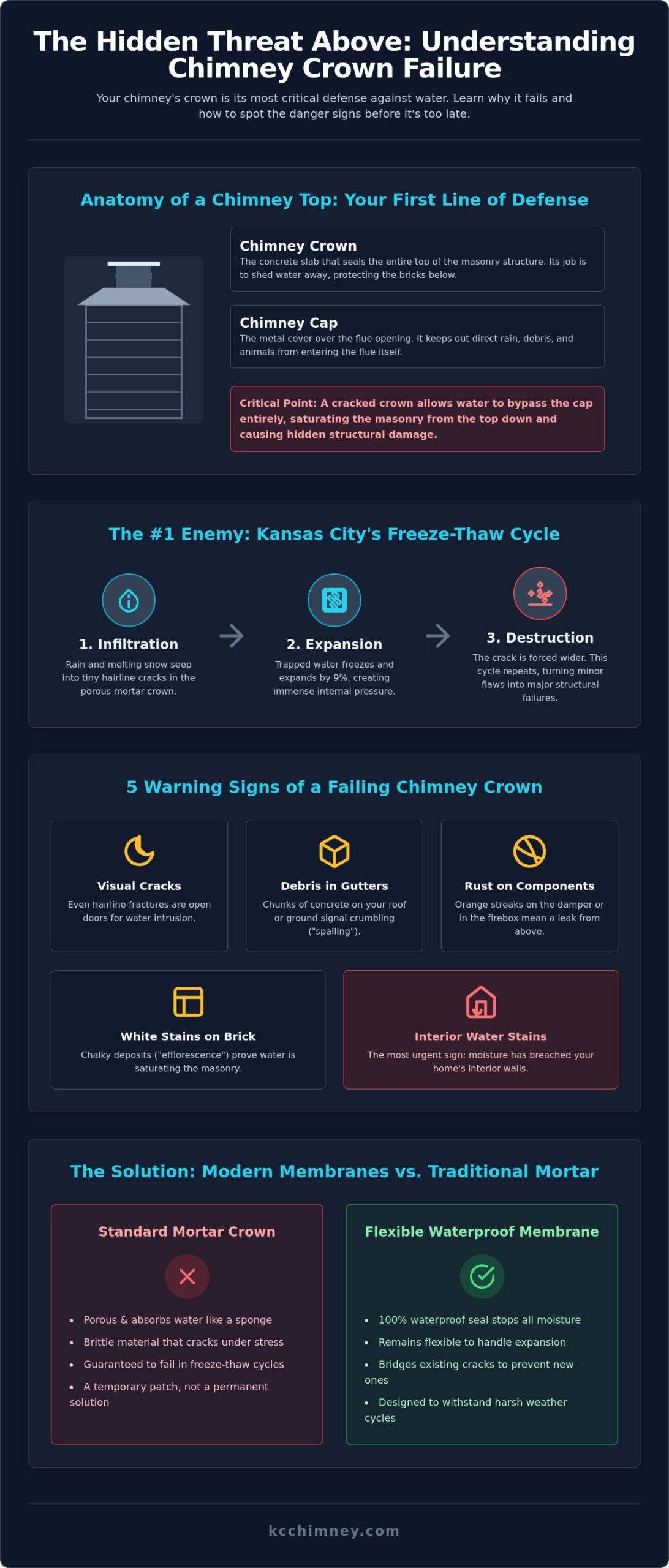
The chimney crown is the concrete or mortar slab covering the top of your masonry structure. Think of the crown as the umbrella of your chimney system. Its primary job is to shed water away from the chimney flue and the exterior brickwork. Unlike the vertical walls of your home, the crown sits horizontally at the very top. This position means it takes the full force of every rainstorm, snow event, and hail strike that hits the metro area. Without this protective layer, moisture would settle directly on top of your bricks or run down into the interior of the chimney stack.
In Kansas City, crowns are the most vulnerable component because they face direct exposure to the sky. A well-built crown should have a slight slope to ensure water runs off the edges rather than pooling in the center. However, many older homes were built with flat or thin mortar washes that don’t provide adequate protection. This constant environmental stress is why understanding the various chimney components is vital for long-term home maintenance. When this first line of defense fails, the rest of your chimney’s structural integrity is immediately at risk.
Crown vs. Chimney Cap: Know the Difference
Many homeowners confuse these two parts, but they serve very different roles. The chimney cap is the metal cover sitting over the flue opening to keep out animals, leaves, and direct rainfall. The crown is the masonry base that supports the cap and seals the rest of the chimney top. While a cap is vital for internal protection, even a high-quality cap cannot save a failing crown from soaking your masonry. If the crown is cracked, water will bypass the cap and enter the brickwork from the top down. This is the most common reason local residents eventually need professional chimney crown repair kansas city to stop hidden leaks.
The Kansas City Freeze-Thaw Factor
Our local weather is uniquely hard on masonry because it oscillates between freezing and thawing dozens of times each winter. When rain or melting snow enters a small hairline crack in your crown, it doesn’t stay still. That moisture expands when it freezes, physically prying the crack wider from the inside out. This happens repeatedly from November through March, turning minor issues into major structural threats in just one or two seasons.
Standard mortar is naturally porous and absorbs water like a sponge. This makes it incredibly prone to “spalling,” a process where the surface of the concrete begins to flake, pop off, or crumble. Once the surface integrity is lost, the crown loses its ability to shed water effectively. These fractures eventually grow into deep gaps that allow water to reach the interior of your home, often hiding behind your walls until the damage becomes a costly emergency. Protecting this surface with a waterproof barrier is the only way to break the cycle of destruction; to ensure the rest of your home is equally well-maintained, you can learn more about BrightWise Handyman for comprehensive improvement services.
Signs You Need Chimney Crown Repair in Kansas City
Catching crown damage early is the difference between a simple seal and a total masonry rebuild. Because the crown is located high above your daily line of sight, problems often go unnoticed until they manifest as water damage inside your home. In the Kansas City area, our frequent temperature swings accelerate these issues, making regular visual checks a necessity for every homeowner. Identifying the need for chimney crown repair kansas city before the heavy spring rains arrive can save you thousands in structural masonry work.
Keep an eye out for these specific indicators that your chimney’s defense system is compromised:
- Visual Cracks: Even hairline fractures are dangerous. Water follows the path of least resistance, and once it enters a tiny crack, the next freeze will force that gap wider.
- Debris in Gutters: If you find chunks of concrete or mortar on your roof or in your downspouts, your crown is likely “spalling” or crumbling. Ensuring your drainage system stays clear is a vital maintenance step; for residents in the Columbus area, Gutters First provides specialized cleaning to keep everything flowing correctly.
- Rust on Components: Moisture bypassing the crown often drips onto the metal fireplace damper or firebox. If you see orange or brown rust streaks inside your fireplace, water is getting in from the top.
- Efflorescence: Look for white, chalky stains on the exterior bricks near the top. These are salt deposits left behind when water evaporates out of the masonry, signaling deep saturation.
- Interior Stains: Dark spots on the ceiling or walls surrounding your hearth are a clear sign that moisture is already moving through your home’s envelope.
Ground-Level Inspection Tips for Homeowners
You don’t need to climb a ladder to check your chimney’s health. Grab a pair of binoculars and stand back in your yard to get a clear view of the top edge. Look for “spalling” bricks where the faces appear to be popping off, which usually indicates the crown is no longer shedding water properly. You should also check for organic growth; if you see moss, weeds, or small plants growing out of the top, the masonry is holding enough moisture to support life. Following basic chimney safety tips starts with these simple visual audits before the winter heating season begins.
The Danger of Hidden Water Damage
Water entering through a cracked crown rarely stays in the chimney. It often travels along the outside of the flue, soaking into the wooden framing of your house. This can lead to structural rot or mold growth in your attic long before you see a single drip in your living room. A Level 2 chimney inspection in Kansas City is the only way to confirm if water has breached the internal structure. If you suspect your crown is failing, you can request a professional evaluation to catch these hidden issues before they become emergency repairs.
Professional Repair Methods vs. Temporary Patches
When you discover a crack at the top of your chimney, the temptation to reach for a bag of pre-mixed mortar or a tube of hardware store caulk is strong. It’s a common reaction for many homeowners looking for a quick fix. However, the choice of material is the most critical factor in determining how long your home stays dry. In our region, the difference between a temporary patch and a professional repair is often measured in years of protection and thousands of dollars in avoided masonry costs. Choosing the right approach for chimney crown repair kansas city requires moving beyond brittle materials that simply weren’t designed for the job.
Traditional mortar washes are the most frequent “budget” choice, but they’re fundamentally flawed for long-term use. Mortar is a rigid, porous material. It lacks the ability to move, which means it will inevitably crack again during the next major temperature swing. Most mortar-based patches fail within 2 to 3 years, leaving your chimney vulnerable once more. A professional repair focuses on creating a system that works with your home’s natural movements rather than fighting against them.
Why DIY Mortar Patches Usually Fail
The primary reason DIY patches fail is a lack of surface preparation and material compatibility. Mortar doesn’t bond well to old, weathered concrete without professional-grade bonding agents and mechanical grinding. Without this prep, the new layer just sits on top of the old one, eventually delaminating and falling away. Additionally, standard hardware store caulk isn’t UV-rated for the extreme heat and direct sun exposure found on a chimney top. These incompatible materials can actually trap moisture inside the masonry, accelerating the very rot you’re trying to prevent.
The Benefits of Flexible Waterproof Membranes
Professional technicians utilize specialized flexible membranes, such as CrownSeal, to provide a permanent solution. These products create a seamless, rubber-like barrier over the entire crown surface that remains pliable even in sub-zero temperatures. Because they are elastomeric, they bridge small cracks and prevent them from reopening when the chimney expands and contracts. While a standard mortar wash might provide a temporary shield, professional membranes offer a 10-15 year lifespan compared to just 2 years for mortar. This longevity makes them a much wiser investment for your property’s future.
In cases where the structure is crumbly or missing large chunks, a full crown replacement is the only safe path forward. Once the crown is restored or replaced, the final step should always involve a professional waterproofing treatment for the rest of the chimney. This ensures that the entire masonry stack, not just the top, is shielded from the elements. This systematic approach to chimney crown repair kansas city is what provides lasting peace of mind through every season.
What to Expect During a Professional Crown Repair
Understanding the steps involved in a professional chimney crown repair kansas city helps remove the mystery from the process. It’s not just about slapping on some sealant; it’s a methodical restoration designed to withstand our local weather extremes. A high-quality repair follows a specific sequence to ensure the new protective layer bonds permanently to your existing masonry. This precision ensures that your investment lasts for a decade or more rather than just a few seasons. When you hire a specialist, you are paying for a multi-stage process that prioritizes structural integrity and long-term waterproofing.
Step 1: Cleaning and Structural Stabilization
Adhesion is everything. If there is moss, soot, or loose debris on the surface, the sealant will eventually peel away. While it might seem efficient, we find that pressure washing is often too aggressive for a damaged crown. It can force water deep into the cracks we’re trying to seal, potentially trapping moisture inside. Instead, we use wire brushes and specialized masonry cleaners to achieve a surgical bond. Once the surface is clean, we grind out any deep fractures and fill them with a high-strength patching compound. This creates a smooth, stable base for the top membrane to adhere to without sagging or bubbling.
Step 2: The Sealing Process
Once the base is stabilized, we apply the waterproof membrane. Timing is critical here because these professional-grade materials must be applied while the temperature is within the manufacturer’s specific range. We apply the sealant in multiple coats to achieve a uniform, rubberized shield that can flex as the chimney heats and cools. Crucially, we ensure the membrane wraps down the sides of the crown. This protects the top course of bricks where water often likes to seep in. If our technicians discover that the underlying masonry is shifting or crumbling during this stage, a more intensive Level 3 inspection may be necessary to ensure your home’s safety.
The final part of the process involves verifying the drip edge. This is the slight overhang that directs water away from the chimney’s vertical walls. Without a proper drip edge, water would simply run down the face of the bricks, leading to the efflorescence and spalling we see so often in local neighborhoods. This level of precision is what separates a long-term chimney crown repair kansas city from a temporary patch. If you’re ready to secure your home before the next storm, you can schedule a professional crown evaluation with our local team today.
Expert Chimney Crown Solutions in the KC Metro
Best Chimney Services has been a fixture in the local community since 2012, providing homeowners with reliable protection against the elements. We specialize in chimney repair in Kansas City with a specific focus on longevity and structural integrity. Our team doesn’t just apply a quick fix; we provide a durable defense system for your home. We take pride in our neighborly approach, ensuring that we explain the technical “why” behind every repair recommendation we make. This transparency allows you to make informed decisions about your property’s safety without feeling pressured by high-pressure sales tactics.
Our commitment to high standards is reflected in our use of advanced video inspection equipment for every evaluation. This technology allows us to show you exactly where your crown is failing, providing clear evidence of moisture intrusion before it reaches your interior walls. Whether you are dealing with minor hairline fractures or significant spalling, our goal is to restore your chimney’s waterproof barrier and give you peace of mind during the next big storm. Choosing a professional for your chimney crown repair kansas city ensures the work is handled with the precision and care your home deserves.
Local Expertise for Johnson & Miami Counties
We understand the specific architectural styles found in Overland Park and Mission Hills, from classic brick colonials to intricate Tudor designs. Our technicians are intimately familiar with the unique challenges of KC masonry and how our local climate affects different types of brickwork. We offer a mess-free service that respects your property, ensuring your landscaping and interior hearth remain pristine throughout the process. Serving the metro area for over a decade has allowed us to build long-term relationships based on honesty, grit, and technical mastery of our craft.
Schedule Your Crown Evaluation Today
Preventative maintenance is the most effective way to protect your investment. In many cases, you can prevent a $5,000 full masonry rebuild with a timely $500 repair to the crown’s surface. Catching these issues early is the key to avoiding the hidden structural rot discussed in previous sections. For the best results, we recommend combining your crown evaluation with a seasonal chimney sweep in Kansas City to ensure your entire system is ready for the burning season. Contact us today for a comprehensive evaluation or a repair estimate. Our CSIA-certified technicians are ready to help you secure your home against the unpredictable Kansas City weather.
Secure Your Home Against the Next Storm
A waterproof chimney is the foundation of a dry, safe home. We’ve explored how the intense Kansas City freeze-thaw cycle turns minor hairline cracks into major structural threats. By choosing flexible, professional-grade membranes over brittle mortar patches, you ensure your masonry remains protected for years to come. Catching these issues early during a routine inspection is the most effective way to avoid the expense of a full chimney rebuild. Our CSIA-certified technicians have been serving Overland Park and Mission Hills since 2012, bringing technical mastery and neighborly service to every roof we step on. We take pride in being a locally owned and operated fixture in the community, dedicated to preserving the integrity of your property’s architectural heritage. Don’t wait for the heavy spring rains to reveal a hidden leak in your walls. Protect your home from leaks—schedule a professional crown evaluation today! Taking this proactive step now provides the peace of mind you deserve all season long.
Frequently Asked Questions
How much does chimney crown repair cost in Kansas City?
The cost of a repair depends entirely on the extent of the deterioration and the height of your chimney. Minor hairline cracks that only require a professional sealant are much more affordable than a structural rebuild where the concrete is missing large chunks. Factors like accessibility and the current state of the underlying brickwork also influence the final investment. While there is an upfront cost, a timely repair is significantly less expensive than a full masonry teardown later.
Can I repair my chimney crown myself with cement?
You shouldn’t use standard cement or mortar for a DIY repair because these materials are too rigid for our local climate. Standard cement is porous and lacks the flexibility to handle the extreme temperature swings we see in the Midwest. Within a season or two, a cement patch will likely crack again, allowing water to reach your interior walls. Professional repairs utilize elastomeric membranes that are specifically engineered to stretch and contract without breaking.
How long does a professional chimney crown repair last?
A professional chimney crown repair kansas city typically lasts between 10 and 15 years when high-quality flexible membranes are applied correctly. This is a massive improvement over traditional mortar washes, which often begin to fail in as little as two or three years. Choosing a professional application ensures the surface is properly prepped for a permanent bond, providing a decade or more of peace of mind for your home.
What is the difference between a chimney crown and a chimney wash?
A chimney crown is a thick, engineered slab of concrete designed to shed water away from the masonry, while a chimney wash is a thin, sloped layer of mortar. Many builders use mortar washes because they’re faster to apply, but they’re fundamentally brittle and prone to rapid cracking. A true crown provides a more robust, long-term defense system that protects the entire footprint of the chimney stack from moisture penetration.
Can a cracked crown cause a chimney leak inside my house?
A cracked crown is a primary culprit for hidden water damage and mold growth inside your attic and walls. Water enters through the fractures at the top and travels down the outside of the flue or through the porous brickwork. You might see dark stains on your ceiling or rust in your firebox, but often the rot is happening behind the scenes in your home’s wooden framing. Catching these leaks early is vital for your family’s safety.
When is the best time of year to repair a chimney crown in KC?
The best time for a chimney crown repair kansas city is during the spring or fall when temperatures are moderate. Professional sealants require specific temperature windows to cure properly, making the mild days of April or October ideal for application. We generally avoid the deep freezes of January and the extreme humidity of July to ensure the waterproof barrier sets with maximum integrity before the next heavy storm hits.
Does home insurance cover chimney crown repair?
Home insurance typically doesn’t cover crown repairs because they’re considered part of routine home maintenance. Most policies are designed to cover sudden, accidental damage rather than the gradual wear caused by the elements. However, if your chimney was damaged by a specific, documented event like a severe hail storm or a lightning strike, it’s worth checking with your agent to see if a claim is possible. Regular inspections help you avoid these insurance questions entirely.
What happens if I ignore a cracked chimney crown?
Ignoring a cracked crown leads to a “freeze-thaw” cycle that eventually destroys the structural integrity of your entire chimney. Moisture trapped inside the bricks will cause the faces to pop off, and the mortar between the bricks will eventually turn to sand. This neglected damage often results in a full masonry rebuild that can cost ten times more than a simple crown seal. Proactive care is the only way to avoid these massive, unbudgeted expenses.