
If you could see through your chimney’s masonry, would you still feel comfortable lighting a fire tonight? It’s a heavy question, especially when you realize that many Kansas City flues haven’t been updated since the mid-century construction boom. You likely feel the weight of protecting your family from hidden hazards, yet the thought of navigating the chimney relining cost in Kansas City often feels like a maze of technical specs and high-pressure sales pitches. It’s frustrating to face confusing choices between 304 and 316 grade steel when all you want is a safe, functional home.
We believe home safety shouldn’t be a mystery. We’ve created this guide to help you understand the real factors driving your investment without the stress. You’ll discover how local building codes and the 2021 International Energy Conservation Code affect your project. We will also break down the differences in liner durability and show you how to choose a code-compliant solution that fits your specific appliance. By the end of this review, you’ll have the clarity needed to secure a reliable fireplace and the peace of mind to enjoy every Kansas City winter for years to come.
Key Takeaways
- Understand why a chimney liner acts as a critical safety barrier that protects your masonry and prevents dangerous heat transfer to your home’s structure.
- Learn how your home’s height and the number of internal chimney bends directly influence the chimney relining cost in Kansas City for 2026.
- Demystify technical specifications like 304 and 316 steel grades to choose a liner that offers the best long-term value for your specific fireplace.
- Navigate local building codes and permit requirements across the KC metro to ensure your installation is fully compliant and safe for the winter season.
- Discover why a professional Level 2 video inspection is a non-negotiable first step to identifying hidden hazards before you begin any repair work.
Why Chimney Relining is a Vital Investment for KC Homeowners
Think of your chimney liner as the silent guardian of your home. While the exterior brickwork gives your house its classic Kansas City character, the inner flue does the dangerous work of containing fire and toxic gases. Many homeowners are surprised to learn that a chimney is not just a hollow brick pillar. In reality, a chimney liner serves as the critical barrier between extreme combustion temperatures and the wooden framing of your house. When you begin researching the chimney relining cost in Kansas City, you’re actually looking at the price of a comprehensive safety system designed to prevent house fires.
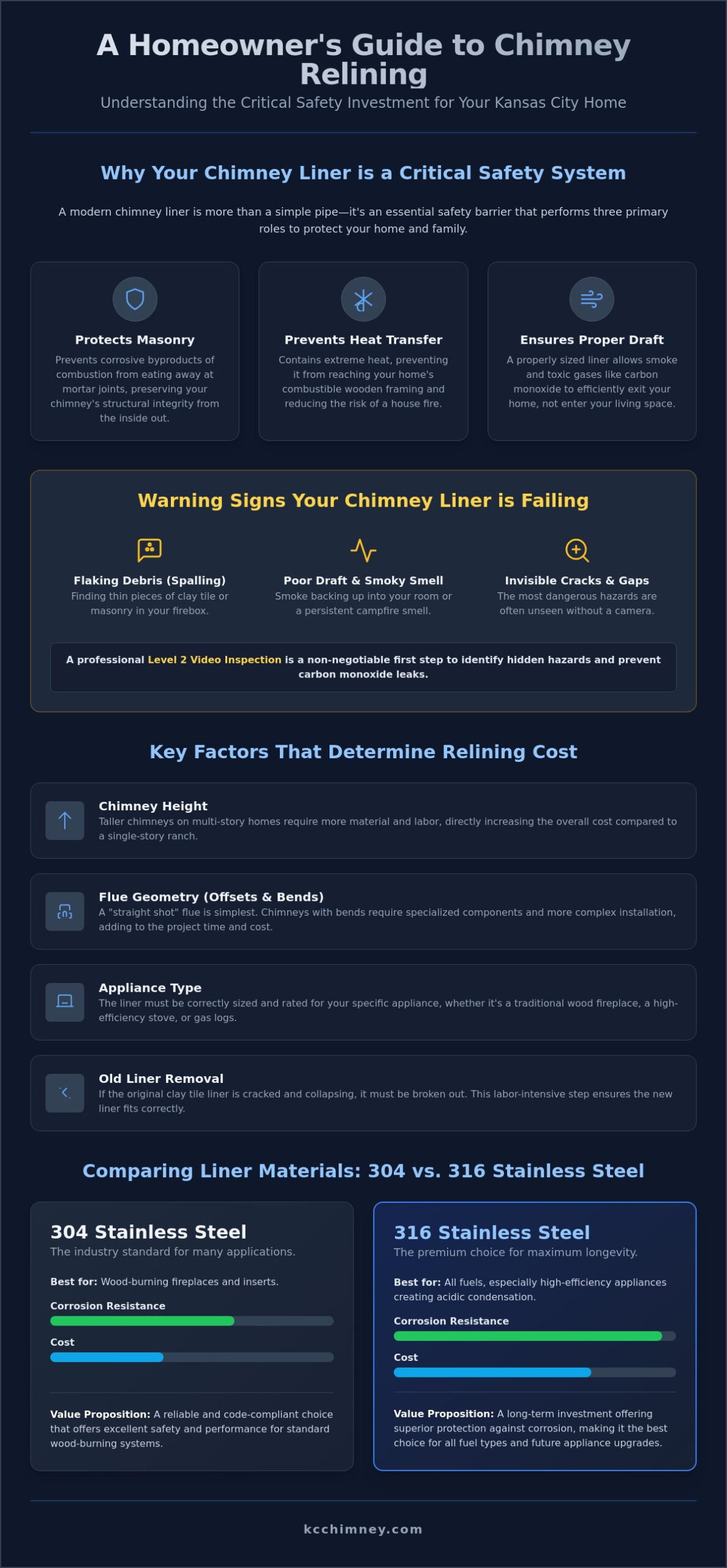
This system performs three primary roles. First, it protects your masonry from the corrosive byproducts of combustion. Without a liner, acidic gases can eat away at mortar joints from the inside out. Second, it prevents heat transfer. Brick is porous and can conduct heat to nearby wood studs, leading to pyrolysis where wood ignites at lower temperatures over time. Third, a properly sized liner ensures a correct draft. This keeps smoke moving up the flue instead of into your living room. In many older Kansas City homes built before World War II, these liners are either missing entirely or made of clay tiles that have long since cracked, creating significant safety liabilities.
When renovating or repairing these historic structures, it’s also important to be aware of other environmental hazards; for example, the specialists at TSIAC International provide expert resources on managing safety risks like asbestos that are often found in older building materials.
The Role of the Flue Liner in Modern Home Safety
Modern liners are designed to contain creosote and acidic condensation that naturally occur during a fire. If these substances seep into your masonry, they weaken the structure and create a permanent fire hazard. According to NFPA 211 standards, a chimney must maintain a specific clearance to combustibles to ensure that heat does not transfer to the home’s structure. Beyond safety, a liner that is correctly matched to your appliance improves efficiency. It allows your wood fireplace or gas insert to burn fuel more completely, which saves you money on heating costs over the long term.
Signs Your Current Liner is Failing
You don’t always need a professional to spot the first signs of trouble. Look inside your firebox for spalling, which appears as thin, flaking pieces of clay or brick on the floor. This usually means your original clay liner is delaminating and falling apart. If you notice a persistent smoky smell or a poor draft when you light a fire, your flue integrity may be compromised. Because cracks can be invisible to the naked eye, a professional chimney inspection in Kansas City is the only way to verify if your liner is still a reliable protector. Evaluating these signs early is the first step in determining the eventual chimney relining cost in Kansas City for your specific home. Catching these hidden cracks early prevents the silent threat of carbon monoxide leaking into your bedrooms.
Breaking Down the Chimney Relining Cost: Key Pricing Factors
Determining the chimney relining cost in Kansas City isn’t a one-size-fits-all calculation. Every home in the metro has a unique architectural history that dictates the complexity of the project. For instance, a multi-story estate in Mission Hills or a historic home in the Plaza area often features much taller chimneys with wider diameters. These require significantly more stainless steel material and extended labor hours compared to a standard ranch-style home in Overland Park. The height of the structure is often the first variable we look at when preparing an estimate, and for homeowners looking to fund these repairs by selling an unused vehicle, you can learn more about Cash For Junk Cars Michigan to see how professional buyers streamline the process.
The geometry of your flue also plays a major role. A “straight shot” chimney is the simplest to reline. However, many chimneys have offsets or bends designed to navigate around other structural elements of the house. These offsets require specialized components and increased installation time to ensure the liner stays centered and functional. Additionally, the type of appliance you use matters. A high-efficiency wood stove has different venting needs than a set of gas logs; your liner must be rated specifically for that heat output and fuel type to ensure long-term safety.
Before a new liner goes in, we often have to address the old one. If your original clay tiles are cracked or collapsing, they may need to be “broken out” using specialized tools. This process clears the path for a properly sized modern liner but adds to the overall labor intensity of the job. It’s a necessary step to maintain the correct internal diameter for proper drafting. If you’re unsure about the state of your flue, scheduling a professional evaluation is the best way to get an accurate assessment of your specific needs.
Material Grades and Thickness
The grade of stainless steel you choose is a primary driver of long-term value. While 304L is often used for wood-burning fireplaces, 316Ti is the superior choice for multi-fuel applications because it contains titanium and molybdenum for better corrosion resistance. Investing in a heavy-duty, UL-listed liner ensures it can withstand the acidic byproducts of combustion for decades. Cheaper, unlisted liners might save money upfront, but they frequently fail after just a few KC winters, leading to a much higher total chimney relining cost in Kansas City over time.
Insulation: The “Hidden” Cost of Safety
Many homeowners are surprised to learn that insulation is often a mandatory requirement, not an optional add-on. Local building codes frequently require liners to be wrapped in ceramic blankets or surrounded by a pour-in mix. This insulation serves a vital purpose: it keeps the flue gases hot. Hotter gases rise faster, creating a better draft and reducing the buildup of dangerous creosote. Following EPA safety guidelines for proper installation also protects your external masonry from thermal shock, which occurs when extreme internal heat meets the freezing Kansas City air.
Comparing Liner Materials: Performance, Longevity, and Value
Choosing the right material is the most significant decision you’ll make regarding the chimney relining cost in Kansas City. While labor and chimney height set the baseline, the liner material determines how long your fireplace remains safe and efficient. In the past, clay flue tiles were the standard in Kansas City construction. However, replacing them today is rarely recommended. Clay is heavy, difficult to install in existing structures, and lacks the flexibility to handle the thermal expansion caused by modern high-efficiency appliances. If a clay tile cracks, the entire system is compromised again.
Cast-in-place liners offer a unique alternative, particularly for historic homes where the masonry stack itself is starting to weaken. This process involves pumping a lightweight, cement-like material into the flue, which bonds to the interior walls. It essentially creates a seamless, insulated pipe that reinforces the entire chimney structure from the inside out. While this is a robust solution that improves structural integrity, it is often more labor-intensive and expensive than stainless steel options. Most modern homeowners find that stainless steel provides the best overall value and protection.
Why Stainless Steel is the Professional Standard
Stainless steel has become the preferred choice for most homeowners because it offers the best balance of longevity and cost-effectiveness. It is naturally resistant to the corrosive acids found in both wood and gas exhaust. Since Kansas City homes often experience slight structural shifts due to our clay-heavy soil, the flexibility of a stainless steel liner is a major advantage. It can bend slightly without cracking, unlike rigid masonry. Before installation, we always ensure the outer structure is sound. If the brickwork is failing, performing a targeted chimney repair in Kansas City is a necessary prerequisite to ensure your new liner has a stable foundation.
The Chimney Safety Institute of America (CSIA) emphasizes that a liner must be UL-listed and tested to withstand high temperatures. Most high-quality stainless steel options come with a lifetime warranty, providing a level of security that traditional clay or simple masonry repairs cannot match. This long-term protection is a key factor when evaluating your investment.
304L vs. 316Ti: Which Steel is Right for You?
Not all steel is created equal. Choosing the wrong grade can lead to premature failure and a higher long-term chimney relining cost in Kansas City. We typically recommend 304L stainless steel for standard wood-burning fireplaces that are used occasionally. It is durable and handles high heat well, provided the wood is seasoned and dry. However, if you have a gas fireplace insert or a wood stove that you use as a primary heat source, 316Ti is the superior choice. This grade contains titanium and molybdenum, which provide maximum resistance to the corrosive moisture and acidic condensation common in these high-output systems. Matching the metal to your specific fuel type ensures your investment lasts as long as your home.
Navigating Kansas City Codes and Installation Complexity
Kansas City homeowners often find that local regulations are just as complex as the chimney structures themselves. If you live in Overland Park, Leawood, or Mission Hills, you’re likely aware that building departments have strict oversight on structural repairs. Chimney relining is classified as a significant mechanical alteration. This means a permit is often required to ensure the work meets the 2018 International Building Code standards adopted by the city. Ignoring these requirements might seem like a way to lower the initial chimney relining cost in Kansas City, but it often leads to failed home inspections and legal headaches when you eventually try to sell your property.
Before any work begins, a Level 2 inspection is essential. This isn’t just a standard sweep; we use specialized video camera equipment to document internal hazards and structural cracks. This documentation is vital for your peace of mind and serves as a record for insurance companies if you’re filing a claim for storm or chimney fire damage. Attempting a DIY relining with a kit from a big-box retailer is a high-risk gamble. These kits often lack the necessary UL-listing or insulation requirements demanded by local codes. If a fire occurs and your liner wasn’t installed by a certified professional, your home insurance provider may deny the claim entirely.
Regional Climate Impact on Chimney Health
The Kansas City climate is particularly brutal on masonry. Our region experiences high humidity followed by rapid temperature swings, creating a constant freeze-thaw cycle. When moisture enters a cracked clay liner, it freezes and expands, widening the gaps and weakening the brickwork. In winter, internal condensation in uninsulated liners often leads to masonry “spalling,” where the faces of your exterior bricks begin to flake and fall off. A properly installed liner acts as a moisture barrier, keeping these corrosive elements away from your chimney’s interior structure and preventing long-term decay.
Professional Standards and Certifications
Safety is a non-negotiable baseline for our work. This is why choosing a CSIA-certified technician is critical for a valid installation. You may encounter “chimney cowboys” who offer low-ball relining quotes, but these operators often skip the permit process and use sub-standard materials that won’t survive a single season. At Best Chimney Services, we prioritize a clean, professional experience. We utilize HEPA filtration and protective coverings to ensure a mess-free installation in your living room, leaving your home exactly as we found it, only safer. If you’re ready to secure your home for the winter, you can schedule a Level 2 inspection with our certified team today.
The Best Chimney Services Approach to Relining
We approach every project with a methodical, safety-first mindset that removes the guesswork for our neighbors. Our process begins with Step 1: a comprehensive Level 2 video inspection. We use specialized camera equipment to navigate the entire length of your flue, identifying internal hazards and documenting cracks that the naked eye simply can’t see. This ensures we aren’t just guessing at the chimney relining cost in Kansas City for your specific home; we’re basing our recommendations on visual evidence and structural reality.
Step 2 involves providing a transparent, flat-rate quote. We believe in no-nonsense honesty, so we break down the costs based on the specific material grade and installation complexity of your chimney. Once you approve the plan, we move to Step 3: professional installation. Our certified technicians use high-quality, UL-listed liner systems designed for longevity and local code compliance. Finally, Step 4 includes rigorous safety testing and draft verification. We don’t consider the job finished until we’ve confirmed that your fireplace is venting perfectly and your home is fully protected for the seasons ahead.
Protecting Your Investment and Your Home
We treat your living room with the same respect we’d show our own. Our team maintains a clean workspace by utilizing specialized HEPA vacuums and heavy-duty drop cloths to prevent soot or debris from ever entering your home. We also handle the heavy lifting regarding bureaucracy. If you live in Johnson County or Miami County, we manage the permit process on your behalf, ensuring your installation meets every local safety standard. This thoroughness creates the long-term value of a Best Chimney Services project, turning a mechanical repair into a permanent guardian of your home’s integrity.
Next Steps for Your Kansas City Hearth
Starting your project is as simple as scheduling a Level 2 inspection. This initial visit allows us to determine the exact diameter and length needed for your new system, giving you an accurate look at the chimney relining cost in Kansas City before any work begins. If you’re looking to maximize your home’s energy efficiency, our team also has deep fireplace insert installation in KC expertise. A new insert paired with a high-quality liner is the gold standard for modern home heating and efficiency. When you’re ready for true peace of mind this winter, get a professional quote for your chimney relining today.
Securing Your Home for the Seasons Ahead
Investing in a new chimney liner is about more than just numbers on a page; it’s about the security of your family and the longevity of your home. You now understand that the true chimney relining cost in Kansas City depends on your home’s unique architecture, the specific grade of steel required for your appliance, and the essential insulation that meets local safety codes. Choosing the right material and ensuring a code-compliant installation protects your masonry from our region’s harsh freeze-thaw cycles and keeps dangerous gases out of your living space.
Since 2012, our locally owned team has served as a trusted guardian for homeowners across the metro. Our Certified CSIA Technicians prioritize technical precision and provide an A+ rated, mess-free service that respects your property. We handle the complex permit process and technical details so you can focus on the comfort of your home. Don’t leave your safety to chance this winter. Schedule Your Kansas City Chimney Inspection & Get a Relining Quote to take the first step toward a safer, more efficient fireplace. We look forward to helping you protect what matters most.
Frequently Asked Questions
How much does chimney relining cost in Kansas City on average?
The chimney relining cost in Kansas City is determined by several specific factors, including the height of your home, the flue diameter, and the complexity of any internal offsets. Material choice also plays a major role, as heavy-duty 316Ti steel represents a different investment than standard 304L grade. Because every chimney has a unique architectural history, we provide flat-rate quotes only after a thorough on-site evaluation.
Does my chimney really need a liner if it has worked fine for years?
Yes, because many older Kansas City chimneys were built without liners or with clay tiles that eventually crack and deteriorate. Even if a fireplace seems to function well, hidden gaps in the masonry can allow toxic gases like carbon monoxide to seep into your living spaces. Modern liners act as a vital safety barrier, protecting your home’s wooden structure from extreme heat and corrosive combustion byproducts.
How long does a stainless steel chimney liner last?
A professionally installed stainless steel liner typically has a lifespan of 15 to 20 years, though many UL-listed systems are designed to last for the life of the home. The durability depends heavily on the grade of steel used and how well the chimney is maintained. Choosing a high-integrity material like 316Ti ensures maximum resistance to the acidic moisture produced by gas and wood-burning appliances.
Can I reline my chimney myself with a kit from a big-box store?
We do not recommend DIY relining because retail kits often lack the required insulation and structural certifications demanded by local building codes. Improper installation can lead to poor drafting, increased fire risk, and the potential denial of insurance claims if a chimney fire occurs. Professional installation by certified technicians ensures that your system is code-compliant and safely protects your family.
Will a new liner stop my chimney from leaking or smelling?
A new liner is excellent for stopping the “campfire” smell caused by creosote buildup and preventing acidic condensation from damaging your masonry. However, if water is physically leaking into your firebox from the outside, you may also need a crown repair or a new chimney cap. We assess these external components during our inspection to ensure your entire system remains dry and odor-free.
What is the difference between a Level 2 and Level 3 inspection for relining?
A Level 2 inspection is the standard for relining and uses specialized video cameras to examine the internal flue for cracks or obstructions. A Level 3 inspection is only necessary if we suspect a major hidden hazard that requires removing part of the chimney or home structure to access. Most homeowners only need the Level 2 video scan to document the condition of their flue before repairs begin.
How long does the actual installation process take?
Most professional relining projects are completed in a single day, typically taking between four and eight hours. The timeline can vary if your chimney is exceptionally tall or if old, collapsing clay tiles must be removed before the new liner can be dropped into place. Our team prioritizes a methodical pace to ensure every connection is secure and the workspace remains completely clean throughout the day.
Is insulation required for a new chimney liner in Overland Park?
Yes, insulation is a non-negotiable requirement under most local building codes in Overland Park and the broader KC metro area. Wrapping the liner in a ceramic blanket or using a pour-in mix keeps flue gases hot, which improves drafting and prevents the buildup of flammable creosote. Meeting these standards is a key part of the chimney relining cost in Kansas City, ensuring your home remains safe for decades.