
Imagine walking out to your driveway after a heavy rain only to find jagged shards of red clay scattered across the pavement. For many local residents, this is the first unsettling sign that they need crumbling chimney brick repair Stilwell services to secure their home. It’s natural to feel a sense of dread when you see your masonry literally falling apart. You worry about water leaking into the firebox, debris damaging your shingles, and the looming fear of a massive repair bill.
In Stilwell, crumbling bricks are a moisture management crisis rather than just a cosmetic masonry issue. We’re here to help you understand that addressing the root cause of water intrusion is the only way to stop this cycle of decay. This 2026 restoration guide explains how our specific humid climate and expansive clay soils impact your chimney’s lifespan. You’ll learn about professional methods like tuckpointing and crown repair that protect your home’s value and safety without necessarily requiring a full structural rebuild. By focusing on technical precision and local building standards, you can ensure your chimney remains a reliable guardian of your home for years to come.
Key Takeaways
- Understand how the local freeze-thaw cycle causes spalling, which is the flaking of brick faces due to trapped moisture.
- Identify early warning signs like white salt stains or gaps in mortar joints to prevent falling debris and roof damage.
- Compare restoration techniques like tuckpointing and partial rebuilds to determine the right path for crumbling chimney brick repair Stilwell property owners.
- Learn why professional chimney crown repair and specific waterproofing agents are necessary to stop the cycle of masonry decay.
- Discover how certified inspections protect your home’s long-term value and ensure your fireplace remains safe for use.
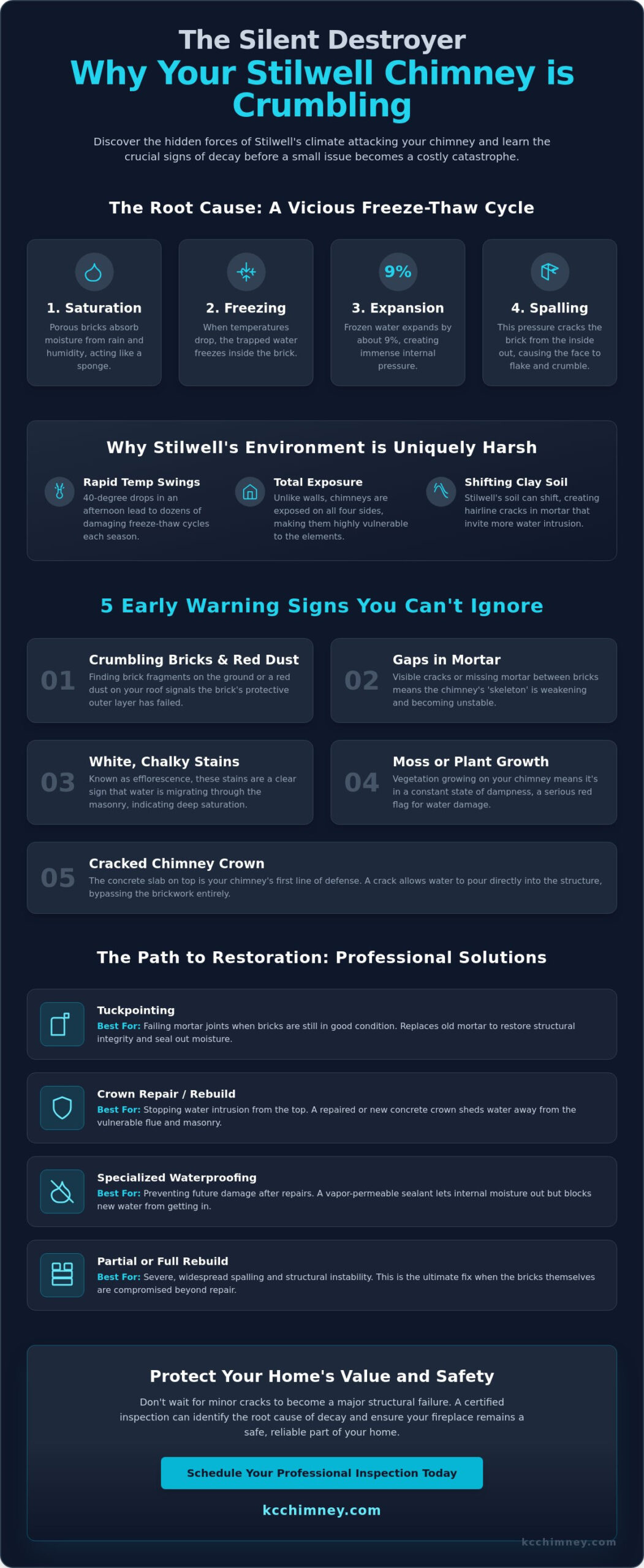
Why Chimneys Crumble: The Stilwell Freeze-Thaw Cycle
Stilwell homeowners often take pride in the classic aesthetic of their brick chimneys, but our local environment is surprisingly harsh on masonry. The combination of heavy summer humidity and sharp winter freezes creates a relentless cycle that attacks the structural integrity of your chimney. When you notice fragments of brick on your lawn or driveway, you’re seeing the results of a specific geological and climatic struggle. For those seeking crumbling chimney brick repair Stilwell experts, understanding this cycle is the first step toward a permanent fix.
What is Chimney Spalling?
Spalling is the technical term for when the outer face of a brick begins to flake, chip, or pop off entirely. This happens because bricks are naturally porous, acting like a hard sponge. During our rainy seasons, moisture enters these tiny pores. When the temperature drops below freezing, that trapped water expands by about 9%. This internal pressure is powerful enough to shatter the brick’s surface from the inside out. If you see a fine layer of red dust or larger clay shards at the base of your stack, your chimney is signaling for help. While surface weathering is a cosmetic issue, structural spalling indicates that the brick’s core is being compromised by deep moisture saturation.
The Role of Johnson County Weather
The Kansas City region is notorious for rapid temperature swings, especially during late fall and early spring. It isn’t uncommon for Stilwell to experience a 40-degree temperature drop in a single afternoon. These fluctuations accelerate masonry decay because the water inside your bricks doesn’t just freeze once; it goes through dozens of freeze-thaw cycles in a single season. This repetitive expansion and contraction eventually fatigues the masonry until it fails.
Unlike the masonry on the side of your house, your chimney is exposed to the elements on all four sides. It lacks the protection of eaves or insulation from the interior of the home, making it the most vulnerable part of your property. Additionally, Stilwell’s clay-heavy soil is prone to shifting. Even minor foundation movements can create hairline cracks in your mortar joints. These cracks allow even more water to enter, leading to a rapid decline. Many suburban developments in Johnson County were built using standard mortar that may not have been designed for this level of environmental stress. To restore these structures, specialized techniques like Tuckpointing are required to replace failing joints with high-quality, weather-resistant materials that can handle our local climate and protect your home’s safety.
Signs You Need Crumbling Chimney Brick Repair in Stilwell
Recognizing the early warning signs of deterioration can save you from the high costs of a total rebuild. While we’ve discussed why the freeze-thaw cycle occurs, knowing how it manifests on your specific property is the next step in crumbling chimney brick repair Stilwell. You should look for visible gaps in the mortar joints. These joints act as the ‘skeleton’ of your chimney, providing the structural tension that keeps bricks in place. When mortar dissolves or cracks, the entire stack becomes unstable and susceptible to leaning. Another common sign is efflorescence. These white, chalky stains appear when water migrates through the brick, bringing internal salts to the surface. It’s a clear signal of deep moisture saturation that hasn’t yet reached the point of structural collapse.
If you notice moss or vegetation growing from the masonry, your chimney is in a constant state of dampness. This usually stems from a cracked or missing chimney crown. The crown is the concrete slab at the top that sheds water away from the flue and the brickwork. When it fails, water bypasses the bricks and pours directly into the structure. Adhering to national safety standards like those found in NFPA 211 is essential for Preventing Future Masonry Decay and ensuring your home remains protected from hidden fire hazards.
The ‘Red Dust’ Warning
Finding small, jagged brick fragments on your shingles or in your gutters is a major warning sign. This ‘red dust’ indicates that the brick’s hard outer shell, often called the fire-skin, has failed. Once this protective layer is gone, the porous inner core is exposed to the elements. These cores absorb water much more aggressively than intact bricks, leading to rapid structural failure during the next freeze. Beyond the masonry itself, falling debris can puncture your roofing material or clog your drainage systems, creating secondary repair costs that are far more expensive than a simple masonry touch-up.
Internal Symptoms of Masonry Failure
Sometimes the most telling signs are found inside your home rather than on the roof. If you notice a musty, damp smell coming from the firebox after a heavy Stilwell rainstorm, water is likely penetrating the masonry. You might also see brown or yellow water stains on the ceiling or walls near the chimney breast. These stains often indicate that water is traveling down the exterior of the flue and soaking into your drywall. Check your fireplace damper; if it has become difficult to move or shows signs of rust, moisture is definitely present in the system. If you’ve observed any of these issues, seeking expert crumbling chimney brick repair Stilwell is the best way to catch the problem before it requires a full rebuild. A professional chimney inspection can help identify the exact source of the leak before it worsens and causes structural damage to your interior.
Restoration Methods: Tuckpointing vs. Partial Rebuilds
When you discover masonry decay, the first question is usually about the scale of the fix. Homeowners often fear that a few flaking bricks mean the entire structure must come down. In reality, professional crumbling chimney brick repair Stilwell focuses on the least invasive method that still guarantees long-term safety. The choice between tuckpointing and a partial rebuild depends entirely on whether the damage is limited to the mortar joints or has compromised the bricks themselves. We look at the chimney as a system; if the bricks are sound but the mortar is failing, we can save the structure without a total tear-down.
Tuckpointing is essentially the surgical restoration of your chimney’s connective tissue. We remove the failing, sandy mortar and replace it with fresh material that matches the strength and color of Stilwell’s diverse suburban architecture. This process is far more than a cosmetic touch-up. It restores the structural tension that keeps your chimney upright. To accurately determine which path is right for your home, we typically start with a Level 2 chimney inspection in Overland Park and the surrounding areas. This diagnostic step ensures we aren’t just covering up a deeper structural flaw that could lead to future hazards.
The Art of Tuckpointing
Professional tuckpointing requires a deep understanding of material science. A common mistake in DIY or general masonry work is using modern, high-strength Portland cement on older, softer bricks. If the new mortar is harder than the brick itself, the brick will crack during the next freeze-thaw cycle because it has no room to expand. We grind out the old joints to a specific depth, usually about three-quarters of an inch, to create a clean surface for the new bond. This meticulous approach restores the structural flexibility of the masonry, allowing the stack to breathe and move slightly without cracking under environmental pressure.
When a Partial Rebuild is Required
There are times when tuckpointing isn’t enough. If the bricks are crumbling into dust or the chimney has developed a visible lean, the structure’s integrity is gone. In these cases, we perform a partial rebuild. This usually involves tearing the masonry down to the roofline, where the bricks are better protected from the elements, and rebuilding upward with new, color-matched materials. Ignoring a crumbling top section is a significant risk. A top-heavy, weakened chimney can collapse during a high-wind storm or heavy ice load. According to the EPA chimney maintenance guidelines, regular checks for these structural gaps are vital for safe fireplace operation. Catching these issues early during a crumbling chimney brick repair Stilwell assessment prevents a minor flaking problem from turning into a total structural failure.
Preventing Future Masonry Decay in Stilwell Homes
After investing in professional crumbling chimney brick repair Stilwell, the goal is to break the cycle of water intrusion permanently. Most masonry decay starts at the top, where the structure is most exposed to the Kansas elements. By implementing a multi-layered defense strategy, you can extend the life of your brickwork by decades. This proactive approach focuses on shedding water effectively and preventing the internal moisture buildup that leads to spalling. Annual maintenance acts as your most powerful tool in this process. It allows a certified technician to spot micro-cracks in the mortar or crown before they have a chance to expand. Catching these tiny failures early is the difference between a simple maintenance visit and an expensive structural restoration.
Professional Waterproofing Solutions
Bricks are naturally porous and must be allowed to “breathe” to remain healthy. This means that while we want to keep liquid water from entering the surface, we must allow internal water vapor to escape freely. Using standard hardware store sealants or, even worse, painting the chimney is the most common mistake Stilwell homeowners make. Paint creates a non-permeable shell that traps moisture inside the brick. When that trapped water freezes, it exerts immense pressure, causing the entire brick face to pop off. We utilize professional-grade, vapor-permeable silane/siloxane sealants instead. These specialized agents penetrate deep into the masonry pores to provide roughly 10 years of water-repellent protection. Because they are vapor-permeable, they allow the chimney to dry out naturally, preventing the internal rot that destroys many Johnson County chimneys from the inside out.
The Crown and Cap Defense
Your chimney crown is the concrete slab that sits atop the masonry stack. If it develops even hairline cracks, it acts like a funnel, directing rainwater straight into the center of the brickwork. A professional crown repair involves sealing these gaps with a high-performance, flexible waterproof membrane. This material is designed to expand and contract with the intense temperature swings we see in Kansas. Complementing the crown is a properly sized stainless steel chimney cap. These caps serve as an umbrella for your entire system, preventing rain from entering the internal flue and damaging the chimney liner or firebox accessories. These top-down defenses are essential components of chimney repair in Kansas City and Stilwell. If you haven’t had your crown or cap inspected recently, taking action now can prevent the need for more extensive crumbling chimney brick repair Stilwell in the future. Contact us for a thorough chimney evaluation to ensure your home’s masonry remains dry, safe, and structurally sound.
Why Stilwell Trusts Best Chimney Services for Masonry
Choosing a partner for crumbling chimney brick repair Stilwell projects requires more than just finding a mason; it requires a specialist who understands the unique architectural demands of Johnson and Miami County. We’ve spent over a decade as a fixture in the local community, protecting homes from the specific environmental stressors found in Eastern Kansas. Our approach strikes a balance between technical mastery and neighborly service. We prioritize the long-term integrity of your home, which is why we always favor precise, professional repairs over high-pressure sales for unnecessary full rebuilds. This commitment to honesty has made us the trusted guardian for Stilwell chimneys.
Our team consists of certified technicians who possess a dual understanding of structural masonry and internal flue safety. We don’t just fix the “face” of your chimney; we ensure the entire system is functioning as a safe exhaust for your fireplace. To provide complete peace of mind, we stand behind our ‘clean-work’ guarantee. Masonry repair can be messy, but we take rigorous steps to protect your roof, gutters, and landscaping from falling debris or mortar splashes. When we leave your property, the only evidence of our visit will be a sturdy, restored chimney that enhances your home’s aesthetic and value.
Our Specialized Masonry Process
We treat every crumbling chimney brick repair Stilwell project with the same methodical care we would use on our own homes. Every masonry quote begins with a comprehensive safety evaluation. We utilize internal video inspections to verify that the exterior masonry decay hasn’t compromised the internal flue liner. This is a critical step because external spalling often coincides with internal cracks that could leak carbon monoxide into your living space. Additionally, we take great pride in our material matching process. Stilwell neighborhoods feature a variety of unique brick styles and mortar colors. We work diligently to source materials that blend seamlessly with your existing architecture, ensuring the repair is structurally superior and visually invisible.
Schedule Your Stilwell Chimney Evaluation
If you’ve noticed jagged brick fragments on your lawn or red dust in your gutters, it’s time to take action before the next heavy rain cycle. Ignoring these signs only allows moisture to travel deeper into the stack, potentially leading to a full structural collapse. Many homeowners find that scheduling their repairs during the ‘off-season’ in Spring or Summer is the most efficient choice. This timing allows the new mortar and waterproofing agents to cure perfectly in stable temperatures before the harsh winter freeze-thaw cycles return. We’re here to demystify the repair process and provide you with a clear, documented plan for restoration. Get a Chimney Repair Quote in Stilwell Today and let our seasoned professionals restore the safety and beauty of your hearth.
Secure Your Home’s Future Today
We’ve explored how Stilwell’s unique climate turns trapped moisture into a structural threat and why catching spalling early saves you from the high costs of a full collapse. Professional restoration isn’t just about aesthetics; it’s about maintaining the safety and structural integrity of your property. Addressing the need for crumbling chimney brick repair Stilwell before the next winter cycle is the smartest investment you can make for your masonry. By focusing on root causes like cracked crowns and porous brickwork, you stop the cycle of decay before it reaches your living room walls.
Since 2012, our locally owned team has served as a trusted guardian for Johnson County homes. Our certified CSIA technicians use specialized video inspection equipment to identify hidden hazards, ensuring every repair is both thorough and lasting. We prioritize your peace of mind by offering honest assessments that value long-term durability over quick fixes. Schedule a Professional Masonry Inspection in Stilwell today to ensure your chimney remains a safe, beautiful centerpiece for your home. We look forward to helping you protect your hearth for years to come.
Frequently Asked Questions
Is a crumbling chimney a fire hazard?
Yes, a crumbling chimney is a serious fire hazard. When the exterior bricks fail, it’s often a sign that the internal structure is also weakening. Gaps in the masonry can allow intense heat or stray sparks to reach combustible materials like your roof’s wooden framing. Additionally, structural damage can compromise the flue liner, increasing the risk of carbon monoxide leaks or chimney fires within the cracks.
Can I just patch the crumbling bricks with hardware store mortar?
You shouldn’t use standard hardware store mortar for these repairs. Most retail mixes are Portland-based and much harder than the original bricks used in local homes. When the bricks expand during a freeze-thaw cycle, the rigid mortar doesn’t give. This pressure causes the bricks to shatter or pop, leading to even more extensive crumbling chimney brick repair Stilwell needs later on.
How much does chimney brick repair cost in Stilwell?
Repair costs vary significantly based on the height of the chimney and the severity of the masonry decay. A simple tuckpointing job for a few joints is a different investment than a partial rebuild from the roofline up. We recommend a professional evaluation to determine the specific needs of your stack. This ensures you aren’t paying for a full rebuild when a targeted repair would suffice.
How long does a typical tuckpointing job take?
A typical tuckpointing project usually takes between one and three days. The timeline depends on the size of the chimney and how much of the old mortar needs to be ground out. We also have to account for the weather. Mortar needs specific humidity and temperature levels to bond correctly, so we plan our work around Stilwell’s forecast to ensure a durable finish.
Why is my chimney crumbling but the rest of my house bricks look fine?
Your chimney is the most exposed part of your home. While your house bricks are protected by roof eaves and benefit from interior heating, the chimney stands alone. It’s hit by wind and rain from all four sides. It also endures extreme temperature shifts from the fireplace, which causes the masonry to expand and contract much more frequently than the rest of your home’s exterior.
What happens if I ignore the red dust on my roof?
Ignoring red dust on your roof is a recipe for a structural emergency. That dust is actually the “fire-skin” or the hard outer shell of your bricks. Once it flakes off, the soft, porous interior is exposed. These cores absorb water ten times faster than intact bricks. If you wait, the damage will spread from a few bricks to the entire stack, eventually leading to a collapse.
Do you offer guarantees on masonry repair in Stilwell?
We prioritize high-quality execution and follow rigorous industry standards for every project we handle. While you should always check for specific project guarantees during your initial consultation, our focus is on long-term durability. We use professional-grade materials designed for the Kansas climate. Our goal is to provide a reliable repair that prevents you from needing more crumbling chimney brick repair Stilwell services for a long time.
Will the new bricks match the 20-year-old bricks on my house?
We use a meticulous matching process to ensure your new bricks blend with the existing masonry. While 20-year-old bricks have a unique weathered patina, we source materials from local suppliers that mimic the original color, size, and texture. Our technicians are skilled at selecting mortar tints that match your home’s current look, making the repair virtually invisible from the street.