
Could your traditional masonry fireplace be the single largest source of energy loss in your home? While a classic hearth is a staple of local architecture, many homeowners find that drafty chimneys and inefficient wood burning actually drive up utility costs. If you’re considering a gas fireplace insert installation in Mission Hills, you aren’t just looking for convenience; you’re investing in a precision-engineered system that protects your family. We understand the unique architectural needs of our community, where maintaining the integrity of a high-end home is just as important as the heat it produces.
You deserve a living space that’s both warm and worry-free. This 2026 guide will show you how to upgrade your hearth to achieve modern efficiency without sacrificing timeless aesthetics. We’ll walk through the essential safety protocols, including Johnson County contractor licensing and 2018 International Building Code compliance, to ensure your new system is a long-term asset. You’ll learn how a professional, mess-free installation can lower your heating bills and provide the reliable, clean-burning warmth your household requires during the coldest Kansas months.
Key Takeaways
- Learn why a self-contained steel insert outperforms traditional masonry by providing instant, remote-controlled heat without the draft.
- Understand why precise quarter-inch measurements and Direct Vent technology are critical for a safe gas fireplace insert installation in Mission Hills.
- Discover the professional protocols used to safeguard your home’s high-end finishes and flooring during the venting and liner installation process.
- Explore the 2026 compliance requirements, including the necessity of a Level 2 chimney inspection and integrated carbon monoxide safety.
- Identify simple maintenance routines and annual professional checks that preserve your hearth’s efficiency and aesthetic appeal for years to come.
Why Mission Hills Homeowners are Upgrading to Gas Inserts
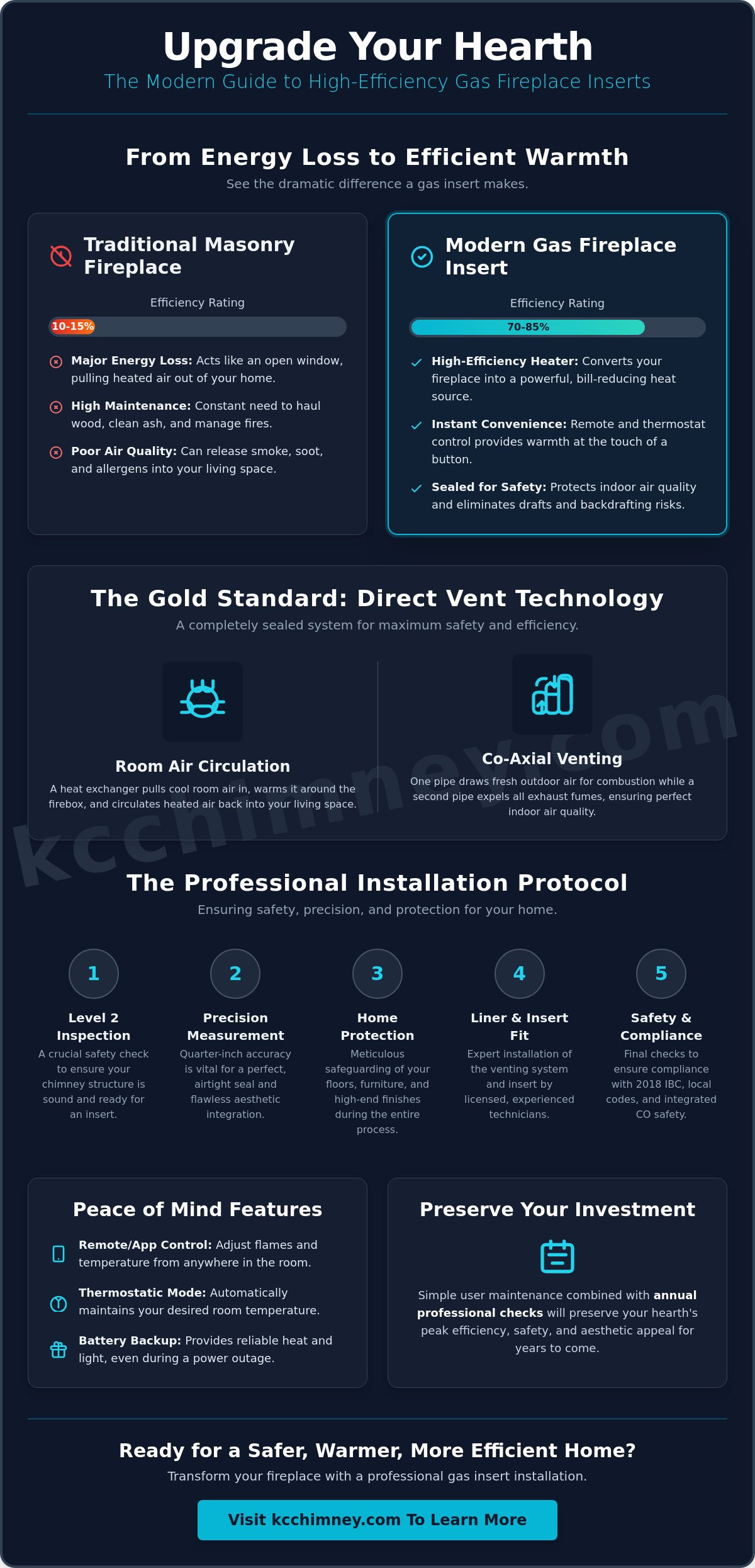
Many local residences feature stunning, hand-crafted masonry chimneys that define a home’s character. However, these traditional structures often act as giant straws, sucking expensive heated air right out of your living room. A gas fireplace insert installation in Mission Hills solves this problem by transforming an inefficient opening into a high-output heater. To understand the mechanics, it helps to ask: What is a Fireplace Insert? Essentially, it is a precision-engineered steel or cast-iron box designed to fit directly into your existing masonry firebox. This upgrade allows you to keep the classic hearth you love while eliminating the drafty “chimney effect” that plagues older homes.
Modern families are also turning to these systems for the benefits of zonal heating. Instead of running a whole-house furnace to warm rooms that aren’t being used, you can focus heat exactly where you spend the most time. This targeted approach reduces wear on your primary HVAC system and provides a more comfortable environment for evening relaxation. It’s a practical solution for the large, multi-story floor plans common in our neighborhood, where some rooms naturally stay colder than others.
Efficiency Gains and Heat Retention
The technical leap from an open wood fire to a gas insert is significant. A traditional open fireplace is often only 10% to 15% efficient; most of the heat generated disappears up the flue. In contrast, modern gas inserts operate at 70% to 85% efficiency. They utilize a heat exchanger system that pulls cool air from the room, warms it around the sealed firebox, and pushes it back into your living space. The use of specialized ceramic glass also plays a vital role. Unlike standard glass, ceramic glass is designed to radiate heat more effectively, ensuring the warmth reaches the center of the room rather than staying trapped inside the unit.
Convenience for Modern KC Lifestyles
Choosing the Right Insert for Your Mission Hills Architecture
Mission Hills architecture is remarkably diverse, ranging from mid-century modern designs to historic Tudor revivals. This variety means a one-size-fits-all approach never works for a gas fireplace insert installation in Mission Hills. Every firebox is unique, requiring our technicians to measure the height, width, and depth of your masonry opening with quarter-inch precision. Even a small miscalculation can lead to unsightly gaps that compromise the airtight seal or prevent the insert from sliding into place correctly. We prioritize these details to ensure the final result looks like it was built with the home.
You must also consider the BTU (British Thermal Unit) requirements for your specific space. A unit that is too powerful for a small den will lead to “short-cycling,” where the room overheats too quickly and the unit shuts off before the flue reaches the ideal operating temperature. Conversely, an underpowered unit will fail to provide the zonal heating benefits your family expects. Balancing these technical needs with your home’s aesthetic, whether you prefer hand-painted ceramic logs that mimic native oak or contemporary glass media, is where professional guidance becomes invaluable.
Direct Vent Technology Explained
Direct Vent technology is the gold standard for safety and efficiency in our local climate. It utilizes a co-axial chimney liner system; one pipe draws fresh outdoor air for combustion while the other expels exhaust. Because the firebox is completely sealed from your indoor air, it eliminates the risk of backdrafting and preserves your indoor air quality. Before you finalize your model choice, it is vital to schedule a professional chimney inspection. This step ensures your existing masonry can support the new venting system and confirms that no hidden damage will impede the installation process.
Sizing and Fit for Older Fireplaces
Older fireplaces in our community often feature shallow fireboxes or unique arched openings that require specialized solutions. Custom surround panels are frequently used to bridge the gap between the modern insert and the original masonry, creating a seamless, built-in appearance. These panels are not just for aesthetics; they help maintain the required clearances to combustibles for your wooden mantels or nearby trim. To ensure every safety standard is met, always work with an NFI certified technician who understands the complex relationship between fuel gas codes and historic preservation. If you are ready to see which models fit your hearth, exploring professional gas fireplace inserts is the best first step toward a warmer home.
The Installation Process: What to Expect
A professional gas fireplace insert installation in Mission Hills begins before we ever touch your chimney. We recognize that your home is a significant investment, so we start by laying heavy-duty drop cloths and protective barriers over your flooring and furniture. This meticulous preparation prevents dust or soot from migrating into your living space. Once the area is secured, our team focuses on the technical core of the project: the chimney flue. Because we treat your property with the same care we’d give our own, we ensure the workspace remains pristine from start to finish.
Step 1: Flue Preparation and Lining
Before the new system is installed, we perform a thorough chimney sweeping to remove any existing creosote or debris. This is a critical safety step; the new flexible aluminum or stainless steel liners need a clean environment to function correctly. These liners are run through the entire length of your existing flue to create a dedicated path for exhaust and fresh air. To maximize thermal efficiency, we often insulate these liners, which helps maintain a steady temperature within the system. Finally, we secure a specialized termination cap at the top of the chimney to prevent rain, pests, or moisture from entering your home.
Step 2: Gas and Electrical Connections
A safe gas fireplace insert installation in Mission Hills requires expert plumbing and electrical work. We route the gas lines through existing channels, such as the ash dump or the side-wall of the firebox, to minimize structural changes. Every connection is high-pressure leak-tested to ensure total safety. We also install a dedicated shut-off valve that remains accessible for future maintenance, as required by 2026 fuel gas codes. To power the blower fans and electronic ignition, we integrate electrical wiring behind the surround panels. This creates a clean, “no-cord” look that preserves the high-end aesthetic of your room.
Step 3: Finishing and Calibration
The final stage involves the precision placement of the burner, logs, and decorative media. These components must be arranged exactly according to manufacturer specifications to ensure proper flame patterns and prevent carbon monoxide buildup. We sync your remote control and test the thermostatic sensors to confirm the system responds instantly to your commands. Before we consider the job finished, we conduct a final safety sweep and a comprehensive walkthrough. We’ll show you how to operate the controls, explain the safety features, and ensure you feel confident using your new hearth.
Safety Standards and Mission Hills Requirements
Safety is the primary foundation of every gas fireplace insert installation in Mission Hills. Because many local homes feature historic masonry, their chimneys were originally designed for wood fires rather than modern gas appliances. Moving from one fuel source to another requires strict adherence to the 2018 International Building Codes, including the International Fuel Gas Code. We manage the technical requirements for you, ensuring that every component of your new system meets these rigorous benchmarks before the first flame is lit. This commitment to precision protects your property value and, more importantly, your family’s well-being.
Our team also handles the administrative side of your project. Contractors performing this work must be licensed with Johnson County and hold a valid occupational license with the City of Mission Hills. We ensure that a building permit is secured for your renovation, as required for most gas-related work in our community. Following the installation, at least one city inspection is typically required to verify that the system complies with all local safety regulations. This methodical approach ensures your hearth is a legal and safe asset to your home.
Understanding Level 2 Inspections
Modern safety standards require a high-definition video verification of your chimney’s interior. During this process, we use specialized cameras to identify internal masonry cracks or joint separations that could allow gas or heat to leak into your home’s structure. This step is non-negotiable when transitioning from wood to gas. For a deeper look at why this process is essential for older chimneys, you can review our Level 2 Chimney Inspection guide. Finding these hidden issues early prevents costly repairs and ensures the long-term integrity of your flue.
Proper Venting and Clearance
Correct venting is vital to prevent pilot outages caused by wind or pressure changes. We ensure the chimney cap is positioned at the correct height and that the firebox floor is structurally sound enough to support the weight of the insert. We also pay close attention to the clearance to combustibles, which is the minimum safe distance required between the hot glass of the insert and your wooden mantel or trim. To maintain peak safety, every installation we perform is paired with a modern carbon monoxide detector. If you want to ensure your home meets these rigorous standards, you can schedule a professional Level 2 Inspection to begin your upgrade process with total confidence.
- Verification of 2018 International Building Code compliance.
- Installation of mandatory carbon monoxide detectors.
- Use of high-definition video for flue wall assessment.
- Strict adherence to manufacturer clearance specifications.
Maintenance and Longevity for Your New Hearth
One specific maintenance task you’ll notice is cleaning the ceramic glass. Over time, a “white film” can develop on the interior surface. This cloudy residue is caused by sulfur and mineral deposits that are natural byproducts of the combustion process. It’s important to remove this film at least once a year with a specialized fireplace glass cleaner. If left uncleaned, these minerals can eventually etch into the glass, permanently dulling the view of your hearth. We also recommend keeping your pilot light active during the humid Kansas City summers. The small amount of heat prevents moisture from accumulating inside the firebox, which discourages corrosion and keeps spiders from spinning webs in the burner tubes.
Annual Service Checklist
Scheduling a professional safety check once a year is the best way to ensure your system remains code-compliant and safe. During these visits, our technicians perform several critical tasks:
- Burner Inspection: We clear out any dust or debris that could cause an uneven flame or soot buildup.
- Safety Sensor Testing: We verify that the Oxygen Depletion Sensor (ODS) and thermocouple are functioning correctly to prevent gas leaks.
- Component Updates: Our team replaces remote control batteries and cleans the blower fan to ensure quiet, efficient air circulation.
Scheduling Your Installation
If you’re ready to transform your drafty masonry fireplace, timing is a key factor. While many homeowners wait until the first frost to think about their hearth, the spring and summer months are actually the ideal time for a gas fireplace insert installation in Mission Hills. Scheduling during the “off-season” allows for faster project turnaround and ensures your system is fully calibrated before the winter rush begins. You can easily request a custom quote for your fireplace insert installation in KC to see how we can tailor a solution to your home’s architecture. We stand by our mess-free promise, ensuring that your high-end finishes and flooring remain protected throughout the entire process.
Secure a Warmer Future for Your Mission Hills Home
Upgrading your home’s hearth is a significant step toward modern efficiency and lasting comfort. By choosing a gas fireplace insert installation in Mission Hills, you eliminate the persistent drafts of traditional wood fireplaces while preserving the classic beauty of your architecture. We’ve explored how 2026 safety standards and precise technical measurements ensure your new system is both reliable and code-compliant. This investment doesn’t just lower your utility bills; it provides a safe, easy-to-use focal point for your family to enjoy for decades.
As a locally owned fixture in the community since 2012, we prioritize your peace of mind above all else. Our NFI Certified Technicians include a Level 2 Video Inspection with every major project to verify the integrity of your flue before we begin. You don’t have to settle for a cold or inefficient living room. Request Your Mission Hills Gas Insert Consultation Today to start your journey toward a cleaner, warmer home. We look forward to helping you protect your property and enhance your lifestyle with a professional hearth upgrade.
Frequently Asked Questions
Do I need a chimney to install a gas fireplace insert in Mission Hills?
Yes, a gas fireplace insert requires an existing masonry or factory-built chimney to function. These units are specifically engineered to fit inside your current firebox. We utilize your chimney’s structure to run flexible aluminum or stainless steel liners that handle air intake and exhaust. If your home lacks a chimney, a direct-vent gas fireplace would be the appropriate alternative for your space.
Can I install a gas fireplace insert myself?
No, you should not install a gas insert yourself because it involves complex gas plumbing and specialized venting. Proper gas fireplace insert installation in Mission Hills requires a contractor license from Johnson County and an occupational license from the city. Professional installers ensure the system meets 2026 safety codes and manufacturer specifications; this protects your home and maintains your product warranty.
How long does a typical gas insert installation take?
Most projects are completed within one to two days. The first day usually focuses on cleaning the flue and installing the new liners. The second day involves the final gas connections, electrical wiring, and system calibration. If your project requires custom masonry work or unique surround panels, we will provide a specific timeline during your initial consultation to ensure your schedule is respected.
Will a gas fireplace insert work during a power outage?
Yes, your fireplace will continue to provide heat during a power outage. Most modern models utilize a battery backup system to power the electronic ignition and gas valve. While the electric blower fan will not circulate air without power, the unit still produces significant radiant heat. This makes a gas insert a reliable emergency heat source during severe Kansas City winter storms.
What is the difference between a gas fireplace and a gas fireplace insert?
A gas fireplace is a self-contained unit used when there is no existing hearth; an insert is a steel box designed to fit into an existing masonry opening. Inserts allow you to keep your original chimney and mantel while significantly improving heating efficiency. This makes them the ideal solution for older Mission Hills homes where homeowners want a modern upgrade without a major renovation.
Do gas fireplace inserts require a lot of maintenance?
Gas fireplace inserts are low-maintenance, but they still require an annual professional inspection. We check for dust in the burner, test the safety sensors, and clean the “white film” from the ceramic glass. This yearly service ensures the system remains efficient and safe. It’s much simpler than wood-burning maintenance since there is no ash to shovel or creosote to worry about.
Is a carbon monoxide detector necessary with a gas insert?
Yes, a carbon monoxide detector is a non-negotiable safety requirement for any gas appliance. Even though Direct Vent technology is a sealed system that prevents exhaust from entering your home, a detector acts as a vital backup. We include a safety check for your detectors as part of our professional gas fireplace insert installation in Mission Hills to ensure your family remains fully protected.
How much does it cost to run a gas fireplace insert in 2026?
Running a 30,000 BTU gas fireplace costs approximately $0.55 per hour based on 2026 natural gas rates. The average annual operating cost for a local household typically ranges between $400 and $640. By using the unit for zonal heating in high-traffic rooms, many families find they can actually lower their overall whole-house heating expenses throughout the winter months.