
Did you know that there are approximately 25,000 residential chimney fires across the United States every year? In Miami County, our extreme Kansas freeze-thaw cycles put significant stress on local masonry, making the task of avoiding chimney fires Bucyrus residents prioritize a matter of both tradition and safety. When temperatures swing 40 degrees in a single day, your chimney structure bears the brunt of that movement, often hiding small cracks or dangerous buildup from plain sight.
You likely value the warmth of a crackling fire during a cold winter evening, but the worry of hidden creosote or a sudden flue fire can easily disrupt that peace of mind. It’s natural to feel uncertain about when to schedule a professional service or how to identify the early warning signs of a dangerous situation before it escalates. You want to protect your home, but the technical details of chimney maintenance can feel overwhelming without a clear plan.
This 2026 guide provides the professional clarity you need to protect your property and enjoy the burning season without worry. We’ll walk through the latest safety standards, explain the critical role of high-tech Level 2 inspections, and share expert strategies for burning wood more efficiently to keep your home and family secure. By understanding these local risks and modern prevention methods, you can ensure your fireplace remains a source of comfort rather than a hazard.
Key Takeaways
- Understand the chemical process of creosote formation and why “cool” flue temperatures are a primary contributor to dangerous residue buildup.
- Discover why a standard sweep is often insufficient and how professional Level 2 inspections are the gold standard for avoiding chimney fires Bucyrus homeowners trust for total safety.
- Master the “Burn Zone” technique and learn which local Miami County hardwoods produce the cleanest, safest heat for your hearth.
- Learn how structural upgrades like chimney relining and professional cap installation create a vital safety barrier between intense heat and your home’s internal framing.
Understanding the Risks of Chimney Fires in Bucyrus, KS
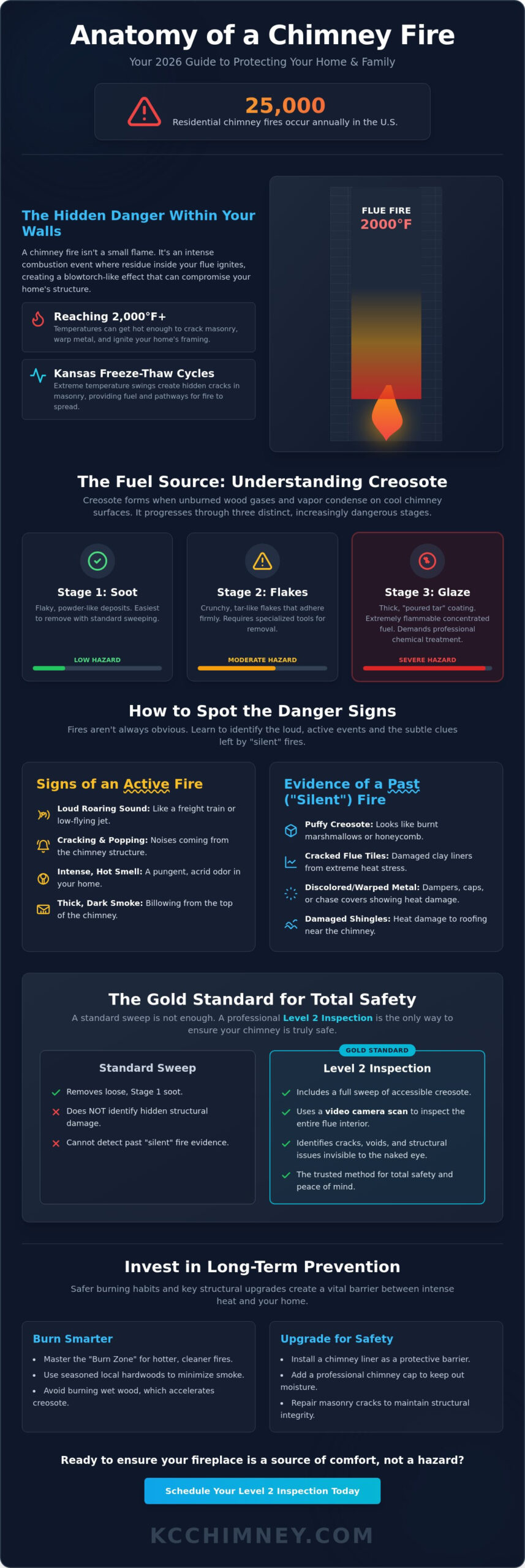
A chimney fire occurs when the combustible residue stuck to your flue walls ignites. This isn’t just a small flame. It’s a rapid, high-heat combustion event that can reach temperatures exceeding 2,000 degrees. For those living in Bucyrus, the risk is often higher than in more urban parts of the Kansas City metro. Many of our local homes rely heavily on wood-burning heat during the winter. This leads to a faster accumulation of fuel inside the chimney. Understanding The Science of Creosote is the first step toward avoiding chimney fires Bucyrus families want to prevent.
Not every fire is an obvious emergency. Many homeowners experience “silent” chimney fires that burn slowly and at lower temperatures. These events don’t always trigger a 911 call, but they bake the masonry and cause structural damage. Over time, this compromises your safety and the integrity of your home. Focusing on avoiding chimney fires Bucyrus homeowners can prevent starts with recognizing these subtle structural shifts. Beyond the immediate danger, this damage can significantly lower your property value. It often leads to a failed Level 2 chimney inspection in Kansas City when you eventually try to sell your home. Investing in prevention now preserves both your safety and your equity.
Warning Signs of an Active Chimney Fire
Active fires often announce themselves with a roar. You might hear a sound like a low-flying jet or a freight train. This happens when air is sucked into the flue to feed the flames. Watch for loud cracking or popping noises. Look for thick, dark smoke pouring from the chimney top. Finally, pay attention to intense, hot smells that permeate your living area. These are signs of an immediate emergency.
Identifying Evidence of Past Chimney Fires
Most people don’t realize they’ve had a fire until a professional points it out. Look for “puffy” creosote that resembles expanded honeycomb or burnt marshmallows. Cracked or collapsed clay flue tiles also indicate extreme heat stress. You might see warped metal dampers or discolored chimney caps. Even heat-damaged shingles near the chimney suggest a fire was hot enough to threaten your home’s exterior. These structural clues require immediate professional attention.
The Science of Creosote: How Your Fireplace Becomes a Hazard
Every time you light a fire, a complex chemical reaction takes place inside your flue. Creosote is the primary byproduct of this process. It forms when unburned wood particles, water vapor, and volatile gases exit the firebox and hit the cooler surfaces of the chimney. Instead of escaping into the atmosphere, these substances condense into a sticky residue. Understanding how creosote forms is essential for anyone serious about avoiding chimney fires Bucyrus homeowners face each winter.
Cool flue temperatures are the biggest culprit in this process. When the interior of your chimney doesn’t reach a high enough temperature, smoke lingers and cools rapidly. This restricted airflow forces the gases to settle against the masonry or metal liner. Current 2026 safety standards place a heavy emphasis on the early detection of Stage 3 creosote. This specific type of buildup isn’t just a nuisance; it acts as concentrated fuel that can ignite in an instant. If you notice a thick, shiny layer inside your flue, it’s time to stop burning until you’ve scheduled a professional chimney sweeping to clear the hazard.
The Three Stages of Creosote Buildup
Creosote doesn’t become dangerous overnight. It progresses through three distinct physical stages. Stage 1 consists of flaky, soot-like deposits. These are relatively easy to remove during a routine cleaning. Stage 2 presents as crunchy, tar-like flakes that adhere more firmly to the flue walls. This stage requires specialized mechanical tools for safe removal. Stage 3 is the most hazardous. It appears as a thick, glazed coating that looks like poured tar. This stage is extremely flammable and often requires chemical treatments or even liner replacement to resolve safely.
Factors That Accelerate Creosote in Bucyrus Homes
Several common habits can speed up this dangerous accumulation. Many residents burn unseasoned or “green” wood because it’s readily available in rural Miami County. However, high moisture content in wood prevents the fire from reaching optimal temperatures, which leads to massive creosote deposits. Oversized flues also contribute to the problem. If a flue is too large for the fireplace or insert, the smoke slows down and cools before it can exit. Finally, many people close their dampers too early to try and “save” heat. This mistake traps smoke inside the system, giving it more time to condense into a fire hazard. Proper fuel selection and airflow management are your best defenses in avoiding chimney fires Bucyrus winters often provoke.
Professional Chimney Inspections: Beyond the Basic Sweep
Many homeowners assume that a quick chimney sweeping is all they need to stay safe for the winter. While removing soot is a vital part of maintenance, it’s only a surface-level fix. A standard sweep cannot reveal if your flue liner has developed hairline cracks or if your masonry joints have started to fail due to age. Relying solely on a brush for avoiding chimney fires Bucyrus homes might be vulnerable to is a risky gamble. You need a deeper look to ensure the entire system is structurally sound and capable of containing high heat.
This is where Level 2 chimney inspections in Kansas City and the surrounding Bucyrus area become indispensable. Unlike a basic visual check, a Level 2 evaluation involves a systematic review of the entire venting system. We use specialized video technology to travel the length of your flue. These cameras provide a high-definition view of every inch of the internal liner. We often find hidden gaps, shifted tiles, or Stage 3 creosote that would be impossible to see from the hearth. At Best Chimney Services, our multi-level safety evaluations prioritize these technical details to give you total peace of mind.
What Happens During a Level 2 Inspection?
During this process, we perform a visual examination of the entire internal and external structure. This includes accessing the attic, crawlspace, or basement to check clearances from combustible materials. The centerpiece is the video scan. We document the integrity of the flue liner and the condition of all joints. This thoroughness ensures your home’s framing is protected from the intense heat transfer that occurs during a burn.
When Bucyrus Homeowners Need a Level 3 Inspection
A Level 3 inspection is the most intensive evaluation we offer. It’s typically required after a suspected chimney fire or a significant weather event, such as a lightning strike or high-wind storm. This level of service is also necessary when we suspect serious structural issues are hidden behind walls or masonry. In Miami County, these detailed inspections are often a critical component of real estate transfers. Since Kansas lacks statewide licensing, local building codes in Bucyrus demand this level of precision to verify that a fireplace is safe for a new family to use. Avoiding chimney fires Bucyrus residents fear starts with this high standard of professional verification.
Actionable Habits for Safer Wood Burning in Miami County
Daily habits are the frontline of defense for avoiding chimney fires Bucyrus families rely on for warmth. While professional inspections are non-negotiable, what you put into your hearth every day determines how quickly your system degrades. In Miami County, we have access to some of the best fuel sources in the country, but using them incorrectly can turn a cozy evening into a safety hazard. Maintaining a clean burn isn’t just about efficiency; it’s about preventing the accumulation of fuel that leads to dangerous flue fires.
Selecting the right fuel is the foundation of a safe fireplace. Local hardwoods like Oak, Hickory, and Ash are superior because they are dense and provide long-lasting, high-intensity heat. Unlike softwoods or “sappy” pines, these hardwoods produce less smoke and fewer volatile gases when they are properly seasoned. You should also strictly avoid burning household trash, cardboard, or treated lumber. These materials release corrosive chemicals that can damage your flue liner and potentially cause a flash fire that spreads beyond the chimney masonry.
Choosing and Seasoning Local Firewood
To get the most out of your local wood supply, you must ensure it’s dry. Wood seasoned in our specific Kansas climate typically takes 6 to 12 months to reach an ideal state. We recommend using a moisture meter to verify that your wood is below 20% moisture content before it ever touches a flame. When wood hisses in the firebox, it’s a sign that energy is being wasted to boil off internal moisture rather than creating heat, which rapidly accelerates creosote accumulation. Store your wood off the ground and covered on top, but leave the sides open to allow our local winds to pull moisture away from the stack.
Optimizing Airflow for a Cleaner Burn
Airflow is the engine of your fireplace. Always ensure your damper is fully open before lighting a fire to provide an immediate exit for smoke and gases. We suggest using the “top-down” fire-starting method to establish a strong draft quickly. Place your largest seasoned logs on the bottom, followed by a layer of kindling, and then your tinder on top. This method heats the flue more effectively, reducing initial smoke production and soot buildup. Avoid the temptation to let a fire “smolder” overnight by cutting off the oxygen supply. A smoldering fire is a low-temperature fire, which creates the perfect environment for creosote to glaze your flue walls. Proper airflow management is a critical step in avoiding chimney fires Bucyrus winters often provoke.
If you’ve been burning unseasoned wood or noticed excessive soot buildup, it’s time to restore your system’s health and safety. Schedule a professional chimney sweeping today to clear out the hazards and start your next season with a clean slate.
Investing in Long-Term Fire Prevention and System Health
Safe wood burning is a partnership between your daily habits and the structural integrity of your chimney. While choosing the right wood and maintaining airflow are vital, your chimney hardware acts as the final barrier between a controlled fire and a household disaster. Investing in high-quality components ensures that your system remains resilient against the harsh Kansas elements. For those focused on avoiding chimney fires Bucyrus homeowners must look beyond the hearth to the actual anatomy of their venting system. Structural health is the foundation of long-term safety.
Masonry isn’t invincible. The freeze-thaw cycles common in Miami County can cause mortar to crumble and bricks to loosen over time. When the external structure fails, it often leads to internal hazards like shifted liners or moisture penetration. Addressing these issues early through expert chimney repair in Kansas City and the Bucyrus area prevents minor cracks from becoming major fire risks. Proper maintenance of the exterior masonry is just as important as cleaning the interior flue.
Chimney Caps and Chase Covers
A chimney cap is your first line of defense against outside interference. It prevents debris, like dry leaves and twigs, from falling into the flue and creating a flammable blockage. In our rural setting, caps are also essential for keeping out birds and small animals that love to nest in warm chimneys. Beyond fire prevention, a cap reduces moisture entry. Rain and snow can lead to structural decay and internal cracking if left unchecked. We recommend selecting durable materials like stainless steel or copper for maximum longevity and rust resistance.
Structural Integrity and Relining
Many older homes in Bucyrus still utilize original clay tile liners. While these were standard for decades, they often fail to meet 2026 safety standards because they can crack under the intense heat of a modern fireplace insert or a minor chimney fire. Chimney relining with a high-grade stainless steel liner is the most effective way to contain heat and gases. These liners are engineered to expand and contract without cracking, providing a seamless path for smoke to exit your home. If you’re unsure about the state of your current liner, schedule a visit with Best Chimney Services for a custom quote on a modern relining solution.
2026 Homeowner’s Safety Checklist
As you prepare for the upcoming burning season, use this checklist to ensure your home is protected:
- Schedule an Inspection: Ensure you’ve had a Level 1 or Level 2 inspection within the last 12 months.
- Verify the Cap: Confirm your chimney cap is securely attached and free of debris.
- Test Alarms: Check that your smoke and carbon monoxide detectors have fresh batteries and are functioning.
- Inspect the Hearth: Look for any new cracks in the firebox or external masonry.
- Confirm Fuel Quality: Use a moisture meter to ensure your wood supply is below 20% moisture content.
Taking these steps is the most reliable method for avoiding chimney fires Bucyrus families might otherwise face. Your fireplace should be a source of comfort, not a source of stress. By prioritizing structural health and professional oversight, you can enjoy the warmth of your home with complete peace of mind.
Secure Your Peace of Mind for the Burning Season
Protecting your Bucyrus home starts with understanding that fire safety is a year-round commitment. By mastering the science of creosote and adopting better wood-burning habits, you’ve already taken the first steps toward a safer hearth. Remember that structural integrity, confirmed through professional video technology, is the only way to ensure your flue remains a safe passage for heat and gases. This proactive approach is the most effective strategy for avoiding chimney fires Bucyrus families can implement today to preserve their property value and personal safety.
Don’t leave your family’s safety to chance as the temperatures begin to drop. Our certified technicians serve Miami County with a commitment to integrity and technical mastery. We provide detailed video inspections to catch hidden defects and offer a mess-free chimney sweeping guarantee to keep your living space pristine. Schedule your professional chimney inspection and sweep in Bucyrus today to secure your home’s future. We look forward to being your trusted partner in home protection and providing the reliable service your property deserves.
Frequently Asked Questions
How often should I have my chimney swept in Bucyrus?
You should have your chimney swept at least once per year or more frequently if you burn more than a full cord of wood. Following the National Fire Protection Association (NFPA) 211 standard ensures that dangerous buildup is removed before the heavy burning season begins. Regular maintenance is the most reliable method for avoiding chimney fires Bucyrus homeowners can use to protect their property and family.
Can I use a chimney cleaning log instead of a professional sweep?
No, a cleaning log cannot replace a professional sweep. These logs contain chemicals that may loosen some creosote, but they don’t remove the debris from your flue. They also cannot perform the critical task of inspecting your liner for cracks or structural failures. Only a professional technician can verify that your system is truly safe to use.
What is the average cost for a chimney inspection in the Kansas City area?
Costs for chimney inspections in the Kansas City area vary based on the level of detail required for your specific system. While national averages exist, local factors like the height of the chimney and the amount of creosote buildup will influence the final rate. It’s best to request a quote from a local professional who can evaluate your chimney’s unique condition and safety needs.
Is it safe to leave a fire burning in the fireplace overnight?
It is not safe to leave a fire burning unattended overnight. As a fire dies down, the flue temperature drops, which significantly increases the rate of creosote condensation. This smoldering state creates a high-risk environment for chimney fires. Always extinguish the flames and ensure the embers are cold before going to bed or leaving your home.
What should I do immediately if I suspect a chimney fire is starting?
Get everyone out of the house immediately and call 911 from a safe distance. Do not attempt to extinguish the fire yourself or climb onto the roof. A chimney fire can spread rapidly to the framing of your home. Once the fire department has cleared the scene, you must have a professional inspection performed before using the fireplace again.
Do gas fireplaces also need annual inspections for fire safety?
Yes, gas fireplaces require annual inspections to ensure all components are functioning safely. Technicians check for gas leaks, obstructed vents, and proper pilot light operation. Even though gas burns cleaner than wood, debris from outside or malfunctioning burners can still create safety hazards that require professional attention to prevent carbon monoxide issues or fire risks.
Does homeowner’s insurance cover damage from a chimney fire?
Most homeowner’s insurance policies cover damage from chimney fires if the event is sudden and accidental. However, many providers may deny a claim if they find the fire was caused by long-term neglect or a lack of documented maintenance. Keeping records of your annual inspections is essential for proving you’ve taken the necessary steps for avoiding chimney fires Bucyrus insurers expect.
How can I tell if my firewood is seasoned enough to burn safely?
Seasoned wood typically feels light, has visible cracks on the ends, and makes a hollow sound when two pieces are struck together. The most accurate way to check is with a moisture meter. Wood is safe to burn when the internal moisture content is below 20 percent. Burning wood with higher moisture levels leads to excessive smoke and rapid creosote buildup.