
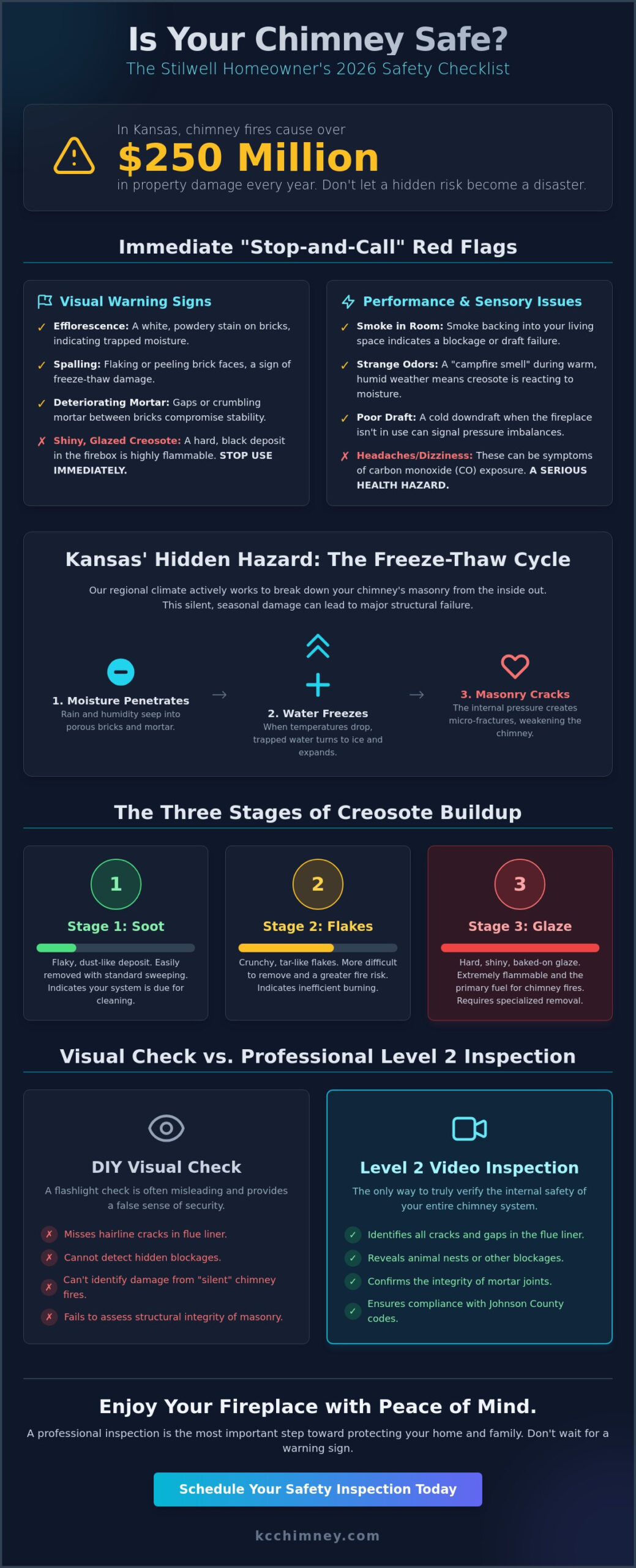
What if the cozy fire you are planning for tonight is actually hiding a six-figure structural risk behind your living room wall? In Kansas, chimney fires cause over $250 million in property damage every year. These incidents often happen because a small masonry gap or a bit of soot went unnoticed. It is natural to feel a sense of uncertainty when you look at an older masonry chimney. You want the warmth of a hearth without the fear of a house fire. If you are asking yourself, is my chimney safe to use Stilwell, you are already taking the most important step toward protecting your home and family.
We understand that the technical side of flue liners and crown seals can feel overwhelming. That is why we have created this 2026 homeowner’s safety checklist. You will learn how to identify critical hazards like heavy creosote and structural gaps before you strike a single match. We will also clarify the difference between a standard sweep and a professional Level 2 inspection. This guide provides the clear, local expertise you need to ensure your chimney meets the latest safety standards. Our goal is to give you the peace of mind to enjoy your fireplace all season long.
Key Takeaways
- Identify the specific “stop-and-call” warning signs, such as deteriorating mortar and strange odors, that indicate your fireplace is not ready for use.
- Learn how the unique Kansas freeze-thaw cycles damage chimney crowns and why seasonal weather requires proactive masonry care.
- Understand why a basic visual scan is often misleading and how a professional Level 2 video evaluation determines is my chimney safe to use Stilwell.
- Follow a simple step-by-step checklist to prepare your hearth and verify your damper is functioning correctly before your first winter fire.
- Discover the importance of local expertise and Johnson County building codes in maintaining the long-term safety and integrity of your home’s masonry.
Is My Chimney Safe to Use in Stilwell? Immediate Red Flags
Determining is my chimney safe to use Stilwell starts with understanding that your eyes can only see a fraction of the entire system. Many homeowners grab a flashlight and peer up the stack, assuming that a little black soot is just part of the charm of an older home. This DIY check is often misleading. A flashlight cannot reveal microscopic fractures in the masonry or the hidden blockages that allow toxic gases to bypass your ventilation. To truly grasp how chimneys work, you must realize that the flue liner is your home’s most critical safety barrier. It protects your wooden wall studs from intense heat and keeps carbon monoxide contained. Even a hairline crack in this liner can turn a quiet evening by the fire into a structural emergency.
Visual Warning Signs You Can Spot Today
You don’t need to be a professional to notice the first signs of trouble on your exterior brickwork. Look for efflorescence, which appears as a white, powdery substance on your Stilwell chimney. This is not just a stain; it is a sign that moisture is trapped inside your bricks, which will eventually lead to structural failure. You should also check for spalling, where the faces of the bricks begin to flake or peel away. This often happens after several Kansas winters. Finally, distinguish between soft, dusty soot and creosote buildup. If you see a hard, shiny glaze inside your firebox, stop using the fireplace immediately. That glaze is highly flammable and is the primary fuel for chimney fires.
Performance Issues During Operation
Your fireplace should be a source of comfort, not a source of smoke. If smoke backs into your living room when you light a fire, you are experiencing a critical safety warning. This usually indicates a blockage or a failure in the draft system. Many Stilwell homes also suffer from “cold hearth” syndrome. This happens when the air pressure in your home is unbalanced, causing cold, outside air to push down the flue. This draft issue often brings in unusual odors. A distinct “campfire smell” during a humid Kansas summer is a major red flag. It tells you that the creosote in your chimney is reacting with the moisture in the air. This odor is a clear signal that your system needs a professional cleaning to restore its safety and integrity.
If you suspect carbon monoxide is leaking into your home, look for physical symptoms in your family, such as unexplained headaches or dizziness while the fire is burning. Because this gas is odorless and colorless, these performance issues are often the only warnings you will get before a situation becomes dangerous. Always prioritize these red flags over the desire for a fire.
Understanding Hidden Risks: Creosote, Cracks, and Kansas Weather
The safety of your hearth depends on more than just a clean firebox. When you ask, is my chimney safe to use Stilwell, you have to consider the invisible battle between your masonry and the Kansas climate. Our region experiences aggressive freeze-thaw cycles. During a typical Stilwell winter, moisture seeps into the porous brick and mortar. When temperatures drop, this water freezes and expands, creating internal pressure that literally pushes the masonry apart from the inside out. This cycle repeats dozens of times each season, slowly compromising the structural integrity of your chimney crown and stack.
Humidity in the Kansas City metro also plays a silent role. High moisture levels can soften older mortar joints and accelerate the deterioration of clay flue liners. Many homeowners are surprised to learn that they’ve had a chimney fire without ever knowing it. These “silent” fires happen when creosote ignites but doesn’t have enough oxygen to become a full-blown house fire. Instead, it burns at intense temperatures, cracking the flue tiles and melting mortar. Without a professional Level 2 inspection, these structural failures remain hidden until the next fire spreads to your attic.
The Three Stages of Creosote
Creosote is a byproduct of incomplete combustion, and the type of wood you burn determines how quickly it builds up. Burning unseasoned “green” wood or softwoods creates thick, cool smoke that condenses easily on your flue walls. Stage 1 is a flaky, soot-like deposit. It is relatively safe but indicates you’re due for a sweep. Stage 2 presents as crunchy, tar-like flakes. This suggests your fire isn’t burning hot enough or your wood is too wet. Stage 3 is the most dangerous. It looks like a hard, glossy glaze. This substance is extremely difficult to remove and serves as concentrated fuel for a devastating chimney fire.
Structural Decay in Johnson County Masonry
Older homes in Stilwell often rely on original clay tile liners. These tiles are brittle and can’t handle the shifting soil common in Johnson County. When the ground moves, your chimney stack can tilt or settle, causing the tiles to shift and create gaps where heat can escape. A cracked chimney crown is the most common entry point for water. Once the crown fails, water runs down the interior of the masonry, rotting the wood framing of your home. If you notice small bits of clay or mortar in your firebox, it’s time to consider a professional evaluation to ensure your system is still sound.
Visual Self-Check vs. Professional Level 2 Inspection
While a quick glance up the flue with a flashlight might reveal a bird’s nest or heavy soot, it cannot provide a complete answer to the question: is my chimney safe to use Stilwell? The human eye is simply not equipped to spot hairline fractures in the upper flue tiles or deteriorating mortar joints hidden behind the smoke shelf. It’s a good starting point for routine maintenance, but it lacks the technical depth required to ensure your home is protected from heat transfer or carbon monoxide leaks. Professional technicians use specialized equipment to examine the entire internal structure, adhering to the Chimney Safety Institute of America (CSIA) safety guidelines which recommend a thorough evaluation at least once a year.
A Level 2 inspection is the industry standard for most safety-related concerns. Unlike a basic sweep, this process involves a high-resolution video scan of the chimney’s interior. This technology allows us to see every square inch of the flue liner, identifying gaps that are invisible from the hearth or the roof. In Stilwell and Mission Hills, these inspections are often a non-negotiable part of real estate transactions. Most home inspectors are generalists; they don’t have the tools to verify the internal integrity of a masonry chimney. A professional safety sign-off provides the documentation needed to satisfy both lenders and insurance providers.
When a DIY Check Is Not Enough
There are specific moments when “eyeballing” your fireplace is a dangerous gamble. If your home has recently weathered a severe Kansas storm or if you suspect a chimney fire has occurred, internal damage is almost guaranteed. You should also seek a professional evaluation when purchasing a new property to avoid inheriting a hidden fire hazard. Additionally, if you plan on switching from a traditional wood-burning setup to a gas fireplace insert, the venting requirements change completely. A professional must verify that your existing flue can handle the new appliance without leaking exhaust into your living space.
The Value of Video Chimney Inspections
The primary advantage of a video evaluation is the ability to see the “unseen.” Our technicians use specialized cameras that travel the full length of the flue, capturing clear images of cracks in the upper tiles where heat is most likely to escape into the attic. For more information on what this looks like, you can explore our guide to Expert Chimney Inspection in Kansas City. Beyond the immediate safety benefit, these inspections provide a digital record of your chimney’s health. If you ever need to file a homeowners’ insurance claim related to your fireplace, having a dated video report proves that you maintained the system according to professional standards.
Preparing Your Stilwell Hearth for the 2026 Winter Season
As the first frost settles over Johnson County, your attention naturally turns to the hearth. Before you strike that first match, you must confirm: is my chimney safe to use Stilwell? Preparing for the 2026 winter season involves more than just stacking wood; it requires a methodical approach to your fireplace’s immediate environment. Start by testing your damper. It should move freely and create a tight seal when closed. If it sticks or feels rusted, don’t attempt to force a fire. A faulty damper can trap smoke and carbon monoxide inside your home, turning a cozy evening into a medical emergency. You should also verify that your smoke and carbon monoxide detectors are functioning. Place CO detectors near all sleeping areas to ensure your family is alerted if toxic gases bypass your ventilation system.
The Pre-Fire Safety Checklist
- Clear a 3-foot safety zone: Ensure that rugs, furniture, and holiday decorations are kept at least three feet away from the firebox to prevent accidental ignition from stray sparks.
- Inspect the exterior: Look at the top of your chimney stack from the ground. In Stilwell, it’s common for birds or squirrels to nest in the flue during the off-season. Any visible debris is a sign that your airflow is blocked.
- Check your fire extinguisher: Verify that your extinguisher is rated for residential use and has not passed its expiration date. Keep it in an accessible location near the hearth.
Firewood Best Practices for KC Homeowners
The quality of the wood you burn directly impacts how much creosote accumulates in your flue. In Kansas, “seasoned” wood refers to logs that have been split and stored in a dry, covered area for at least six to twelve months. You can use a moisture meter to ensure your wood is below 20% moisture content. Burning “green” wood from a recent Kansas storm is a significant safety hazard. This wet wood burns at a lower temperature, which causes smoke to condense quickly and form dangerous creosote layers. Additionally, never burn trash, cardboard, or treated lumber. These materials release toxic chemicals and can cause unpredictable, intense flare-ups that damage your liner. To ensure your system is clear and ready for the cold, schedule a professional chimney sweeping before your first seasonal fire.
Taking these small steps now prevents major structural issues later. By maintaining a clean hearth and using high-quality fuel, you reduce the risk of a chimney fire and ensure your fireplace remains a safe source of warmth for your home. Proper preparation is the best way to gain peace of mind before the heart of the winter season arrives.
Best Chimney Services: Stilwell’s Trusted Safety Experts
Stilwell is a unique community with a rich architectural history, but that history often includes aging masonry that requires specialized care. When you ask, is my chimney safe to use Stilwell, you deserve an answer backed by local experience and technical precision. We don’t just provide a mechanical service; we act as guardians of your home. Our team understands the specific challenges of Johnson County, from the shifting clay soils that destabilize chimney stacks to the intense freeze-thaw cycles that degrade your exterior brickwork. We treat every inspection as a critical safety mission, ensuring that your fireplace remains a source of joy rather than a liability.
One of the biggest concerns for homeowners is the mess often associated with chimney work. At Best Chimney Services, we’ve perfected a mess-free process that respects your living space. We use high-powered dust containment systems and protective coverings to ensure your carpets and furniture remain pristine. Beyond cleanliness, we leverage advanced video technology during every professional evaluation. This allows us to provide you with a definitive verdict on your chimney’s health, showing you exactly what is happening inside the flue so you can make informed decisions about your home’s safety.
Certified Protection for Your Hearth
Our technicians aren’t just laborers; they are highly trained professionals who adhere strictly to NFPA 211 standards for residential safety. This rigorous training ensures we catch the subtle signs of deterioration that general contractors often miss. We believe in transparency, which is why we offer straightforward, flat-rate pricing for our Stilwell sweeping and inspection services. You won’t have to worry about hidden fees or high-pressure sales tactics. To see our full list of maintenance options, check out our Chimney Sweep Kansas City guide.
Ready for a Safer Winter?
Don’t leave your family’s safety to chance this season. Guessing about the integrity of your flue is a risk you don’t have to take. Our goal is to provide a professional verdict that gives you absolute peace of mind before the first major snowstorm hits. Scheduling your seasonal maintenance is simple and can be done online in just a few minutes. By booking early, you beat the winter rush and ensure your hearth is ready the moment you want to light that first fire. Schedule Your Professional Chimney Inspection Today and let us help you protect what matters most.
Secure Your Hearth for a Worry-Free Winter
Protecting your home starts with moving beyond guesswork. You now know how to identify immediate red flags like efflorescence and why the aggressive Kansas freeze-thaw cycle makes structural integrity a moving target for local masonry. While a DIY checklist is a great way to stay proactive, it cannot replace the technical depth of a professional evaluation. If you’re still asking yourself, is my chimney safe to use Stilwell, it’s time for a definitive answer. Since 2012, we’ve served the Stilwell and Johnson County community with a focus on precision and safety. Our CSIA Certified Technicians use advanced video flue inspections to look where the human eye can’t reach, ensuring every crack and gap is accounted for before you light your first seasonal fire.
Don’t wait for a performance issue to become a structural emergency. Taking a methodical approach to maintenance is the best investment you can make in your property’s future and your family’s peace of mind. Ensure Your Hearth is Safe—Book Your Stilwell Inspection Today. Your fireplace should be a sanctuary of warmth and comfort. By choosing professional care, you’re making sure it stays that way all winter long.
Frequently Asked Questions
How do I know if my chimney needs a cleaning or a full inspection?
A cleaning focuses on removing soot and creosote, but an inspection evaluates the structural health of the entire system. You should have an inspection once a year regardless of how much wood you burn. If the inspection reveals one-eighth of an inch of creosote or more, a professional sweep is necessary to prevent a chimney fire and ensure proper airflow.
Is it safe to use my fireplace if I see small cracks in the firebox?
It is not safe to light a fire if the firebox has visible cracks. These gaps allow extreme temperatures to transfer to the combustible wooden studs behind the masonry. Even small hairline fractures can expand quickly during a fire, leading to a structural house fire that is difficult to detect until it is too late. Always have these cracks repaired before your next use.
What is a Level 2 chimney inspection and when do I need one in Stilwell?
This is a comprehensive evaluation that uses a specialized camera to scan the internal flue tiles. You specifically need a Level 2 inspection when buying or selling a home in Stilwell, or if your chimney has experienced a lightning strike or a chimney fire. It provides a definitive digital record of safety that a standard visual check cannot offer.
Can I use a chimney cleaning log instead of a professional sweep?
Chemical cleaning logs are not a replacement for mechanical sweeping. While they can help soften certain types of creosote, they do not remove the debris from your chimney. The loosened material often falls and blocks the smoke shelf or the damper area, which can cause smoke to back into your living room during operation.
How often should I have my gas fireplace inspected in Stilwell?
Gas fireplaces require an annual safety check just like wood-burning systems. While they don’t produce creosote, they can develop blockages from bird nests or suffer from deteriorating gas lines and pilot assemblies. Regular maintenance ensures that carbon monoxide is venting properly and that the glass seal remains airtight to protect your indoor air quality.
What should I do if I smell smoke in my house when the fireplace is not in use?
This “ghost” smoke smell usually indicates that your chimney has a downdraft problem or a heavy accumulation of creosote. During humid Kansas summers, moisture reacts with the soot to create a strong campfire odor. This is a sign that your damper may not be sealing correctly or that your flue is overdue for a thorough professional cleaning.
Do I need to inspect my chimney if I only use it a few times a year?
Annual inspections are a non-negotiable safety standard even for light users. A chimney that sits idle for months is a prime target for masonry cracks caused by shifting soil and nesting animals that block airflow. Ensuring is my chimney safe to use Stilwell before your occasional holiday fire prevents unexpected hazards from ruining your evening.
What are the most common chimney problems found in Stilwell homes?
Many Stilwell properties face issues with cracked chimney crowns and spalling bricks due to the local freeze-thaw cycles. The shifting Kansas soil also causes clay flue tiles to crack or shift over time. These hidden structural failures are why we emphasize professional video inspections to catch problems before they lead to expensive repairs or fire risks.