
That hairline crack in your fireplace floor isn’t just a cosmetic flaw; it’s a direct breach in your home’s primary heat shield. Many homeowners assume small gaps in the masonry are a natural part of an aging house, but delaying a Stilwell firebox repair can lead to serious safety risks. It’s understandable to feel uneasy about the potential for a house fire or the perceived mess of a masonry project. You want your hearth to be a source of relaxation, not a source of worry about heat transfer to the wooden studs hidden behind your walls.
This guide helps you identify when your fireplace needs professional attention to restore its structural integrity. You’ll learn how to spot the difference between surface wear and dangerous gaps that violate the 2018 International Residential Code. We’ll walk through the safety risks of cracked firebrick and the durable, long term solutions that keep your home protected and your fireplace looking its best for years to come. By understanding the health of your masonry, you can ensure every fire you light is a safe one.
Key Takeaways
- Identify the critical role firebrick and refractory mortar play in shielding your home from temperatures exceeding 1000°F.
- Learn how to distinguish between site-built masonry and factory-built prefabricated units to understand your fireplace’s expected lifespan.
- Understand the hidden dangers of pyrolysis and how small masonry gaps can allow carbon monoxide to enter your living areas.
- Discover the criteria professionals use to determine if your hearth needs a simple tuckpointing service or a more extensive rebuild.
- Find out how a professional Stilwell firebox repair can restore your home’s safety using specialized techniques that minimize mess and disruption.
What is a Firebox and Why Does it Fail in Stilwell Homes?
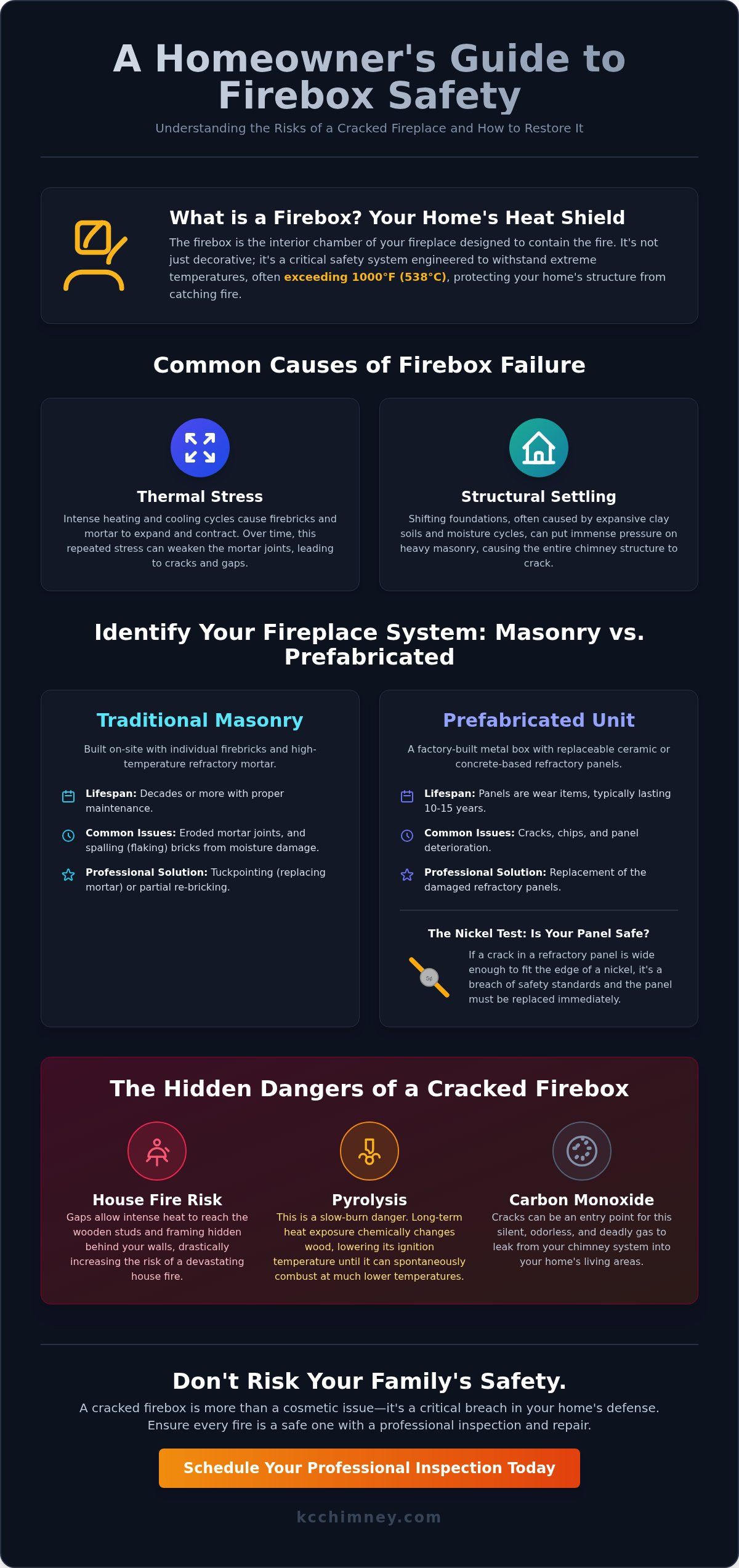
The firebox is the engine of your fireplace. It is the specific interior chamber where you stack logs and strike a match. Understanding What is a Firebox is essential because this area endures the most extreme stress in your entire home. It isn’t just a decorative alcove; it is a precision-engineered box designed to contain temperatures that often exceed 1,000°F. When this containment system fails, it’s usually due to a combination of intense thermal cycles and the unique environmental pressures found in Johnson County.
If you’ve noticed gaps in the bricks or crumbling dust on the hearth, you might need a Stilwell firebox repair. These issues often stem from two distinct sources: thermal stress and structural settling. Thermal stress occurs when the materials expand and contract too rapidly during a fire. Settling, however, is often tied to the expansive clay soils common in our part of Kansas. These soils shift with the seasons, putting immense pressure on your home’s foundation and the heavy masonry of your chimney system.
The Science of Refractory Materials
Your firebox isn’t built with the same red bricks found on your home’s exterior. It uses specialized firebricks, which are dense and capable of withstanding high heat without shattering. These bricks are held together by refractory mortar. Unlike standard mortar, which can become brittle and turn to sand when heated, refractory mortar is designed to expand and contract in sync with the bricks. If a previous builder used standard masonry materials, the joints will eventually fail. This leaves dangerous gaps that expose your home’s wooden framing to direct heat and sparks.
Local Stilwell Factors: From Historic Hearths to Modern Builds
Stilwell presents unique challenges for masonry. In older farmhouses near 199th Street, we often see hand-laid fireboxes that have reached the end of their natural lifespan after decades of use. These historic hearths often require careful tuckpointing to restore their integrity. Meanwhile, in newer developments around Metcalf Avenue, we frequently encounter settling issues. Kansas humidity cycles play a major role here. High summer moisture followed by dry winter air causes the soil to swell and shrink, which can pull masonry joints apart. A professional Stilwell firebox repair addresses these local environmental factors to ensure your hearth remains a safe sanctuary for your family.
Masonry vs. Prefabricated Fireboxes: Identifying Your System
Before you can address a crack or crumbling mortar, you must identify which type of system is installed in your home. A masonry firebox is built on-site using individual firebricks and mortar, often integrated into the structural foundation of the chimney. In contrast, a prefabricated fireplace is a factory-built metal unit with replaceable refractory panels that mimic the look of brick. Identifying your system is the first step toward a proper Stilwell firebox repair because the materials and safety requirements for each are entirely different.
Masonry systems are designed for longevity, often lasting decades when given regular care. Prefabricated panels are considered wear items with a typical lifespan of 10 to 15 years. Using a DIY patch kit on either system is a risky shortcut. These store-bought pastes often lack the structural bond needed for Professional Firebox Restoration and can fail during the first high-heat fire of the season. If you’re unsure which system you have, scheduling a Level 2 Inspection can provide the clarity you need to move forward safely.
Traditional Masonry Fireboxes: Tuckpointing and Re-bricking
Traditional fireboxes fail when the mortar joints erode or the bricks themselves begin to spall. Spalling occurs when moisture trapped inside the brick freezes and expands, causing the face of the brick to flake off in layers. This isn’t just an aesthetic issue; it thins the protective barrier between the fire and your home. Repairing these units involves carefully removing the damaged bricks and performing specialized tuckpointing with refractory mortar. This process ensures the new joints can handle the intense thermal expansion that occurs every time you light a fire.
Prefabricated Systems: Replacing Refractory Panels
Prefabricated fireplaces rely on thick ceramic or concrete-based panels to protect the outer metal cabinet from melting. You can check the health of these panels using the nickel test. If a crack is wide enough to insert the edge of a nickel, the panel is no longer safe and requires immediate replacement. Because these units are engineered systems, you must use exact manufacturer matches. A cracked prefab panel is an automatic fire hazard because it allows heat to reach the metal shell, which isn’t designed for direct flame contact. Replacing these panels is a straightforward process that restores the unit to its original safety specifications without the need for extensive masonry work.
Whether your home features a historic brick hearth or a modern factory-built unit, maintaining the integrity of the firebox is non-negotiable. A targeted Stilwell firebox repair ensures that your fireplace remains a safe, efficient heat source rather than a liability. Taking action when you first notice small cracks prevents the need for a full, costly rebuild later on.
Safety Risks: The Hidden Danger of a Cracked Firebox
A crack in your fireplace floor or walls might look like a minor cosmetic issue, but it acts as a direct pathway for heat to escape the containment zone. When the internal structure of your hearth is compromised, the primary concern shifts from aesthetics to home preservation. Gaps as small as 1/8 of an inch can radiate enough heat to ignite the wooden studs hidden behind the masonry. This is why a prompt Stilwell firebox repair is essential for maintaining the safety of your property.
Beyond the immediate threat of fire, a damaged firebox can allow embers to bypass the throat of the fireplace and land on the smoke shelf. This area often accumulates creosote, a highly flammable byproduct of wood combustion. If an ember ignites this buildup, it can lead to a chimney fire that spreads rapidly through the flue system. Because these gaps are often hidden in the corners of the box, a Level 2 Inspection is non-negotiable whenever you spot visible damage.
Heat Transfer and the Wood Framing Threat
Building codes in Stilwell, specifically the 2018 International Residential Code (IRC), require strict clearances between masonry and combustible materials. For example, wood beams and studs must maintain a clearance of at least 2 inches from the front and sides of a masonry fireplace and 4 inches from the back. Pyrolysis is the chemical decomposition of wood due to long-term heat exposure. Even if wood doesn’t touch a flame, repeated exposure to high temperatures through a firebox crack lowers its ignition point. Over time, the wood framing can catch fire at much lower temperatures than it would when new.
Smoke and Gas Intrusion
The integrity of your firebox is also the first line of defense for your indoor air quality. Cracks disrupt the natural draft of the chimney, which can cause back-puffing into your living space. If you notice soot staining on your mantle or the smell of smoke in the room when a fire is lit, your firebox may be leaking. These gaps also provide a path for carbon monoxide to enter your home rather than being vented safely up the flue. Ensuring your system is airtight through a professional Stilwell firebox repair protects your family from these invisible respiratory hazards.
Professional Firebox Restoration: Repair vs. Rebuild
Deciding between a minor patch and a complete overhaul depends on the depth of the damage discovered during your inspection. A few surface cracks in the mortar joints might only require a targeted Stilwell firebox repair, while deep, structural fissures often signal that the masonry has reached its point of no return. Our priority is to preserve as much of your original hearth as possible, but we won’t compromise on safety. If the back wall of the firebox has begun to lean or the bricks are crumbling into dust, a rebuild is the only way to ensure your home remains protected from extreme heat.
Modern restoration technology has introduced more efficient ways to seal your fireplace without a total tear-out. We often utilize HeatShield Cerfractory foam to smooth out pitted masonry and fill internal voids. This specialized material creates a seamless, heat-resistant barrier that restores the integrity of the firebox walls. It’s an excellent solution for homeowners who want to maintain the aesthetic of their existing fireplace while upgrading its safety performance to meet current standards. If you’re concerned about the state of your hearth, you can schedule a Level 2 Inspection to receive a professional assessment of your repair options.
The Tuckpointing Process for Fireboxes
Tuckpointing a firebox is a precision task that differs significantly from exterior masonry work. We use specialized tools to grind out the old, sandy mortar to a specific depth, taking care not to chip the edges of the firebricks. Once the joints are clean, we apply fresh refractory mortar using proper striking techniques to ensure a tight, airless seal. Patience is vital during this stage. The new mortar requires a specific curing time, typically 48 to 72 hours, before you can build a fire. Lighting a fire too soon can cause the moisture in the mortar to boil, leading to immediate cracking and failure of the Stilwell firebox repair.
Full Rebuilds: Structural Integrity for the Next 50 Years
When a firebox is structurally unsound, a full rebuild is the safest path forward. This process begins with a careful tear-out phase where we use heavy-duty HEPA vacuums and floor protection to keep your home free from soot and masonry dust. We then construct a new firebox from the ground up, often redesigning the floor to reflect more heat back into your living room. A critical part of this process is ensuring the new masonry integrates perfectly with your existing chimney flue. This seamless transition prevents smoke turbulence and ensures that your fireplace vents efficiently for decades to come.
Best Chimney Services: Your Stilwell Firebox Specialists
Choosing a partner for your Stilwell firebox repair means trusting someone with the very heart of your home. We treat every project with the same care we would give our own families, prioritizing safety above all else. Our team understands that masonry work can be intimidating, which is why we’ve perfected a mess-free process. We use industrial-grade dust containment systems and heavy-duty floor protection to ensure that while we’re restoring your hearth, your living room remains spotless. This commitment to cleanliness is a hallmark of our service across southern KC and the surrounding communities.
Before any tools touch your bricks, we begin with a comprehensive chimney inspection. This step is critical because firebox damage is often a symptom of larger issues within the flue or foundation. Our technicians are certified professionals who stay current with both historic masonry techniques and modern building codes. We don’t just patch holes; we analyze the entire system to ensure your fireplace is a safe place for family gatherings. By identifying the root cause of a crack, we prevent the same issue from returning next season.
A Neighborly Approach to Masonry
With over 10 years of experience serving Johnson and Miami counties, we’ve built our reputation on honesty and technical mastery. Our “no-pressure” sales philosophy means we’ll never try to sell you a full rebuild if a targeted tuckpointing job will suffice. We focus on what is necessary for the long-term safety and integrity of your home. This neighborly approach to high-integrity chimney repair has made us a trusted fixture in the Stilwell community. We value long-term relationships over quick sales, ensuring that our neighbors can enjoy their fireplaces with complete peace of mind.
Schedule Your Stilwell Firebox Evaluation
When you book your first appointment, you can expect a methodical and transparent process. We utilize advanced video technology to look deep into the corners of your firebox and up into the smoke chamber. We show you exactly what we see, explaining any cracks or deterioration in plain English. This visual evidence allows you to make an informed decision about your Stilwell firebox repair without any guesswork. Our goal is to provide you with a clear path forward and a durable solution that looks great and lasts for years. We take pride in our specialized niche, blending the grit of manual labor with the precision of modern safety standards.
Ready to restore the safety of your hearth? Contact Best Chimney Services for a Stilwell firebox consultation today and let our local experts handle the rest with the care your home deserves.
Secure Your Hearth for the Seasons Ahead
Protecting your home starts with a clear understanding of the firebox. It’s the critical heat shield that stands between a roaring fire and your house framing. Whether you manage a traditional masonry hearth or a modern prefabricated system, ignoring small cracks can lead to significant safety hazards. These range from carbon monoxide intrusion to the invisible threat of heat transfer to wooden studs. Professional restoration ensures your fireplace meets modern safety standards while preserving the beauty of your masonry for years to come.
Choosing a local expert for your Stilwell firebox repair provides the peace of mind that comes from technical mastery and neighborly service. Best Chimney Services has been locally owned since 2012, offering 5-star rated service across Stilwell and Overland Park. Our CSIA Certified Technicians use advanced video technology to provide honest assessments and high-integrity repairs. You don’t have to guess about the safety of your home when professional help is just a call away.
Schedule Your Stilwell Firebox Safety Inspection Today and enjoy the warmth of your hearth with total confidence. We look forward to helping you keep your home safe and secure for many winters to come.
Frequently Asked Questions
Is it safe to use my fireplace if the firebox has a small crack?
It is generally not safe to use a fireplace with any visible cracks in the firebox. Even a hairline fracture acts as a conduit for intense heat and combustion gases to reach the combustible wooden framing behind the masonry. This repeated exposure can lead to a house fire through a process called pyrolysis. You should have a professional evaluate the damage before lighting another fire to ensure your home remains protected.
How much does firebox repair typically cost in Stilwell?
The cost of a Stilwell firebox repair depends on the extent of the damage and the type of fireplace you own. Minor repairs like tuckpointing a few eroded joints are relatively straightforward maintenance tasks. However, a full rebuild of the firebox walls or floor involves more labor and materials. We recommend a professional assessment to determine the specific needs of your hearth so you can receive an accurate estimate for the work.
Can I use regular cement to patch my fireplace cracks?
You should never use regular bag cement or mortar for fireplace repairs. Standard masonry materials aren’t designed to withstand the extreme thermal expansion that occurs during a fire. They will quickly become brittle, crack, and fall out of the joints. Professionals use specialized refractory mortar, which is engineered to maintain its structural bond at temperatures exceeding 1,000°F.
What is the difference between firebrick and regular red brick?
Firebrick is made from a specialized clay that is much denser and more heat-resistant than standard red brick. While regular brick is perfect for the exterior of your home, it’s too porous for the inside of a fireplace. The intense heat of a fire will cause standard bricks to disintegrate or shatter. Firebricks are designed specifically to absorb and reflect heat without losing their structural integrity over decades of use.
How long does a professional firebox repair take to complete?
Most professional Stilwell firebox repair projects are completed within one to two days. Simple joint repairs are often finished in a single afternoon, while a full rebuild takes longer due to the precision masonry required. After the work is done, you’ll need to wait for a curing period of 48 to 72 hours. This ensures all moisture has evaporated from the refractory mortar before it’s exposed to high heat.
Why are my firebox walls peeling or flaking off?
This flaking is known as spalling, and it’s usually caused by moisture intrusion. When water gets trapped inside the porous structure of a brick and then heats up during a fire, the internal pressure causes the face of the brick to pop off. Spalling is a clear sign that the masonry is weakening. If left unaddressed, the bricks will continue to thin until they can no longer safely contain the heat of your fires.
Do I need to replace my whole chimney if the firebox is damaged?
You rarely need to replace an entire chimney just because the firebox is damaged. The firebox is a distinct component that can usually be repaired or rebuilt independently of the exterior chimney structure. However, it’s important to identify why the damage occurred. If the firebox is cracking due to foundation settling, we’ll need to inspect the rest of the chimney to ensure the entire system is still stable and safe.
Will firebox repair create a lot of dust in my home?
A professional repair shouldn’t leave your home covered in dust. We use industrial HEPA vacuums and specialized containment systems to capture masonry dust at the source during the grinding process. By using heavy-duty drop cloths and sealing off the work area, we ensure that the soot and debris stay inside the fireplace. Our goal is to leave your home just as clean as we found it.