
What if the very hearth that defines your home’s historic character is quietly compromising your family’s safety? You take immense pride in your property, but the intricate masonry of these older chimneys often hides cracks and deterioration that a standard visual check misses. It’s natural to worry that a necessary Mission Hills chimney flue repair might strip away the architectural soul of your home or lead to an overwhelming reconstruction project. You shouldn’t have to choose between a functional fireplace and the aesthetic integrity of your historic residence.
We understand that protecting your family from house fires and carbon monoxide is your top priority. This article explains why Mission Hills’ unique architecture requires specialized flue techniques and how you can restore your chimney’s efficiency. We’ll cover the critical differences between relining and resurfacing, the importance of modern video diagnostic tools, and how to stay compliant with current building codes while preserving your home’s value. From navigating Architectural Review Board expectations to choosing the right restoration method, you will find the clarity you need to enjoy your fireplace with total peace of mind.
Key Takeaways
- Learn why the complex masonry and multi-flue systems common in historic Mission Hills homes require specialized maintenance to vent toxic gases safely.
- Identify critical warning signs of deterioration, such as clay shaling in your firebox or white staining on your exterior chimney breast.
- Understand the technical differences between stainless steel relining and ceramic resurfacing to choose the most durable Mission Hills chimney flue repair for your property.
- Discover how the specific Kansas City freeze-thaw cycle accelerates masonry damage and why proactive moisture protection is essential for chimney longevity.
- Gain peace of mind by learning how professional, mess-free inspections ensure your hearth remains a safe and efficient centerpiece of your home.
Understanding the Unique Flue Systems in Mission Hills, KS
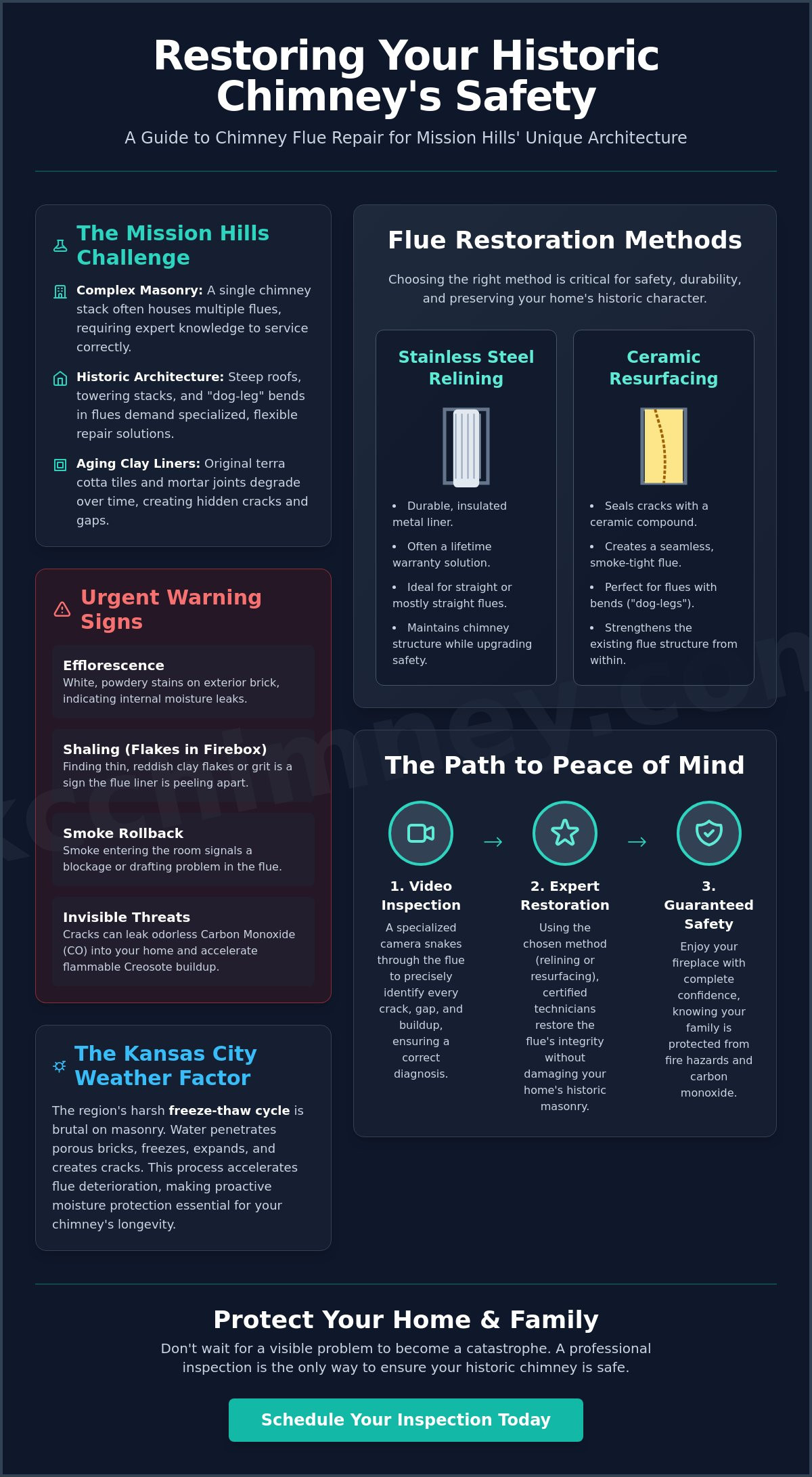
A chimney flue is more than just a vent in your roof. It is a vital, engineered duct designed to channel combustion byproducts, such as carbon monoxide and smoke, safely out of your home. Understanding the Unique Flue Systems in your residence is the first step in maintaining a healthy hearth. In the 66208 zip code, these systems are notably complex. Many of our local estates were designed with central masonry hubs that consolidate venting for multiple rooms. This means one chimney stack might house three or four separate flues, each with its own specific draft requirements and structural needs. Because of this interconnected design, a Mission Hills chimney flue repair requires a higher level of technical mastery than a standard suburban patch job.
The Role of Clay Tile Liners in Older Homes
Most historic residences in our community were built using terra cotta clay tiles. These liners were the industry standard for decades because clay naturally resists heat and corrosion. However, the mortar joints holding these tiles together weren’t built to last forever. Over time, the acidic byproducts of wood or gas fires degrade the mortar, creating dangerous gaps. These openings allow heat to transfer to combustible wooden framing or let toxic gases seep into your living spaces. Since these issues are hidden behind thick layers of brick, a professional chimney inspection kansas city is the only reliable way to verify the integrity of your clay liner.
Architectural Challenges of Mission Hills Chimneys
Repairing a chimney in Mission Hills presents logistical hurdles you won’t find in newer developments. Our neighborhood is famous for its steep roof pitches, towering stacks, and ornate masonry details. These features are architectural treasures, but they create tight working conditions and difficult access points. Many historic flues weren’t built in a straight line; they often have “dog-legs” or shifts to navigate around windows or other structural elements. A Mission Hills chimney flue repair often involves navigating these narrow offsets that generic, rigid liners cannot handle. We focus on specialized techniques that protect your historic exterior while bringing the interior venting system up to modern safety standards.
Warning Signs Your Chimney Flue Needs Urgent Repair
Detecting a faulty flue early can prevent catastrophic damage to your home’s structure. One of the most visible external signs is efflorescence. This white, powdery salt deposit appears on the exterior brickwork when moisture pushes through the chimney walls. It suggests that your flue liner is no longer containing moisture and heat effectively. If you notice these stains or feel a drafty chill when the fireplace isn’t in use, it’s time to consider a professional Mission Hills chimney flue repair to prevent further masonry decay.
Physical Indicators in the Firebox
When you clear out ash, pay close attention to what’s left behind. Finding thin, reddish flakes or sand-like grit is a definitive sign of “shaling.” This happens when the clay tile liner begins to peel and delaminate due to age and moisture. These flakes often collect behind the damper or in the smoke shelf, creating hidden blockages. You might also notice vertical cracks in the visible portion of the flue just above the firebox. Even a small amount of smoke rolling back into your living room isn’t just a minor nuisance; it’s a warning that your flue’s drafting capability is compromised. It’s a safety risk you shouldn’t ignore.
The Invisible Threat: Carbon Monoxide and Creosote
Structural cracks in a flue are particularly dangerous because they allow invisible threats to bypass your chimney’s defenses. Carbon monoxide is odorless and can seep through even hairline fractures into bedrooms or upper floors. Additionally, a jagged or cracked flue surface provides more surface area for creosote to cling to. This highly flammable byproduct of wood burning builds up faster in damaged flues, significantly increasing the risk of a chimney fire. Most of these hazards remain invisible from the hearth, which is why a comprehensive chimney inspection is the only way to ensure your family’s safety. If you’ve noticed any of these red flags, it’s wise to have a specialist take a look before your next fire. You can learn more about our process at kcchimney.com to see how we help neighbors keep their historic homes safe.
Flue Restoration Methods: Relining vs. Resurfacing
Choosing the right restoration method for your hearth is a precision task that requires a deep understanding of masonry physics. It’s not a one-size-fits-all situation. When you’re looking at a Mission Hills chimney flue repair, you generally have two primary paths: relining with stainless steel or resurfacing with specialized ceramic. Both methods aim to create a seamless, gas-tight path for exhaust, but the best fit depends on your chimney’s dimensions and current state of decay. Experienced chimney repair kansas city specialists use internal video diagnostics to see which method provides the highest level of protection for your specific masonry structure.
Stainless Steel Chimney Relining
Relining is often called the “pipe-within-a-pipe” solution. It’s a robust choice for both wood-burning and gas systems, especially when the original clay tiles are too damaged to support a coating. In our local climate, we prioritize 316Ti alloy liners. This titanium-stabilized stainless steel is specifically engineered to withstand the high humidity and corrosive condensation typical in the Missouri and Kansas region. We don’t just drop a pipe down the hole; we wrap the liner in high-temperature insulation. This critical step keeps the flue gases hot for a better draft and ensures the exterior masonry stays cool, which significantly reduces house fire risks in older homes.
Ceramic Flue Resurfacing (HeatShield)
For many historic Mission Hills homes, maintaining the original flue diameter is essential for a proper draft. This is where ceramic resurfacing, often using the HeatShield system, provides a superior alternative. This method involves applying a specialized ceramic-refractory foam over the existing clay tiles to “heal” the original structure. It’s an excellent way to fill gaps in mortar joints or smooth out spalled tile surfaces without the need for a metal insert. When choosing the right Mission Hills chimney flue repair strategy, we evaluate three ceramic options:
- Joint Repair: Specifically targets gaps and eroded mortar between clay tiles.
- Resurfacing: Coats the entire internal flue from top to bottom to seal hairline cracks.
- Sleeving: Adds a thin, high-strength ceramic layer for additional structural integrity.
This approach restores the flue’s integrity while keeping the chimney’s internal physics exactly as the original architects intended. It’s particularly useful in multi-flue chimneys where space is at a premium and installing multiple metal pipes might be physically impossible without major masonry alterations.
Why Kansas City Weather Makes Flue Maintenance Critical
Living in the Kansas City metro means dealing with some of the most erratic weather in the country. Our local climate is particularly hard on masonry structures. When rain or snowmelt seeps into the tiny pores of your chimney’s brickwork or the hairline fractures of a clay liner, it sets a destructive process in motion. This moisture penetration is the primary driver behind the need for Mission Hills chimney flue repair. Without a sound flue and a watertight exterior, your chimney is essentially an open target for the elements.
The mature tree canopy that defines Mission Hills adds a unique challenge. While the towering oaks and elms provide beautiful scenery, they also create dense shade that prevents chimneys from drying out quickly after a storm. This persistent dampness, combined with high summer humidity, leads to “mortar rot.” This is a process where the chemical bonds in the mortar joints dissolve, leaving the flue tiles unsupported and prone to shifting. It’s a silent cycle of decay that often goes unnoticed until a major failure occurs.
The Dangers of Winter Expansion
Winter is the most aggressive season for flue damage. During our frequent freeze-thaw cycles, trapped water expands as it turns to ice. This expansion exerts immense pressure inside existing cracks, effectively prying them wider with every cold snap. A chimney that appeared functional in November can become a serious fire hazard by February as these cracks grow. Installing a high-quality chimney cap is one of the most effective ways to prevent this. It acts as a primary shield, keeping bulk water out of the flue and protecting your internal masonry from the inside out.
Preparing Your Flue for the 2026 Burning Season
The best time to address these issues is during the spring and summer months. Most homeowners wait until the first cold snap to think about their hearth, which leads to a massive rush for service in the fall. By scheduling your fireplace repair early, you ensure your home is ready before the burning season begins. Proactive maintenance is always more cost-effective than a full chimney rebuild. We recommend that you schedule your annual inspection now to identify small weather-related issues before they turn into expensive structural problems. Taking care of your Mission Hills chimney flue repair during the off-season gives you the peace of mind that your home is protected well before the snow starts to fall.
Expert Mission Hills Flue Repair with Best Chimney Services
Restoring a historic hearth requires more than just technical skill; it demands a deep respect for the architectural heritage of our community. We specialize in the unique requirements of the 66208 area, where complex masonry and custom-built systems are the standard. When you choose us for your Mission Hills chimney flue repair, you are partnering with a team that views itself as a guardian of your home’s safety and value. Our certified technicians combine the grit of specialized manual labor with high-tech diagnostic tools to ensure every project meets rigorous industry standards. This blend of tradition and technology is why local homeowners consistently trust us for chimney repair kansas city.
We understand that inviting a service provider into your home requires trust. Our approach is rooted in transparency and reliability. We don’t just perform a mechanical service; we provide peace of mind. By focusing on the human element of our trade, we ensure that every interaction is polite, professional, and informative. We take pride in our specialized niche and aim to provide a service that feels personal rather than corporate.
Our Multi-Level Inspection Process
We believe that you cannot fix what you cannot see. That is why we include internal video scanning with every flue evaluation. Our high-definition cameras travel the entire length of the chimney, revealing hidden cracks, eroded mortar joints, and structural shifts that a standard visual check would miss. Once the inspection is complete, we provide a clear, honest report that prioritizes your family’s safety. We don’t believe in high-pressure sales tactics or temporary patches. Instead, we focus on long-term durability, offering transparent quotes for solutions like stainless steel relining or ceramic resurfacing that will stand up to the Kansas City climate for decades. Our goal is to demystify the process so you feel confident in the integrity of your fireplace.
Schedule Your Mission Hills Consultation
Preparing for the 2026 burning season starts with a simple phone call or online booking. When our neighborly team arrives for your first visit, you can expect a professional and mess-free experience. We use specialized drop cloths and high-efficiency vacuums to ensure your living room remains spotless while we work. We take the time to walk you through our findings and answer any technical questions you might have about your chimney’s specific design. Don’t wait until the first frost to discover a hidden flue defect. Protect your Mission Hills home—schedule your flue repair today! Our methodical approach ensures that every project is handled with the measured care your historic property deserves.
Secure the Future of Your Historic Hearth
Protecting your home’s architectural legacy starts with ensuring its internal systems are as robust as its exterior masonry. You’ve seen how the unique multi-flue designs of our local estates require more than a generic fix and why the Kansas City freeze-thaw cycle is such a persistent threat to clay tile liners. By identifying warning signs like shaling or efflorescence early, you prevent minor cracks from becoming major structural hazards. A professional Mission Hills chimney flue repair is an investment in both your property’s value and your family’s safety.
Our CSIA Certified Technicians have been serving Mission Hills and the wider KC metro since 2012. As A+ rated local chimney experts, we provide the technical mastery and neighborly care your historic property deserves. We use internal video scanning to ensure every repair is precise, durable, and fully compliant with modern safety standards. We’re here to help you navigate the complexities of restoration while keeping your home clean and your fireplace functional.
Schedule Your Mission Hills Flue Inspection & Repair
Take the first step toward a safer, more efficient fireplace today so you can enjoy your hearth with total confidence for years to come.
Frequently Asked Questions
What is a chimney flue and why does it need repair?
A chimney flue is the internal duct that channels smoke and toxic gases out of your home. It requires repair when the original clay tiles crack or the mortar joints erode, as these gaps allow heat to reach combustible framing. Over time, the acidic byproducts of combustion eat away at the masonry, which can lead to structural failure or carbon monoxide leaks into your living spaces.
How much does chimney flue repair cost in Mission Hills, KS?
The cost for a Mission Hills chimney flue repair varies based on the chimney’s height, the number of flues involved, and the chosen restoration method. Since historic homes in the 66208 area often feature complex, multi-flue designs, a personalized evaluation is necessary. Factors like the extent of masonry decay and accessibility for specialized equipment will ultimately determine the total investment required to restore safety.
Can I use my fireplace if the flue is cracked?
You should not use your fireplace if you suspect or know the flue is cracked. A fractured liner cannot properly contain heat or toxic gases, which significantly increases the risk of a house fire or carbon monoxide poisoning. Even a hairline crack can allow embers to reach dry wood inside your walls. It’s best to keep the damper closed until a professional verifies the system’s integrity.
What is the difference between a chimney flue and a chimney liner?
A chimney flue is the actual passageway or duct that exhaust gases travel through, while a chimney liner is the protective layer installed inside that space. In many older homes, the flue is lined with terra cotta clay tiles. Modern liners, such as stainless steel pipes or ceramic coatings, are often added during a Mission Hills chimney flue repair to provide a seamless barrier that the original masonry lacks.
How long does a stainless steel chimney liner last?
A high-quality stainless steel liner, particularly one made from 316Ti alloy, is designed to last for several decades. Many of these systems are engineered to last 50 years or even for the lifetime of the home when properly maintained. Regular sweeping and annual inspections are essential to prevent corrosive soot buildup from shortening the lifespan of the metal and ensuring its continued performance.
Does my gas fireplace need a flue inspection too?
Gas fireplaces require regular flue inspections because they produce high levels of moisture and carbon monoxide. While they don’t create creosote like wood fires, the water vapor produced during gas combustion can mix with other chemicals to form an acidic liquid. This acid eventually eats through clay tiles and mortar joints, causing hidden structural damage that only a professional video inspection can detect.
How do I know if my historic chimney flue is safe for 2026?
The only way to confirm your historic chimney is safe for the 2026 burning season is through a Level 2 inspection that includes internal video scanning. This process allows technicians to view the entire length of the flue in high definition. We look for specific issues like shaling, gaps in the mortar, or blockages from nesting animals that are impossible to see from the hearth or the rooftop.
Can you repair a flue without tearing down the chimney?
We can almost always repair a damaged flue without tearing down the exterior masonry. Modern techniques like stainless steel relining or ceramic resurfacing allow us to restore the internal duct from the top down or bottom up. These methods create a new, safe venting system within the existing structure, which preserves the historic aesthetic of your property while avoiding the mess and expense of a full rebuild.