
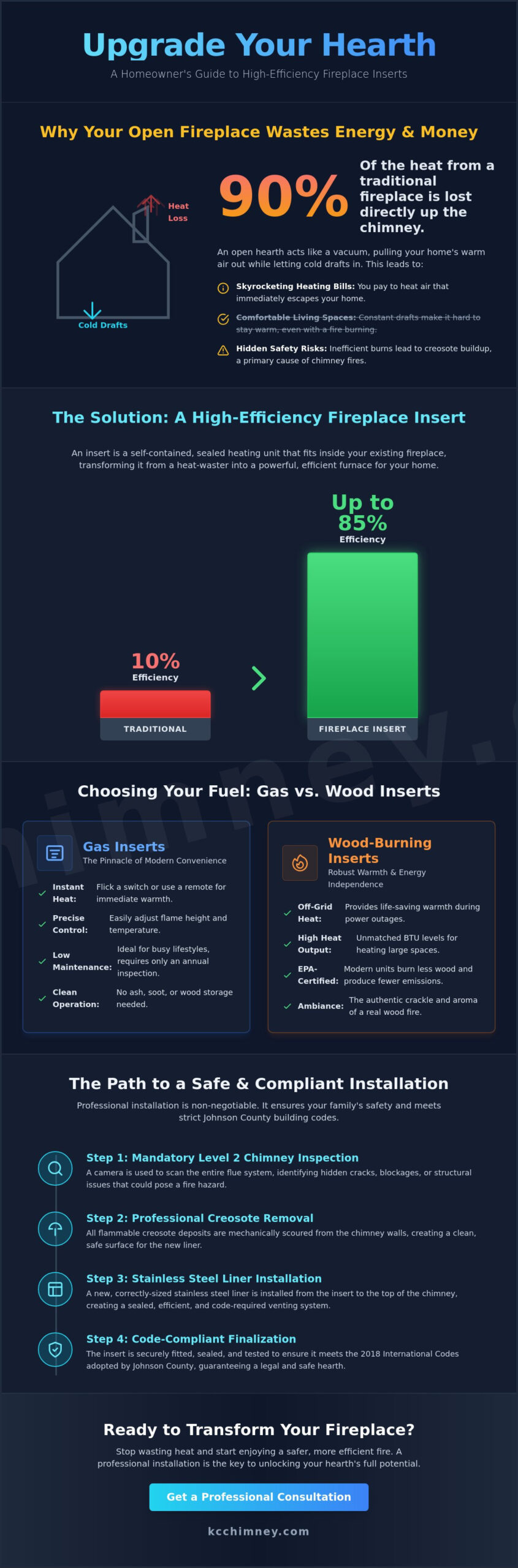
Did you know that a traditional open fireplace can lose up to 90% of its heat directly through the chimney? When you search for fireplace insert installers Spring Hill, you’re likely looking for a way to stop high heating bills and drafty living rooms. It’s frustrating to feel a chill even when the logs are burning, especially when you’re concerned about hidden creosote buildup or chimney safety. Your hearth should be a reliable source of protection and comfort, not a source of worry or wasted money.
This guide explains how a professional fireplace insert installation can transform your inefficient hearth into a high-performance system, boosting efficiency by up to 85% while ensuring total family safety. We’ll break down the confirmed 2026 costs for gas, wood, and electric models, explain the 2018 International Codes adopted by Johnson County, and help you select a licensed team that prioritizes technical integrity over a quick sale. You’ll learn exactly what it takes to upgrade your home’s warmth while meeting the strict permit requirements of the Spring Hill area.
Key Takeaways
- Learn how a self-contained insert transforms your masonry fireplace from a heat-wasting draft into a high-efficiency heating system.
- Discover why the most reliable fireplace insert installers in Spring Hill insist on a mandatory Level 2 Chimney Inspection to protect your home from hidden fire hazards.
- Evaluate the benefits of gas versus wood-burning inserts, balancing modern convenience with the ritual and high BTU output of real wood.
- Understand the technical necessity of stainless steel liners and professional creosote removal for a safe, code-compliant installation.
- Gain peace of mind by learning how certified local technicians navigate Johnson County building codes to ensure your hearth is both warm and legal.
Why Spring Hill Homeowners are Switching to Fireplace Inserts
A traditional masonry fireplace is often the heart of a home, but it’s rarely an efficient way to stay warm during a Kansas winter. Most homeowners don’t realize that an open hearth acts like a giant vacuum, pulling warm air out of your living room and venting it directly into the sky. Research shows that open fireplaces lose up to 90% of their heat through the chimney. This efficiency gap is the primary reason residents look for What is a Fireplace Insert? to solve the problem. A fireplace insert is a self-contained heating unit designed to fit securely into your existing masonry structure, effectively turning a decorative feature into a powerful furnace.
In Spring Hill and the surrounding Johnson County area, winter temperatures frequently drop below freezing. Relying on a central HVAC system to heat every corner of a house can lead to skyrocketing utility bills. Expert fireplace insert installers Spring Hill help residents implement “zone heating.” This strategy allows you to turn down the thermostat for the rest of the house while keeping your main living area at a comfortable temperature. Beyond the cost savings, these units offer a significant safety upgrade. Because inserts utilize a sealed system and a dedicated stainless steel liner, they drastically reduce the risk of creosote buildup and chimney fires.
Efficiency vs. Traditional Open Fireplaces
Modern inserts operate using a sealed combustion system. This means they draw air from outside the home for the fire rather than using the air you’ve already paid to heat. Many models achieve efficiency ratings between 60% and 90%, which is a massive leap from the 10% efficiency of a standard hearth. When the unit isn’t running, the heavy duty glass doors and gasket seals prevent cold drafts from entering your home. It’s a permanent solution to the chilly living room problem that many older Spring Hill homes face during the peak of January.
Boosting Your Spring Hill Property Value
Upgrading your hearth is a strategic investment in your property. In the competitive Johnson County real estate market, energy efficient features are a major selling point for families. Modern gas and wood designs offer a clean, updated aesthetic that appeals to contemporary buyers. Since Spring Hill follows the 2018 International Codes, having a professionally installed, code compliant heating system adds a layer of verified quality to your home. Most buyers view a high efficiency insert as a premium upgrade. Working with qualified fireplace insert installers Spring Hill ensures the job is done right the first time, protecting your investment for years to come. While focusing on your fireplace, you might also consider other high-impact interior updates; for instance, Cabinet refinishing Denver offers specialized painting services that you can read more about to see how a professional finish can revitalize your home.
Choosing the Right Insert: Gas vs. Wood for Your KC Home
Deciding on a fuel type is the first major step in your hearth upgrade. This choice impacts your daily routine, your home’s energy independence, and your long term maintenance schedule. Professional fireplace insert installers Spring Hill often see homeowners torn between the push button ease of gas and the traditional crackle of a real wood fire. Both options provide a massive efficiency boost over an open hearth, but they serve different lifestyle needs.
The Case for Gas Fireplace Inserts
Gas units represent the pinnacle of modern convenience. They provide instant heat with the flick of a switch or a tap on a remote control. For busy families in Mission Hills and Overland Park, this means you can enjoy a fire for twenty minutes before bed without worrying about extinguishing logs. Many models allow you to precisely adjust flame height and heat output, giving you total control over the room’s temperature. Because these systems are highly reliable, a gas fireplace repair is rarely needed if you invest in a basic annual inspection to check the pilot assembly and valves.
The Benefits of Wood Burning Inserts
If you value the ritual of building a fire and want total energy independence, a wood burning insert is your best choice. These units continue to provide life saving warmth during Kansas ice storms even when the power goes out. Modern models are EPA-certified for efficiency, which means they burn significantly less wood than older stoves while producing more heat. The heavy cast iron or plate steel components act as a thermal battery, radiating warmth long after the flames have subsided. It’s a robust solution for homeowners who don’t mind the physical labor of hauling and stacking logs.
Maintenance requirements differ significantly between the two types. Wood inserts require an annual chimney sweeping to remove creosote, a flammable byproduct of wood smoke. Gas inserts don’t produce soot, but they still require a professional to check the venting and ensure no debris has blocked the flue. Fuel sourcing is also a factor. Most Spring Hill properties have easy access to natural gas lines, making gas inserts a “set it and forget it” option. Wood users in Johnson County must source seasoned hardwood, which requires at least six months of drying time to burn cleanly. Qualified fireplace insert installers Spring Hill can verify your existing gas line capacity or inspect your wood storage area to ensure you’re ready for the season. If you’re still weighing your options, our team can provide a detailed hearth consultation to help you find the perfect fit for your home’s layout.
Key Factors for Fireplace Insert Installation in Spring Hill, KS
Installing a fireplace insert is a precision task that involves more than just sliding a metal box into your hearth. Before the unit arrives, your existing chimney must undergo a rigorous evaluation. Structural integrity is the foundation of a safe system. If your masonry has cracked flue tiles or deteriorating mortar, the new unit won’t operate safely or efficiently. Professional fireplace insert installers Spring Hill prioritize these structural checks to ensure your home meets modern fireplace safety standards before any work begins.
Chimney Relining and Venting
Most modern inserts require a dedicated stainless steel liner, typically 3 or 4 inches in diameter, to function correctly. Your old chimney flue was designed for a large, open fire, but an insert produces concentrated heat and different combustion byproducts. A new liner creates a “closed-loop” system that protects your original masonry from corrosive gases and moisture. This setup ensures that smoke and carbon monoxide are channeled directly out of your home without leaking into wall cavities. It’s a non-negotiable step for any high-integrity installation in Johnson County.
Sizing and Clearance to Combustibles
A common mistake is assuming a larger unit provides better value. In reality, an oversized insert can make a room uncomfortably hot, leading you to run it at low temperatures that cause excessive creosote buildup. We measure the height, width, and depth of your firebox to find a unit that fits perfectly while maintaining required clearances. Fire safety regulations dictate specific distances between the heat source and combustible materials like wooden mantels or trim. If your current hearth doesn’t meet these standards, fireplace insert installers Spring Hill can install custom surround panels or non-combustible floor protection to bridge the gap and ensure compliance with the 2018 International Residential Code.
Local regulations in Spring Hill are governed by the Johnson County Contractor Licensing Program. This means every installer must prove their knowledge of current safety codes and carry proper insurance. Using a licensed professional is the only way to ensure your mechanical permit is approved and your installation is recognized by your homeowner’s insurance provider. It’s about doing the job right the first time to protect your family’s peace of mind.
The Professional Installation Process: What to Expect
A professional installation follows a methodical sequence designed to protect your home’s structural integrity. Qualified fireplace insert installers Spring Hill use a five step process that begins long before the actual unit is set in place. This structured approach ensures that every component, from the gas valves to the chimney cap, meets the rigorous safety standards required in Johnson County. We treat your home with the same care we’d use for our own families, ensuring a clean and precise setup.
Why a Level 2 Inspection is Non-Negotiable
The first step is always a comprehensive expert chimney inspection in Kansas City. We use specialized video technology to examine the interior of your flue from top to bottom. This camera system identifies hidden cracks, missing mortar joints, or structural gaps that are invisible from the hearth. Skipping this step is dangerous. If a liner is installed over a damaged chimney, heat can transfer to the home’s wooden framing, creating a significant fire risk that could remain hidden for years. We provide a full report of these findings to ensure your masonry is sound enough to host a high-output appliance.
The Importance of Pre-Installation Sweeping
Before the new stainless steel liner is dropped down the chimney, the flue must be perfectly clean. Our chimney sweep Kansas City service removes all existing creosote and soot from the masonry walls. If you trap old creosote behind a new liner, it can still ignite from the radiant heat of the insert. This “hidden” fire is nearly impossible to extinguish and can destroy your chimney from the inside out. A thorough cleaning also ensures your home stays odor free once the new system begins to radiate heat throughout your living space.
Once the chimney is verified safe and clean, the technical work begins. Preparing the infrastructure is the third phase. For gas inserts, this involves running a dedicated gas line and ensuring the electrical supply is grounded and code compliant. Wood inserts may require hearth extensions if your current floor protection isn’t wide enough. The stainless steel liner is then lowered and secured to the insert, creating a direct, airtight path for all exhaust. This precision prevents “lazy” flames and ensures your unit reaches its maximum efficiency rating quickly. The final step is a live test and homeowner orientation. We walk you through every safety feature, show you how to operate the remote or air controls, and explain the proper break-in procedure. If you’re ready to secure your home’s warmth, schedule your pre-installation inspection with our certified team today.
Expert Fireplace Insert Installers in Spring Hill: The Best Chimney Difference
Choosing a team to work on your home is a matter of trust. At Best Chimney Services, we live and work in the same neighborhoods we serve. We understand the architectural nuances of Johnson County homes and the specific demands our climate places on your masonry. Our goal isn’t just to sell a product; it’s to act as a guardian of your family’s hearth. We take pride in ensuring that every installation is an investment in your home’s long term safety and efficiency.
Our technicians aren’t just mechanical installers. They’re seasoned professionals who take pride in a specialized niche. We combine the grit of manual labor with the precision of modern safety standards. This means we never take shortcuts. If we find a problem that compromises your safety, we’ll address it head-on with a clear, professional remedy. We value long term customer relationships over high pressure sales tactics. You can expect an honest, no-nonsense evaluation of your chimney’s structural health every time we step into your home. As reliable fireplace insert installers Spring Hill, we prioritize your peace of mind above all else.
Our Commitment to Johnson County Safety
Reliability is our baseline. Since 2012, Best Chimney Services has served families across Overland Park, Stilwell, and Spring Hill with a dedicated focus on protection. If our evaluation reveals structural issues, we will always prioritize chimney repair in Kansas City before proceeding with an upgrade. Installing a new appliance into a failing structure is a risk we won’t take. Our certified technicians have the technical mastery to demystify complex venting issues, providing you with honest answers and durable solutions. This commitment to integrity has made us a fixture in the community for over 14 years.
Ready to Upgrade Your Hearth?
The journey to a warmer, safer home starts with a simple conversation. When you’re ready to move forward, our team will visit your home for a detailed measurement and structural consultation. We recommend having any previous inspection reports ready so we can provide the most accurate assessment of your needs. We’ll handle the mechanical permits and ensure every detail aligns with Spring Hill’s safety standards. You deserve a living room that offers both comfort and peace of mind. Let us help you Transform your home with a professional fireplace insert installation in KC before the next winter chill arrives. We look forward to serving as your trusted local experts and ensuring your hearth remains a safe center for your family.
Secure Your Home’s Warmth for the Coming Seasons
Transforming your inefficient hearth into a high performance heating system is one of the smartest upgrades you can make for your Johnson County home. By choosing an EPA-certified wood or gas insert, you’re not just improving aesthetics; you’re stopping the 90% heat loss common in open fireplaces. This transition requires technical precision and a deep understanding of local safety standards. Working with qualified fireplace insert installers Spring Hill ensures that every component, from the stainless steel liner to the firebox seal, is installed with total integrity.
Since 2012, our locally owned team has served as a trusted guardian for Kansas City area families. Our Certified CSIA Technicians maintain an A+ rating for mess-free service, so you can enjoy a professional installation without the stress of a dirty living room. We believe in doing the job right the first time, providing you with a safe, reliable system that lowers energy costs and increases property value. Don’t let another drafty winter pass you by. Schedule Your Fireplace Insert Consultation in Spring Hill Today and experience the peace of mind that comes with expert craftsmanship and local reliability.
Frequently Asked Questions
Do I really need a chimney liner for a fireplace insert in Spring Hill?
Yes, a dedicated stainless steel liner is required for almost every installation. Modern inserts produce cooler exhaust than open fires, which can lead to condensation and masonry damage if a 3 or 4 inch liner isn’t used. Following the 2018 International Residential Code adopted by Johnson County ensures your system vents properly and prevents carbon monoxide from entering your living space. It’s a non-negotiable safety step for high-integrity installers.
How much does a fireplace insert installation typically cost in Kansas City?
Current 2026 data shows that a gas fireplace insert installation typically ranges from $2,000 to $5,000 including labor. Wood-burning models usually cost between $2,000 and $5,500. If you choose an electric unit, expenses generally fall between $700 and $5,800. These figures include the unit and the venting system. Remember to budget an additional $200 to $1,000 for gas line connections or firebox repairs if your existing masonry is damaged.
Can I install a fireplace insert myself to save money?
DIY installation is strongly discouraged and often illegal in Spring Hill. Johnson County requires all contractors to be licensed through the Contractor Licensing Program to ensure they meet strict code knowledge standards. You also need a mechanical permit for the project. Attempting this yourself can void your homeowner’s insurance and your appliance warranty. Hiring professional fireplace insert installers Spring Hill ensures the job is done right and stays code compliant.
What is the difference between a fireplace insert and a wood stove?
The main difference is the installation location and the footprint. A fireplace insert is specifically designed to slide into an existing masonry hearth, using the current chimney for venting. A wood stove is a freestanding appliance that sits on a hearth pad and can be placed anywhere with proper clearances. While both offer high efficiency, inserts are the preferred choice for homeowners who want to preserve their traditional fireplace look while upgrading performance.
How long does the installation process take from start to finish?
Most physical installations are completed in a single day, typically taking between 4 and 8 hours. However, the entire process from consultation to final testing takes longer due to permitting and inspections. You should expect a few days for the mechanical permit approval from the city. Our team coordinates these steps to ensure your new heating system is ready for use without unnecessary delays or technical hiccups.
Do I need to have my chimney swept before the installers arrive?
Yes, a professional sweep is a mandatory step before the new unit is placed. Removing creosote prevents it from becoming trapped behind the new liner, where it could ignite and cause a chimney fire. Our team includes this as part of the pre-installation process to ensure a clean, odor-free environment. It’s an essential part of our safety-first approach that protects your home’s structural integrity.
Will a fireplace insert heat my entire Spring Hill home?
Fireplace inserts are designed for high-efficiency zone heating rather than replacing a central furnace. A 30,000 BTU unit can effectively heat approximately 600 square feet, while a 60,000 BTU model can handle significantly larger open-concept areas. This allows you to stay warm in your main living space while lowering the thermostat in unused bedrooms. It’s an excellent way to reduce overall energy consumption during peak winter months in Kansas.
What kind of maintenance does a gas fireplace insert require?
Gas inserts are low maintenance but still require an annual professional inspection. A technician should check the pilot assembly, glass seals, and gas valves to ensure everything is operating at peak efficiency. We also verify that the venting system remains clear of debris or bird nests. This proactive care helps you avoid a gas fireplace repair during the coldest weeks of the year when you need the heat most.