
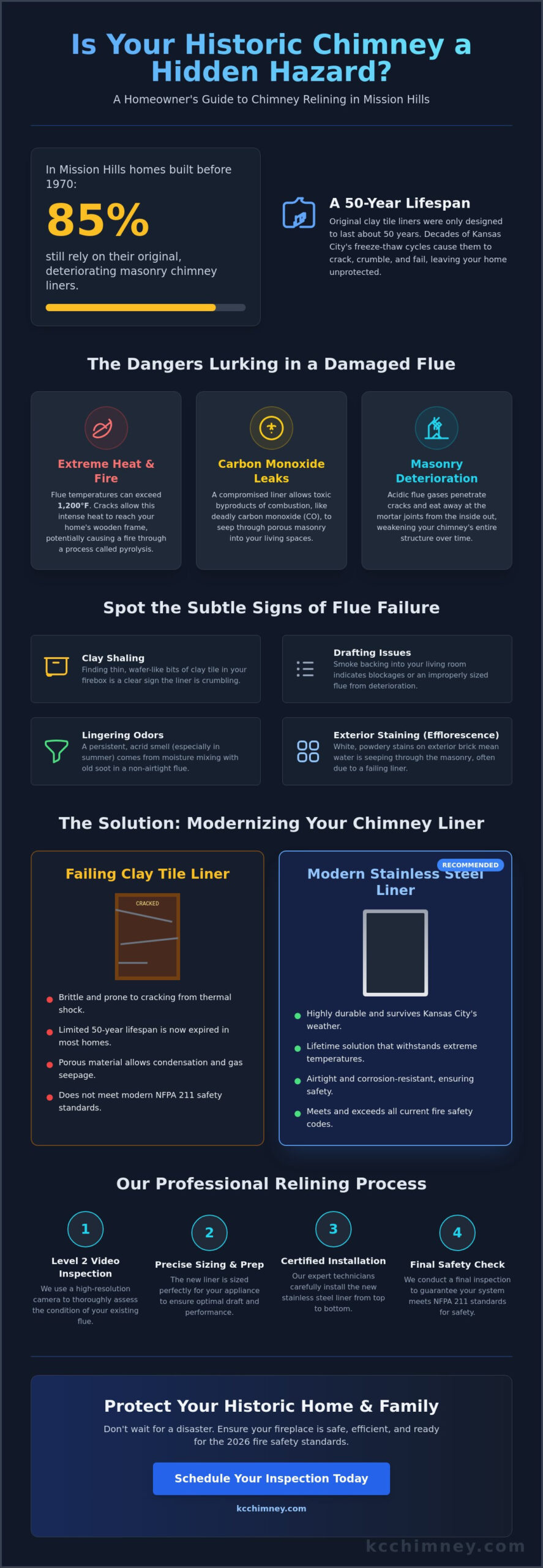
Your chimney’s original clay tile liner was likely engineered to last 50 years, yet approximately 85% of Mission Hills homes built before 1970 still rely on their original, crumbling masonry. You care deeply about the heritage of your historic property and the safety of the family inside it. It’s unsettling to think that a hidden crack in your flue could invite carbon monoxide or stray sparks into your walls. We understand that your home is an investment in the future. This is why chimney relining Mission Hills has become the most vital safety upgrade for local homeowners looking to meet the rigorous 2026 fire safety standards.
You deserve to enjoy your fireplace without the lingering fear of what’s happening behind the brickwork. We promise to help you choose the right solution for your specific masonry, ensuring your hearth remains a source of warmth rather than a liability. In the following sections, we’ll demystify the different liner materials available and provide a clear, step-by-step look at how we modernize your venting system while fully preserving your home’s architectural integrity and resale value.
Key Takeaways
- Understand how a chimney liner serves as the essential safety barrier between high heat and your home’s historic structure.
- Learn to spot the subtle warning signs of flue deterioration, such as clay shaling or drafting issues, before they become hazardous.
- Discover why stainless steel is the most durable solution for chimney relining Mission Hills homes need to survive the Kansas City weather.
- See how professional video inspections and precise installation techniques guarantee long-term integrity for your masonry.
- Identify the critical standards for choosing a certified local technician who prioritizes safety and Mission Hills building codes.
What is Chimney Relining and Why Does Your Mission Hills Home Need It?
Mission Hills is defined by its stunning historic architecture, but the very features that give these homes their character often hide outdated venting systems. At its core, a chimney liner is the innermost layer of your flue. To understand the fundamental mechanics, you can read What is a Chimney Liner and how it serves as the critical barrier between extreme heat and your home’s wooden structure. Without this protective sleeve, temperatures inside the flue can reach 1,200 degrees Fahrenheit, which is high enough to ignite nearby wall studs through a process called pyrolysis.
Beyond fire protection, a liner is responsible for the safe transit of toxic combustion byproducts. It ensures that carbon monoxide and nitrogen dioxide exit the home rather than seeping through porous masonry into your bedrooms. Investing in chimney relining Mission Hills homeowners often find that their fireplace performance improves immediately. A properly sized liner creates a tighter, more consistent draft, preventing smoke from billowing back into the living room and ensuring your wood burns more efficiently.
The Anatomy of a Mission Hills Flue
Most homes in our community built between 1920 and 1960 were constructed with either unlined brick flues or basic clay tile liners. Over several decades, the freeze-thaw cycles of Kansas City winters cause these materials to deteriorate. Clay tiles frequently crack or “spall,” dropping chunks of debris that block the airflow. Because an unlined chimney is considered a major fire hazard by modern standards, a professional chimney inspection in Kansas City is the first step we take before the burning season. We use high-resolution cameras to identify gaps in the masonry that the naked eye simply cannot see.
Safety Standards and NFPA 211 Compliance
The National Fire Protection Association (NFPA) 211 is the gold standard for chimney safety and maintenance. These codes dictate that all chimneys must be lined to safely contain the products of combustion. If you are involved in a real estate transaction in Mission Hills, a Level 2 inspection is required by most lenders and inspectors. This involves a detailed look at the internal flue surfaces to ensure they meet current safety codes. Operating a fireplace with a compromised or missing liner isn’t just a safety risk; it’s a significant liability that can lead to insurance claim denials in the event of a house fire.
- Heat Shielding: Protects combustible materials from catching fire.
- Masonry Protection: Prevents acidic flue gases from eating away at your mortar joints.
- Optimal Sizing: Matches the flue diameter to your specific appliance for better heat output.
Signs of Flue Deterioration: When to Call a Mission Hills Specialist
Your chimney often communicates its condition through subtle physical clues. In the historic neighborhoods of Mission Hills, many original clay liners have reached the end of their 50 year life expectancy. One of the most obvious red flags is “shaling.” This occurs when you find thin, wafer-like bits of clay tile piling up on the floor of your firebox. It indicates that the flue liner is delaminating and losing its structural integrity.
You might also notice unexplained smoke backing into the living room or a persistent, acrid smell that lingers even in the summer heat. These odors often stem from moisture mixing with old soot deposits, signaling that your venting system isn’t airtight. If you see white, powdery staining called efflorescence on your exterior brickwork, it means water is moving through the masonry. This moisture often originates from inside the flue because of a failing liner. When these signs appear, scheduling an inspection is the safest way to determine if you need chimney relining Mission Hills to restore your home’s safety.
The Danger of Cracked Clay Tiles
Clay tiles are rigid and brittle. When you light a fire, the internal temperature can jump from 50 degrees to over 1,000 degrees in minutes. This rapid expansion causes thermal shock; this often results in long vertical cracks. These gaps are dangerous because they allow heat to reach combustible wooden framing members behind the masonry. Creosote also seeps into these cracks, creating a fuel source that’s impossible to clean with a standard brush. Even a small 1/8 inch gap can compromise the entire system’s safety. The EPA emphasizes that professional installation and maintenance of your liner is the only way to prevent these hidden fire hazards from escalating.
Moisture Damage and the Kansas City Freeze-Thaw Cycle
Kansas City weather is exceptionally hard on masonry. Our region typically experiences between 40 and 60 freeze-thaw cycles every year. During the winter, moisture inside the flue freezes and expands; this widens small cracks into major structural issues. This process accelerates the decay of mortar joints, which eventually leads to a total liner collapse. When the internal flue fails, it often necessitates more extensive chimney repair in Kansas City to stabilize the exterior stack. Investing in chimney relining Mission Hills provides a permanent, non-porous barrier against this moisture, protecting your historic brickwork from the inside out and ensuring the structural longevity of your hearth.
The Benefits of Stainless Steel Chimney Liners in the Kansas City Climate
Kansas City weather puts immense stress on masonry. Our region experiences 100-degree summers and sub-zero winters, creating a freeze-thaw cycle that destroys traditional clay tile liners. By 2026, stainless steel has become the undisputed gold standard for chimney relining Mission Hills homeowners choose to protect their investments. While clay tiles often crack after 15 years of thermal shock, stainless steel remains resilient for decades. Cast-in-place liners offer strength but add significant weight to the structure. Stainless steel provides a lightweight, airtight alternative that doesn’t compromise the architectural integrity of a historic home.
The shifting foundations of older Mission Hills estates present a unique challenge. Over 70 years, a house naturally moves. Rigid clay or cast-in-place systems can’t adapt to these shifts, often resulting in hidden gaps that allow heat or carbon monoxide to escape. Stainless steel liners are engineered with enough flexibility to accommodate these structural changes. When we install these systems, we prioritize longevity. Professional installations typically include a lifetime warranty, ensuring that the first time you reline your chimney is also the last time.
UL Listed Liners for Gas and Wood Applications
Material choice depends entirely on what you burn. We use 304-grade stainless steel for wood-burning fireplaces because it withstands high heat and prevents creosote buildup. For gas or pellet stoves, we install 316L-grade steel. This alloy contains molybdenum, which resists the highly corrosive acidic condensate produced by modern high-efficiency gas appliances. Every installation we perform adheres to chimney liner industry standards set by the NFPA 211 code. We also include heavy-duty insulation blankets. This insulation is critical; it keeps the flue gases warm to maintain a strong draft and prevents the exterior masonry from overheating during long winter burns.
Long-term Value for Mission Hills Properties
Investing in a high-quality liner increases a home’s resale value by providing a documented safety upgrade. Buyers in the 2026 market look for “move-in ready” safety features, and a certified stainless steel flue is a major selling point. This “one and done” solution also simplifies your annual maintenance. A smooth steel surface collects far less soot than porous clay. This efficiency reduces the complexity and cost of your regular chimney sweeping in Kansas City. Choosing the right materials now prevents expensive masonry repairs later. It’s a proactive step for chimney relining Mission Hills residents take to ensure their hearth remains a safe, functional centerpiece of the home.
The Professional Installation Process: Relining Your Mission Hills Chimney
Effective chimney relining Mission Hills homeowners can trust starts with a precise technical roadmap. Our technicians don’t rely on guesswork. We begin every project with a high-definition video inspection to map the internal dimensions of your flue. This allows us to identify structural shifts and determine if the existing clay tiles must be removed. Clearing out damaged masonry tiles is a vital step; it creates the necessary clearance for a modern, high-performance stainless steel system that fits securely within the original brick structure. This ensures your historic masonry remains intact while the internal venting system moves into the modern era.
The Sizing and Insulation Phase
Precision sizing is the difference between a functional fireplace and a smoke-filled living room. A liner that’s too small won’t vent gas efficiently. One that’s too large leads to rapid cooling and dangerous creosote accumulation. We calculate the exact diameter needed based on your fireplace opening size or the BTU output of your heating appliance. Once the liner is in place, we pour a specialized insulation mixture around it. This creates a gas-tight seal from the appliance to the chimney top. This insulation keeps flue temperatures high, which ensures a strong, consistent draft even during the coldest Kansas City winters. This step is non-negotiable for maintaining the long-term integrity of the installation.
Mess-Free Service in High-End Homes
We understand that Mission Hills homes often feature valuable artwork, historic rugs, and delicate finishes. Protecting your interior is our top priority. Our team uses industrial-grade HEPA vacuums to maintain negative air pressure during the installation. This prevents soot migration and keeps your indoor air quality clean. We use heavy-duty drop cloths and floor runners to protect every inch of the work zone. After securing the new system with professional-grade top plates and stainless steel caps, we conduct a final smoke test. This verifies the integrity of the new liner and ensures it meets the 2024 NFPA 211 safety standards. We leave your home exactly as we found it, only safer.
- Comprehensive video mapping of all internal flue joints.
- Mechanical removal of cracked or obstructed clay liners.
- Custom sizing to match the specific cubic feet per minute (CFM) requirements of your hearth.
- Installation of weather-proof top plates to prevent moisture intrusion.
Why Mission Hills Homeowners Trust Best Chimney Services for Relining
Mission Hills homes are architectural treasures that require specialized care. Maintaining these properties involves more than just basic repairs; it requires a deep understanding of the 1920s and 1930s masonry styles prevalent in Johnson County. When you choose us for chimney relining Mission Hills, you’re partnering with specialists who respect the structural integrity of your historic home while bringing it up to modern safety standards.
Our certified technicians prioritize safety and local building codes above all else. We follow NFPA 211 standards for every project, ensuring that your venting system is sized correctly for your specific fireplace or appliance. This technical precision prevents the accumulation of dangerous creosote and ensures proper draft. We don’t believe in shortcuts. Every relining project begins with a Level 2 internal camera inspection to document the exact condition of your flue before any work starts.
We’re committed to “doing it right the first time” by using premium UL-listed stainless steel liners. These materials are chosen for their longevity and resistance to the corrosive byproducts of combustion. Our team understands that a chimney liner is a long-term investment in your home’s infrastructure. By using high-grade alloys, we provide a solution that stands up to the heavy usage required during Kansas City winters. Our comprehensive support includes:
- Initial Diagnostic: Detailed video documentation of your current flue tiles.
- Precision Sizing: Calculating the exact diameter needed to optimize fireplace efficiency.
- Professional Installation: Securing the liner and top plate to prevent moisture intrusion.
- Long-term Maintenance: Providing scheduled cleanings to protect your new investment.
Locally Owned and Community Focused
KC Chimney has served Mission Hills, Overland Park, and the Kansas City metro since 2012. We’ve built our reputation on the fact that a large portion of our new projects come from neighborhood referrals. We live in the same communities we serve, which drives our focus on honest communication and reliable craftsmanship. You won’t find high-pressure sales tactics here. Instead, we offer personalized quotes and safety evaluations designed to give you peace of mind. You can reach out to our local office to discuss your home’s specific needs and schedule a site visit.
Beyond Relining: Total Chimney Care
A liner is only one component of a safe hearth. We often integrate relining with crown repair and tuckpointing to ensure your entire chimney stack is weatherproof. Kansas City’s freeze-thaw cycles are brutal on exterior masonry; addressing these issues now is the best way to prepare your hearth for the 2026 winter season. Our goal is to provide a total care solution that preserves the beauty of your Mission Hills residence while keeping your family secure.
Secure Your Mission Hills Home for the Seasons Ahead
Preserving a historic property in Mission Hills requires focused attention on the hidden components that keep your family safe. A high quality stainless steel liner provides a permanent solution to flue deterioration and shields your masonry from the rigorous freeze-thaw cycles common in the Kansas City climate. Since 2012, Best Chimney Services has specialized in chimney relining Mission Hills residents rely on for lasting peace of mind. Our CSIA Certified Technicians approach every project with technical mastery. We guarantee mess free service on every job. We’ve built a 5 star local reputation by prioritizing homeowner safety and ensuring every installation meets the highest industry standards. You’ve worked hard to maintain your home’s character; don’t let a damaged flue compromise its structural integrity. It’s an investment in your home’s future that offers immediate security and warmth for years to come.
Protect your home with expert chimney relining; get a quote from Best Chimney Services today!
Frequently Asked Questions
How much does chimney relining cost in Mission Hills, KS?
Professional chimney relining costs typically range from $2,500 to $7,000 depending on the material and chimney height. These figures reflect national industry averages reported by HomeAdvisor for 2024, as local prices vary based on the specific masonry needs of historic homes. Investing in a quality liner protects your home’s structural integrity and prevents expensive flue damage later. We provide detailed estimates after a thorough physical inspection of your venting system.
How long does a stainless steel chimney liner typically last?
A high quality stainless steel chimney liner typically lasts between 15 and 25 years. Many UL 1777 listed liners even come with a lifetime warranty when installed by a certified professional. Regular annual inspections ensure the steel remains free of corrosion from acidic combustion byproducts. This durability makes it a preferred choice for chimney relining Mission Hills homeowners rely on for long term safety and peace of mind.
Can I install a chimney liner myself or do I need a pro?
You need a professional to install a chimney liner to ensure it meets NFPA 211 safety standards. Proper installation requires specialized tools to navigate flue offsets and specific knowledge of clearance requirements. An amateur mistake can lead to carbon monoxide leaks or house fires. Our team follows a rigorous safety checklist to guarantee every connection is airtight and secure, protecting your family from invisible venting hazards.
Does my gas fireplace really need a liner if there is no wood smoke?
Yes, gas fireplaces require a liner because they produce high levels of acidic condensation that eats through masonry. This moisture can saturate bricks and cause them to flake or crumble within 5 to 10 years. A dedicated aluminum or stainless steel liner protects your chimney walls from this invisible chemical erosion. It also ensures that toxic exhaust gases exit your home efficiently rather than lingering in the flue.
Will relining my chimney fix a smoky fireplace problem?
Relining can fix a smoky fireplace if the issue is caused by an incorrectly sized flue. If your flue is too large for your fireplace opening, it won’t create the necessary draft to pull smoke upward. Installing a liner with the correct diameter restores the proper airflow balance. However, we also check for other factors like 15 percent chimney height deficiencies or structural downdrafts during our initial diagnostic process.
How long does the actual installation process take for a Mission Hills home?
The actual installation process for a Mission Hills home usually takes 4 to 8 hours to complete. Most projects are finished in a single day, though complex masonry repairs or multiple flues might extend the timeline slightly. We arrive with a full crew and specialized equipment to minimize disruption to your household. Once the liner is secure, we perform a smoke test to verify its performance and safety immediately.
What happens if I ignore a cracked chimney liner?
Ignoring a cracked chimney liner creates a severe fire hazard and risks carbon monoxide poisoning for your family. Cracks allow heat to transfer directly to combustible wooden framing, which can ignite at temperatures as low as 200 degrees Fahrenheit. According to the NFPA, over 25,000 chimney fires occur annually in the United States. A damaged flue also lets toxic gases seep into your living spaces instead of venting safely outside.
Is a chimney liner required by law in Kansas City?
Chimney liners are required by modern building codes, including the International Residential Code adopted by local Kansas City municipalities. If you’re upgrading a heating appliance or if your existing clay tile liner is damaged, the law mandates a replacement that meets current safety standards. We ensure every chimney relining Mission Hills project complies with these local regulations to protect your home’s resale value and your family’s safety.