
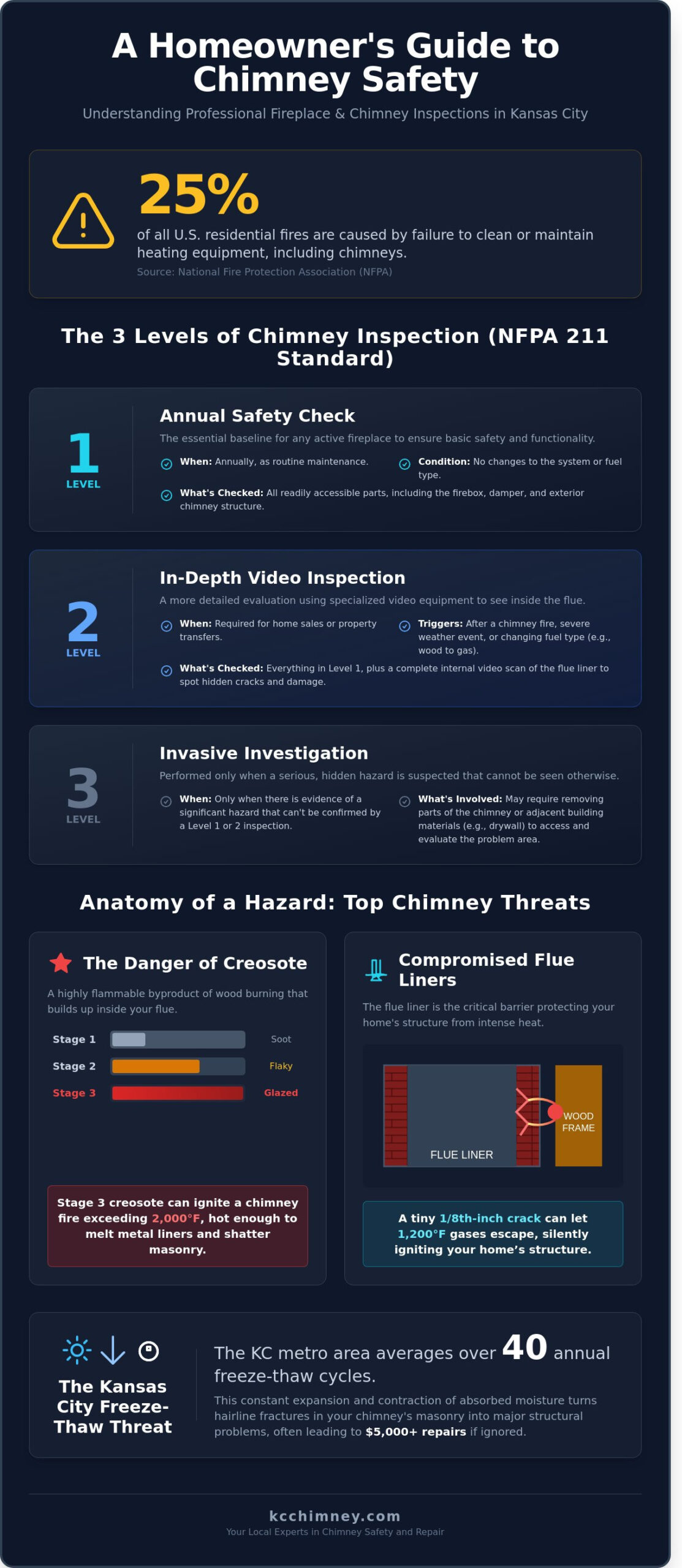
According to the National Fire Protection Association, nearly 25% of all residential fires are caused by a failure to clean or maintain heating equipment like chimneys. For a homeowner in Overland Park, that statistic isn’t just a number; it’s a direct threat to the safety of your family. You likely view your fireplace as the heart of your home during a brutal Kansas City winter, and you deserve to know that the structure protecting you is sound. We agree that peace of mind shouldn’t come with a side of confusion or hidden fees, which is why a professional fireplace and chimney inspection is the most critical maintenance task on your 2026 calendar.
This guide shows you exactly what happens when a certified technician evaluates your flue. We will explain why the 40 annual freeze-thaw cycles common in the KC metro area can turn a hairline fracture into a $5,000 masonry repair if ignored. You’ll learn to distinguish between the three standard levels of inspection and discover how to secure certified proof of safety for your insurance provider. We’re breaking down the technical details of creosote and flue liners to ensure you never overpay for unnecessary repairs while keeping your home’s integrity intact.
Key Takeaways
- Understand the three levels of professional assessment and why a Level 1 check is the essential safety baseline for homes in Stilwell and Bucyrus.
- Learn to identify hidden warning signs of flue liner damage and the specific fire hazards associated with Stage 3 glazed creosote.
- Discover why a professional fireplace and chimney inspection is a non-negotiable requirement when buying a home or upgrading to a new gas insert.
- See how Kansas City’s unique freeze-thaw cycles impact your chimney crown and why local expertise is vital for maintaining historic masonry.
- Master the simple steps to prepare your hearth for a technician to ensure a thorough, mess-free, and efficient safety evaluation.
Understanding Fireplace and Chimney Inspection Levels in Kansas City
For homeowners across the Kansas City metro, maintaining a safe hearth is about more than just aesthetics. The National Fire Protection Association (NFPA) 211 standard establishes three distinct levels of fireplace and chimney inspection to ensure every home remains protected. We believe in demystifying the technical safety jargon that often confuses people. Our team acts as a neighborly expert, translating complex masonry requirements into clear, actionable advice. Whether you live in Stilwell or Bucyrus, the primary goal remains the same: identifying creosote buildup and structural compromises before they evolve into house fires. According to NFPA data, heating equipment remains a leading cause of home fires, making these standards vital for local safety.
The three levels defined by the NFPA allow technicians to scale their efforts based on the specific needs of the property. Level 1 is the standard baseline, Level 2 is a more detailed look often required during property transfers, and Level 3 involves invasive measures like removing walls or masonry. By following these rigorous standards, we provide a consistent level of care that prioritizes the integrity of your home and the safety of your family. We don’t just look for soot; we examine the entire Anatomy of a Chimney to ensure every component functions as intended.
Level 1: The Standard Annual Safety Check
A Level 1 inspection serves as the essential baseline for annual maintenance. It focuses on the “readily accessible” portions of the system. This includes the exterior masonry, the interior of the firebox, and the visible components of the venting system. For families in Stilwell who use their fireplaces regularly without any changes in performance, this check provides essential peace of mind. Our technicians examine the damper, the hearth, and the chimney cap to ensure no debris or animals have blocked the passage. A Level 1 inspection is the minimum requirement for any active fireplace in 2026. This level is sufficient if your heating habits haven’t changed and you haven’t noticed any performance issues like smoke backing into the room.
Level 2: When a Deeper Look is Required
Sometimes a standard check isn’t enough to guarantee safety. In Mission Hills, real estate transactions typically require a mandatory Level 2 scan to protect both the buyer and seller. This process utilizes specialized video technology to examine the internal flue liner from top to bottom. It’s a non-invasive way to spot hidden cracks, gaps, or shifts in the masonry that the naked eye can’t see from the ground or the roof. A Level 2 fireplace and chimney inspection is also necessary after specific events. You’ll need this deeper look if you’ve experienced a chimney fire, a severe Kansas City weather event, or if you’re switching fuel types, such as converting from wood-burning to gas inserts. These triggers demand a higher level of scrutiny to ensure the internal structure can handle the specific thermal stresses of a new appliance or the aftermath of a disaster.
- Level 1: Annual check for systems with no changes.
- Level 2: Required for home sales, fuel changes, or after chimney fires.
- Level 3: Necessary when hidden hazards are suspected and require removing parts of the building.
The Anatomy of a Professional Inspection: What We Look For
A professional fireplace and chimney inspection goes far beyond a quick glance up the flue with a flashlight. Our process follows the rigorous CSIA Inspection Standards to ensure every component of your venting system performs exactly as the manufacturer intended. We focus on the internal flue liner first. This clay or metal sleeve must be entirely intact to contain 1,200-degree gases. Even a single 1/8th-inch crack in a clay tile can allow heat to transfer to your home’s wooden skeleton, creating a silent fire hazard.
Creosote accumulation is our next priority. This byproduct of wood combustion is highly flammable and builds up in three distinct stages. While Stage 1 is a simple soot, Stage 3 glazed creosote is a hardened, tar-like substance that is notoriously difficult to remove. It acts as a concentrated fuel source; if a spark hits Stage 3 creosote, it can ignite a chimney fire that burns at temperatures exceeding 2,000 degrees Fahrenheit, often melting metal liners and shattering masonry in minutes.
The exterior of your home tells the rest of the story. Kansas City weather is particularly harsh on masonry, with an average of 40 freeze-thaw cycles each year that can turn small moisture pockets into structural cracks. We meticulously examine three key areas:
- The Chimney Crown: The concrete “roof” of the chimney that must shed water away from the bricks.
- The Chimney Cap: A stainless steel or copper guard that prevents rain, debris, and local wildlife from entering the flue.
- The Flashing: The metal seal where the chimney meets your roofline, which is the most common site for interior water damage.
Finally, we test the firebox and damper functionality. A damper that fails to seal tightly will skyrocket your heating bills, while one that won’t open fully forces carbon monoxide back into your living space. If you haven’t had your system checked since last winter, you can schedule a safety assessment with our team to ensure your home is ready for the first frost.
Advanced Video Scanning Technology
We don’t guess about the health of your chimney. Our technicians use high-definition internal cameras that provide a 1080p view of every joint and tile. These cameras find hairline fractures and gaps that are physically impossible to see from the hearth or the roof. This digital documentation is vital for homeowner insurance records, providing clear proof of your chimney’s condition. We prioritize a mess-free experience by using specialized drop cloths and vacuum systems, delivering a full digital report to your inbox before we leave your driveway.
Identifying Hidden Masonry Failures
Masonry looks permanent, but the mortar joints inside your firebox can erode over time. We look for signs of “tuckpointing” needs, where the mortar has turned to sand and fallen away. When these joints fail, the 2-inch safety clearance between your chimney and your home’s framing is compromised. We view ourselves as the guardians of your hearth; our goal is to identify these structural failures before they become emergency repairs. A proactive fireplace and chimney inspection catches these gaps early, preventing the transfer of heat to combustible wall studs and keeping your family safe throughout the burning season.
When is a Chimney Inspection Mandatory? Buying, Selling, or Upgrading
Many homeowners in Kansas City believe that if they haven’t lit a fire in several seasons, their system is perfectly safe. We hear the phrase “I haven’t used it, so it’s fine” almost every week. This is a dangerous misconception. In reality, an unused chimney is often more prone to issues like bird nests, moisture-driven masonry decay, or crumbling mortar joints. A dormant flue doesn’t stop the freeze-thaw cycles that characterize our local winters. Skipping a fireplace and chimney inspection because of inactivity can lead to hazardous blockages or carbon monoxide leaks the moment you finally decide to strike a match.
Beyond personal choice, certain milestones make an inspection a legal or safety requirement. The Chimney Safety Institute of America guidelines state that any “change of use” requires a Level 2 inspection. This includes switching from wood-burning to a gas insert or even relining the flue. These changes alter how heat and gases move through your home. If the venting isn’t sized perfectly for the new appliance, you risk venting toxic fumes back into your living room. Additionally, if your neighborhood was hit by a severe KC storm with winds exceeding 60 mph or a lightning strike, a post-incident check is vital to ensure the structural integrity of the masonry hasn’t been compromised. Even a small chimney fire you didn’t notice can reach 2,000 degrees Fahrenheit, warping metal liners or cracking clay tiles instantly.
Real Estate Transfers in Johnson County
In the competitive Overland Park and Leawood real estate markets, a Level 2 inspection is now a standard part of the closing process. A general home inspector typically performs a basic visual check, but they lack the specialized high-resolution internal cameras needed to see hairline cracks in the flue tiles. Identifying these issues before a sale protects sellers from last-minute deal-breakers and saves buyers from “hidden” repair bills that often exceed $12,000. Providing a professional safety certificate during a home sale builds trust and proves the home’s most vital heating component is up to code.
Upgrading to Gas or Wood Inserts
When you upgrade your hearth, the existing chimney becomes the venting exhaust for the new unit. Most older flues in Kansas City are too large for modern, high-efficiency inserts. This mismatch causes poor draft and excessive creosote buildup. Relining the chimney with a stainless steel sleeve is often a necessary step to ensure the new system operates at 100% efficiency and safety. This ensures that 100% of the combustion byproducts leave the home. If you’re ready to modernize your home’s heat source, Explore our fireplace insert options to find the perfect fit for your existing structure and ensure your fireplace and chimney inspection covers all the necessary safety bases.
Kansas City Weather and Your Chimney: Why Local Expertise Matters
Kansas City weather is notoriously unpredictable. Our metro area experiences an average of 38 freeze-thaw cycles every winter. This constant expansion and contraction is the primary reason why a professional fireplace and chimney inspection is non-negotiable for local safety. When moisture seeps into porous brickwork during a January thaw and then freezes overnight, the resulting internal pressure can literally snap a brick in half. This process, known as spalling, is a leading cause of structural failure in the 1920s-era homes found throughout Mission Hills and the Country Club Plaza.
Local housing stock varies significantly across the metro, requiring a nuanced approach to masonry care. While historic homes in Brookside often feature solid brick construction that requires specific lime-based mortar for repairs, newer builds in Spring Hill or Olathe frequently utilize wood-framed chimneys with thin stone veneers. These modern structures are prone to different issues, such as failed kick-out flashing or moisture trapped behind the siding. We understand the specific soil conditions in Jackson and Johnson Counties, where shifting clay can cause chimney tilting or separation from the main house structure. Our team monitors these movements to ensure your flue remains vertical and safe for use.
Wildlife also poses a unique regional challenge. The Missouri Department of Conservation notes that Chimney Swifts are common migratory guests in our area from April through October. These birds are protected under the Migratory Bird Treaty Act of 1918, meaning once they nest in your flue, we cannot legally remove them until they migrate south. Installing a high-quality, 100% stainless steel chimney cap is the only reliable way to prevent birds, raccoons, and squirrels from turning your chimney into a nursery. This simple barrier protects your family from the parasites and nesting debris that often lead to chimney fires.
The Crisis of the Cracked Chimney Crown
The chimney crown is the sloped concrete slab at the very top of your chimney. It acts as the first line of defense against Kansas rain and snow by shedding water away from the masonry. A single hairline crack in a KC chimney crown can lead to thousands in interior water damage within one season. Our specialized crown repair services utilize flexible, elastomeric membranes that bridge existing gaps and prevent the need for a total $4,800 chimney reconstruction later. We catch these small fissures before they rot your ceiling joists.
Seasonal Timing for KC Homeowners
Most homeowners wait until the first frost in October to think about their hearth. By that time, our schedule often has a 4-week wait list. Scheduling your fireplace and chimney inspection during the spring or summer months in Overland Park ensures you are ready for the first cold snap. This timing also allows for dry-weather masonry repairs. Most professional-grade mortars and sealants require temperatures to stay above 40 degrees Fahrenheit for at least 24 hours to cure properly, making the Kansas City summer the ideal window for structural maintenance.
Protect your home from the elements by booking your local fireplace and chimney inspection with our certified experts today.
Preparing for Your Inspection: What KC Homeowners Need to Know
Preparing for a professional visit ensures your home stays clean and your technician gets the most accurate data possible. A fireplace and chimney inspection is a detailed diagnostic process that requires full access to the “guts” of your heating system. By taking a few minutes to prep your living space, you help our team focus on identifying potential hazards rather than moving furniture.
The most critical step is to stop using your fireplace 24 to 48 hours before the technician arrives. Safety is our primary concern; a chimney that’s still radiating heat is impossible to inspect thoroughly. Internal flue temperatures can exceed 2,000 degrees Fahrenheit during a fire. Even a day later, residual heat can damage the high-definition cameras we use to scan your liner for cracks. A cold system allows for a closer look at the masonry and ensures the safety of the person climbing your roof.
Clear a 5 to 6 foot perimeter around the hearth before we knock on your door. Our technicians bring in specialized equipment, including industrial vacuums and camera monitors, which require a stable workspace. Moving your coffee tables, rugs, and fragile decor prevents accidental damage and keeps our workspace efficient. You should also remove any old ashes, burnt logs, or decorative inserts from the firebox area. While we provide cleaning services, starting with a clear firebox allows us to begin the structural evaluation of the brickwork and mortar joints immediately.
Beyond the living room, ensure we have clear access to other parts of the home. This includes:
- Clearing the path to the attic hatch or crawlspace if you’ve booked a Level 2 inspection.
- Unlocking any gates that provide access to the exterior chimney stack.
- Moving vehicles from the driveway so we can safely set up ladders.
- Securing pets in a separate room to keep them away from open doors and equipment.
What to Expect During the Visit
Our team arrives with a focused, no-nonsense attitude. We treat your Kansas City home with the same respect we’d show our own. The process begins with a “no-mess” setup where we lay down specialized heavy-duty tarps and position HEPA-filtered vacuums to catch every stray dust particle. We don’t leave soot on your carpets. Once the inspection is complete, we’ll sit down with you to review the digital report and any video footage captured inside the flue, explaining exactly what we found in plain English.
Next Steps After the Inspection
Every fireplace and chimney inspection concludes with a clear summary of your system’s health based on NFPA 211 standards. If we find more than 1/8 inch of creosote buildup, we’ll recommend a professional chimney sweeping to prevent a flue fire. If the system “passes,” you’re set for the season. If we find structural issues like a cracked flue tile or a deteriorating chimney crown, we’ll provide a detailed estimate for the necessary masonry repairs. Our goal is to ensure your family stays warm without the worry of hidden fire risks.
Ready for peace of mind? Book your KC chimney inspection today.
Secure Your Hearth for the 2026 Season
Your home’s safety shouldn’t be a guessing game. Kansas City weather brings harsh freeze-thaw cycles that can compromise your masonry overnight; even small hairline cracks can lead to significant structural issues. Whether you’re finalizing a real estate transaction in Overland Park or upgrading to a new gas insert, a professional fireplace and chimney inspection is your first line of defense against hidden fire hazards. We’ve spent over 10 years serving the KC Metro area, ensuring local families enjoy their fires without worry. Our CSIA Certified Technicians include advanced internal video scanning with every evaluation to identify deep-seated flue damage or creosote buildup that standard visual checks miss. We prioritize your family’s protection by adhering to the most rigorous 2026 safety standards. Don’t wait for a draft issue or a chimney fire to reveal a problem that a proactive checkup would’ve caught. We’re here to provide the technical mastery and local expertise your home deserves.
Schedule Your Certified Chimney Inspection with Best Chimney Services
We look forward to helping you keep your home warm and safe for many winters to come.
Frequently Asked Questions
How much does a chimney inspection cost in Kansas City?
A Level 1 chimney inspection in the Kansas City metro area typically costs between $150 and $250. If your property requires a Level 2 inspection, which includes a high-resolution camera scan of the flue interior, prices generally range from $300 to $500. These rates reflect the specialized equipment and CSIA-certified expertise needed to ensure your masonry stays resilient against Missouri’s freeze-thaw cycles.
Do I need an inspection if I have a gas fireplace?
You should schedule a professional fireplace and chimney inspection for gas units at least once every 12 months. Even though gas burns cleaner than wood, 2023 safety data shows that bird nests or crumbling mortar can still block vital ventilation. Our technicians check for carbon monoxide leaks and ensure your gas connections meet NFPA 211 standards so your family stays safe.
How long does a professional fireplace inspection take?
A standard Level 1 inspection usually takes 45 to 60 minutes to complete. If we’re performing a Level 2 assessment involving a video scan of the flue, expect the process to last between 90 minutes and 2 hours. We take this time to document the condition of your flue liner and masonry crown, providing you with a detailed digital report before we leave your home.
Can I perform a chimney inspection myself to save money?
You can’t perform a certified inspection yourself because it requires specialized tools like internal chimney cameras and moisture meters. Homeowners often miss hairline fractures that contribute to the 25,000 chimney fires reported annually in the United States. Professional technicians carry the specific insurance and safety certifications required to protect your property’s value and ensure your hearth meets local building codes.
What is the difference between a chimney sweep and an inspection?
An inspection is a thorough evaluation of the chimney’s structural integrity, while a sweep is the physical removal of soot and creosote. During a fireplace and chimney inspection, we use a 14 point checklist to look for hidden moisture damage or structural shifts. If we find more than 1/8 inch of creosote buildup, we’ll recommend a sweep to prevent a fire and improve your home’s air quality.
What happens if the inspector finds a crack in my chimney liner?
If we discover a crack, you’ll need to stop using the fireplace immediately to prevent heat from reaching your home’s wooden framing. We’ll provide a 3D scan of the damage and discuss repair options like a UL-listed stainless steel relining system. These modern liners often carry a lifetime warranty, ensuring your chimney remains a safe asset for the next 50 years of operation.
How often should I have my dryer vent inspected alongside my chimney?
You should have your dryer vent inspected and cleaned every 12 months to minimize fire hazards. National statistics indicate that 27 percent of home dryer fires start because lint buildup restricts necessary airflow. Coordinating this service with your annual chimney check often saves you 15 percent on labor costs and ensures all exhaust systems in your Kansas City home function with peak efficiency.