
The safest repair choice isn’t always rebuilding the chimney. For historic home chimney restoration in Stilwell, an inspection helps determine whether the work calls for tuckpointing, crown repair, or relining the flue. Masonry chimneys can last 100 years or more, while flues in homes built during the 1950s, 1960s, and 1970s may need repairs or rebuilding after nearly 50 years of use.
It’s understandable to want to preserve original brickwork while making sure your fireplace is safe to use. For historic home chimney restoration in Stilwell, start by identifying the damage before choosing a repair: worn mortar, a cracked crown, and a damaged flue each call for a different solution.
This guide explains what an inspection should cover, how cleaning and tuckpointing fit into restoration, and when relining or other repairs may be appropriate. You’ll be better equipped to understand the options and how each can help protect an older home.
Key Takeaways
- Start with a thorough inspection so repair choices address the chimney’s actual condition, from the crown and mortar joints to the flue.
- Preserve the original look by matching replacement brick and mortar to the existing masonry, rather than treating every chimney as a full rebuild.
- Learn how tuckpointing, crown repair, and chimney caps address different forms of wear at the chimney’s top and exterior.
- See why regular sweeping and cleaning matter when maintaining an older fireplace and preparing for restoration work.
- Use the chimney’s safety, condition, and architectural character to guide which restoration steps make sense for the home.
1. Brickwork, masonry repair, and mortar matching
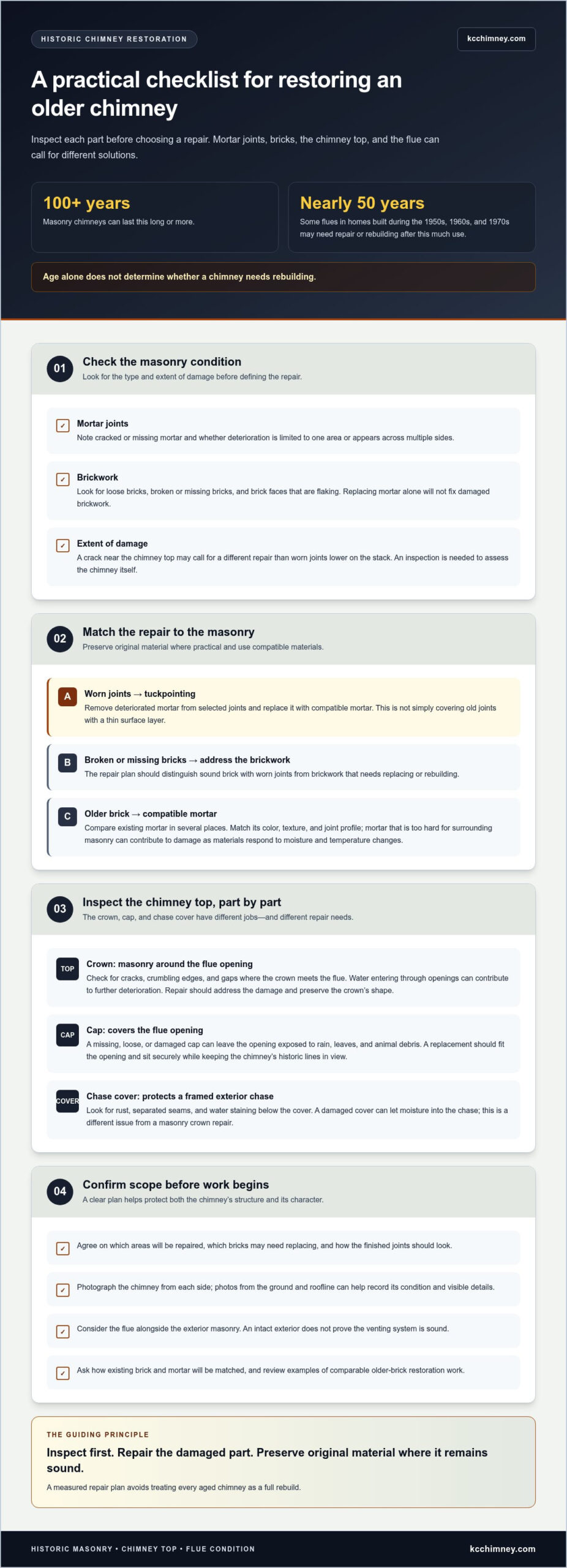
Historic home chimney restoration in Stilwell begins with identifying which masonry elements need attention. Brick, mortar joints, and the chimney’s structure can show different signs of wear. Flues in some Stilwell homes built during the 1950s, 1960s, and 1970s may need repairs or rebuilding after nearly 50 years of use. Masonry chimneys can last 100 years or more, so age alone doesn’t determine whether rebuilding is necessary.
Look for cracked or missing mortar, loose bricks, and areas where the brick face is flaking. Note whether damage is limited to one area or appears across multiple sides. A crack near the chimney top, for example, may call for a different repair than deteriorated joints along the lower stack. These observations help define the scope of a professional assessment, but they don’t replace an examination of the chimney itself.
Matching mortar matters because a patch can stand out if its color, texture, or joint profile differs from the original. A careful repair compares existing mortar in several places, since weathering can change its appearance across the chimney. Replacement mortar should also suit the older brick. Mortar that is too hard for the surrounding masonry can contribute to damage as the materials respond to moisture and temperature changes.
Tuckpointing removes deteriorated mortar from selected joints and replaces it with compatible mortar. It isn’t the same as covering old joints with a thin surface layer. The repair should follow the existing joint shape and meet the brick neatly. If bricks are broken or missing, replacing only the mortar won’t solve the masonry problem. The repair plan should distinguish sound brick with worn joints from brickwork that needs rebuilding.
When choosing a mason for historic chimney restoration near Stilwell, look for experience with older brickwork, mortar analysis, and careful joint repair. Ask to see examples of comparable restoration work and how the existing brick and mortar will be matched.
Before work begins, agree on which areas will be repaired, which bricks may need replacing, and how the finished joints should look. Photographing the chimney from each side records its existing condition. In older homes, consider masonry work alongside the flue’s condition: an intact exterior doesn’t prove the venting system is sound. A measured repair preserves original material where practical and avoids treating every aged chimney as a full rebuild.
Treat that figure as a broad budgeting reference, not a price for a particular chimney. Before approving work, ask for a written estimate describing the repair areas, included mortar and brick work, and any exclusions. Compare the proposed scope with the observed damage so the estimate reflects the restoration plan, not a general allowance. A clear estimate also keeps the focus on compatible materials and a finish that fits the existing masonry, rather than simply the lowest quoted amount.
2. Finishing the chimney top to preserve its appearance
The chimney top is directly exposed to the weather, so its condition affects both appearance and protection. Assess the crown, cap, and exposed masonry separately. The crown is the sloped or flat masonry surface around the flue opening. A chimney cap sits over the opening to help keep rain and debris out. Each part needs a repair suited to its material and condition.
Whether a historic chimney should be restored or rebuilt depends on how much of its original structure remains sound. Restoration can preserve existing brick and the chimney’s profile; rebuilding may be necessary if masonry is unstable or damage extends deep into the stack. Cost depends on access, deterioration, material matching, and whether the structure can be retained. A project quote follows a quote request.
Look for crown cracks, crumbling edges, and gaps where the crown meets the flue. Water entering through these openings can contribute to further deterioration. Crown repair should address the damaged area and preserve the top’s shape, rather than simply hide a crack. If the chimney has extensive structural failure, a surface patch won’t correct loose or unstable masonry.
A cap also needs to suit the flue and chimney top. A missing, loose, or damaged cap leaves the opening exposed to rain, leaves, and animal debris. Choose a replacement that fits the opening and sits securely without obscuring the chimney’s historic lines. A low-profile cap can help maintain the original silhouette, while a poorly sized one may look out of place or fail to cover the opening effectively.
Chase-cover details matter on chimneys with a framed exterior chase. Check for rust, separated seams, and water staining below the cover. A damaged cover can let moisture into the chase, so replacing it addresses a different issue than repairing a masonry crown. Matching the finish to the home’s existing trim helps the replacement blend with the roofline.
Before choosing a finish, photograph the chimney from the ground and roofline. Compare its shape, brick color, and visible metal details with older photographs, if available. These records can guide decisions about retaining original features and help distinguish long-standing design details from later repairs. A close inspection also shows whether the top needs masonry work, a cap, or a chase-cover replacement.
For a damaged crown, chimney crown repair can address the top’s masonry while keeping its appearance in view. The right finish protects the chimney without making an older home’s roofline feel newly assembled.
3. Inspection, cleaning, and tuckpointing
Begin restoration with an inspection, not a layer of new mortar. For Stilwell chimneys built before 1945, essential safety components may be missing. A thorough review covers the cap, firebox, damper, crown, smoke chamber, exterior, mortar joints, masonry, flue, and overall structure. Each area contributes information about the chimney’s condition and the repairs it needs.
The exterior inspection should include a roof-level view, where cracks or defects may be difficult to see from the ground. Inside, the inspector checks the firebox, damper, smoke chamber, and flue. Cracked or broken clay flue tiles and improper clearances to combustible materials are examples of defects that can affect safe operation. Use the findings to guide repairs before restoration work begins.
Common damage in old chimneys includes cracked clay flue tiles, deteriorated mortar, and improper clearances to combustible materials. These problems can compromise the chimney’s structure or allow heat and combustion products to reach areas they shouldn’t. A visual review alone may not reveal damage inside the flue, so an inspection should assess both the visible masonry and the venting passage.
Have historic chimneys inspected annually for damage or deterioration, and professionally swept and cleaned to help prevent fires from creosote buildup. Cleaning removes accumulated deposits; inspection identifies defects that cleaning cannot repair. Keeping these tasks distinct helps homeowners tell whether the next step is routine maintenance or masonry and flue repair.
Some older chimneys have long, narrow flues measuring less than 6 inches across. That shape can affect how the fireplace vents, so the flue’s condition and dimensions deserve attention during restoration planning. A chimney may be a restoration candidate when its tiles remain intact, its fire bricks are correctly installed, and its damper opens and closes properly. Those signs support repair planning, but defects still need correction first.
Tuckpointing addresses deteriorated mortar joints by removing damaged mortar and placing new mortar into the joints. The repair should follow the existing joint profile and avoid covering sound brick with a surface layer. This distinction matters on older masonry: a neat-looking coating can conceal ongoing deterioration instead of repairing the failed joint.
After inspection, use the findings to set the work sequence: repair identified defects, clean the chimney, then complete appropriate masonry restoration. Tuckpointing, for example, cannot fix broken flue tiles, and sweeping cannot stabilize loose brickwork. A written record of affected areas, such as the crown, flue, or specific mortar joints, also makes it easier to compare completed work with the original findings.
These steps also help you evaluate the proposed work in relation to the chimney’s condition. Inspect historic chimneys before restoration begins, and repair defects found during inspection before starting restoration.
Consider estimates alongside the damaged joints identified during inspection and the condition of the masonry, rather than treating tuckpointing as a cosmetic coating.
4. Aesthetic, property value, and heritage benefits
A chimney can shape a historic home’s roofline as strongly as its porch or windows. In Stilwell, Kansas, older homes may include architectural details connected to the area’s past. Restoration can preserve those details while addressing visible deterioration. The goal isn’t to make every chimney look new. It’s to retain sound historic materials and repair damaged parts with compatible materials.
Stilwell’s history provides context for preserving older buildings. The community began as a railroad stop in 1886, and churches were established in the area in 1856. Those dates don’t establish the age or historic status of any particular home. They do help explain why original materials and architectural details can matter locally. Brick color, stack shape, and mortar profile all contribute to a chimney’s character.
To protect a home’s appearance, compare the chimney with the rest of the exterior before selecting repairs. Photograph the brick, joints, crown, and roofline from several angles. Record which features appear original and which may be later additions. For example, replacing damaged bricks with closely matched units can preserve more of the original appearance than rebuilding a sound section.
For a home in Stilwell, Kansas, preservation requirements depend on whether the property has a historic designation and which local rules apply. Identify the property’s designation and applicable requirements before changing historically visible features. This helps owners plan exterior work with the building’s documented status in mind, rather than assuming the same requirements apply to every older house.
Restoration can support a home’s presentation by showing that its exterior has received considered maintenance, but it can’t establish a particular increase in property value. Buyers may notice coherent masonry, a chimney profile suited to the home, and clear repair records. Keep dated photographs and descriptions of materials and completed work with the home’s maintenance documents.
Preserving heritage also means avoiding changes that erase distinctive features without a clear need. A century-old house, for instance, may have a chimney profile unlike newer homes nearby. Retaining that profile while repairing failed sections can keep the structure visually connected to its period. Base decisions on the chimney’s condition and architectural character, not age alone.
Build a practical preservation record by documenting the chimney before work, saving photographs during repairs, and noting the finished materials afterward. Stilwell community members and officials discussed the town’s future in 2013, followed by agreement on a 15-year plan. That civic history reflects local interest in the town’s future, while each homeowner’s preservation choices remain specific to the property and its condition.
5. Historic home chimney restoration contractors near Stilwell, Kansas
This guide covers historic chimney work in Stilwell, Kansas. The right restoration scope depends on the chimney’s condition, the home’s construction, and which original details remain. Start by documenting the property, fireplace type, and visible concerns, such as loose brick or water staining.
A useful project plan connects each visible problem to a specific repair. Deteriorated mortar joints need different work from a damaged flue or unstable masonry. An inspection can help distinguish cleaning, masonry repairs, relining, and more extensive restoration. A written scope makes it easier to understand how each proposed repair relates to the chimney’s condition.
Historic homes also call for careful attention to materials and appearance. Record the existing brick, mortar color, joint profile, crown shape, and any later repairs before planning changes. Matching mortar texture and profile can help a repaired area blend with adjoining masonry. Preserving original features means retaining sound materials where practical, rather than applying a uniform finish over every surface.
Keep the project organized with a simple record. Photograph each side of the chimney and the fireplace before work begins. Save inspection findings, the repair scope, and completion photographs together. These records show which areas were addressed and provide context for future maintenance. If the property has a historic designation, include that information when planning visible exterior changes.
Stilwell’s local history offers context, but it doesn’t establish the age or designation of an individual house. The area’s railroad stop began in 1886, and churches were established locally in 1856. Use property-specific records and the building’s features to guide preservation choices. A chimney may have later alterations, so distinguish original materials from additions before deciding what to retain.
Plan the work in sequence: document the chimney, review its condition, define repairs, and compare completed work with the agreed scope. A cap, crown, flue, and exterior masonry serve different purposes, so one repair doesn’t replace another. To discuss chimney restoration needs in Stilwell, contact a local chimney professional.
Best Chimney Services: Chimney Sweeping
Best Chimney Services provides chimney sweeping to help homeowners maintain older fireplaces and address creosote buildup. Sweeping is a practical next step when an inspection identifies deposits in the flue or before using a fireplace after a period without maintenance.
If an inspection identifies a damaged liner or crown, chimney relining and crown repair address those separate needs. Sweeping can remove deposits, but it doesn’t repair broken flue tiles or damaged masonry. Matching the service to the problem keeps restoration focused on the chimney’s actual condition.
For chimney sweeping or help with a related chimney concern, contact Best Chimney Services or visit kcchimney.com.
Make a Clear Plan for Your Chimney
The next step is to turn what you’ve learned into a practical plan for your home. For historic home chimney restoration in Stilwell, begin with your main concern, whether that’s preserving original character, addressing a safety issue, or preparing a fireplace for regular use. Setting a clear priority helps keep the project focused and makes it easier to discuss the work your chimney needs.
Best Chimney Services can help with chimney sweeping when deposits need attention, chimney relining when the flue needs a liner, and gas fireplace inserts when you’re considering a different fireplace setup. These options address different needs, so the right conversation starts with your chimney’s condition and how you want to use your fireplace.
Contact Best Chimney Services today to discuss your chimney and a sensible next step. Protecting an older home can begin with one informed decision, and you can move forward at a pace that feels right.
Frequently Asked Questions
What historic chimney restoration services are available in Stilwell and nearby areas?
Best Chimney Services offers chimney sweeping, inspections, chimney relining, crown repair, tuckpointing, chimney cap installation, and chase cover replacement. Fireplace insert options include gas and wood models. Service areas include Stilwell, Overland Park, Mission Hills, Bucyrus, and Spring Hill. For an older home, the appropriate service depends on the chimney’s condition and fireplace setup. An inspection can help identify the repair or maintenance step that fits the home.
What are the steps to inspect and restore a historic brick chimney?
Start by recording the fireplace type, fuel, visible changes, and any past repairs. Arrange an inspection that assesses the chimney’s exterior and interior, including the flue; a video inspection can help reveal internal conditions. Use the findings to define the repair scope, then prioritize issues affecting structure or venting before cosmetic work. After repairs, keep the findings and completion records together. These provide a useful reference for future maintenance.
How can I preserve original brick and mortar during chimney repointing?
Preserve sound brick by repointing only failed joints instead of coating the entire chimney. Remove deteriorated mortar carefully without damaging brick edges, and match replacement mortar to the existing color, texture, and joint profile. A small test area can help assess the appearance before work continues. Replace bricks only where they’re damaged beyond repair. Photographing the wall beforehand also helps you compare the finished work with its original pattern.