
A yellow flame isn’t always a sign that something is wrong: decorative gas logs can color the flame, and some blue at the base may be normal. If your gas fireplace flame is yellow, not blue, in Spring Hill, look beyond color: a steady, evenly spread flame differs from an all-yellow flame accompanied by soot, odor, or unstable movement. Those signs can point to a combustion or ventilation concern.
It’s understandable to wonder whether to adjust the fireplace or stop using it. The answer depends on the flame pattern and any changes around the burner, logs, or glass. This guide explains what yellow and orange flames can mean, which simple visual checks can help you assess the situation, and when it’s safer to have the fireplace inspected.
You’ll also learn how soot, unusual odor, flickering, and ventilation fit into the picture, so you can make a calm, informed decision about your next step.
Key Takeaways
- Judge the flame by its pattern and steadiness as well as its color; decorative logs can create yellow or orange flames.
- Notice whether flickering or unusual movement occurs, since it can point to a gas-supply or ventilation concern.
- Watch for black soot on the logs or glass and pay attention to unusual odors, which can signal combustion trouble.
- Learn why flame color changes and which signs mean it’s time for a professional assessment rather than an adjustment at home.
- Understand how chimney sweeping and inspection can help address buildup or chimney concerns related to fireplace performance.
Make yellow flame into blue flame in a gas fire place?
Flame color reflects the burner’s air-to-gas mix, fuel, and decorative logs, so blue isn’t always the goal. If your gas fireplace flame is yellow, not blue, in Spring Hill, assess the whole flame pattern before deciding what it means. Permit requirements depend on the repair scope; check local building rules before work changes gas piping, venting, or appliance installation.
Ideal Flame Color and Distribution
A well-distributed gas fireplace flame burns steadily across the burner, with its color influenced by the fireplace design. Consistent coverage matters because uneven flames, excessive flickering, or unusual movement may signal a change that needs attention. Compare the whole burner, not just one bright spot. Note whether flames reach each burner area or appear uneven in one location. This observation helps describe the change without adjusting the appliance.
Air-to-Gas Mixing and Flame Color
The air-to-gas mix affects how the fuel burns. More air mixed with gas before it reaches the burner can produce blue flames, while less air can shift the color toward yellow. That color change doesn’t prove the fireplace is operating correctly. The air shutter is part of the burner setup, so don’t adjust it to chase a preferred shade. Instead, note changes, including whether they affect the whole flame or just one section.
Fake Logs and Flame Appearance
Artificial fireplace logs may make flames yellow or orange because chemicals in the logs color them. A warm-colored flame can therefore be part of the fireplace’s intended appearance, rather than a sign that it must become blue. Compare the flame with its usual pattern, and note whether the logs were moved or replaced before the color changed. Keep decorative logs positioned as designed; their placement affects where flames appear around the burner.
Natural Gas Flame Color
Natural gas has lower carbon content than propane, making yellow flames more difficult to produce. Still, natural-gas flames can show blue near the base with warmer color higher up. A small blue area doesn’t mean the entire flame should look blue. If a gas fireplace flame is yellow rather than blue in Spring Hill, look for changes in steadiness and distribution, not a single uniform color.
A decorative-log fireplace may show yellow tips while retaining blue near the burner. A gas fire pit has different burner and air-mixing needs, so don’t use it as a direct comparison. If the flame is weak or its pattern has changed, record what you see and when it happens. Soot, odor, or unstable movement alongside a color change gives a clearer reason to seek an assessment than color alone.
Checking fireplace ventilation
Ventilation affects how a gas fireplace moves combustion gases out and draws replacement air in. An unstable or excessively flickering flame can signal a gas-supply or ventilation problem. Note when the movement starts. For example, if it begins after the fireplace has been running steadily, that change gives a technician useful context. Flame movement alone doesn’t identify the cause, but it deserves attention alongside soot or an unusual odor.
Start with the fireplace’s venting design. For a natural-gas fireplace that uses a chimney, the damper should be open during operation. Ventless fireplaces are the exception, so don’t apply the chimney-damper rule to a ventless model. If you’re unsure which design you have, check the appliance information rather than guessing. A damper in the wrong position can interfere with the intended path for combustion gases.
Chimney draft and connected piping both matter because combustion gases need a clear route outside. A blocked or damaged path can affect how the fireplace vents. Visible damage, loose connections, or signs of a hole in the piping are reasons not to rely on a visual flame check alone. Don’t dismantle vent pipes or attempt repairs yourself; concealed gaps can be difficult to spot from the firebox.
Replacement air is another part of the system. As air rises through a chimney, the home needs a source of fresh air to replace it. A tightly sealed house can restrict that supply and affect draft. For example, if the fireplace behaves differently when doors or windows are closed, mention that pattern during an assessment. A tightly sealed home may need an air-to-air heat exchanger to remove stale air and bring in fresh air.
- Observe whether the flame flickers or shifts unusually.
- Identify whether the fireplace is ventless or connected to a chimney.
- Look for visible vent-pipe damage without taking the system apart.
- Note changes associated with closed doors or windows.
A smoke gun can help a professional test pipe seams for escaping smoke, while a homeowner’s visual check cannot rule out hidden leaks. Carbon monoxide is deadly, so treat venting concerns seriously, especially when flame instability accompanies other warning signs. A professional chimney evaluation can assess draft and connected components; chimney inspection services can help address concerns that a surface check cannot resolve.
Soot and odor as signs of a problem
Black soot on gas fireplace logs or glass is a warning sign, not ordinary decoration. Excess soot can point to an improper air-to-gas ratio, which affects how fuel burns. Notice where the residue appears: a dark coating on several logs differs from a small mark in one spot. Either way, don’t treat heavy soot as a cosmetic issue or try to mask it by cleaning the glass alone.
A clean-burning gas fireplace shouldn’t produce soot, smoke, or a strong gas odor. These signs matter because they can indicate that combustion or fireplace operation needs attention. Soot building up after recent use or smoke appearing near the firebox, for example, deserves a closer assessment. A clean log surface at one moment also doesn’t explain why residue returns after the fireplace runs.
Note changes before deciding what to do. Record whether soot appears on the glass, artificial logs, or both. Notice whether the odor occurs during startup, while the fireplace is burning, or after it shuts off. This information helps distinguish a persistent change from residue left by earlier use. Don’t move logs or adjust burner parts to test a theory, since their positions and settings affect the flame.
- Look for black deposits on the logs and glass.
- Notice any smoke or strong gas odor during operation.
- Record when the signs begin and whether they return.
- Avoid changing burner settings or log placement to hide the symptoms.
If you smell gas, turn off the fireplace immediately and contact a professional. Don’t keep the appliance running to see whether the odor fades. A gas smell is different from the brief, familiar scent some people associate with lighting an appliance; treat a persistent or strong odor as a reason to stop operation. When arranging an assessment, describe the situation specifically, such as, “odor continues while the fireplace is on.”
Cleaning can remove buildup, but it won’t address the cause if soot forms again. Burner condition, log placement, and the air-to-gas balance all affect how a fireplace operates. Let the fireplace cool before handling logs or glass, and follow its care instructions for routine cleaning. If soot or odor returns after cleaning, leave adjustments to a qualified professional. A repeated pattern is useful evidence, not a reason to keep wiping the same surface.
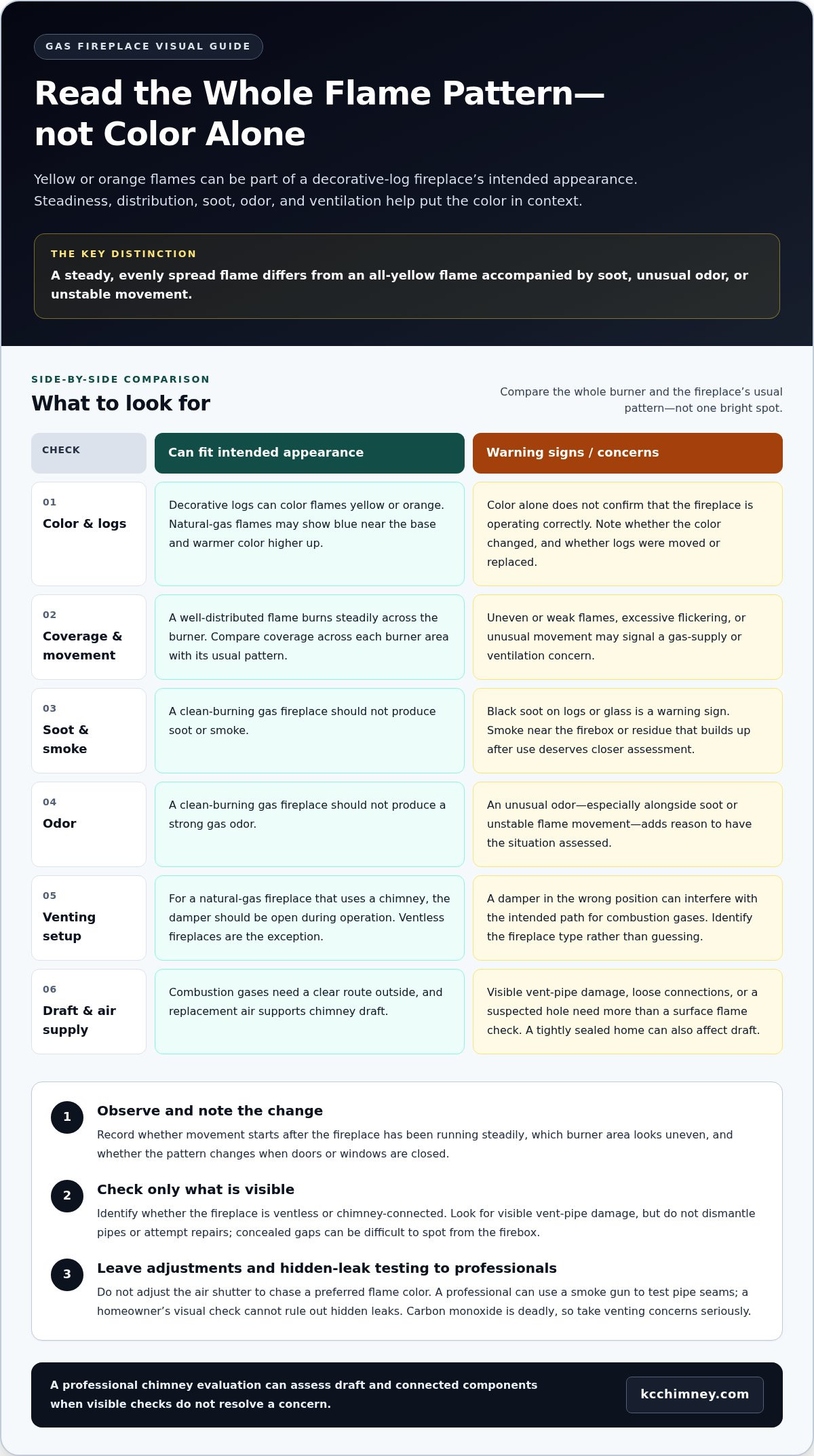
Yellow or orange flames and combustion concerns
A brief blue flame at startup can occur before the fireplace settles into its usual pattern. Airborne dust or limited oxygen during initial combustion may affect its appearance. Watch what happens after the flame stabilizes. If it remains entirely yellow or orange, rather than showing blue near the base with warmer tips, combustion may need attention.
An all-yellow or all-orange flame can indicate improper combustion. That matters because poor combustion may contribute to carbon buildup or carbon monoxide production. Flame color alone can’t measure carbon monoxide, and a familiar-looking flame doesn’t replace a working detector. Treat a persistent color change as a reason to assess the appliance, especially if it appears with other unusual signs.
Use the pattern and timing to describe what you see. Note whether the whole burner changes color or only one area, and whether the change starts immediately or after the fireplace has run. A weak flame, soot, or unusual movement adds important context. These observations help distinguish a short startup change from a flame that continues to look abnormal during operation.
Carbon monoxide has no reliable visible warning in the flame. A detector near the fireplace and detectors in other locations in the home provide an added layer of awareness. Keep detectors in working condition and follow their manufacturer’s placement and maintenance instructions. Never use flame color as a substitute for a detector: one shows combustion behavior, while the other alerts occupants to carbon monoxide.
- Observe whether blue appears only at startup or remains at the base.
- Notice whether yellow or orange covers the full flame after it stabilizes.
- Record changes alongside weakness, soot, odor, or unusual movement.
- Keep carbon monoxide detectors near the fireplace and elsewhere in the home.
Household gas appliances are generally expected to burn with blue flames, which are associated with clean and efficient combustion. A fireplace’s decorative design can affect its expected appearance, so compare the flame with its normal pattern rather than applying a furnace rule to every fireplace. A furnace or boiler used to heat a home should not have an excessive yellow flame, because that points to less efficient operation and calls for professional cleaning and flue checks.
If an all-yellow or all-orange fireplace flame persists, don’t adjust the air shutter or gas controls to force a blue color. A proper assessment considers the burner, fuel supply, air mixing, and venting together. If a carbon monoxide detector alarms, follow its instructions and leave the area; don’t stay inside to troubleshoot the fireplace. A qualified professional can evaluate combustion and identify what needs correction.
Causes of blue and yellow gas flames
Flame color comes from combustion, fuel, air mixing, and the fireplace’s design. Blue and yellow flames don’t arise from one simple cause. Reading the color alongside burner behavior helps distinguish decorative appearance from a change that deserves attention. For Spring Hill homeowners asking why a gas fireplace flame is yellow rather than blue, the surrounding signs matter too.
Yellow light comes from carbon particles heated until they glow. In a gas fireplace, that color can appear when combustion conditions or decorative materials affect the flame. Blue indicates a different appearance from the burning gas and its air mix. Neither color, by itself, describes every aspect of fireplace performance. The pattern, steadiness, and any soot or odor provide useful context.
Air mixing changes flame color because gas needs air to burn. A blue flame can result when more air mixes with gas before it reaches the burner. Reducing that air can shift the flame toward yellow, but that doesn’t make a homeowner’s adjustment a safe solution. The air shutter is part of the appliance’s setup. Changing it to force a preferred color may create an unsuitable mixture.
Fuel type also matters. Propane’s higher carbon content makes yellow flames easier to produce than natural-gas flames. Natural gas has lower carbon content, so a yellow flame is harder to achieve, though decorative logs can still create yellow or orange color. A propane fire pit and an indoor natural-gas fireplace shouldn’t be treated as direct comparisons; their fuel and burner arrangements differ.
Artificial logs provide another explanation. Chemicals in decorative logs can color the flames, so warm tips may reflect the fireplace’s intended appearance. But new soot, a flame that changes across the burner, or persistent yellow color can point to something beyond the logs. A weak or unusually small flame may also relate to low gas pressure or a clogged burner. These causes require different checks, not a guessed color adjustment.
Start by noting what changed: fuel type, log position, flame size, color pattern, and whether soot appeared. Don’t move burner components or adjust gas controls to test a theory. If your gas fireplace flame is yellow rather than blue in Spring Hill and it’s unstable, weak, or paired with soot or odor, leave appliance adjustments to a qualified professional. Color is a clue, not a diagnosis; several parts of the combustion system shape what you see.
If a persistent flame change concerns you, request professional help with your fireplace rather than adjusting the burner yourself.
Best Chimney Services: Chimney Sweeping
Best Chimney Services offers Chimney Sweeping for homeowners whose fireplace concerns may involve chimney buildup or venting. Sweeping addresses chimney deposits, but it doesn’t adjust a gas burner or diagnose every cause of a yellow flame. If soot or odor accompanies a persistent flame change, stop using the fireplace if you smell gas and arrange professional help.
Chimney Relining may be appropriate when the chimney’s lining needs attention. Crown Repair addresses damage at the chimney crown. These services relate to chimney condition, while flame color also depends on the fireplace, burner, fuel, and air mixture.
For a chimney concern or guidance on a suitable next step, contact Best Chimney Services.
Choose a Clear Next Step for Your Fireplace
If your gas fireplace flame is yellow, not blue, in Spring Hill, let the pattern guide your next step instead of trying to tune the burner by appearance alone. Note when the change occurs and any related signs. This record can help focus an assessment on the fireplace, chimney, or venting system.
Best Chimney Services can address chimney concerns with Chimney Sweeping or Chimney Relining. If you’re considering a fireplace change rather than a repair, the company also offers Gas Fireplace Inserts. The right next step depends on whether the concern involves the chimney, the appliance, or both.
Share what you’ve observed and discuss the appropriate service for your home. Contact Best Chimney Services for help, and move forward with a clearer plan for your fireplace.
Frequently Asked Questions
Need Professional Fireplace Maintenance?
Yes, arrange professional attention when a flame change persists or comes with other unusual signs. Best Chimney Services recommends scheduling fireplace maintenance annually. Its Chimney Sweeping and inspection services address chimney condition, including concerns that can affect venting. If you notice a recurring change after the fireplace runs, describe when it happens and what else you observe so the issue can be assessed clearly.
Why Does My Flame Look Different When I First Turn It On?
A flame can look different briefly at startup as the fireplace begins operating. Airborne dust or incomplete combustion associated with limited oxygen can affect its initial appearance. Watch whether the pattern settles into its usual look as the appliance continues running. If the change persists, begins happening at other times, or comes with soot or an unusual odor, record those details instead of adjusting burner controls.
Why is my gas fireplace flame yellow instead of blue?
Yellow color can come from glowing carbon particles, decorative-log chemicals, or a change in the air-to-gas mixture. Check whether the color appears only around decorative logs or across the burner. A new, persistent change deserves more attention than a familiar flame pattern. For Spring Hill homeowners, noting whether the logs were moved or the appearance changed after startup gives a professional useful context.
Is a yellow gas fireplace flame normal or a sign of a problem?
It can be normal for decorative gas logs to create yellow or orange color, but an all-yellow flame may signal improper combustion. Consider the whole picture: whether the color is new, whether it remains after startup, and whether soot, smoke, or odor appears. A familiar decorative flame without other changes differs from a new color accompanied by black deposits.
What does a healthy gas fireplace flame look like?
A healthy-looking flame burns steadily and spreads evenly across the burner. Depending on the fireplace and decorative logs, it may show yellow or orange color, with some blue near its base. Compare the flame with its usual pattern rather than expecting every fireplace to look identical. A sudden uneven section or persistent flickering is more useful to report than a color preference alone.
How can I safely troubleshoot a yellow gas fireplace flame?
Start with observation, not adjustment. Note whether the color is limited to startup, covers the whole burner, or coincides with logs that appear to have shifted. Don’t dismantle the fireplace or alter gas controls or air-shutter settings to force a blue flame. If you smell gas, turn off the fireplace immediately and contact a professional. Share your observations when arranging an assessment.
Can dirty burners, logs, or air inlets cause yellow flames?
Yes, buildup on a burner, logs, or glass can affect flame quality, and a clogged burner may contribute to a weak or small flame. Deposits can also make it harder to distinguish the intended flame pattern. Let the fireplace cool before routine cleaning, and follow the appliance’s care instructions. If buildup returns or the flame remains changed after cleaning, leave burner and air-inlet adjustments to a professional.
When should I turn off a gas fireplace with a yellow flame?
Turn off the fireplace immediately if you smell gas, then contact a professional. Don’t keep it running to see whether the odor clears. A persistent all-yellow flame, new soot, or smoke also calls for prompt attention; avoid trying to correct combustion with homeowner adjustments. If a carbon monoxide detector alarms, follow its instructions and leave the area. Keep your observations ready for the person assessing the appliance.