
What if black stove glass is more than a cleaning problem? For homeowners searching for the best way to clean wood stove glass Overland Park, start by letting the glass cool completely and checking the stove manufacturer’s manual before choosing a tool or cleaner. Soot can obscure the fire and make the stove look neglected, but the wrong cleaning method may scratch or damage the glass.
It’s frustrating when the glass turns black again soon after cleaning. This guide covers how to clean cooled glass carefully, what to avoid, and which burning conditions may contribute to recurring soot. You’ll also learn how dry, seasoned wood and following the stove’s operating instructions can help, and when persistent deposits may call for a closer look at the chimney system.
If soot keeps returning despite careful cleaning and good burning habits, chimney sweeping or an inspection can help assess the chimney. Best Chimney Services LLC provides chimney cleaning and inspections for Overland Park homeowners, including advanced video inspections that show the chimney’s interior. The aim is to help you care for the glass safely and recognize when the issue may need professional attention.
Key Takeaways
- The best way to clean wood stove glass Overland Park homeowners can use starts with the stove manufacturer’s care instructions.
- Choose gentle, approved tools and cleaners. Harsh chemicals or abrasive materials may damage the glass.
- Smoke deposits can point to burning conditions or airflow issues, so look beyond the window if blackening keeps returning.
- Dry, seasoned firewood and following the stove’s operating guidance may help reduce repeat deposits.
- Persistent soot may warrant chimney sweeping or an inspection, including a closer look inside the chimney with video equipment.
Why Does Wood Stove Glass Turn Black in Overland Park?
Black stove glass has a layer of soot or other combustion deposits that obscures the view through the window. It describes what you see, not a single diagnosis. A light film after use may be ordinary residue, while a window that darkens again quickly is a reason to look beyond cleaning. Wiping away deposits restores visibility, but it doesn’t necessarily address why they formed.
Wood stoves rely on fuel, heat, and airflow. When combustion is less complete, smoke and fine particles may linger and settle on the glass instead of moving up the chimney. The Wood-burning stove operation overview explains the basic role of airflow and stove components. The way those parts work together depends on the appliance, so use its manual as your guide to normal operation.
What causes soot and haze on a wood stove window?
Smoke can leave deposits as it moves through a stove. Conditions that produce more smoke or slow its movement may contribute to a hazy or blackened window. Damp or insufficiently seasoned wood is one possible factor because it may burn less cleanly, but it doesn’t prove what caused the deposits. Air supply, chimney draft, and stove operation can also affect how smoke moves. A stain on the glass alone can’t identify which factor is involved.
When is black glass a sign to look beyond cleaning?
Occasional residue that comes off during careful cleaning differs from glass that turns black again soon after you clear it. Track when deposits return and what was happening beforehand. For example, note whether the wood seemed damp, the fire struggled to burn steadily, or you operated the stove differently than usual. These details can help describe the pattern, but they don’t diagnose the stove, chimney, or installation.
Cleaning removes deposits from the glass; investigating recurring soot looks for conditions that may contribute to those deposits. That’s the difference between restoring a clear window and addressing a recurring symptom. Don’t assume the glass alone identifies a blocked chimney or another specific fault. If blackening continues despite careful cleaning and following the stove maker’s operating guidance, a chimney inspection can help assess the venting system. Best Chimney Services provides chimney cleaning and inspections in Overland Park, including advanced video inspections that show the chimney’s interior.
How to Clean Wood Stove Glass Safely, Step by Step
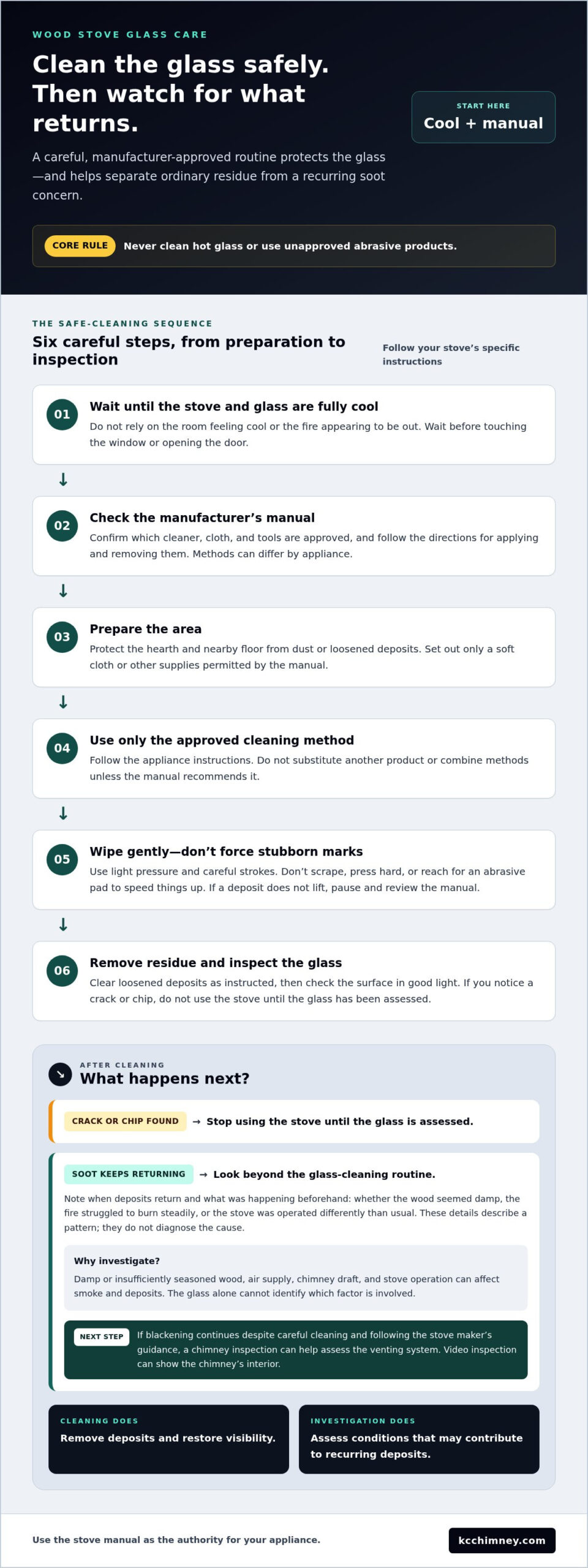
A careful routine protects the glass and the view of the fire. Before you begin, use the stove manufacturer’s manual as your authority. It should guide which cleaners, cloths, and tools are suitable for your appliance. A method that works for one stove may not suit another. Never clean hot glass or use unapproved abrasive products.
Prepare the stove and choose a compatible cleaning method
Wait until the stove and glass are fully cool before touching the window or opening the door. Then check the manual for cleaning instructions, including directions about products and materials. Protect the hearth and nearby surfaces from loosened residue, and gather only supplies the manufacturer permits. Don’t assume a household remedy is safe just because it’s commonly suggested online.
- Make sure the stove is fully cool. Don’t rely on the room feeling cool or the fire appearing to be out. The glass and stove must be cool before you handle the door or start cleaning.
- Read the appliance instructions. Find the manufacturer’s guidance for glass care. Confirm which cleaner and tools are approved, and follow the directions for applying and removing them.
- Prepare the area. Protect the hearth and floor around the stove from dust or loosened deposits. Set out a soft cloth that the manual permits, and keep unapproved tools away.
- Apply the approved cleaning method. Follow the manual’s directions for the chosen cleaner or tool. Don’t substitute another product or combine cleaning methods unless the instructions recommend it.
- Wipe gently. Use light pressure and careful strokes across the glass. Don’t scrape stubborn spots, press hard, or reach for an abrasive pad to speed up the job.
- Remove residue and inspect. Clear loosened deposits with a soft cloth, following the appliance instructions. Check the glass before closing the door, and stop if you notice a crack, chip, or other damage.
Clean gently and check the glass afterward
Take your time instead of trying to remove every mark with force. If a deposit doesn’t lift with the approved method, don’t scrape harder. Pause and review the manufacturer’s directions. Once the surface is clean, check it in good light for visible damage. If the glass appears cracked or chipped, don’t use the stove until it has been assessed.
The best way to clean wood stove glass Overland Park homeowners can rely on is the method that follows their specific appliance manual, not a one-size-fits-all online tip. If the glass keeps blackening after careful cleaning, that’s a separate concern from cleaning itself. A chimney inspection in Overland Park can help assess whether the chimney or venting system needs attention.
Wood Stove Glass Cleaning: What to Use and Avoid
Wood stove glass may look similar from one model to another, but care instructions can differ. The safest choice isn’t necessarily the cleaner that’s most popular online. Start with the stove manufacturer’s manual, then use only products and materials it permits. The right method should lift residue without scratching or otherwise damaging the glass.
Which tools and cleaners are appropriate for stove glass?
Look for the appliance maker’s glass-care instructions before selecting a cleaner or cloth. If the manual allows a soft, non-abrasive cloth, use it with gentle pressure. If it names an approved cleaner, follow its directions rather than substituting a household product. Keep the glass fully cool before applying any cleaner. A product suitable for cool glass may not be safe on a hot surface.
| Method | Suitability | Caution |
|---|---|---|
| Cleaner approved in the stove manual | Use when the manufacturer identifies it as suitable and gives directions. | Follow application and removal instructions; don’t apply it to hot glass. |
| Soft, non-abrasive cloth | May be appropriate if the manual permits it. | Use light pressure. A cloth’s softness doesn’t override the appliance instructions. |
| Metal blades, scouring pads, or abrasive powders | Avoid unless the manufacturer explicitly approves the specific tool or product. | They can scratch or damage the glass, especially with force. |
| Ash, vinegar, or other household remedies | Don’t assume they’re suitable for every stove. | Use only if the manual specifically allows the method. |
| Cleaner on hot glass | Not a safe shortcut. | Wait until the glass is fully cool before cleaning. |
Which cleaning shortcuts can damage the glass?
A metal blade may seem like a quick way to remove a stubborn spot, but scraping can damage the glass. Scouring pads and abrasive powders can scratch it too. Don’t increase pressure just because residue won’t come away. Stop and check the manual for another approved approach. Sudden temperature changes can put glass under stress, so don’t clean it while hot or expose it to a rapid change in temperature.
Advice from a forum or video may describe one person’s stove, not yours. Ash or vinegar may be promoted as an easy remedy, but that doesn’t make either one manufacturer-approved for every appliance. For the best way to clean wood stove glass Overland Park homeowners should follow the instructions for their own stove, not assume a generalized tip applies. If residue resists the permitted method, avoid experimenting with harsher products or tools.
How to Keep Wood Stove Glass Cleaner Between Fires
Cleaner glass usually starts with steadier burning conditions, not a special trick that guarantees the window will stay clear. Some deposits can still form during normal use. Dry, seasoned firewood and operation according to the stove manufacturer’s instructions may help reduce repeat soot while keeping care specific to your appliance.
What burning habits can help reduce repeat deposits?
Choose dry, seasoned wood rather than fuel that produces visibly smoky burning. Damp wood can contribute to deposits, though it isn’t the only possible cause. Follow the stove maker’s instructions for lighting, operation, and air control. There’s no single air-control position or temperature that applies to every model, so don’t copy a setting from advice written for a different stove.
Airflow and chimney draft affect how smoke moves through the appliance and venting system. Notice changes, such as smoke behaving differently than usual, but don’t try to correct an unexplained pattern with repeated adjustments outside the manual’s guidance. A brief log can help you see whether the same conditions seem to come before the glass darkens.
What should Overland Park homeowners monitor during heating season?
Keep a simple record as you use the stove. Note the fuel and how the fire behaved, then compare that with how quickly deposits returned after cleaning the glass. This can help distinguish an occasional film from recurring blackening and give a chimney professional useful context if the concern continues.
- Fuel condition: Record whether the firewood was dry and seasoned or seemed damp.
- Burn observations: Note unusual smoke behavior or changes in how the fire burns.
- Airflow and draft: Write down noticeable changes without assuming what caused them.
- Return of deposits: Track when the glass was cleaned and how soon it darkened again.
One smoky fire followed by a light film may not tell you much on its own. Repeated darkening under similar conditions is more useful to track, especially if you’ve followed the stove’s operating directions and used suitable fuel. These notes don’t diagnose a problem, but they can help you describe it clearly during an inspection.
For broader maintenance context, the Kansas City chimney sweeping guide explains how chimney care fits into routine fireplace and venting-system maintenance. If recurring deposits raise questions about your chimney, arrange chimney sweeping or an inspection with Best Chimney Services in Overland Park. An inspection can help assess the chimney rather than treating repeated soot as only a glass-cleaning issue.
When Overland Park Homeowners Should Call for Chimney Service
If the glass keeps turning black soon after careful cleaning, look beyond the window. Repeated deposits can be a reason to assess the chimney and venting system, especially if you’ve also noticed smoke coming back into the room, unusual odors, leaks, or a change in draft. These signs deserve attention, but none identifies the cause on its own. Don’t treat a dark pane as proof of a specific chimney or stove problem.
What signs make a chimney inspection worth considering?
Pay attention to patterns and changes. Note whether smoke backflow happens during use, whether an odor persists when the stove isn’t burning, or whether you see signs of moisture near the chimney. Persistent blackening alongside these symptoms gives a professional useful context. An inspection can assess the system’s condition. It can’t be replaced by repeatedly cleaning the glass or diagnosing the system from one symptom.
For a closer look at what an inspection can cover, the Kansas City chimney inspection guide offers broader context. If you notice visible damage, such as deteriorating masonry or water-related damage around the chimney, chimney repair guidance for Kansas City homes may also help explain why an assessment matters. These observations are reasons to seek a professional evaluation, not diagnoses by themselves.
How local chimney sweeping or inspection can help
Chimney sweeping and inspection address different needs. Sweeping removes deposits from the chimney, while an inspection evaluates the system’s condition. Neither service is the same as cleaning the stove window. Best Chimney Services provides chimney sweeping and inspection for Overland Park homeowners. Its technicians are CSIA-certified, and the company follows National Fire Protection Association standards.
Advanced video inspections provide a detailed view inside the chimney. This helps a technician examine areas that aren’t visible just by looking at the stove glass. Sharing when the soot returns, what the fire was doing, and whether you noticed smoke, odors, or leaks can help explain the concern during the visit.
The best way to clean wood stove glass Overland Park homeowners can follow is to use care instructions suited to their appliance. But if deposits repeatedly return or other symptoms appear, have the chimney and venting system assessed rather than relying on another cleaning alone. Best Chimney Services serves Overland Park, Mission Hills, Stilwell, Bucyrus, and Spring Hill with chimney sweeping and inspection.
Take the Next Step Toward a Clearer View
A clearer stove window is useful, but recurring soot can also be a cue to pay attention to how your heating system is behaving. Keep notes about changes you observe and share them with a chimney professional if deposits keep returning. That gives the conversation a practical starting point without assuming the glass alone explains what’s happening.
For homeowners considering the best way to clean wood stove glass Overland Park, careful glass care and attention to repeat symptoms go hand in hand. Best Chimney Services is based in Overland Park and serves Johnson County and the greater Kansas City metro. Its technicians are CSIA-certified, background-checked, and insured. The team uses advanced video inspections and follows NFPA standards.
If persistent soot has you concerned about the chimney or venting system, take a measured next step: Schedule chimney cleaning or an inspection with our local team. Contact Best Chimney Services at (816) 805-2271 to arrange service.
Frequently Asked Questions
Can I clean wood stove glass while the stove is warm?
Wait until the stove and glass are fully cool before cleaning. Heat can make handling unsafe and may increase the risk of damage if a cleaner or cloth contacts the surface. Check the stove manufacturer’s instructions before choosing a product or tool, and do not operate the appliance if the glass is cracked or chipped. Let the door and surrounding parts cool too, and don’t judge readiness by room temperature alone.
Can I use a razor blade to clean wood stove glass?
Do not assume a razor blade is safe for your stove glass. A blade can scratch or damage some surfaces, especially if used with pressure or at the wrong angle. Follow the appliance manufacturer’s care instructions and use only tools they approve. If deposits resist gentle cleaning, avoid scraping harder and consider asking about chimney or stove-system assessment. A stubborn mark isn’t a reason to switch to a sharper tool or increase pressure.
Why does my wood stove glass turn black so quickly?
Fast or repeated blackening can be associated with burning conditions, fuel moisture, airflow, or chimney draft. Glass appearance alone cannot identify the exact cause. Note what fuel you used, how the stove was operated, and how soon the deposits returned. If blackening persists or accompanies smoke or odor concerns, arrange an appropriate chimney assessment. Include whether the change began after switching firewood or noticing different smoke behavior, so the pattern is easier to discuss.
Is ash safe to use on wood stove glass?
Ash-based cleaning tips are common, but they are not automatically suitable for every stove or glass surface. Fine particles may still scratch when rubbed against glass, and appliance instructions differ. Check the manufacturer’s manual before trying ash or another household remedy. When the approved method is unclear, choose a gentle method specifically permitted by the stove maker. Don’t treat a method used successfully on another stove as proof it’s right for yours.
What should I do if wood stove glass is cracked?
Do not use the stove with cracked or chipped glass. Let the appliance cool completely, keep clear of the damaged area, and follow the manufacturer’s instructions for service. A crack is not a cleaning problem, and wiping or applying a product will not address it. Have the appliance assessed before returning it to use. Avoid pressing on the damaged pane or trying to remove fragments yourself while arranging the next step.
Does black stove glass mean my chimney needs cleaning?
Not necessarily. Black glass can have several possible contributors, including fuel and airflow conditions, so it does not prove that the chimney needs cleaning. However, persistent soot, smoke backflow, unusual odors, or poor draft are reasons to consider a professional assessment. Chimney sweeping and inspection address the chimney system, while the stove manual guides glass care. Share any symptoms that occur alongside the soot rather than relying on the glass as a diagnosis.
How can I keep wood stove glass cleaner through winter in Overland Park?
Start with dry, seasoned wood and follow the stove manufacturer’s operating guidance. Clean only when the glass is fully cool, using a method approved for the appliance. Track how quickly deposits return and note any draft, smoke, or odor changes. If the issue persists, a chimney cleaning or inspection can help assess the chimney system. For the best way to clean wood stove glass Overland Park homeowners should follow the care instructions for their particular stove, not a universal online tip.