
Could a chimney look sound from the outside while hiding a problem inside the flue? That uncertainty is common, especially before using a fireplace or buying a home. A professional chimney inspection in Spring Hill can reveal visible damage and internal hazards, helping you make decisions based on the chimney’s condition rather than guesswork.
It’s reasonable to wonder what an inspection includes, whether sweeping is part of it, and which inspection level fits your situation. These services aren’t interchangeable: an inspection assesses condition, while sweeping is a separate service when cleaning is needed. Best Chimney Services serves Spring Hill with Level 2 and Level 3 inspections, using video camera equipment to examine internal flue conditions. Technicians explain their findings and the next steps those findings indicate.
This guide explains what a professional inspection covers, when to schedule one, and how a chimney’s history or condition can affect the scope. You’ll also learn what to expect from Best Chimney Services, so you can approach the process with clearer expectations.
Key Takeaways
- A clean-looking fireplace doesn’t reveal hidden flue conditions, so consider an inspection before relying on it for safe use.
- Learn how an inspection moves from discussing chimney history to examining accessible areas and explaining findings, with video equipment used to assess internal flue conditions.
- Understand how Level 1, Level 2, and Level 3 inspection scopes differ and which circumstances may call for a more detailed evaluation.
- Prepare for a chimney inspection in Spring Hill by sharing prior repairs, unusual odors, smoke issues, and recent events that could affect the chimney.
- Use the findings to plan appropriate next steps, such as separate sweeping or repairs when needed. Best Chimney Services serves Spring Hill and the Kansas City area.
Why schedule a chimney inspection in Spring Hill before using your fireplace?
Before lighting the first fire of the season, it’s natural to wonder whether the chimney is ready. A fireplace can look tidy even when parts you can’t see, particularly the inside of the flue, have damage or an obstruction. A chimney inspection in Spring Hill assesses visible and less accessible areas so you can understand the system’s condition before using it.
A chimney inspection is a professional assessment of accessible chimney and fireplace components to identify their condition and any concerns that may need attention. It isn’t the same as sweeping: an inspection evaluates condition, while sweeping removes soot and creosote when cleaning is needed. Repairs are separate work, recommended when inspection findings indicate a problem.
Consider arranging an inspection if:
- You’ve moved into a home and don’t know the chimney’s maintenance or repair history.
- You’re changing how often you use the fireplace, or returning to regular use after a long break.
- You notice deterioration, such as cracked masonry, damaged chimney components, or signs of water entry.
- A chimney-related event has occurred, such as a fire, impact, or unexpected smoke issue.
Tell the technician what prompted the visit. Past repairs, a new odor, or smoke that behaves differently than usual can help focus the assessment, though these details don’t determine its outcome in advance.
What can a Spring Hill chimney inspection help uncover?
An inspection can assess accessible surfaces for deterioration, look for obstructions, and identify signs of moisture or fire damage. The flue provides a passage for smoke and combustion gases to exit the home, so an obstruction or damaged interior can affect fireplace operation. Video camera equipment helps examine flue areas that are difficult to see directly. For background on the history and practice of chimney sweeping, including the role of cleaning in addressing creosote buildup, see this overview.
When should a homeowner arrange an inspection?
Scheduling an assessment before regular seasonal fireplace use gives you a chance to learn about the chimney’s condition before depending on it. A home purchase is another sensible time, particularly when maintenance records are limited or the previous owner’s use is unclear. A long period without use may also be a reason to get an assessment, since the visible firebox can’t show whether internal areas have changed.
Arrange an inspection after significant damage or a notable change in performance, too. New smoke behavior, a strong unusual odor, or visible damage after an incident deserves attention before the next fire. These are practical reasons to seek an assessment, not a claim that every homeowner must schedule at a specific interval.
Best Chimney Services serves Spring Hill with chimney inspections and video inspection equipment to assess internal flue conditions. The technician explains the findings and appropriate next steps. If cleaning or repair is indicated, those are separate services, not automatic parts of every inspection.
What happens during a chimney inspection in Spring Hill?
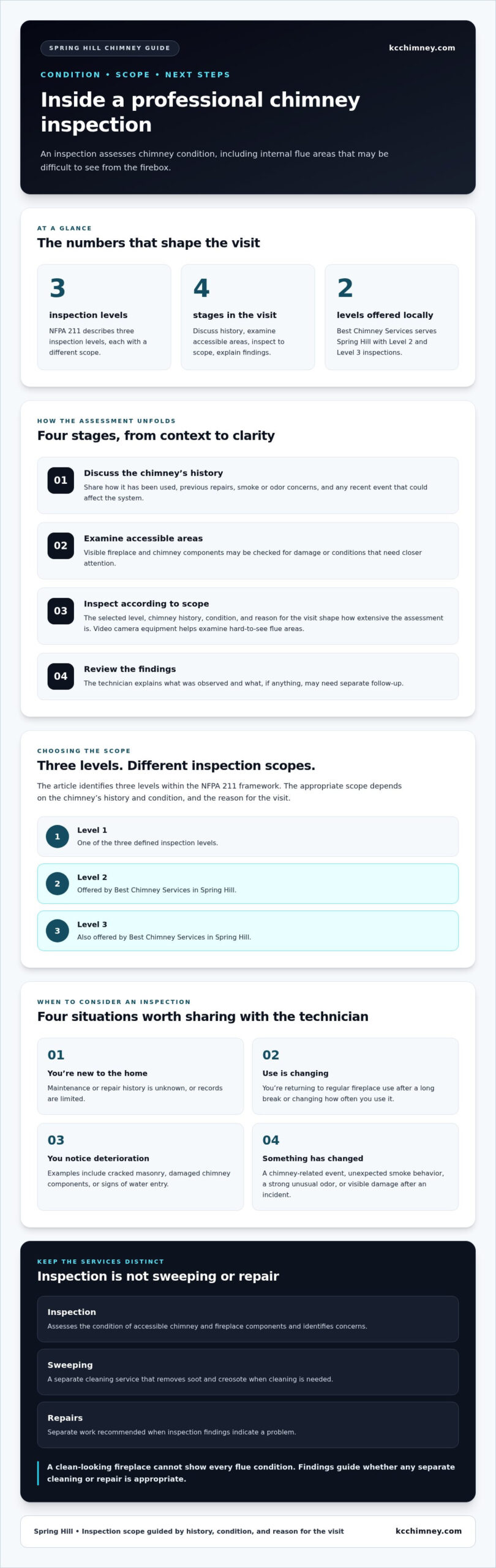
A chimney inspection follows a practical sequence, but the scope depends on the inspection level, the chimney’s history and condition, and the reason for the visit. The technician begins by discussing how the fireplace has been used, previous repairs, and any concerns you’ve noticed. This context helps shape the assessment rather than treating every chimney as if it has the same needs.
- Discuss the chimney’s history. Share details about use, past work, smoke or odor concerns, and any recent event that could affect the system.
- Examine accessible areas. The technician may look over visible fireplace and chimney components for conditions that warrant closer attention.
- Inspect according to scope. The selected inspection level determines how extensive the assessment is. The NFPA 211 Standard for Chimneys describes a framework with three inspection levels, each with a different scope.
- Explain the findings. You should understand what was observed and what, if anything, may need separate follow-up.
This sequence makes a chimney inspection in Spring Hill easier to understand. An inspection assesses condition; it doesn’t automatically include sweeping or repairs. If cleaning or repair is appropriate, those are separate next steps based on the findings.
What areas may the technician examine?
Depending on the inspection scope, the technician may assess accessible fireplace, chimney, and flue components. The assessment can look for visible damage, deposits, obstructions, or signs of moisture or fire damage that deserve attention. The checks vary by visit because the reason for service and the selected inspection level determine what can be examined.
Internal areas can be difficult to view from the firebox. Video camera equipment helps examine the flue interior and identify conditions that may otherwise be hard to see. A video camera brings hard-to-see flue conditions into view, giving the technician more information to assess the chimney. It supports the inspection but doesn’t replace the rest of the assessment.
How are findings explained to the homeowner?
Clear explanations matter as much as the examination. The technician can describe what was observed in plain language, distinguish visible evidence from a possible concern, and explain why a next step may be recommended. For example, an observed deposit is a finding; sweeping is a separate service if cleaning is needed. A repair recommendation likewise follows an identified condition rather than being automatic.
Understanding the inspection scope and how findings relate to next steps can help you make an informed decision. To learn more, explore chimney inspection services from Best Chimney Services, serving Spring Hill and the Kansas City area.
Which chimney inspection level fits your Spring Hill home?
Inspection levels describe how extensive an assessment is, not a grade for the chimney or a guarantee about what it will find. The appropriate scope depends on the system’s use, history, current condition, and reason for inspection. The comparison below is a general guide; the technician determines the suitable scope based on the circumstances and applicable standard.
| Level | General scope | Typical context |
|---|---|---|
| Level 1 | Visual examination of readily accessible portions of the chimney and connected appliance. | Continued use under unchanged conditions, with no known concerns that call for a broader assessment. |
| Level 2 | Broader assessment that includes accessible areas beyond the Level 1 scope and examination of internal flue surfaces, often using video equipment. | A home sale or transfer, a change to the system or its use, or a relevant incident or suspected damage. |
| Level 3 | More extensive inspection that may involve removing or opening building components to reach concealed areas. | Serious suspected hazards that can’t be evaluated adequately through less intrusive inspection. |
How do Level 1 and Level 2 inspections differ?
A Level 1 inspection is generally suited to a chimney whose use and conditions haven’t changed and where no known concern points to a need for more. It focuses on accessible portions. A Level 2 inspection is broader. It may be appropriate after a change, incident, or property transfer, when additional access and a closer look inside the flue can help assess the system. Best Chimney Services offers Level 2 inspections for Spring Hill homeowners.
For example, a homeowner continuing familiar use without known changes may need a different scope from someone buying a home with limited service history. A property transfer or altered fireplace setup can raise questions that a limited visual assessment may not answer. The inspection level should reflect the circumstances, not a homeowner’s guess based on the firebox’s appearance.
When might a Level 3 inspection be considered?
Level 3 may be considered when a serious concealed hazard is suspected and less intrusive inspection can’t adequately assess the areas involved. Access might require removing or opening building materials. This is a more involved scope, not a routine step for every chimney. A technician determines whether it’s warranted based on observed conditions and the chimney’s history.
Don’t try to diagnose structural or internal hazards yourself or decide that a particular inspection level is necessary based on appearance alone. Share what you know about repairs, changes in use, or an incident. The technician can use that context and the inspection findings to determine an appropriate scope. If findings point to cleaning or repair, those are separate next steps, not automatic parts of every inspection.
How to prepare for a Spring Hill chimney inspection and review the findings
A little preparation can make a chimney inspection in Spring Hill more useful. You don’t need to diagnose a problem or guess which inspection level you need. Your observations and any records you have can help the technician understand the chimney’s history and the reason for the visit.
What should you have ready before the appointment?
Before the visit, gather what you know and make the fireplace and accessible work area available. Specific details help, even if they seem minor. A change in smoke behavior, for instance, can provide useful context alongside the chimney’s service history.
- Note how often and how recently the fireplace has been used.
- Gather records or notes about prior inspections, sweeping, and repairs, if available.
- Write down changes in performance, including smoke entering the room or unusual odors.
- Recall recent events that might matter, such as damage or a change to the fireplace or chimney.
- Make the fireplace and accessible areas around it available for the technician’s assessment.
Share concerns at the beginning of the visit rather than waiting until the end. A short timeline can help: when you first noticed an odor, whether it occurs during use, and whether anything changed beforehand. You don’t need to identify the cause. Clear observations help the technician assess the chimney in context.
To arrange an assessment tailored to your chimney’s history and current concerns, schedule a Spring Hill chimney inspection with Best Chimney Services.
What should you take away from the inspection?
Before wrapping up, ask the technician to explain what was observed in straightforward terms. Clarify which areas were assessed, what the findings mean for fireplace use, and whether further evaluation or work is recommended. If an area wasn’t accessible or needs a closer look, ask what that means for the assessment and what happens next.
It also helps to distinguish between a condition that may affect safe operation and maintenance or repair that can be planned. Ask the technician to explain the reason for each recommendation and whether it is a separate service. Sweeping or repair isn’t automatically included in an inspection; next steps depend on the findings and your chimney’s needs.
Keep any notes or information provided with your home’s maintenance records. That history can help make a future visit more informed, especially if fireplace use changes or a concern comes up. For a broader overview of what an inspection can involve, see the Kansas City chimney inspection guide. A clear explanation should leave you knowing what was observed, what deserves attention, and what practical next step makes sense.
Book a chimney inspection in Spring Hill with Best Chimney Services
Understanding your chimney’s condition can help you make thoughtful decisions before relying on the fireplace. An inspection clarifies what was assessed, what the findings mean, and whether follow-up makes sense. Best Chimney Services is locally owned and serves Spring Hill as part of the Kansas City area, helping local homeowners address chimney questions.
Inspection scope should fit the chimney and the reason for the visit. Best Chimney Services offers Level 2 and Level 3 inspections, using video camera equipment to assess internal flue conditions. The goal is to give you a practical understanding of the assessment and its findings, not to assume every chimney has the same needs or requires the same work.
What to expect from a local inspection appointment
Expect a safety-focused assessment shaped by the chimney’s history, condition, and inspection scope. Sharing details about previous repairs, changes in use, or concerns you’ve noticed gives the technician useful context. After examining the relevant areas, the technician can explain observations in plain language and discuss appropriate next steps. You should be able to distinguish what was observed from what may warrant further evaluation.
Inspection, cleaning, and repair are different services. If the findings indicate that the chimney needs sweeping or repair, those can be considered separately; neither is automatically included in every inspection. Best Chimney Services also provides chimney sweeping and chimney repairs, so the inspection can help clarify which next step, if any, fits the findings.
Take the next step for your Spring Hill chimney
If you’re unsure about your chimney’s condition, an inspection can replace guesswork with a clearer assessment. Bring your questions and any relevant history, then use the technician’s explanation to understand the scope and plan accordingly. You don’t need to decide on repairs or cleaning before the inspection; let the findings guide that conversation.
Best Chimney Services serves homeowners in Spring Hill and the Kansas City area with chimney inspections, including Level 2 and Level 3 options. Start a conversation about your chimney and arrange an assessment by contacting Best Chimney Services.
Make your next fireplace decision with confidence
A chimney inspection in Spring Hill can give you a useful reference as you make decisions about fireplace use and future care. Rather than relying on appearance or assumptions, use the technician’s explanation to understand what was assessed and what deserves attention. If a concern is identified, discuss the appropriate next step before making plans to use the fireplace.
Keep the conversation practical. Share what you’ve noticed, ask about unfamiliar terms, and make sure you understand whether a recommendation involves further evaluation, cleaning, or repair. That clarity helps you move forward at a pace that fits the situation, without treating every finding as an emergency or overlooking a concern that needs attention.
When you’re ready to arrange a professional assessment, schedule your chimney inspection in Spring Hill with Best Chimney Services. A clear starting point can make the next decision easier and help you care for your home with greater peace of mind.
Frequently Asked Questions
Is a chimney inspection different from chimney sweeping?
Yes. An inspection assesses the chimney’s condition, while sweeping removes soot and creosote deposits. They address different needs, though both may be appropriate during the same period of fireplace care. An inspection may identify deposits that call for cleaning or a condition that needs repair rather than sweeping. The technician can explain which service fits the observed conditions; one isn’t automatically included with the other.
How often should I have my chimney inspected in Spring Hill?
A practical baseline is to arrange a professional inspection annually, ideally before regular fireplace use begins. Also schedule an assessment after a chimney-related event, a change to the fireplace or venting, or a long period without use. The right timing can depend on fuel type, frequency of use, and maintenance history. Homeowners in Spring Hill, Overland Park, Mission Hills, Stilwell, and Bucyrus can use those details to plan chimney care.
What is the difference between a Level 1 and Level 2 chimney inspection?
A Level 1 inspection is a more limited assessment when the chimney’s use and conditions remain unchanged and no known concern suggests a broader scope. Level 2 extends the assessment, including closer examination of accessible areas and the flue interior. It may be appropriate after a property transfer, system change, or relevant incident. The technician can determine the suitable level from the chimney’s history and the reason for inspection.
Can a chimney inspection find hidden problems inside the flue?
It can help identify internal concerns, especially when the inspection scope includes examining the flue with video camera equipment. A camera may show deposits, obstructions, or visible damage in areas that are difficult to view from the fireplace. No inspection method can establish the condition of every concealed building component in every situation. If an area needs more access or assessment, the technician can explain that limitation and discuss next steps.
What happens if the inspection finds chimney damage?
The technician should explain what was observed and why it matters, then discuss appropriate next steps. Depending on the condition, that may mean additional evaluation or a separate repair, such as chimney relining, crown repair, or tuckpointing. Recommendations should relate to the findings rather than be assumed in advance. If you’re unsure whether to use the fireplace, ask the technician directly and follow their guidance about safe operation.
Should I use my fireplace before a chimney inspection?
If you have a specific safety concern, such as smoke entering the room, visible damage, or a recent chimney-related incident, avoid using the fireplace until it has been assessed and you understand the next steps. If there are no known concerns, scheduling an inspection before regular seasonal use can help inform your decision. A clean-looking firebox alone can’t tell you whether the internal flue is in suitable condition.
Do I need to prepare my home for a chimney inspection?
No special setup is needed beyond making the fireplace and accessible work area available. Gather any notes about previous service, repairs, usage, and changes in performance. Mention unusual odors, smoke behavior, or recent events when the technician arrives, even if they seem minor. Clear access helps the visit proceed smoothly, and sharing your observations gives the technician useful context for assessing the chimney.