
Why would cold air, smoke, or an odor move down your chimney instead of out? If you’re wondering what causes a fireplace downdraft, common causes include a cold flue, changing air pressure inside the home, wind around the chimney, or a possible obstruction. A downdraft can happen when the fireplace is unused or when you light a fire, and a dirty chimney isn’t the only possible explanation.
A reversed draft can make a room uncomfortable and raise safety concerns. Before using the fireplace again, note when the problem occurs and what conditions seem to affect it. This guide explains how temperature, exhaust fans, wind, and chimney conditions can affect airflow, and how a downdraft differs from other causes of a smoky fireplace.
You’ll also learn which observations are safe to make and when to stop using the fireplace. If the problem keeps returning, a professional inspection can help assess the flue and visible chimney components. Best Chimney Services provides chimney inspections, video examinations of the flue, sweeping, and repairs for homeowners in the Kansas City metro area, including Overland Park, Mission Hills, Stilwell, Bucyrus, and Spring Hill.
Key Takeaways
- Learn what causes a fireplace downdraft, including a cold flue, changing indoor air pressure, wind, and possible obstructions.
- Use weather and airflow patterns as clues, not as proof of the underlying cause.
- If smoke enters the room, stop using the fireplace. Don’t climb onto the roof or take chimney components apart.
- Note whether the problem returns in different conditions. Recurring symptoms may call for a closer look at the chimney.
- A professional inspection, including video equipment to view the flue, can help identify obstructions or damage and guide next steps.
What Is a Fireplace Downdraft, and What Does It Feel Like?
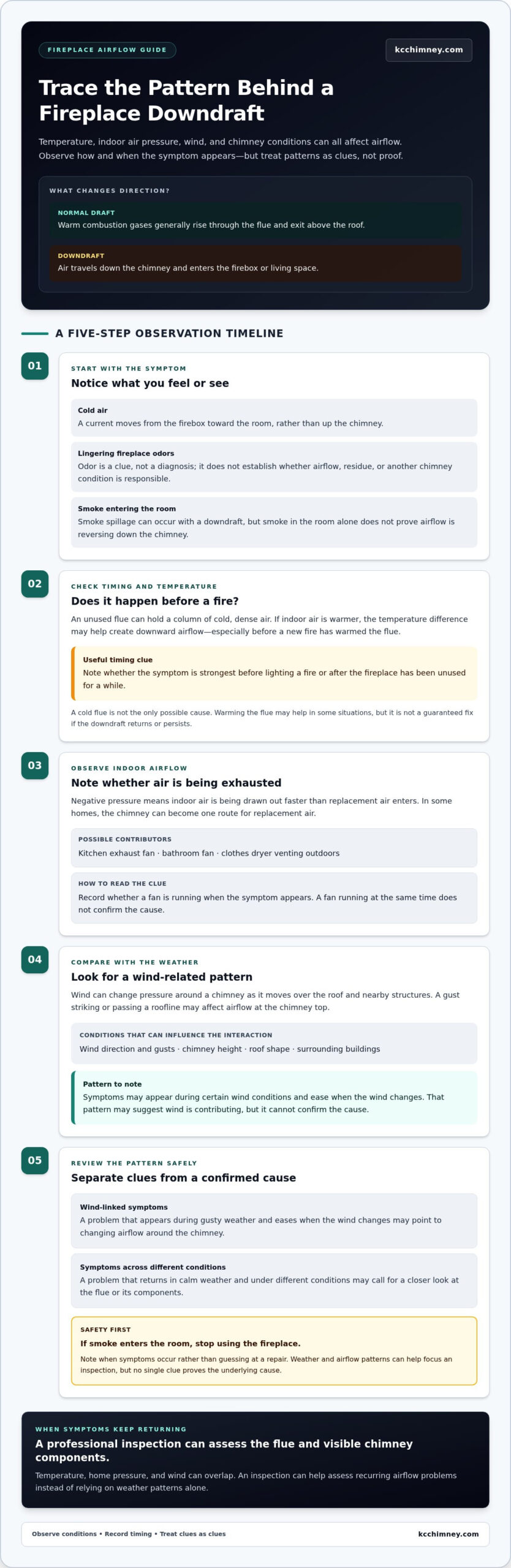
A fireplace downdraft occurs when air travels down the chimney and enters the firebox or living space instead of moving upward. You might feel a cold stream at the fireplace opening, smell lingering fireplace odors, or notice air pushing into the room. To understand what causes a fireplace downdraft, it helps to know how a chimney normally moves air.
How does normal chimney draft work?
When a fireplace burns, its hot combustion gases are warmer and less dense than the air outside the chimney. They generally rise through the flue and exit above the roof. This upward airflow is called draft. It results from differences in temperature and air pressure, rather than from a fan pushing the smoke along.
Think of warm air leaving through an upstairs window: cooler air may enter the home through another opening to replace it. A chimney can also act as a path for air movement. When conditions support normal draft, smoke and combustion gases travel up and out. A general overview of chimney structure and airflow appears in Chimney Function and Downdraft Control.
What signs might point to a downdraft?
When the fireplace is unused, a downdraft may feel like a steady or intermittent cold current coming through the opening. You may also notice smoke or fireplace odors indoors. Odor is a clue, not a diagnosis: it doesn’t establish whether airflow, residue, or another chimney condition is responsible.
- Cold air: Air moves from the firebox toward the room instead of up the chimney.
- Lingering odors: Fireplace smells become noticeable indoors, sometimes when no fire is burning.
- Smoke in the room: Smoke spills into the living space while the fireplace is operating.
A downdraft describes the direction of airflow. Smoke spillage describes smoke entering the room. They can occur together, but smoke spillage alone doesn’t prove air is reversing down the chimney; other draft or operating conditions may be involved. If smoke enters the room during a fire, treat it as an immediate safety concern and stop using the fireplace. Note when the symptom occurs rather than guessing at a repair.
How Temperature, Pressure, and Wind Can Reverse Chimney Draft
Chimney airflow responds to more than whether a fire is burning. Flue temperature, pressure inside the home, and wind around the roof can each affect draft direction. These forces may interact, so a single clue can suggest a pattern without proving its cause.
Why can a cold chimney push air into the room?
An unused flue can hold a column of cold, dense air. If the indoor air is warmer, the temperature difference may help create downward airflow, especially before a new fire has warmed the flue. The effect may be more noticeable after the fireplace has been unused for a while, but a cold flue isn’t the only possible reason air enters the room.
Notice whether the symptom is strongest before lighting a fire or after a long period without use. That timing is useful context, not a diagnosis. Warming the flue may help in some situations, but it isn’t a guaranteed fix for a downdraft that returns or persists. If smoke enters the room, stop using the fireplace rather than trying to overcome the airflow with a larger fire.
How can home pressure and wind affect a fireplace?
Negative pressure means indoor air is being drawn out of the home faster than replacement air enters. A kitchen exhaust fan, bathroom fan, or clothes dryer venting outdoors may contribute in some homes. If the house needs replacement air, the chimney can become one route for it. The effect depends on the home and conditions, so a fan running at the same time doesn’t confirm the cause.
Wind can change pressure around a chimney as it moves over the roof and nearby structures. A gust striking or passing a roofline may affect airflow at the chimney top. Chimney height, roof shape, and surrounding buildings can all influence how wind interacts with the flue. As a result, symptoms may appear during certain wind conditions and ease when the wind changes.
These factors can overlap. A cold flue may be more affected when indoor air is being exhausted, while wind adds another pressure change at the chimney top. To narrow down what causes a fireplace downdraft, note when it occurs, whether exhaust fans are running, and whether it follows a change in wind. These observations can help focus an inspection without treating any one clue as proof.
For recurring symptoms, a professional chimney inspection can assess the flue and visible components instead of relying on weather patterns alone. The NFPA 211 chimney safety standard provides broader context on chimney safety, including design and maintenance. Kansas City homeowners can arrange chimney inspection services when airflow problems keep returning.
Downdraft Clues: Weather, Home Airflow, or a Chimney Problem?
The same symptom can have different causes. A draft that appears during gusty weather may point to changing airflow around the chimney. A problem that returns in calm weather and under different conditions may call for a closer look at the flue or its components. Patterns help organize what you’ve noticed, but they can’t confirm what causes a fireplace downdraft.
| Possible factor | Clue to observe | What the clue can’t prove |
|---|---|---|
| Wind around the chimney | The problem appears during certain windy conditions and eases when the wind changes. | Wind may be contributing, but the pattern alone can’t rule out another airflow or chimney issue. |
| Home air pressure | Airflow seems to change when a kitchen or bathroom exhaust fan is running, or when a window is open. | A change doesn’t establish that a fan or the home’s air balance is the only cause. |
| Cold flue | The symptom is most noticeable before lighting, especially after the fireplace has been unused. | Timing doesn’t confirm that the flue temperature explains recurring symptoms. |
| Obstruction or chimney condition | The downdraft recurs across different weather conditions, or there are concerns about a blocked flue, damaged component, or cap. | Indoor observations can’t show what’s inside the chimney or determine which repair, if any, is needed. |
Which observations can help narrow down the cause?
Keep a brief record of when the airflow occurs: before lighting or during a fire, in particular wind conditions, and with exhaust fans on or off. Note whether opening a window changes what you feel, but don’t treat that change as a fix or diagnosis. These details can help a technician understand the pattern. They aren’t a substitute for inspecting the chimney, and you don’t need to create unsafe conditions to test them.
When could the chimney itself need attention?
A suspected blockage, damaged chimney component, or missing or compromised cap should be assessed rather than guessed at. Recurring symptoms across varied conditions are a good reason to arrange a professional inspection. A downdraft doesn’t automatically mean the chimney is dirty. Sweeping is appropriate when an inspection identifies soot, debris, or another obstruction that can be addressed by cleaning. Temperature, pressure, wind, or another chimney condition may also be involved.
A chimney inspection can assess the flue and visible components. Video equipment can help examine the chimney interior. For more detail about what an inspection can cover, see this Kansas City chimney inspection guide. The goal is to identify a contributing condition before deciding on the next step, not to assume every draft needs the same repair.
What to Do Safely When Your Fireplace Has a Downdraft
If smoke or fumes enter the room, put safety ahead of finding the cause. Don’t add more fuel or keep operating the fireplace to see whether the draft improves. Smoke can irritate your breathing, and carbon monoxide is odorless, so smell alone can’t tell you whether the air is safe. A carbon monoxide alarm is an important safeguard, but it doesn’t diagnose a draft problem or rule out every hazard.
What should you do if smoke or fumes enter the room?
Stop using the fireplace. If it’s safe to do so without staying near smoke, open a door or window for ventilation, then move away from the affected area. Don’t delay leaving to investigate the chimney. If anyone feels unwell, get everyone outside and seek emergency help.
Use a simple sequence:
- Stop: Don’t add fuel or try to restart the fire.
- Move to fresh air: Leave the room, and leave the home if smoke or fumes persist or anyone feels unwell.
- Get help: Seek emergency assistance if someone feels unwell. Don’t use the fireplace again until the concern has been assessed.
Follow the alarm manufacturer’s instructions if a carbon monoxide alarm sounds. Don’t rely on the absence of an odor, a clear-looking room, or an alarm that hasn’t sounded as proof that a draft issue is harmless.
Which checks are safe to make from indoors?
Once there’s no immediate exposure concern, make notes without testing the fireplace. Was it unused or recently lit? Were kitchen or bathroom exhaust fans running? Did the airflow change when a door or window was open? These details can help describe the pattern, but they can’t confirm what causes a fireplace downdraft or establish that the chimney is safe to use.
Check that your home has a working carbon monoxide alarm and follow its instructions for placement, testing, and maintenance. Treat it as a safety device, not a chimney diagnostic tool. Don’t light a fire to test a suspected blockage, reach into the flue, or use improvised tools to clear it. Avoid climbing onto the roof or dismantling a cap or other chimney component. Those steps can expose you to falls, hot surfaces, or hidden damage.
Repeated downdrafts, unexplained fireplace odors, or a suspected obstruction call for professional evaluation. An inspection can assess the flue and visible chimney components, and video equipment can help examine the chimney interior. Sweeping may be appropriate if the inspection identifies soot or debris, but not every airflow problem has the same cause or remedy.
If the problem keeps returning, arrange a chimney inspection with Best Chimney Services before using the fireplace again. A careful assessment can help identify an underlying condition and guide a safe next step.
How a Kansas City Chimney Inspection Can Identify Recurring Downdrafts
Recurring airflow problems can be difficult to diagnose from inside the room. Weather, pressure changes in the home, and chimney conditions may produce similar symptoms, so an inspection looks beyond the draft itself. It can assess the flue and accessible chimney components for signs of an obstruction, damage, or another condition that may affect airflow. Findings guide the next step; they don’t mean every downdraft has the same cause.
What can a chimney inspection examine?
A technician can assess the flue and visible, accessible chimney components for conditions that may warrant further attention. Video inspection equipment can help examine interior areas that aren’t visible from the fireplace opening. This provides a closer view of the chimney interior, while the inspection findings can be considered alongside when and how the downdraft occurs.
Before the visit, describe whether the problem happens before lighting or during a fire, whether it recurs in different weather, and whether you’ve noticed smoke or odors. These observations provide context but don’t replace a professional assessment. Homeowners can also review this Kansas City chimney sweeping and maintenance guide to understand how routine chimney care relates to keeping the fireplace in service.
What happens after the cause is identified?
Recommendations depend on the inspection findings, not on the symptom alone. If an obstruction such as soot or debris is identified, chimney sweeping may be appropriate. If the inspection finds a concern involving the chimney cap, cap installation may be a relevant next step. Damage or another issue may call for chimney repair. If the findings don’t point to a chimney condition that can be addressed with these services, don’t assume sweeping or replacing a component will resolve the airflow concern.
Asking what causes a fireplace downdraft doesn’t lead to one universal answer. A camera-assisted inspection can help clarify what’s visible inside the chimney and whether the flue or accessible components show signs that need attention. The findings help distinguish a possible obstruction or damage from conditions that may require a different assessment.
If downdrafts keep returning, schedule a Kansas City chimney inspection with Best Chimney Services. Homeowners in Overland Park, Mission Hills, Stilwell, Bucyrus, and Spring Hill can arrange an inspection, sweeping, or chimney repair based on the conditions found.
Take the Next Step Toward a Reliable Fireplace Draft
Wondering what causes a fireplace downdraft is a useful starting point, but recurring airflow trouble deserves more than guesswork. Note when it happens and share those observations during an inspection. Video camera equipment can help examine the chimney interior and areas that can’t be seen from the fireplace opening.
Best Chimney Services provides chimney sweeping, inspection, and repair for homeowners across the Kansas City metro area, including Overland Park, Mission Hills, Stilwell, Bucyrus, and Spring Hill. The right next step depends on the inspection findings, so there’s no need to assume every draft calls for the same work. A clear assessment can help you make an informed decision about your fireplace.
Schedule a chimney inspection with Best Chimney Services to take a practical next step toward a safer, more comfortable hearth.
Frequently Asked Questions
What is the most common cause of a fireplace downdraft?
Air-pressure imbalance in the home is a frequent contributor, though no single cause explains every downdraft. Exhaust fans or a clothes dryer can move indoor air outdoors, and replacement air may enter through the chimney. If the draft changes when these appliances run, share that observation during an inspection. It’s a clue, not proof that an appliance is solely responsible.
Can wind cause a fireplace downdraft?
Yes, wind can affect airflow at the chimney top and push air down the flue under some conditions. You might notice the problem during gusts from a particular direction or when wind passes over nearby rooflines. That pattern can point to wind as a factor, but it doesn’t rule out a flue or cap issue. Don’t go onto the roof to investigate.
Why does cold air come down my chimney when the fireplace is not in use?
A cold, unused flue can allow cool air to flow into the room, especially when indoor and outdoor temperatures differ. Home air pressure can also influence airflow direction. If the draft is persistent, note whether it changes when exhaust fans are off or a nearby window is open. Don’t use an unlit fireplace to test whether the chimney is clear.
Can a blocked chimney cause a downdraft?
A blockage can interfere with normal airflow and may contribute to smoke or air behaving unexpectedly. Debris, an animal nest, or buildup are possible obstructions, but a downdraft alone can’t tell you what’s inside the flue. Don’t try to clear a suspected blockage with a fire or an improvised tool. A professional inspection can assess the chimney interior and determine whether sweeping or another step is appropriate.
Is a fireplace downdraft dangerous?
It can create a safety concern if smoke or combustion gases enter the home. Carbon monoxide has no smell, so fireplace odor cannot confirm or rule out its presence. A working alarm is an important safeguard, not a draft diagnostic. If anyone feels unwell or an alarm sounds, leave the home and seek emergency help. Keep the fireplace out of use until the concern is assessed.
How can I tell whether my fireplace downdraft is caused by wind?
Look for a consistent connection between the symptom and windy conditions. For example, record whether airflow changes during gusts and eases when the wind calms. Note the timing, but don’t treat the pattern as a diagnosis: wind can coincide with other pressure or chimney conditions. Homeowners in Overland Park, Mission Hills, Stilwell, Bucyrus, and Spring Hill can share these observations during a local chimney inspection.
Should I use my fireplace if smoke is coming back into the room?
No. Stop adding fuel and don’t continue operating the fireplace while smoke enters the room. Move away from the smoke and ventilate only if you can do so safely. If anyone feels unwell, get outside and seek emergency help. Don’t relight the fireplace to see whether the problem clears. Have the cause assessed before using it again, since smoke spillage may need attention even if the source isn’t obvious.