
Did you know that an older fireplace can pull more heated air out of your home than it actually produces? Through the chimney stack effect, outdated decorative units often operate like cracked windows during freezing Kansas winters. If you are struggling with drafty living spaces, stubborn pilot lights, or climbing energy bills, a gas fireplace insert replacement Overland Park homeowners trust turns an inefficient architectural feature into safe, dependable zone heating.
It is natural to feel hesitant about overhauling your hearth. Concerns about gas line safety, Johnson County building permits, and hidden chimney flue issues can make any homeowner pause. Fortunately, modern direct-vent technology eliminates indoor drafts while delivering heating efficiencies over 80 percent. This 2026 guide covers everything you need to know, from deciding whether to repair or replace your existing unit to navigating local code standards and professional installation timelines.
Key Takeaways
- Learn how to spot critical warning signs, such as recurring pilot failures and firebox deterioration, indicating your unit has surpassed its typical 15 to 20-year lifespan.
- Discover how a modern gas fireplace insert replacement Overland Park homeowners choose uses sealed direct-vent technology to stop winter drafts and boost zone-heating performance.
- Understand the multi-step replacement process, starting with thorough internal flue evaluations and safe gas line decommissioning before final installation.
- Determine the right fit for your living space by evaluating firebox depth, taper angles, and room-specific heating capacity.
- Protect your hearth investment with routine glass care and essential annual professional safety evaluations.
Signs It Is Time for a Gas Fireplace Insert Replacement in Overland Park
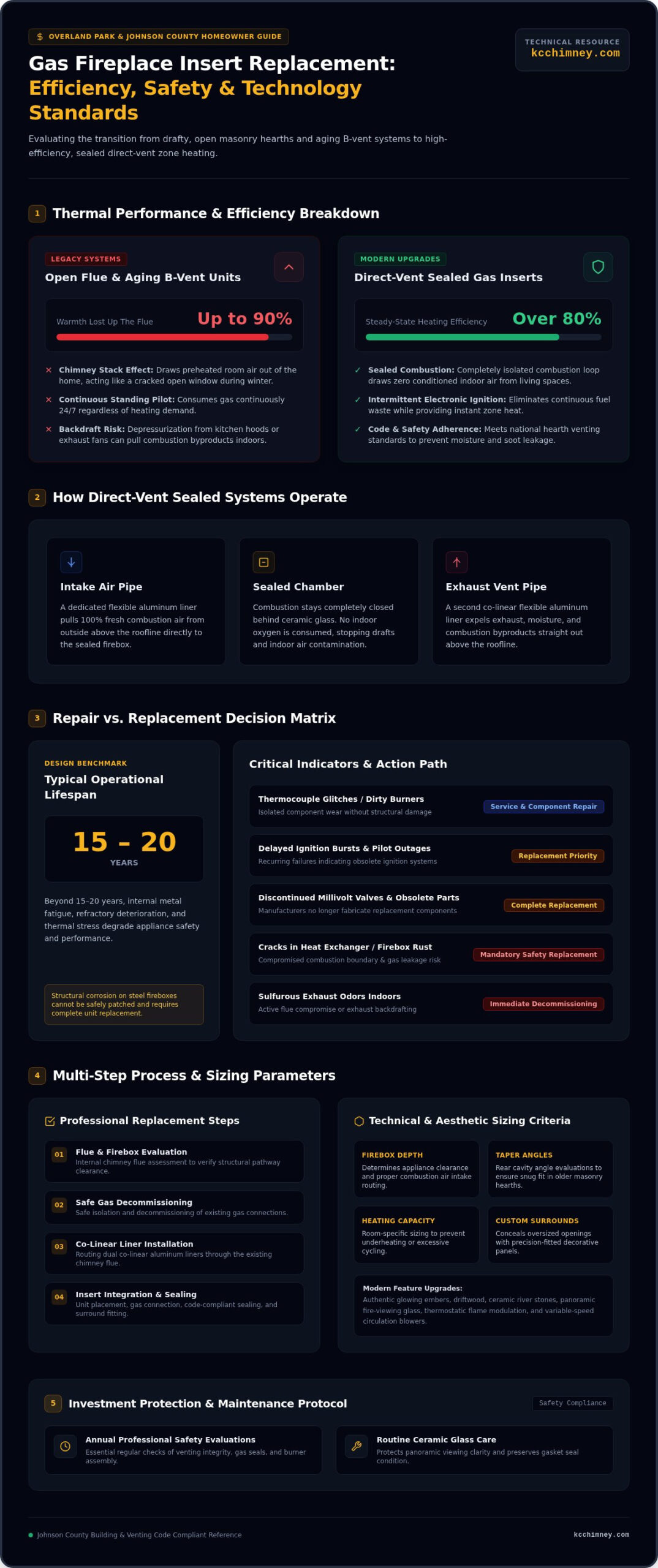
Most residential gas hearth units have an operational lifespan of 15 to 20 years. Beyond this window, internal metal fatigue, refractory deterioration, and thermal stress begin to degrade performance. For homeowners exploring what is a fireplace insert and how these sealed appliances operate, age is only the first indicator. Critical red flags include delayed ignition bursts, persistent pilot outages, and obsolete components that manufacturers no longer fabricate. When you notice strange, sulfurous exhaust odors or visible cracks along the heat exchanger, continuing to run the appliance compromises your indoor air quality. At that stage, planning a gas fireplace insert replacement Overland Park technicians recommend becomes a necessary safety priority.
Performance Decline and Rising Energy Bills
Legacy B-vent appliances and open decorative log sets draw preheated room air up the chimney flue, venting conditioned warmth directly into the Kansas winter sky. Modern direct-vent units change this dynamic entirely by using sealed combustion chambers that draw zero air from inside your living quarters. Older models also rely on continuous standing pilots, which burn fuel around the clock regardless of whether you need heat. Transitioning to modern intermittent electronic ignition eliminates this constant fuel consumption while providing powerful zone heating that warms your main living area without driving up whole-house utility bills.
Mechanical Failure vs. Component Repair Limits
Determining whether to service or replace an aging hearth often comes down to structural integrity and component availability. While thermocouple issues or dirty burners are easily solved through expert gas fireplace repair in Overland Park, major failures tell a different story. If an outdated millivolt valve leaks, replacement parts are often discontinued. More critically, when moisture causes deep corrosion or rust along the firebox shell, the entire combustion boundary is compromised. Patching deteriorated steel fireboxes is unsafe; complete unit replacement is the only responsible way to protect your home from combustion gas leakage.
Outdated Aesthetics and Lifestyle Upgrades
Performance matters, but daily livability is just as important for Johnson County homeowners:
- Realistic Burner Media: Swap artificial, crumbling yellow oak logs for authentic glowing embers, driftwood, or contemporary ceramic river stones.
- Intelligent Comfort Controls: Upgrade from basic manual toggle switches to multi-function remotes featuring thermostatic flame modulation and variable-speed circulation blowers.
- Custom Architectural Surrounds: Cleanly conceal oversized, dated masonry openings with precision-fitted decorative panels that frame modern, panoramic fire-viewing glass.
A comprehensive gas fireplace insert replacement Overland Park homeowners invest in turns a tired, drafty hearth into an efficient, beautiful centerpiece tailored for years of trouble-free warmth.
Why Modern Direct-Vent Gas Inserts Outperform Older Hearth Systems
Traditional masonry fireplaces in Johnson County often act as thermal bridges, pulling biting winter winds straight through porous brickwork and unsealed dampers. A modern gas fireplace insert replacement Overland Park homes receive solves this issue through direct-vent technology. This sealed combustion design relies on two co-linear flexible aluminum liners routed directly through your existing chimney flue. One pipe pulls fresh combustion air from outside, while the second expels exhaust gases safely above the roofline.
Sealed Combustion and Indoor Air Quality
Direct-vent systems form a completely closed loop, which keeps combustion byproducts entirely separate from the air your family breathes. Older open appliances can backdraft when powerful kitchen range hoods or bathroom exhaust fans depressurize tightly sealed homes. Modern direct-vent installations adhere strictly to national safety standards for hearth venting. This isolated design stops cold drafts and prevents indoor moisture, soot, and carbon monoxide leakage.
High Efficiency and Heating Performance
While an open fireplace can lose up to 90 percent of its warmth up the flue, modern direct-vent gas inserts routinely achieve steady-state heating efficiencies exceeding 70 to 80 percent. Heavy-duty heat exchangers capture heat from the burner, while variable-speed convection blowers quietly circulate that warmth throughout the room. Practicing effective zone heating during sub-zero Kansas cold snaps keeps your primary living space cozy without forcing your main furnace to heat unoccupied rooms.
Reliable Backup Warmth During Midwest Winter Outages
Severe Kansas ice storms frequently knock out electrical grids when dependable warmth is most critical. Modern gas inserts include integrated battery backup packs that fire the electronic ignition even when household electricity fails. Even without the electric blower running, the unit’s high-temperature ceramic glass radiates steady, powerful warmth into the living area. If you want dependable safety and comfort before freezing temperatures arrive, consulting the specialists at Best Chimney Services ensures your hearth is ready for severe weather.
The Professional Gas Insert Replacement Process Explained
Upgrading your hearth requires far more than simply sliding a new metal box into an existing opening. A successful gas fireplace insert replacement Overland Park homeowners can count on involves precise mechanical planning, flue adaptation, and rigorous safety verification. Seasoned technicians follow a systematic five-step sequence that protects your home’s structural framing while ensuring flawless draft performance.
Pre-Installation Chimney and Flue Assessment
Before disconnecting any mechanical components, technicians conduct a comprehensive evaluation of the host masonry structure. Scheduling an expert chimney inspection in Kansas City identifies cracked clay flue tiles, mortar joint decay, or internal voids that could compromise venting. Installers also measure firebox dimensions and verify clearances to combustibles, ensuring nearby wood mantels, trim, and drywall remain completely protected from radiant heat transfer.
Safe Extraction and Gas Plumbing Connection
Decommissioning begins by isolating the fuel supply and testing shut-off valves for micro-leaks. Technicians lay protective floor containment coverings to prevent legacy soot and debris from tracking into living spaces before disconnecting existing electrical lines. During extraction, the installer verifies the existing gas pipe diameter and tests line pressure. This step confirms your plumbing can supply adequate fuel volume to meet the appliance’s specified BTU demands.
Co-Linear Flue Relining and Weatherproof Termination
Direct-vent operation requires two continuous flexible aluminum liners dropped down the chimney flue. One tube pulls fresh outdoor air directly to the sealed firebox, while the second exhausts combustion products out the top. Technicians anchor both pipes to a weather-sealed chimney cap and custom flashing plate to block Midwest rain and wind. If rooftop evaluations reveal spalling brick or cracked crowns, pairing this phase with expert chimney repair in Kansas City keeps external masonry solid and watertight.
Finally, technicians anchor the insert, connect the precision gas valve, and attach custom decorative surround panels that cleanly frame your existing brickwork. After setting the ceramic media, the installer calibrates flame aeration, runs safety checks across all connections, and walks you through remote control functions so you can operate your new hearth with complete confidence.
Key Sizing, Aesthetic, and Technical Factors for Overland Park Homes
Every home in Johnson County features its own distinct layout, from mid-century ranches near downtown Overland Park to spacious two-story floor plans in the southern neighborhoods. Selecting the right replacement unit requires taking exact measurements of your existing firebox. Installers record opening height, front width, rear width, total depth, and the angle of the rear wall taper. Overlooking that back taper angle is a common mistake that prevents an insert from seating properly against existing firebrick.
Determining Correct BTU Output for Your Living Space
Bigger is not always better when choosing heat capacity. An oversized appliance will quickly roast you out of the room, forcing you to shut it down before completing a proper burn cycle. This short-cycling wastes fuel and prevents the unit from warming surrounding walls. For standard living rooms, a unit rated between 20,000 and 30,000 BTUs provides balanced comfort. If you have vaulted ceilings or an open-concept great room, higher capacities around 35,000 to 40,000 BTUs deliver ample warmth. Look for models with wide turn-down ratios, which let you dial back thermal output by up to 50 percent while maintaining a robust, relaxing flame presentation.
Selecting Liners, Surrounds, and Hearth Finishes
A gas fireplace insert replacement Overland Park families choose should elevate the room’s interior design just as much as its heating performance. Modern hearths offer several distinct customization choices:
- Firebox Interior Liners: Choose reflective black porcelain panels to visually multiply flame depth, traditional stacked red brick, or modern herringbone ceramic patterns.
- Custom Surround Trim: Select three-sided or four-sided metal faceplates designed to bridge the gap between the new firebox shell and uneven historic masonry.
- Burner Media: Tailor your hearth aesthetic with hand-painted split oak logs, tumbled river stones, or modern crushed reflective glass crystals.
Installers must also check the floor beneath the opening. Non-combustible hearth extension requirements vary depending on how high the insert sits above finished flooring, ensuring hardwood and carpets remain completely safe from thermal damage.
Local Building Codes and Manufacturer Clearances
Installing gas appliances requires strict adherence to local mechanical codes, Johnson County permitting requirements, and NFPA 54 fuel gas provisions. Proper installation also demands an accessible, code-compliant 120-volt electrical outlet inside or adjacent to the firebox cavity to power the internal convection blowers. If you are uncertain about whether your current setup meets regional clearance mandates, review the critical guidelines outlined in our fireplace repair in Overland Park & KC safety resource. Ready to plan your hearth upgrade? Reach out to schedule an on-site consultation with our certified installation team today.
Maintaining Your New Gas Fireplace Insert for Maximum Safety and Longevity
Completing a gas fireplace insert replacement Overland Park homeowners invest in delivers dependable warmth, but ongoing reliability depends on proactive care. Gas appliances are closed mechanical systems that endure thousands of hours of intense heating cycles. Scheduling an annual professional safety evaluation keeps electrical controls, gas seals, and venting passages functioning safely throughout the coldest months.
Annual Multi-Point Safety Checkpoints
During an annual service visit, certified technicians inspect both the electronic ignition and gas distribution networks. Key checkpoints include:
- Valve and Voltage Testing: Technicians measure millivolt output and test intermittent pilot ignition modules to ensure valves open and close cleanly.
- Gas Leak Screening: Installers sweep all interior fittings and flex lines using calibrated electronic combustible gas sniffers to catch micro-leaks early.
- Blower Cleaning: Technicians vacuum the internal convection blower cage, clearing accumulated pet hair, dust, and household fibers that cause overheating.
Homeowner Seasonal Upkeep and Glass Care
Between professional visits, a few basic habits keep your hearth operating smoothly. During normal combustion, minerals in the fuel produce a faint white haze on the interior glass. Clean this film using a non-abrasive, ammonia-free fireplace glass cream; standard household window cleaners contain ammonia, which chemically etches ceramic glass under high heat. In the fall, replace the backup batteries in your wall switch or handheld remote receiver. Finally, take a quick walk outside to ensure autumn leaves, twigs, or bird nests have not obstructed the rooftop venting terminal.
Partnering with Best Chimney Services for Long-Term Comfort
Best Chimney Services has served Overland Park, Mission Hills, and Stilwell since 2012. We believe in meticulous craftsmanship, zero-mess work, and thorough safety diagnostics that put Johnson County homeowners first. Whether you need your first annual inspection or want to explore an upgrade through our guide to expert fireplace insert installation in KC, our team ensures your hearth remains a safe, dependable sanctuary all winter long.
Upgrade to Lasting Warmth and Protection in Overland Park
Replacing a worn, drafty hearth does much more than modernize your living room decor. A professional gas fireplace insert replacement Overland Park homeowners invest in turns an inefficient, leaky fireplace into a reliable zone-heating powerhouse that lowers utility bills and secures indoor air quality during freezing Midwest cold snaps. With sealed direct-vent engineering and intelligent controls, you regain total comfort and dependable emergency heat when you need it most.
Since 2012, Best Chimney Services has helped families across Kansas City and Johnson County protect their homes with meticulous care. Our certified, courteous technicians use advanced internal video camera evaluations to confirm structural flue and firebox integrity, guaranteeing clean, mess-free workmanship from start to finish. Don’t let another harsh winter pass by with an unreliable fireplace. Schedule your professional gas insert evaluation with Best Chimney Services today and enjoy dependable, worry-free warmth for years to come.
Frequently Asked Questions
How do I know if my existing gas fireplace insert should be repaired or completely replaced?
Replace your unit if you face structural rust through the steel firebox, discontinued control valves, or persistent carbon monoxide alerts. Minor issues like dirty thermopiles, loose wiring, or worn remote switches are straightforward repairs. However, when an appliance exceeds 15 to 20 years of continuous use, opting for a full gas fireplace insert replacement Overland Park homeowners count on delivers better fuel efficiency, updated safety controls, and lower long-term heating costs.
Can a new gas insert be installed into my existing wood-burning masonry fireplace?
Yes, converting a traditional open masonry hearth is the most common installation path in Johnson County. Technicians inspect the firebox floor, clean out lingering creosote, and verify that the host masonry structure remains structurally sound. Two flexible aluminum direct-vent liners are then routed straight through the existing clay or metal chimney flue to complete the closed-loop combustion venting cycle.
How long does a professional gas fireplace insert replacement take from start to finish?
A standard replacement typically takes between four and eight hours of on-site labor to complete. The process involves safely isolating and disconnecting fuel lines, extracting the legacy appliance, dropping dual chimney liners from the rooftop, and setting the new unit into place. Commissioning the burner, fine-tuning decorative media, and running comprehensive gas pressure checks are completed during the same single-day appointment.
Will my gas fireplace insert provide heat during an electrical power outage?
Yes, modern gas inserts provide reliable emergency warmth when Midwest winter storms take down the local power grid. Units equipped with intermittent pilot electronic ignition include internal battery backup packs that fire the burner without mains electricity. While electric convection blowers require wall power to circulate air mechanically, the insert’s ceramic glass radiates intense heat outward to warm your room safely.
Do I need to pull a permit or update my chimney flue when replacing a gas insert in Overland Park?
Yes, local Johnson County and City of Overland Park building codes require mechanical permits for gas appliance installations and gas line modifications. All fuel connections must comply with NFPA 54 standards and pass formal pressure testing. The flue must also be retrofitted with dedicated, continuous direct-vent liners to ensure exhaust gases cannot escape into surrounding masonry cavities.
What is the primary difference between a direct-vent insert and a ventless fireplace model?
Direct-vent inserts draw all combustion air from outdoors through sealed co-linear liners and expel one hundred percent of combustion fumes outside. Ventless models take room air directly from your living quarters and discharge moisture, carbon dioxide, and trace combustion byproducts right back into the home. For superior indoor air quality and draft-free operation, sealed direct-vent units remain the preferred standard across Overland Park.
How often does a newly installed gas fireplace insert require professional service?
Industry standards recommend scheduling a professional inspection once every twelve months, ideally in late summer or early fall. Annual evaluations include testing safety pilot switches, cleaning dust accumulation from blower assemblies, removing mineral haze from ceramic glass, and using electronic sniffers to verify gas line integrity. Investing in timely maintenance preserves operating performance and keeps your hearth ready for the coldest Kansas winter days.