
Imagine walking into your living room after a heavy Kansas storm only to find a puddle of water sitting in your firebox. It’s a frustrating sight that many of our neighbors face when their chimney isn’t properly sealed against the elements. If you’re wondering about the chimney cap vs chase cover Bucyrus homeowners often ask about, you aren’t alone. Most people assume these parts are interchangeable, but using the wrong one is like trying to put a lid on a jar that doesn’t fit.
We understand that identifying whether you have a traditional masonry chimney or a factory-built prefab system can be confusing. Choosing the right protection is the difference between a dry home and expensive internal damage or unwanted animal guests. In this guide, we’ll break down the critical differences between these two components. You’ll learn exactly which part your home requires, how they function during our local weather cycles, and how a professional installation ensures your fireplace remains a safe, reliable feature of your home for years to come.
Key Takeaways
- Learn why identifying your chimney type as either masonry or prefabricated is the essential first step in preventing water damage.
- Discover how a chimney cap acts as a protective lid for masonry flues, keeping out rain, snow, and local Bucyrus wildlife.
- Understand the role of a chase cover as a comprehensive shield for prefab systems, clarifying the chimney cap vs chase cover Bucyrus homeowners require for their specific architecture.
- See why a Level 2 inspection is vital before installation to ensure any underlying structural issues are caught with video technology.
- Find out how professional installation eliminates the safety risks of DIY roof work while providing a mess-free guarantee for your home.
Understanding Your Bucyrus Chimney: Masonry vs. Prefabricated Systems
Identifying your chimney’s construction is the foundation of effective home maintenance. You can’t choose the right protective hardware until you know what you’re trying to protect. In Bucyrus, we see a diverse range of homes, from historic farmhouses to modern developments. This means your neighbor might have a traditional brick stack while you have a wood-framed chase. Understanding the chimney cap vs chase cover Bucyrus homeowners need starts with a simple visual inspection of the exterior materials. Choosing the wrong component leaves your home vulnerable to the heavy rains and snow typical of our region.
The Masonry Chimney Anatomy
A masonry chimney is built from heavy materials like brick, stone, or concrete block held together by mortar. If you look at the top of the stack, you’ll likely see a clay tile flue liner. This is a square or round ceramic tube that vents smoke safely out of the home. The flat or sloped area surrounding the flue is the concrete chimney crown. Because brick and mortar are naturally porous, these systems require a chimney cap. This metal lid attaches directly to the flue tile or the crown. It prevents water from soaking into the masonry and causing “spalling,” where bricks begin to flake and crumble during the Kansas freeze-thaw cycle. Without this protection, the integrity of your entire chimney is at risk.
The Prefabricated (Chase) System
Prefabricated chimneys operate on a different structural principle. Instead of solid brick, they feature a wood-framed box called a “chase.” This structure is usually covered in siding, stucco, or stone veneer to match the rest of your home’s exterior. Inside this box sits a double-walled metal flue pipe. Unlike masonry systems, these chimneys are topped with a large metal pan known as a chase cover. This part acts like a lid on a shoebox, covering the entire top opening of the chase to keep rain out of the wooden interior. If your Bucyrus home has vinyl or wood siding on the chimney, you have a chase system. Understanding the chimney cap vs chase cover Bucyrus requirements is vital for these systems. These units rely on a high-quality cover rather than a standard cap to prevent rot and mold inside the framing. When we perform a Level 2 inspection, we often find that a rusted or sagging chase cover is the primary cause of fireplace leaks.
The Role of a Chimney Cap: Protection for Masonry Flues
A chimney cap is a specialized metal lid designed specifically for masonry flues. It features a solid top to deflect precipitation and mesh sides that allow smoke to escape while keeping debris out. For homeowners weighing the chimney cap vs chase cover Bucyrus decision, it’s important to remember that a cap is the right choice when you have a brick or stone chimney with a visible clay tile liner. It sits directly on the flue or is mounted to the crown, serving as the first line of defense for your masonry.
The primary job of a cap is moisture control. Rain and snow are the leading causes of masonry deterioration. When water enters an unprotected flue, it soaks into the porous clay tiles. During a typical Kansas winter, this water freezes and expands, causing the tiles to crack or “spall.” A high-quality cap acts as a roof for your flue, extending the life of your chimney system. Additionally, the mesh serves as a “spark arrestor.” This safety feature catches hot embers before they can land on your roof or nearby trees. It also keeps out local Bucyrus wildlife, like raccoons or chimney swifts, that often mistake an open flue for a nesting site.
Standard vs. Top-Sealing Caps
Standard caps provide reliable weather protection and are the most common choice for modern masonry chimneys. However, many owners of older homes in Miami County prefer top-sealing damper caps. These units serve two purposes. They protect the flue from water and pests, but they also include a rubber-sealed damper that closes tightly when the fireplace isn’t in use. This prevents conditioned air from escaping up the chimney, which can lower your utility bills. If your existing throat damper is warped or missing, a top-sealing cap is a smart investment in home efficiency.
Material Matters: Stainless Steel vs. Copper
We always recommend choosing materials that can withstand the high humidity and variable weather of the Kansas City metro. Stainless steel is the industry standard for a reason. It’s incredibly durable, resists rust, and usually comes with long-term warranties. For those looking to add a touch of architectural elegance to their property, copper caps offer a beautiful aesthetic that develops a unique patina over time. We strongly advise against using galvanized steel. While it’s cheaper initially, galvanized metal eventually rusts and can leave unsightly orange streaks down your masonry. If you’re ready to upgrade your protection, our team provides professional chimney cap installation that ensures a perfect, secure fit for your home.
The Purpose of a Chimney Chase Cover: The Shield for Prefab Chimneys
A chase cover is essentially a protective pan that seals off the entire top of a prefabricated chimney’s wood-framed “chase.” While a masonry chimney uses a small cap over the flue, a prefab system needs this comprehensive shield. In the industry, you might hear these called chimney shrouds or top pans. Their job is simple but critical: keep every drop of water out of the wooden structure. Without a functioning cover, moisture can seep into the framing, leading to mold and structural rot that is often invisible until it’s a major problem.
Many Bucyrus homeowners notice unsightly orange or reddish streaks running down the siding of their chimney. This is a classic sign of a failing galvanized chase cover. When these flat metal sheets are installed, they often suffer from “oil canning.” This is a phenomenon where the metal warps, creating low spots where water pools. Over time, that standing water eats through the galvanized coating. Rust eventually leaks into your home, staining your siding and damaging your firebox. Understanding the chimney cap vs chase cover Bucyrus distinction is the first step toward stopping these leaks before they cause structural rot.
Custom Fitting for Maximum Protection
A “one size fits all” approach doesn’t work for these systems. Every chase has unique dimensions. We ensure a precision fit by measuring the exact footprint of your chimney top. A key feature of a professional installation is the “cross-break” or peaked design. By creating a slight pyramid shape in the metal, we ensure that water sheds off the sides rather than pooling in the center. This design prevents the sagging that leads to rust and premature failure. Our technicians use these custom measurements to ensure your home stays dry even during the heaviest Kansas thunderstorms.
Upgrading from Galvanized to Stainless Steel
Most homes are built with builder-grade galvanized steel covers. These are designed for low cost, not long-term durability. In our local climate, they rarely last more than a few years before rusting. We specialize in Chase Cover Replacement using high-quality stainless steel. Stainless steel covers are a permanent solution. They won’t rust, they won’t stain your siding, and many manufacturers provide lifetime warranties on the material. This upgrade protects your home’s exterior and saves you from the recurring costs of temporary fixes. Investing in stainless steel means you won’t have to worry about your chimney’s “lid” for as long as you own the home.
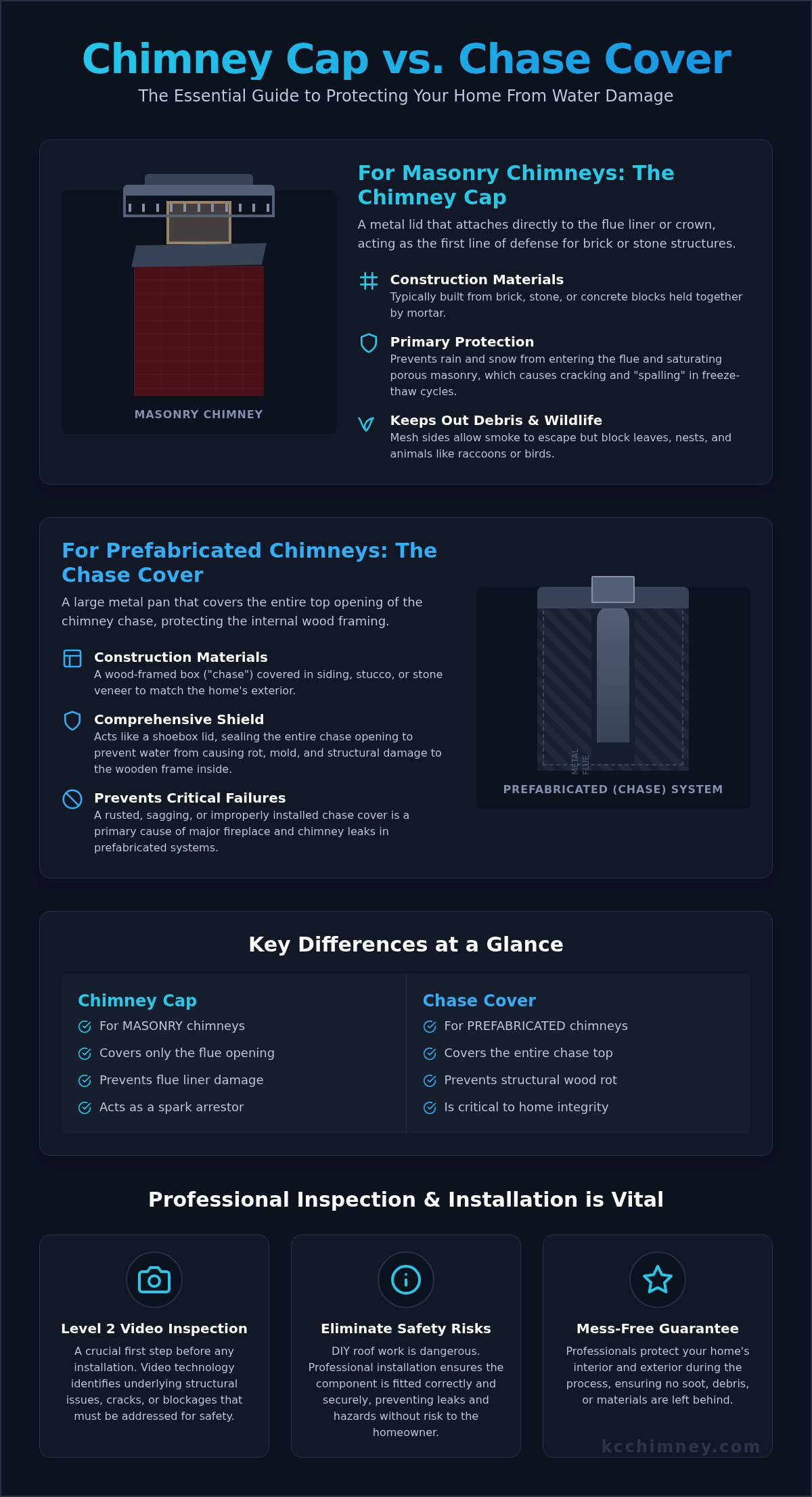
Chimney Cap vs. Chase Cover: A Side-by-Side Comparison
While both components act as a roof for your venting system, they serve different masters. A chimney cap is a targeted shield for the flue opening on a masonry stack. In contrast, a chase cover is a comprehensive lid that protects the entire footprint of a wood-framed chimney. Choosing the right chimney cap vs chase cover Bucyrus homeowners need depends entirely on the exterior construction of your home. Mixing these up or ignoring their maintenance leads to structural rot that can compromise your fireplace’s safety.
Key Differences at a Glance
The deciding factor is always the material of your chimney’s exterior. If you see brick, stone, or mortar, you need a cap. If you see vinyl siding, wood, or stucco, you need a chase cover. Beyond basic function, high-quality stainless steel installations significantly boost home resale value in the Kansas City market. Prospective buyers often look for signs of proactive maintenance. A rusted, sagging cover or a missing cap is a red flag that suggests hidden water damage inside the walls.
Common Failure Points in Kansas Weather
Our local climate presents unique challenges for these protective parts. During storm season in Bucyrus, high winds can actually lift poorly secured caps right off the flue. Similarly, the high humidity of Kansas summers accelerates rust on builder-grade galvanized covers. This leads to the orange staining mentioned earlier. We also frequently deal with animal entry. Raccoons and squirrels in Johnson and Miami counties are persistent. They can easily pry off a loose cap to nest in the warmth of your flue. A professionally installed, heavy-gauge stainless steel unit provides the physical strength needed to keep these pests out.
Maintaining these parts involves regular checks for structural integrity. While a cap might only require a quick check for mesh clogs, a chase cover needs to be inspected for pooling water or “oil canning” that indicates the metal is weakening. In some custom architectural setups in Bucyrus, we actually install both: a custom chase cover to protect the box and a decorative cap on top of the flue pipe for added aesthetic and spark protection. If you’re unsure which system protects your roof, our team can perform a thorough Level 2 Inspection to identify your needs and ensure your home stays dry.
Professional Installation in Bucyrus: Protecting Your Home
Deciding between a chimney cap and a chase cover is a vital first step, but the installation process carries its own set of challenges. Climbing onto a roof in Bucyrus with heavy tools and custom metal components is a significant safety risk for homeowners. A simple slip or an improperly secured fastener can lead to injury or recurring leaks. Professional installation ensures that your protection is wind-rated and watertight. When we evaluate the chimney cap vs chase cover Bucyrus needs of your property, we prioritize your safety and the structural integrity of your home.
Before any parts are installed, we perform a thorough Level 2 inspection. This process uses video technology to examine the interior of your flue and the exterior of your chimney stack. This is the only way to confirm if a rusted chase cover has already allowed water to damage the internal framing or if a missing cap has led to cracked flue tiles. By identifying these issues early, we prevent minor repairs from turning into major masonry projects. We take pride in our mess-free guarantee, ensuring that your living room stays clean while we work on your roof.
What to Expect During Your Appointment
Our process is methodical and transparent. During your visit, our certified technicians conduct a multi-level safety evaluation. We don’t rely on “off the shelf” solutions that might not fit correctly. Instead, we take precise measurements for custom-fabricated parts that provide a perfect seal. After the evaluation, you’ll receive a clear, honest explanation of your chimney’s health. We believe in educating our neighbors so you can make informed decisions about your home’s protection without high-pressure sales tactics.
Your Local Guardian for Chimney Care
We’ve served the Bucyrus, Spring Hill, and wider Kansas City metro area since 2012. Our local expertise matters because we understand how the regional humidity and storm patterns affect different chimney materials. We position ourselves as the guardians of your home, focusing on longevity and durability in every project we undertake. Whether you need a simple cap replacement or a complex custom chase cover, we bring technical mastery to every roof. Contact Best Chimney Services today to schedule your professional evaluation and secure your hearth for the coming season.
Secure Your Bucyrus Home Against the Elements
Your chimney’s defense system is only as strong as its weakest component. Whether you own a traditional masonry stack or a modern prefabricated system, understanding the chimney cap vs chase cover Bucyrus homeowners need is the key to avoiding costly internal repairs. By choosing high-quality stainless steel and ensuring a custom fit, you’re investing in the longevity of your home’s exterior and the safety of your fireplace.
Our CSIA Certified Technicians have been the local guardians of Bucyrus homes since 2012. We understand the specific architectural needs of our community and the grit required to withstand Kansas storms. We offer a mess-free service guarantee, so you can enjoy peace of mind without the cleanup. Don’t wait for the next heavy rain to discover a leak in your firebox. Taking action now ensures your hearth remains a warm, reliable center for your family all year long.
Protect your home from leaks-schedule your Bucyrus chimney inspection today!
Frequently Asked Questions
Do I need a chimney cap if I already have a chase cover?
Yes, you usually need both. While a chase cover seals the top of the wooden box, the metal flue pipe still opens to the sky. A cap sits on that pipe to block rain and pests. When looking at the chimney cap vs chase cover Bucyrus homeowners need, it’s vital to ensure both are in good condition. This dual protection keeps your venting system clear and your internal framing dry.
What are the signs that my chimney chase cover is leaking?
The most common sign is reddish or orange rust streaks running down your chimney siding. You might also find water pooling in the firebox or notice a musty odor after it rains. If you hear a rhythmic metallic dripping sound during a storm, your cover likely has “oil canning” issues where water is bypassing the seal. Identifying these signs early prevents expensive structural rot in your home’s framing.
How much does it cost to replace a chimney cap in Bucyrus?
Pricing depends on several factors, including the material you choose and the dimensions of your flue. Stainless steel and copper options have different price points compared to basic galvanized metal. Because every chimney in Bucyrus is unique, we recommend a professional inspection to determine the exact size and mounting style required. This ensures you receive an accurate quote for a part that will actually protect your home for years to come.
Can I install a chimney cap myself?
We don’t recommend DIY installation for several reasons. Climbing onto a roof presents a significant fall risk, especially on the multi-story homes common in our area. Additionally, an improperly sized cap can restrict airflow or blow off during high winds. A professional technician ensures the cap is securely fastened and correctly sized for your specific flue, which is essential for both safety and maintaining your fireplace’s draft.
How long do stainless steel chase covers last?
Stainless steel is the gold standard for longevity. Unlike builder-grade galvanized steel that might rust within five to ten years, stainless steel covers are designed to last for the life of your home. They are impervious to the high humidity and variable weather we experience in the Kansas City metro. Investing in this material means you won’t have to worry about rust streaks or water damage for decades.
Will a chimney cap keep birds and squirrels out of my fireplace?
Yes, a cap with sturdy mesh sides is your best defense against pests. Raccoons, squirrels, and birds often view an open chimney as a safe, warm place to build nests. These nests can block your flue and create a dangerous fire hazard. A professionally installed cap creates a physical barrier that keeps Bucyrus wildlife out while still allowing smoke and gases to vent safely from your home.
Why is there rust on the outside of my chimney siding?
Rust on your siding is almost always a symptom of a failing galvanized chase cover. When water pools on a flat, builder-grade cover, it eventually corrodes the metal. This rusty water then overflows and runs down the side of your chimney, leaving permanent stains on your vinyl or wood siding. Replacing the old unit with a sloped stainless steel cover is the only permanent way to stop this staining.
Is a chimney cap required by code in Kansas City?
Most local building codes and the International Residential Code require a spark arrestor, which is a primary function of a chimney cap. Even if not explicitly mandated by every municipality, insurance companies often require them to mitigate fire risks. Beyond legalities, a cap is a technical necessity for any masonry flue to prevent moisture from destroying the clay liner. It’s a foundational safety component for any working fireplace in our region.