
That lower quote for an aluminum liner might look like a bargain today, but it could actually leave your Stilwell home unprotected against the harsh Kansas City winter. Choosing the wrong material isn’t just a budget mistake; it’s a safety risk that could lead to carbon monoxide leaks or structural damage. It’s frustrating to receive conflicting advice from different contractors, especially when you’re just trying to keep your family safe and your home up to code.
We understand the confusion that comes with maintaining a home in Johnson County. You want a solution that lasts decades, not just a few seasons. In this 2026 homeowner’s comparison, you’ll discover the critical differences in the stainless steel chimney liner vs aluminum Stilwell debate. We’ll show you how each material handles different fuel types and why local building codes, like the 2018 International Residential Code, often dictate your choice. By the end of this guide, you’ll know exactly which liner provides the 20 plus year durability and safety your household deserves.
Key Takeaways
- Learn how a high-quality liner protects your Stilwell home’s masonry from heat damage and corrosive byproducts.
- Understand the strict limitations of aluminum liners, which are only safe for use with specific Category I gas appliances.
- Compare the long-term performance of a stainless steel chimney liner vs aluminum Stilwell to see why steel is the “one and done” choice for most homeowners.
- Discover how 2018 International Residential Code standards in Johnson County impact your material selection and installation requirements.
- Find out why professional video-verified inspections are essential to ensure your chimney system remains safe and code-compliant for decades.
Why Your Stilwell Chimney Needs a Liner Upgrade
A chimney liner is the essential barrier between high-heat exhaust and your home’s structure. Understanding what a chimney liner is helps homeowners realize its vital role in protecting masonry from intense heat and corrosive byproducts. It keeps the fire where it belongs and ensures that dangerous gases exit your home safely. Without this protective layer, your chimney’s structural integrity is constantly under attack from the very appliances meant to keep you warm.
Many older homes in Stilwell feature unlined flues or aging clay tiles that are essentially “ticking time bombs.” These systems often lack the resilience to handle modern heating demands. A proper liner upgrade improves the draft and appliance efficiency, ensuring your fireplace or furnace operates at peak performance. If you notice cracks, flaking, or debris in your firebox, your current clay liner is likely failing and needs immediate attention. When you begin evaluating a stainless steel chimney liner vs aluminum Stilwell, you’re taking the first step toward securing your home for the next twenty years.
The Dangers of an Unlined or Damaged Flue
When a flue is damaged, the risks to your family are significant. Heat transfer to combustible house framing is a leading cause of chimney fires in Johnson County. Without a solid barrier, temperatures can rise high enough to ignite the wood studs surrounding your chimney. Additionally, carbon monoxide can seep through small mortar joints and into your living spaces, often without any warning. Acidic condensate from modern gas appliances can also eat away at the chimney’s interior, causing the structure to crumble from the inside out.
Local Climate Factors in Johnson County
Stilwell’s specific climate puts extra stress on masonry. Our region’s intense freeze-thaw cycles cause moisture trapped in the brickwork to expand and contract, which accelerates decay. A high-quality liner prevents moisture from soaking into the masonry in the first place. High humidity also contributes to flue condensation and creosote buildup, making the stainless steel chimney liner vs aluminum Stilwell choice a critical decision for long-term protection. Best Chimney Services ensures that your relining project accounts for these local environmental factors. We focus on providing a lasting, safe solution that respects the unique architectural needs of Johnson County properties.
Aluminum Chimney Liners: The Budget-Friendly Gas Option
Many homeowners look at the initial price tag first when planning a relining project. Aluminum is a frequent choice for budget-conscious venting, specifically for dedicated gas water heaters. It’s lightweight and relatively easy to install in existing flues. However, its application is strictly limited by safety requirements. According to National Fire Protection Association safety standards, aluminum liners are only permitted for use with Category I gas appliances. These are systems that operate with non-positive pressure and produce exhaust that doesn’t cause excessive condensation.
In the context of a stainless steel chimney liner vs aluminum Stilwell comparison, durability is the primary trade-off. You can expect a professional aluminum liner to last between 5 and 15 years. This is a significantly shorter lifespan than the 20 plus years typically offered by stainless steel. While aluminum serves a specific purpose for gas appliances, it’s not a universal solution for all homes in Johnson County.
When to Choose Aluminum
Aluminum is best suited for low-efficiency gas furnaces and standard gas water heaters. It provides a cost-effective solution for specific venting needs in mid-century Stilwell homes where these appliances are common. If your heating system is older and doesn’t produce the highly acidic condensate found in modern high-efficiency units, aluminum may meet local building codes. It’s a functional, code-compliant fix for homeowners who only need to vent a single gas appliance. While it saves money upfront, it lacks the multi-fuel flexibility that modern households often require.
The Risks of Improper Aluminum Installation
The biggest danger with aluminum is misapplication. It absolutely cannot handle the high heat generated by wood-burning fireplaces or pellet stoves. If exposed to wood-fire temperatures, aluminum will melt, leaving your home’s structure completely unprotected from fire. Corrosion is another concern. In many modern systems, acidic moisture can eat through thin aluminum in just a few seasons. Choosing between a stainless steel chimney liner vs aluminum Stilwell involves weighing these immediate savings against the long-term safety of your masonry. Before you commit to a material, a Level 2 chimney inspection in Overland Park is vital to confirm your appliance compatibility and flue condition. If you’re unsure which category your appliances fall into, it’s best to consult a professional at Best Chimney Services to ensure your venting system remains safe and efficient.
Stainless Steel Liners: The Gold Standard for Durability
While aluminum serves a niche purpose, stainless steel is the undisputed heavyweight of chimney protection. It offers unmatched versatility, allowing you to switch between wood, gas, oil, or pellet fuel without replacing your venting system. When weighing a stainless steel chimney liner vs aluminum Stilwell, homeowners often choose steel because it eliminates the need for future upgrades if they decide to install a high-efficiency wood stove or a gas insert later. It’s a permanent solution that adapts to your home’s changing heating needs over the decades.
The technical superiority of steel comes down to the specific alloy grade used in the installation. Grade 304 is frequently used for wood-burning applications, but Grade 316 is the superior choice for chimneys venting multiple appliances or acidic gas exhaust. 316L stainless steel is the industry standard for all-fuel venting due to its molybdenum content. This specific element provides the high-level corrosion resistance required to meet modern chimney liner safety standards, ensuring your flue can handle the harshest chemical byproducts of combustion.
Why Stainless Steel Outperforms Everything Else
Stainless steel thrives in environments where other materials crumble. It provides superior resistance to both acidic corrosion from gas furnaces and the intense heat of creosote fires. Beyond safety, these liners offer structural reinforcement. A rigid or heavy-walled flexible stainless liner can help stabilize an aging masonry chimney, acting as a new internal backbone for the structure. Maintenance is also simpler; the smooth interior surface makes it much easier for chimney sweeps to remove deposits during annual cleanings, which keeps your system running efficiently year after year.
Investment Value for Johnson County Properties
For Stilwell properties, a stainless liner is a significant asset during a home sale. Home inspectors in Johnson County look for these upgrades, and having a lifetime-warranted system can prevent costly repair requests before closing. Unlike aluminum, which may only last a decade, most professional stainless steel installations come with lifetime guarantees that transfer to the next owner. At Best Chimney Services, we often pair these liners with specialized insulation blankets. This insulation keeps the flue gases hot for a better draft and ensures the exterior masonry stays cool, providing the ultimate peace of mind for your family during the coldest Kansas City winters.
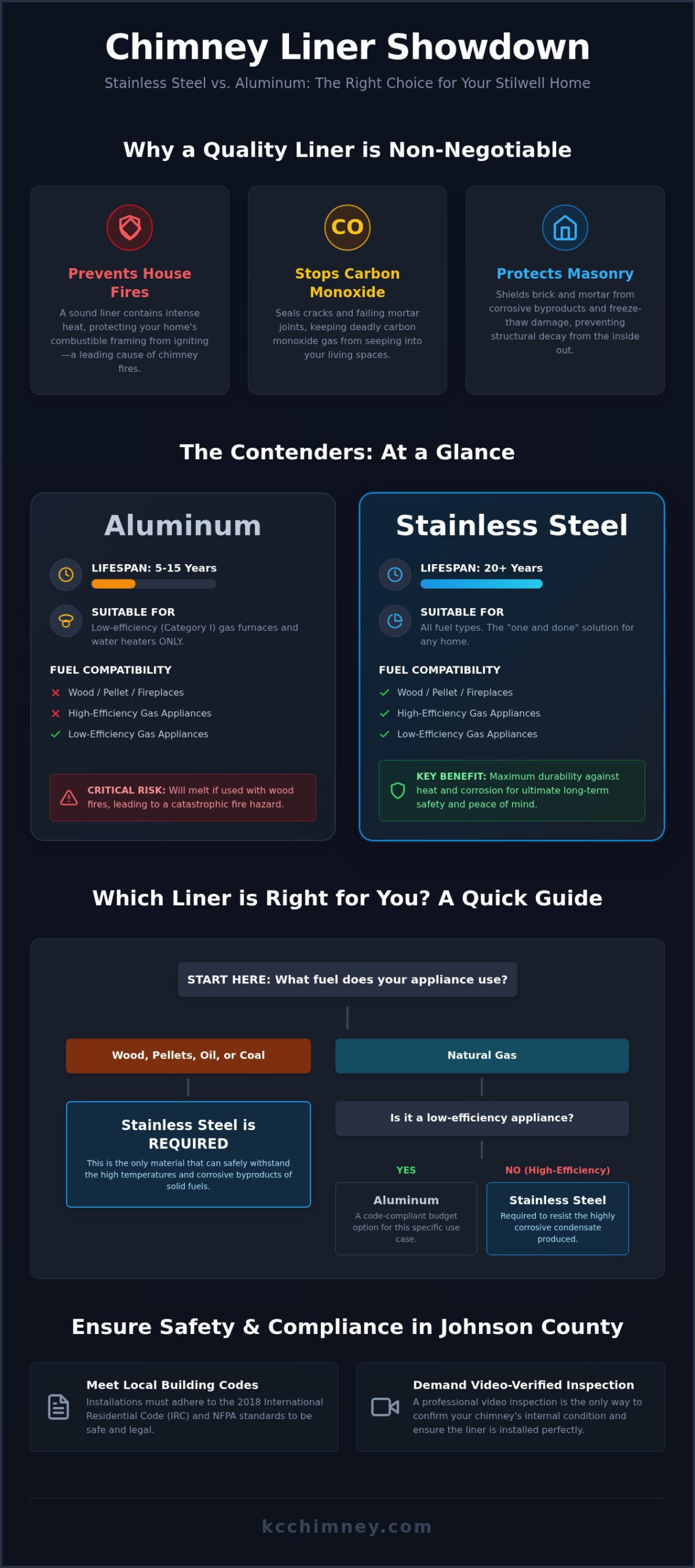
Stainless Steel vs. Aluminum: Which Is Right for Your Home?
Deciding between a stainless steel chimney liner vs aluminum Stilwell comes down to balancing your immediate budget against long term security. While aluminum offers a lower entry price, it lacks the high heat resilience required for many modern homes. Stainless steel carries a higher upfront cost but aligns with a “one and done” philosophy. You pay for the installation once and likely never worry about it again. This choice effectively ends the cycle of frequent repairs and replacements that often plague lower quality materials.
Safety ratings are a major differentiator in this comparison. Aluminum liners generally follow UL 441 standards, which are intended for gas venting only. In contrast, stainless steel liners are tested under UL 1777, the gold standard for high temperature chimney relining. This rigorous testing ensures the material can withstand chimney fires without failing. Choosing the UL 1777 rated option provides a level of structural reinforcement that aluminum simply cannot match.
Labor requirements also vary based on your choice. Aluminum is flexible and lightweight, making it faster to drop into a flue. Stainless steel, especially heavy walled or rigid versions, requires expert precision to ensure every joint is sealed and the liner is properly supported. While the labor for stainless might be more intensive, the result is a robust system that stabilizes the entire masonry column.
Fuel Type Decision Matrix
Your heating appliance is the ultimate deciding factor. If you have a wood-burning fireplace or stove, stainless steel is your only safe and code-compliant option. For homeowners with dedicated gas-only systems, aluminum is a possibility, but stainless remains more reliable against acidic corrosion. If you are currently using wood but considering a switch to a gas insert in the future, choosing stainless steel now ensures your chimney is ready for any fuel type without needing a second relining project later.
Long-Term ROI for Stilwell Homeowners
When you calculate the cost per year of service, stainless steel is almost always the winner. An aluminum liner might last ten years, while a stainless steel system often carries a lifetime warranty. Maintenance is also more cost-effective over time. Stainless steel is easier to clean and less prone to the pitting and scaling that can make aluminum flues difficult to sweep. Local chimney repair in Kansas City experts evaluate your specific flue needs to determine which material provides the best protection for your unique architecture. To ensure your home is protected for decades to come, schedule a professional consultation with Best Chimney Services today.
Professional Chimney Relining Services in Stilwell
DIY chimney projects often look simpler on paper than they are in practice. Attempting to reline your own flue frequently leads to dangerous safety violations that can put your household at risk. Beyond the physical danger, many manufacturers will void their product warranties if the installation isn’t performed by a certified professional. This leaves you with no recourse if the material fails prematurely. Best Chimney Services takes a different approach, prioritizing precision and long-term reliability for every project in Johnson County.
Our team doesn’t just drop a liner and hope for the best. We use specialized video camera equipment to perform a Level 2 inspection before any work begins. This allows us to see exactly what’s happening inside your masonry. Whether we are discussing a stainless steel chimney liner vs aluminum Stilwell homeowners need to know that the right fit is about more than just the material. It’s about the integrity of the entire venting system. We’ve been serving the local community from Stilwell and Bucyrus to Spring Hill since 2012, ensuring that every home we visit is prepared for the next Kansas City winter.
What to Expect During a Relining Appointment
A professional relining appointment starts with an initial video inspection to identify structural roadblocks like shifting masonry or hidden creosote deposits. Once the path is clear, we provide custom sizing and professional fitting for optimal draft. This step is crucial because an improperly sized liner can lead to poor appliance performance or dangerous backdrafting. We finish every project with rigorous testing to ensure zero leaks, providing you with video-verified results that prove your chimney is safe and compliant with local building codes.
Schedule Your Safety Inspection Today
Your family’s peace of mind is our highest priority. Don’t wait until the first freeze to realize your chimney isn’t up to the task. Our local, neighborly team understands Stilwell’s housing stock and the specific architectural challenges of older Johnson County homes. We take pride in being more than just a service provider; we are guardians of your hearth. If you’re still weighing the pros and cons of a stainless steel chimney liner vs aluminum Stilwell, we can provide a comprehensive evaluation of your flue’s current state. Contact Best Chimney Services for a professional relining consultation to ensure your home stays warm and protected all season long.
Secure Your Home’s Hearth for the Future
Deciding on the right material for your flue is a critical step in protecting your property and family. While aluminum works for specific gas appliances, stainless steel remains the gold standard for its multi-fuel versatility and superior resistance to corrosion. Investing in a high-quality liner today prevents the need for costly repairs down the road, especially given Stilwell’s unique freeze-thaw cycles. It’s about more than just meeting code; it’s about the peace of mind that comes with a robust, lifetime solution.
Best Chimney Services has provided expert care to Stilwell, Overland Park, and Spring Hill since 2012. Our CSIA Certified Technicians use specialized equipment for thorough Level 2 video inspections, ensuring every inch of your system is safe. When you compare a stainless steel chimney liner vs aluminum Stilwell, the long-term value of steel is clear for most homeowners. Don’t leave your safety to chance before the winter temperatures arrive.
Schedule Your Professional Chimney Inspection in Stilwell Today and let our neighborly team help you make the best choice for your home. We look forward to ensuring your fireplace remains a safe, reliable center for your household for years to come.
Frequently Asked Questions
Can I use an aluminum liner for my wood-burning fireplace?
No, you cannot use an aluminum liner for a wood-burning fireplace. Aluminum is strictly designed for Category I gas appliances that produce low-heat exhaust. Wood fires generate intense heat and corrosive creosote that would quickly melt or destroy an aluminum liner, creating a severe fire hazard for your home. When choosing between a stainless steel chimney liner vs aluminum Stilwell homeowners must select stainless steel for any wood-burning application to ensure safety and code compliance.
How long does a stainless steel chimney liner last in Stilwell’s climate?
A high-quality stainless steel liner typically lasts for 20 years or more, and many professional installations come with lifetime warranties. In Stilwell’s climate, these liners are particularly effective because they resist the moisture damage caused by our regional freeze-thaw cycles. Best Chimney Services uses professional-grade alloys like 316L stainless steel that stand up to both extreme temperatures and acidic condensation. This durability makes it a permanent investment that often outlasts the home’s original masonry flue.
Is a chimney liner required by law in Stilwell, KS?
Yes, a chimney liner is required by local building codes in Stilwell. Johnson County has adopted the 2018 International Residential Code, which mandates that all masonry chimneys have a proper liner to protect the structure from heat and gases. If you are selling your home or installing a new appliance, a Level 2 inspection will confirm if your current system meets these legal safety standards. Operating an unlined chimney is a significant violation and a fire risk.
What happens if my chimney liner is the wrong size for my appliance?
If your chimney liner is the wrong size, your appliance will not vent properly. A liner that is too large allows exhaust gases to cool too quickly, which leads to excessive creosote buildup and poor draft. Conversely, a liner that is too small can cause dangerous backdrafting, pushing smoke and carbon monoxide into your living space. Best Chimney Services performs precision measurements during every installation to ensure the diameter perfectly matches your specific heating appliance requirements.
Does a new liner help with a smoky fireplace or bad draft?
Yes, a new liner can significantly improve a smoky fireplace or a weak draft. Many old chimneys have oversized or rough flues that hinder the upward flow of smoke. A properly sized stainless steel liner creates a smooth, continuous path for exhaust gases to escape efficiently. When combined with professional insulation, the liner stays warmer, which helps establish a strong draft quickly. This upgrade is one of the most effective ways to solve persistent fireplace performance issues.
Is it possible to repair a clay liner instead of installing a metal one?
While some specialized masonry coatings can repair minor cracks in clay tiles, these fixes are often temporary. For long-term durability, installing a stainless steel chimney liner vs aluminum Stilwell is the preferred professional standard. Metal liners provide a seamless, joint-free barrier that eliminates the risk of gases leaking through shifting mortar joints. Most homeowners find that relining with stainless steel is more cost-effective over time because it offers a permanent solution backed by a reliable warranty.
How much does a typical chimney relining project take to complete?
Most professional chimney relining projects in Stilwell are completed in a single day. The process involves an initial inspection, cleaning the flue, and then carefully lowering the new liner from the roof. Our technicians at Best Chimney Services prioritize a clean and efficient workspace, ensuring that your home remains mess-free throughout the installation. While complex chimneys with multiple bends might take slightly longer, we strive to restore your fireplace to full, safe operation by the time we finish.