
Would your chimney stand tall against a 70-mile-per-hour Kansas gust tonight, or is the only thing holding those bricks together a bit of luck and crumbling mortar? It’s natural to feel uneasy when a storm rolls across Johnson County, especially if you’ve noticed small cracks or water spots near your hearth. You want a home that’s both beautiful and secure, yet the technical jargon surrounding Spring Hill chimney masonry repair can feel overwhelming when you just need to know if your family is safe.
We understand that your fireplace is the heart of your home, and keeping it functional requires more than just a quick patch. This guide will help you identify structural red flags, explain the difference between simple tuckpointing and a full rebuild, and provide clear expectations for 2026 repair costs. You’ll learn how to navigate local building codes and prevent expensive water damage before the next season hits. From restoring curb appeal to ensuring your flue meets the latest safety standards, we’re here to help you make an informed investment in your home’s future.
Key Takeaways
- Learn to spot early warning signs of chimney failure, like flaking brick faces and stair-step mortar cracks, before they lead to expensive structural issues.
- Understand when your home needs a simple Spring Hill chimney masonry repair like tuckpointing versus a more extensive brick replacement.
- Discover how the unique Kansas freeze-thaw cycle and heavy spring rains specifically target the porous masonry of local chimneys.
- Get a step-by-step look at the professional restoration process, from the initial Level 2 safety inspection to the final protective seal.
- Gain the confidence to choose a repair plan that meets 2026 building codes while restoring your home’s curb appeal and fireplace efficiency.
Signs You Need Chimney Masonry Repair in Spring Hill
Spring Hill weather is notoriously hard on brickwork. Between heavy spring rains and the intense summer heat, your chimney’s exterior is constantly expanding and contracting. Recognizing the early warning signs of decay can be the difference between a minor Spring Hill chimney masonry repair and a total structural failure. Identifying these issues early protects your home’s value and ensures your family stays safe during the burning season.
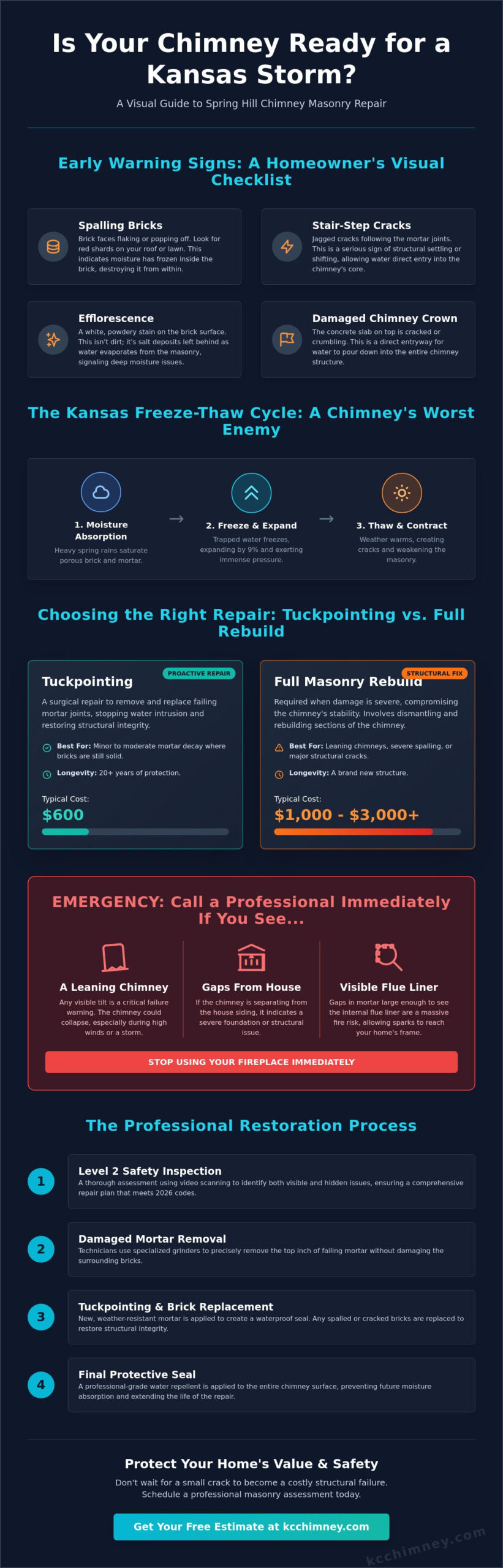
One of the most common issues is spalling. This happens when moisture gets trapped inside a brick and freezes, causing the outer face to flake or pop off entirely. If you see red shards on your roof or lawn, your masonry is losing its protective shell. You should also watch for stair-step cracks. These jagged lines follow the mortar joints between bricks and often signal that your chimney is settling or shifting under its own weight. Ignoring these cracks allows water to seep into the internal structure, accelerating the decay.
Don’t ignore a white, powdery substance on your bricks known as efflorescence. Some might mistake this for simple staining, but it’s actually salt being pushed out by water penetration. Similarly, if you see moss or vegetation growing in the joints, it’s a sign that the mortar has become soft and porous enough to hold life. Unlike what some might claim, this isn’t just a cosmetic mildew issue; it’s a direct threat to the masonry’s integrity. Developing a basic understanding of chimney construction helps you see that these external symptoms often point to deeper internal moisture problems that require professional attention.
Visual Inspection Tips for Homeowners
You don’t need a ladder to perform a basic check. Grab a pair of binoculars and scan the chimney from your yard. Look specifically at the chimney crown, which is the concrete slab at the very top. If that’s cracked, water will pour straight down into the brickwork. Inside the home, check your firebox. If you find “sand” or small bits of brick on the floor, the interior masonry is likely decaying. These small piles of debris are often the first sign that the internal flue or mortar joints are failing.
When a Sign Becomes an Emergency
Some issues require an immediate call to a professional. A leaning chimney is a critical safety hazard that could lead to a collapse during a Kansas storm. Additionally, if you see large gaps where the chimney masonry separates from your house siding, or gaps in the mortar that allow you to see the flue liner, stop using your fireplace immediately. These openings can allow sparks to reach your home’s wooden framing, creating a massive fire risk. Taking action now prevents these hazards and keeps your repair costs from spiraling into a full rebuild, which can cost between $1,000 and $3,000.
Tuckpointing vs. Brick Replacement: Choosing the Right Repair
Homeowners often feel stuck between a quick patch and an expensive rebuild. Understanding the difference is key to a long-lasting Spring Hill chimney masonry repair. Tuckpointing is the surgical removal of failing mortar joints, replaced with fresh, high-performance mortar. It’s the best way to stop water from entering the stack without tearing down the entire structure. While a full rebuild might cost between $1,000 and $3,000, tuckpointing is a proactive investment that typically costs around $600 for a standard section of 150 to 200 bricks.
The success of this work relies on matching the mortar strength and color to your existing masonry. Using a mortar that’s too hard for older bricks can actually cause the brick faces to crack or pop as the house settles. We prioritize industry safety standards to ensure every repair respects the original construction of your home. If you’re unsure which path to take, a professional masonry assessment can clarify your options before the next freeze hits. Addressing these gaps now prevents the internal decay that leads to total chimney failure.
The Tuckpointing Process Explained
Our technicians use specialized grinders to remove the top inch of damaged mortar without nicking the surrounding bricks. We then hand-apply new, weather-resistant mortar that creates a seamless, waterproof barrier. This process does more than just fix the look of your chimney; it restores the structural tension that keeps the stack upright. A properly tuckpointed chimney can withstand the heavy spring rains common in Johnson County for twenty years or more.
When Full Masonry Rebuilding is Required
Sometimes, the damage goes beyond the mortar joints. If your bricks are crumbling into dust or the chimney has begun to lean away from the house, tuckpointing won’t be enough. Structural shifting or foundation issues often require a partial or total teardown from the roofline up. This is especially common in Spring Hill’s older neighborhoods where historic brickwork has endured decades of Kansas winters. In these cases, we focus on matching the unique texture and hue of your original bricks to preserve your home’s curb appeal while meeting modern 2026 building codes.
How Kansas Weather Impacts Your Spring Hill Masonry
Living in Spring Hill means dealing with weather that can swing fifty degrees in a single day. This volatility is the primary enemy of your brickwork. While homeowners in milder climates might ignore their exterior stack for years, the need for Spring Hill chimney masonry repair is often driven by our unique local conditions. Our brick stacks face a relentless cycle of moisture and temperature shifts that most building materials aren’t designed to handle without regular maintenance.
The freeze-thaw cycle is particularly destructive in Johnson and Miami counties. When winter rain or melting snow seeps into porous bricks, that water expands by about 9% as it turns to ice. This internal pressure literally shreds the brick from the inside out. By the time the spring thaw arrives, the structural damage is already done. Small cracks that seem harmless in November can become major gaps by March. Resealing cracks and replacing flashing early, which typically costs between $300 and $400, can prevent this destructive cycle from taking hold and causing permanent masonry failure.
Summer brings its own set of challenges. Intense Kansas heat causes masonry to expand, while sudden thunderstorms provide a rapid cooling effect that can lead to thermal shock. If your mortar is already brittle, this constant movement creates new pathways for water to enter. Ensuring your system meets chimney safety standards is vital because hidden moisture doesn’t just damage bricks; it can eventually rot the adjacent wood framing of your home, leading to much more expensive structural repairs.
The Science of Water Penetration
Bricks act like vertical sponges during our humid Kansas summers. Without a proper shield, they soak up moisture that eventually migrates to the interior of your home. Your chimney crown serves as the first line of defense, shedding water away from the masonry. However, if the crown is cracked or poorly constructed, water bypasses it entirely. Be wary of “cheap” hardware store sealants or paints. These products often create a plastic-like film that traps moisture inside the brick, leading to faster decay than if you had used no sealant at all.
Protecting Your Chimney Year-Round
We recommend using professional-grade, vapor-permeable water repellents. These specialized products allow the brick to “breathe” out internal vapors while still blocking liquid water from entering from the outside. After a season of severe storms, a quick visual check is essential to catch new cracks before they widen. For those looking for expert chimney repair in Kansas City, understanding these regional climate factors is the first step toward a permanent solution. Maintaining this protective barrier is a simple, effective investment in your home’s longevity.
What to Expect During a Professional Masonry Restoration
A professional restoration is a methodical process designed to ensure your home remains a sanctuary. It begins long before the first brick is laid and ends only when we’re certain the structure is sound. You shouldn’t have to guess about the status of your home’s safety. Our approach to Spring Hill chimney masonry repair is rooted in a clear, step-by-step journey that prioritizes technical precision and property protection. This methodical flow mirrors a professional inspection process, giving you peace of mind that every joint and brick meets modern safety standards.
Step 1: The Multi-Level Inspection
Before starting any Spring Hill chimney masonry repair, a Level 2 inspection is non-negotiable. This isn’t a simple glance from the roof. We use specialized internal video cameras to scan the entire length of the flue. This allows us to find hidden cracks, gaps, or blockages that a standard visual check would miss. We’re looking for the root cause of your masonry failure. Often, what looks like a brick problem is actually caused by a failing chimney cap or a cracked crown. Once we identify the source, we provide a transparent, flat-rate estimate. You’ll know exactly what the labor and materials will cost before we ever pull out a tool.
The Restoration Phase
Once the plan is set, we prioritize property protection. We set up safe scaffolding and use heavy-duty drop cloths to protect your roofing and landscaping. Masonry work is inherently dusty, so we employ dust containment strategies to keep the mess away from your home. The actual restoration involves cutting out old mortar, cleaning the joints, and resetting loose bricks. Our technicians take great pride in matching the specific color and texture of your existing mortar. This ensures the repair looks like it has always been there rather than a mismatched patch. After the masonry is set, we allow for a proper curing period. This is vital for the mortar to reach its full structural strength.
We finish every project with a thorough cleanup, removing all old brick debris and mortar dust from your property. We don’t consider the job done until we’ve performed a final safety test to ensure the system is ready for use. This meticulous attention to detail ensures your fireplace remains a safe, warm focal point for years to come. If you’re ready to secure your home’s structural integrity, schedule your Level 2 inspection today to get a clear picture of your chimney’s health.
Why Spring Hill Trusts Best Chimney Services for Masonry
Choosing a partner for Spring Hill chimney masonry repair involves more than just finding someone with a trowel. You need a team that understands the specific architectural nuances and climate challenges of our region. Our approach is rooted in a professional, neighborly commitment to homeowner safety. We don’t just patch holes; we analyze the structural integrity of your stack to ensure it meets the rigorous 2026 building codes adopted by the City of Spring Hill. This focus on doing it right the first time distinguishes us as a high-integrity alternative in a crowded service market.
Our technicians are seasoned professionals who take pride in their specialized niche. We blend the grit of manual labor with the precision of modern safety standards, using only high-grade, durable materials. We provide comprehensive care that ranges from routine chimney sweeping and relining to complex crown repair and tuckpointing. Because we understand that your fireplace is an investment in your home’s future, we prioritize long-term durability over quick, temporary fixes. We treat every chimney as if it were protecting our own family’s hearth.
Local Expertise and Neighborly Service
We’ve been a fixture in the local community since 2012, serving families throughout Johnson and Miami counties. This long history allows us to recognize the specific ways Kansas storms and freeze-thaw cycles impact local brickwork. We prioritize honest communication and safety over high-pressure sales tactics. Our goal is to demystify complex masonry issues so you can make informed decisions about your home. Once your masonry is restored to its full strength, maintaining that integrity requires regular care. You can learn more about protecting your system in our guide to chimney sweep Kansas City for annual maintenance essentials.
Schedule Your Spring Hill Consultation
Getting started with your restoration is a straightforward, methodical process. When you book a professional evaluation, we’ll perform a thorough assessment to identify any hidden vulnerabilities. Before our technician arrives, we recommend clearing a small area around your fireplace and removing any fragile items from the mantel. This allows us to set up our inspection equipment and property protection materials efficiently. We’ll provide a clear, stable estimate and a timeline that respects your schedule. Don’t wait for the next major storm to test the strength of your masonry. Contact us today for a professional chimney repair quote and let us help you secure your home for the years ahead.
Protecting Your Family Hearth for the Years Ahead
Your chimney is more than just brick and mortar; it’s a critical safety component of your home’s structure. By learning to identify early warning signs like spalling or stair-step cracks, you’ve taken the first step toward preventing a structural emergency. Remember that the unique Kansas freeze-thaw cycle won’t wait for a convenient time to cause damage. Addressing these issues now ensures your fireplace remains efficient and your home stays dry through every heavy spring rain.
When you choose a partner for Spring Hill chimney masonry repair, you deserve a team that values your peace of mind as much as technical precision. We’ve been serving the local community since 2012 as certified masonry specialists. Every project we handle includes a comprehensive Level 2 video inspection to ensure no hidden vulnerability is left behind. We’re committed to doing it right the first time so you can enjoy your fireplace with total confidence.
Get a Professional Masonry Repair Quote for Your Spring Hill Home
We look forward to helping you keep your family safe and warm for many seasons to come.
Frequently Asked Questions
How much does chimney masonry repair cost in Spring Hill?
Chimney repair costs in Spring Hill typically range from $458 to $1,568, with a standard project averaging around $848. Specific services like tuckpointing often cost about $600 for a section of 150 to 200 bricks, while a full crown repair can reach $1,000. These figures depend on the extent of the damage and roof accessibility. We provide flat-rate estimates after a Level 2 inspection to ensure there aren’t any surprises.
Can I repair chimney bricks myself?
We don’t recommend repairing chimney bricks yourself because masonry is a structural safety component. Professional Spring Hill chimney masonry repair requires specialized mortar mixes and structural knowledge to ensure the stack remains stable during intense Kansas winds. Improper DIY patches can trap moisture inside the brick, leading to faster decay and potentially dangerous chimney fires. It’s always safer to trust a certified technician for these structural tasks.
How long does tuckpointing last on a typical KC home?
Tuckpointing typically lasts between 20 and 30 years when performed with high-quality, weather-resistant materials. The lifespan on a Kansas City home depends heavily on exposure to the elements and the quality of the original brick. Regular maintenance, such as applying vapor-permeable water repellents, can help extend this period. If you’re seeing mortar crumbling sooner, it may indicate a deeper moisture issue or a failing chimney cap.
Why are the bricks on my chimney flaking off?
Bricks flake off, a process called spalling, because moisture has penetrated the porous material and frozen. As the water expands, it puts immense pressure on the brick’s surface, causing it to pop or peel. This is common in the Johnson County area due to our intense freeze-thaw cycles. Once the hard outer shell of the brick is gone, the interior decays rapidly, making immediate repair essential to save the stack.
Does homeowners insurance cover chimney masonry repair?
Homeowners insurance usually covers chimney repairs only if the damage was caused by a sudden, accidental event like a lightning strike or a severe storm. Standard wear and tear, such as gradual mortar decay or spalling from age, is typically considered a maintenance responsibility and isn’t covered. We recommend reviewing your specific policy or speaking with your agent if you believe a recent storm caused structural shifting or cracks.
How long does a chimney masonry repair project take?
Most Spring Hill chimney masonry repair projects are completed within one to three days, depending on the size of the chimney and the complexity of the damage. A simple tuckpointing job might only take a single afternoon, while a partial rebuild from the roofline up requires more time for setup and curing. We prioritize property protection and thorough cleanup, so we include time in our schedule to leave your yard exactly as we found it.
Is it safe to use my fireplace if the exterior masonry is cracked?
It is not safe to use your fireplace if you see visible cracks in the exterior masonry. Exterior gaps often signal that the internal flue liner is also compromised, which can allow sparks or carbon monoxide to escape into your home’s walls. We advise a Level 2 video inspection to verify the integrity of the entire system before you light your next fire. Your family’s safety is our primary concern.
What is the best time of year for masonry repair in Kansas?
Late spring and early fall are the best times for masonry repair in Kansas because the moderate temperatures allow mortar to cure properly. Mortar shouldn’t be applied when temperatures are freezing or excessively hot, as this can lead to brittle joints that fail prematurely. Scheduling your repairs during these windows ensures the best structural bond and prepares your chimney for the upcoming winter burning season or heavy spring rains.