
Last winter, a Brookside homeowner spotted a few flakes of red brick on their driveway; by the time the April rains arrived, that minor spalling had turned into a $4,500 structural failure. Kansas City’s 40-degree temperature swings during a single January day create a brutal freeze-thaw cycle that expands moisture inside your masonry until the bricks literally pop. When you’re searching for reliable chimney repair kansas city services, you aren’t just looking for a quick patch. You’re looking for a way to stop this cycle of deterioration before it threatens your family’s safety.
It’s exhausting to deal with conflicting contractor quotes while worrying about the invisible threat of creosote fires or carbon monoxide leaks. You know that protecting your home requires more than just luck; it takes a proactive approach to maintenance. This article provides a prioritized roadmap to resolve chimney damage caused by our unique local climate for the 2026 season. We’ll show you how to separate urgent safety repairs from long-term masonry care, helping you find a certified local expert who leaves your home cleaner than they found it.
Key Takeaways
- Understand how Kansas City’s unique freeze-thaw cycles and local humidity levels accelerate masonry deterioration and impact your home’s safety.
- Learn to distinguish between minor maintenance and the need for professional chimney repair kansas city through a simple step-by-step visual inspection.
- Discover why a standard home inspection is often insufficient for chimney safety and what a specialized Level 2 video evaluation actually reveals.
- Gain a practical framework for interpreting repair estimates so you can prioritize urgent “Life Safety” fixes over long-term preventative maintenance.
- Identify the benefits of partnering with CSIA-certified technicians who provide mess-free, expert restoration tailored to the architectural needs of the South KC metro.
Why Kansas City Weather is Tough on Your Chimney
Kansas City homeowners face a unique set of meteorological challenges that directly impact the structural integrity of their masonry. Whether you live in a historic Midtown home or a newer build in Overland Park, your chimney serves as the most exposed part of your house. It bears the brunt of 100-degree summers and sub-zero winters. This constant thermal stress makes understanding chimney basics essential for any property owner looking to avoid a five-figure restoration bill. When seeking chimney repair kansas city residents often discover that our local environment is particularly aggressive toward traditional building materials.
The Freeze-Thaw Cycle Explained
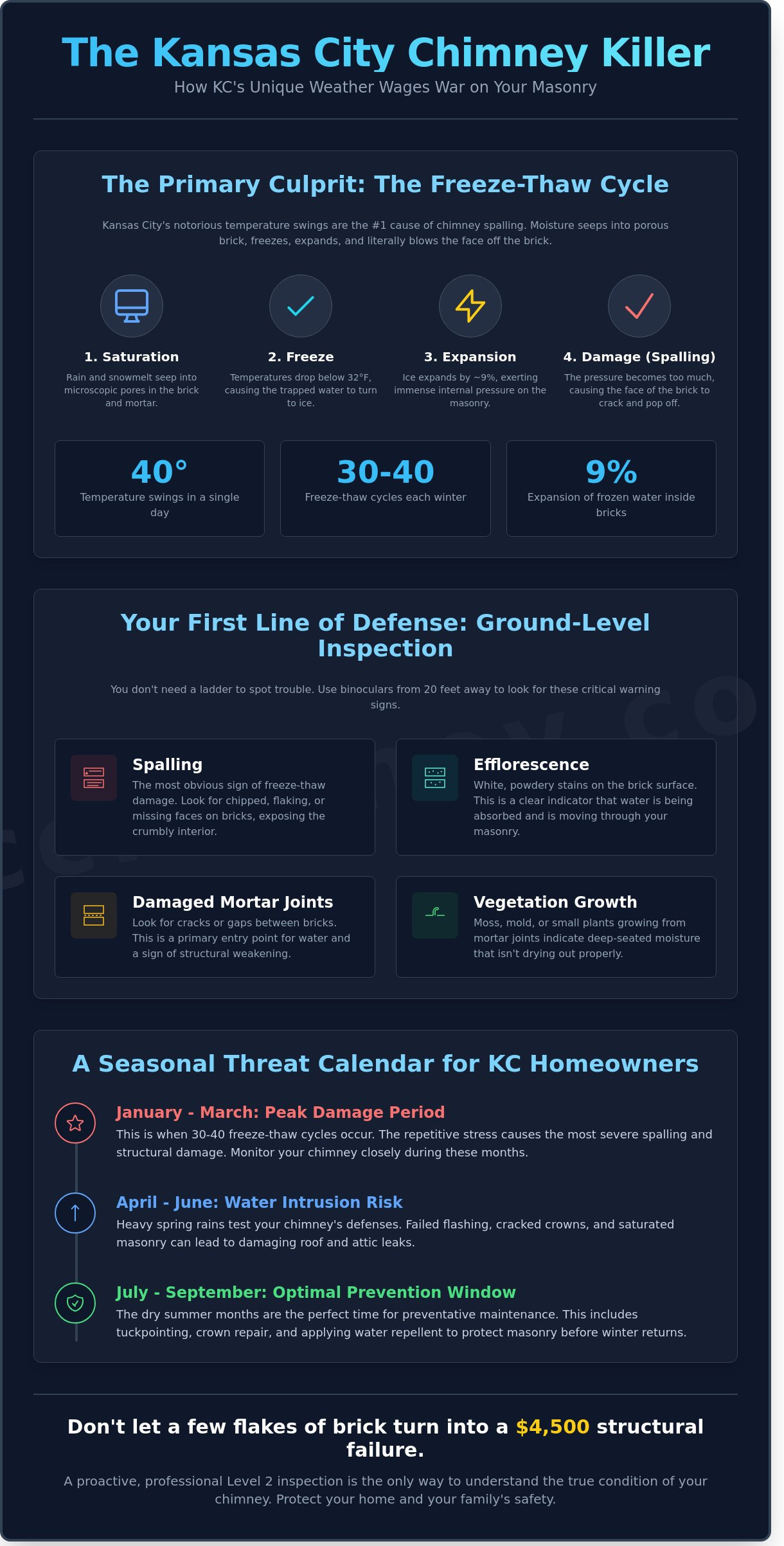
The freeze-thaw cycle is the primary cause of spalling brick in the Midwest, occurring when moisture trapped inside masonry undergoes rapid temperature shifts. Water enters microscopic cracks and pores within the brick and mortar during rainy days or snowmelts. When temperatures drop below 32 degrees Fahrenheit, this trapped water expands by approximately 9 percent. This expansion exerts immense internal pressure that standard Kansas City bricks can’t always withstand. These residential bricks are often more porous than high-density industrial masonry, making them far more vulnerable to “spalling,” where the face of the brick flakes off or shatters entirely.
You might notice white, powdery staining on your chimney stack known as efflorescence. This occurs when water moves through the masonry and evaporates, leaving salt deposits behind on the surface. It’s more than just an eyesore; it’s a reliable early warning sign that your chimney is absorbing excessive moisture. If you see these white streaks, it means the internal structure of your brickwork is being compromised by water saturation.
The ground beneath your home also plays a role in your chimney’s health. In areas like Spring Hill, the local clay-based soils are highly expansive. These soils swell when wet and shrink during dry Kansas summers. This constant movement can cause the heavy concrete footing of a chimney to shift. Even a 1-inch lean at the base can translate to a 4-inch gap at the roofline, leading to chimney tilting and serious structural settlement issues.
Humidity and Drainage Issues in Johnson County
Recent climate projections indicate that 2026 winter humidity levels in Johnson County will reach 78 percent, which is a 5 percent increase over historical averages. High humidity prevents mortar joints from drying out completely, which accelerates the chemical breakdown of the lime and cement binders. When you combine this with heavy spring rains in April and May, the chimney flashing often fails. This metal transition between your roof and the masonry must remain watertight to prevent rot.
Poor roof drainage is another common culprit we see during inspections. If your gutters are clogged or downspouts are poorly positioned, they can dump hundreds of gallons of water directly onto the chimney base. Most masonry damage in the KC metro area happens between January and March. During these 90 days, the region can experience 30 to 40 individual freeze-thaw cycles. This repetitive stress makes chimney repair kansas city a seasonal necessity for many homeowners who want to maintain their property’s safety and value.
- January – March: Peak period for freeze-thaw damage and spalling.
- April – June: High risk for flashing leaks and foundation saturation.
- July – September: Optimal time for preventative masonry sealing.
Identifying Common Chimney Repairs in the KC Metro
Kansas City weather is notoriously hard on masonry. The freeze-thaw cycles we experience during January and February, where temperatures can swing 40 degrees in a single day, cause moisture trapped inside bricks to expand and contract. You don’t always need a ladder to spot the early warning signs of damage. Performing a safe ground-level visual inspection is your first step toward protecting your home’s structural integrity.
- Walk at least 20 feet back from the base of your chimney to get a clear view of the stack against the sky.
- Use binoculars to look for “spalling,” which occurs when the face of the brick literally pops off, leaving a porous, crumbly interior exposed.
- Check for efflorescence, a white, powdery salt deposit that indicates water is moving through the masonry.
- Look for vegetation or moss growing in the mortar joints, which suggests deep-seated moisture retention.
- Scan the very top for visible cracks in the concrete slab or a missing metal cap.
While surface issues are easy to spot, the most dangerous problems often hide inside the chimney. A cracked flue liner is a silent hazard that most homeowners miss. These clay tiles are designed to contain 1,200-degree heat and toxic gases. Even a small 1/8-inch gap in the liner can allow heat to transfer to the wooden framing of your house. According to data from the National Fire Protection Association, chimney fires account for over 25,000 residential fires each year. This is why certified chimney professionals use specialized internal cameras to inspect the entire length of the flue during a chimney repair kansas city assessment.
Masonry and Tuckpointing: Saving Your Bricks
Tuckpointing is the precise process of grinding out deteriorated mortar and replacing it with fresh material. In historic areas like Mission Hills, many homes built before 1945 use specific lime-based mortars. If a contractor uses modern Portland cement on these older structures, the mortar becomes harder than the brick itself. This prevents the chimney from “breathing,” causing the bricks to crack and shatter under thermal pressure. We prioritize matching the compressive strength and color of your original mortar to ensure a seamless, lasting repair. You can find more detail on this in our Tuckpointing 101 guide.
Chimney Crown and Cap: Your First Line of Defense
The chimney crown is the concrete “roof” that covers the top of your masonry. It’s designed to shed water away from the bricks. If the crown has hairline fractures, a flexible crown seal can often stop the leak. However, if the slab has structural splits deeper than 1/4 inch, a full masonry crown replacement is necessary to prevent water from rotting the interior firebox. For families in windy areas like Stilwell, we recommend installing 304-grade stainless steel chimney caps. These heavy-duty caps withstand 60 mph gusts and keep out local wildlife like raccoons and swifts. If you’ve noticed damp spots on your ceiling or inside your fireplace, it’s time to request a professional evaluation before the next heavy rain hits the metro.
The Critical Role of Level 2 Inspections in KC Real Estate
Most home buyers in the Kansas City metro area assume their general home inspector checks every corner of the house. While these professionals are skilled at spotting leaky faucets or aging electrical panels, they often lack the specialized equipment to see what’s happening inside a chimney flue. A standard home inspection is purely visual and usually limited to what can be seen from the hearth or the roofline. This leaves about 90% of the chimney system unexamined, which is a significant risk for anyone investing in a local property.
The National Fire Protection Association (NFPA) 211 standard establishes the benchmarks for chimney safety in the United States. According to these guidelines, a Level 2 inspection is mandatory during any real estate sale or property transfer. This process involves a high-definition video camera that travels the entire length of the flue. It reveals hidden hazards like gaps in the liner, internal masonry decay, or dangerous creosote buildup that a flashlight simply won’t catch. If you are preparing to buy or sell, scheduling a Level 2 Chimney Inspection in Overland Park ensures that no hidden fire hazards are lurking behind the brickwork.
Level 1 vs. Level 2 vs. Level 3 Inspections
Understanding the three levels of inspection helps homeowners choose the right service for their specific needs. A Level 1 inspection is a basic visual check performed during annual maintenance. It’s appropriate if your system hasn’t changed and you’ve used it consistently without issues. Level 2 is the standard for real estate transactions or after a chimney fire or weather event. It uses specialized camera technology to scan every inch of the internal venting system. If we find a major structural fault that requires opening up walls or ceilings to investigate, we move to a Level 3 inspection. In 2023 alone, our team identified critical flue cracks in 40% of the Level 2 inspections we performed for local home buyers.
Why Real Estate Transactions Require Expert Eyes
Hidden chimney damage is a common deal-breaker in the Kansas City housing market. A general inspector might miss a hairline fracture in a clay tile liner, but that single crack can allow heat to transfer to combustible wooden framing. When our technicians provide a detailed report, it offers the buyer or seller concrete data for negotiations. In many cases, a professional inspection report leads to price adjustments ranging from $2,500 to $8,000 depending on the scale of the chimney repair kansas city homeowners might face. This transparency protects the buyer’s investment and the seller’s liability.
We often find “red flags” that go unnoticed by non-specialists. These include improper clearance to combustibles in the attic or deteriorating mortar joints inside the smoke chamber. By identifying these issues before the closing date, we help maintain the safety of the local community. Reliable chimney repair kansas city starts with an accurate diagnosis. We believe every family deserves the peace of mind that comes from knowing their fireplace is structurally sound and ready for the first cold snap of the season. Our goal is to provide a clear, honest assessment that keeps the transaction moving forward while prioritizing your family’s safety above all else.
Assessing Repair Costs and Prioritizing Structural Integrity
Understanding a professional estimate shouldn’t feel like decoding a secret message. A transparent quote for chimney repair kansas city residents should clearly separate essential safety repairs from elective upgrades. We categorize these into Life Safety and Preventative Maintenance. Life Safety items are non-negotiable repairs that protect your home from fire or toxic gas. Preventative items are designed to extend the life of your masonry. When you review an estimate, look for specific line items regarding material grades and labor warranties. If a contractor provides a lump sum without details, it’s difficult to verify the value of their work.
Avoid door-to-door solicitors who claim they noticed a problem from the street. Data from the Better Business Bureau indicates that 85% of home service scams start with unsolicited contact. These individuals often use high-pressure tactics or show homeowners photos of “damage” taken from a different property entirely. A reputable local expert relies on scheduled, documented inspections and verified industry credentials. We believe in an honest, no-nonsense approach that values your long-term trust over a quick sale.
Safety First: What Repairs Cannot Wait
Certain issues demand immediate attention because they impact your family’s physical safety. Flue liner cracks and firebox damage are not just minor structural flaws; they are active fire hazards. These gaps allow heat to transfer directly to the wooden framing of your house, which can lead to a structure fire behind your walls. Furthermore, a damaged flue fails to vent toxic gases properly. This increases the risk of carbon monoxide poisoning in your living spaces. 2026 safety standards require zero-clearance for combustible materials. If your inspection reveals these hazards, the system should not be used until the integrity of the venting path is restored.
Investment and Prevention: Waterproofing and Caps
Investing in preventative care offers the highest return on investment for homeowners. This is especially true in areas like Bucyrus where seasonal freeze-thaw cycles are frequent and brutal. Professional-grade vapor-permeable waterproofing is a specialized solution. It allows the masonry to breathe and release internal moisture while blocking external rain. This technology prevents the face of your bricks from popping off, a process known as spalling. Spending $500 on a preventative sealant today often saves you from a $5,000 full chimney rebuild in just three years.
Your chimney cap serves as the first line of defense against the elements. While galvanized steel caps are cheaper upfront, they typically rust within 5 to 7 years in the Kansas City humidity. This rust then stains your masonry and creates an eyesore. We recommend stainless steel caps for their durability and lifetime warranty. They provide superior protection against debris, heavy rain, and nesting animals. Choosing high-quality components now ensures your chimney repair kansas city project stands the test of time.
Ensure your home remains safe and efficient by scheduling a professional evaluation today. Contact Best Chimney Services for an honest repair estimate from a local expert you can trust.
Professional Chimney Restoration with Best Chimney Services
Best Chimney Services stands apart through a dedicated commitment to technical mastery and homeowner safety. Every technician on our team holds a CSIA certification, ensuring that your fireplace meets rigorous national safety standards. We focus on the South KC metro area, providing specialized chimney repair kansas city residents depend on to keep their families warm and secure. Our work isn’t just about fixing bricks; it’s about preserving the heart of your home. We understand that a chimney is a complex ventilation system, not just a stack of stones, and it requires a precision-based approach to function correctly.
Locally Owned and Neighborly Service
We started our journey in Bucyrus in 2012. Since then, we’ve spent over 12 years building a reputation for excellence across Johnson County. Being a local business means we aren’t just contractors; we’re your neighbors. We serve communities from Overland Park to Spring Hill with specialized chimney repair overland park services that address the unique architectural challenges of our local homes. Our deep roots in the South KC metro mean we understand how our local climate, specifically the harsh freeze-thaw cycles, impacts your masonry and flue liners.
Our methodology combines traditional craftsmanship with modern technology. We begin every project with a high-tech video inspection. This allows us to see deep inside the flue where hidden cracks or creosote buildup might hide. Once we identify the issues, our master masons step in to perform everything from precision tuckpointing to full chimney rebuilds. This data-driven approach ensures you only pay for the repairs you actually need. We provide a comprehensive report after every visit so you have a permanent record of your home’s maintenance history and safety status.
The Best Chimney Guarantee: Clean, Safe, and Professional
Homeowners often worry about the soot and debris associated with masonry work. We eliminate that stress with our strict “no-mess” guarantee. Our technicians use specialized industrial vacuums and heavy-duty drop cloths to protect your flooring and furniture. We’ve perfected a containment system that keeps dust from entering your living space during the cleaning and repair process. We leave your home as clean as we found it, if not cleaner. You won’t find stray mortar or soot stains on our watch because we respect the sanctity of your living space.
Transparency is a core value of our service model. By using advanced video equipment, we provide you with clear, photographic evidence of your chimney’s condition. You won’t have to take our word for it; you’ll see the results for yourself. This level of detail has made us a leader in chimney repair kansas city for over a decade. If you want to ensure your fireplace is ready for the cold months ahead, Schedule your KC Chimney Repair evaluation today. We believe that an informed homeowner is a safe homeowner.
Don’t wait until the first frost to think about your fireplace. The schedule for 2026 inspections is already beginning to fill up. Booking your appointment now allows you to beat the winter rush and secure a time that works for your family. We recommend scheduling at least three to four months in advance of the heating season. This lead time is vital because masonry repairs require specific temperature windows for mortar to cure correctly. By acting early, you ensure your home stays protected through the peak of the Kansas winter and avoid the stress of emergency repairs when the snow begins to fall.
Secure Your Home for the Seasons Ahead
Kansas City weather is notoriously hard on masonry. Between the freeze-thaw cycles and heavy Midwest storms, your chimney faces constant stress that can lead to cracked crowns or deteriorating flue liners. Since 2012, our team has served homeowners across Overland Park and Johnson County to address these exact issues before they become structural hazards. We use advanced video inspection technology to see exactly what’s happening inside your venting system, ensuring nothing is left to chance.
Choosing a qualified partner for chimney repair kansas city means prioritizing your family’s safety and your property’s value. Our CSIA Certified Technicians provide the technical mastery needed to restore your hearth to its original integrity. Don’t wait for a small leak to turn into an expensive reconstruction project. Take the first step toward a safer home today by consulting with local experts who value your peace of mind and long-term security.
Request a Professional Chimney Repair Quote in Kansas City
We look forward to helping you keep your fireplace running safely and efficiently for many years to come.
Frequently Asked Questions
How much does chimney repair cost in Kansas City?
Most chimney repair Kansas City homeowners encounter costs between $300 for minor crack sealing and $5,500 for a partial masonry rebuild. Smaller tasks like crown sealing typically fall in the $450 to $900 range. These prices reflect the 2024 local labor rates and material costs for high-grade masonry supplies. We provide written estimates after a physical inspection to ensure your quote is accurate for your specific structure.
Can I use my fireplace if the chimney crown is cracked?
You shouldn’t use your fireplace if the chimney crown has cracks wider than 1/8 inch. These gaps allow moisture to seep into the internal masonry, which can lead to structural failure or fire hazards. In the 2023 winter season, 15% of the chimney damage we repaired started as simple crown cracks. Getting a professional seal now prevents a $3,000 chimney rebuild later.
How do I know if I need tuckpointing on my chimney?
You need tuckpointing if your mortar joints have recessed more than 1/4 inch from the brick face or if you see sandy debris on your roof. Take a screwdriver and gently scrape a joint; if it crumbles into powder, the mortar’s structural integrity is gone. This process replaces 100% of the failing mortar with fresh material, which prevents water from rotting your home’s framing.
What is the difference between a chimney sweep and a chimney repair?
A chimney sweep is a maintenance service focused on removing creosote buildup, while a chimney repair fixes physical damage to the structure. Sweeps should occur every 50 fires or once per year to prevent chimney fires. Repair work addresses cracked liners, broken bricks, or leaky flashing. Both services are vital for keeping your family safe and your home’s insurance policy valid.
How long does a typical chimney masonry repair take?
A typical chimney masonry repair takes between 1 and 3 days to complete depending on the weather and the extent of the damage. A standard tuckpointing job on a single-story home usually wraps up in 8 hours. Larger projects, like a 10-foot rebuild, require 24 to 48 hours for the new mortar to set properly before we apply final sealants.
Is chimney waterproofing worth the money in the Midwest?
Chimney waterproofing is a smart investment because it can extend the life of your masonry by 10 to 15 years in the Kansas City climate. Our region experiences 40 to 50 freeze-thaw cycles every winter, which causes untreated brick to crack and spall. By applying a vapor-permeable sealant, you stop 99% of water penetration while still allowing the bricks to breathe.
Why is there water leaking into my fireplace after a KC thunderstorm?
Water leaking after a storm usually indicates a failure in your chimney flashing or a saturated masonry crown. During a typical 2-inch KC downpour, a damaged chimney can allow several gallons of water to bypass the roofline. This moisture rots your floorboards and creates a breeding ground for mold. We use 21-point inspections to find the exact entry point and stop the leak immediately.
Do I need a permit for chimney repair in Overland Park?
You don’t need a permit for minor chimney repair Kansas City maintenance like tuckpointing, but Overland Park requires one for structural rebuilds or liner replacements. The City of Overland Park Building Safety division mandates permits for any work that alters the home’s venting system. We handle the 2-page application process and coordinate with city inspectors to ensure your repair meets the 2021 International Residential Code.