
Last Tuesday, an Overland Park homeowner discovered a small pile of red clay flakes on their hearth. They didn’t realize those tiny pieces represented a failing 30-year-old flue that could no longer safely contain heat or toxic gases. It’s a common story in the Kansas City metro area. Our older housing stock often hides dangerous structural secrets behind the brickwork. You want a warm fire to enjoy during a sub-zero January night; however, the fear of a house fire or a silent carbon monoxide leak can make it hard to relax. We understand that receiving a complex quote for chimney relining feels overwhelming, especially when you’re worried about a construction mess inside your home.
In this guide, you’ll discover why this specific upgrade is the most critical safety investment for your local residence. We’ll show you how to choose a liner that handles the 40-degree temperature shifts typical of our Missouri and Kansas seasons. You’ll learn about the latest 2026 safety standards for stainless steel and cast-in-place options that provide a permanent, code-compliant solution. We’ve designed this breakdown to give you the technical clarity you need to protect your family and improve your heating efficiency without the stress of the unknown.
Key Takeaways
- Understand why chimney relining is the most vital safety upgrade for protecting your family from heat transfer and toxic exhaust gases.
- Learn to identify early warning signs of deterioration, such as “shaling” clay tiles, caused by Kansas City’s harsh freeze-thaw cycles.
- Compare the benefits of stainless steel and cast-in-place liners to determine which solution offers the best long-term durability for your home.
- Discover what to expect during a professional installation, including the specialized tools used to ensure a clean and debris-free flue.
- Gain insights into local cost averages and how a certified liner installation increases your property’s marketability and resale value.
What is Chimney Relining and Why is it Critical for KC Homes?
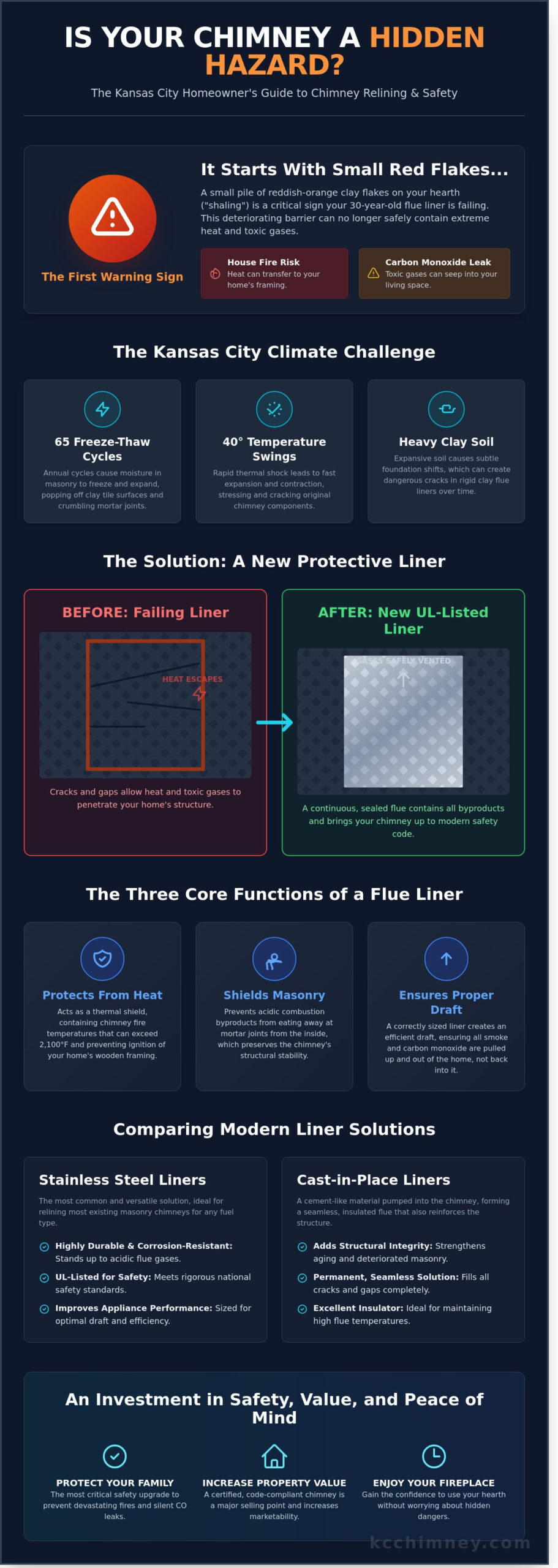
Chimney relining involves the installation of a new inner exhaust sleeve within your existing masonry structure to ensure toxic gases and intense heat exit your home safely. This process is a vital restoration technique for older chimneys that have suffered internal decay or were built without proper protection. To get a foundational understanding of the materials used in this process, you can explore What is a Chimney Liner? to see why modern standards have shifted toward high-grade stainless steel. For Kansas City homeowners, this isn’t just a maintenance task; it’s a necessary upgrade that addresses the specific environmental stresses our region faces.
Regional shifts in areas like Bucyrus and Spring Hill create unique challenges for masonry integrity. The heavy clay soil in these parts of the Kansas City metro expands and contracts with moisture levels, leading to subtle foundation movements that can crack original clay tile liners. These cracks allow heat to escape into the home’s framing. Additionally, our local climate features 40-degree temperature swings in a single day, which causes rapid expansion and contraction of masonry. This thermal shock often leads to the deterioration of original chimney components that were never designed for such volatile conditions.
Modern building codes in Kansas City now mandate specific liner standards to prevent house fires and carbon monoxide poisoning. The International Residential Code (IRC) Section R1003 requires all masonry chimneys to be lined to protect the house structure. Older homes in neighborhoods like Brookside or Waldo often fall short of these 2021 standards, making chimney relining the most effective way to bring an aging hearth up to current safety requirements. By installing a UL-listed liner, you ensure that your fireplace meets the rigorous safety benchmarks used by professional inspectors across the Midwest.
The Three Functions of a Flue Liner
First, the liner protects your home from heat transfer to combustible wall studs. During a chimney fire, temperatures can exceed 2,100 degrees Fahrenheit, which is hot enough to ignite nearby wooden framing through the masonry. A properly installed chimney relining system acts as a thermal shield, keeping that intense heat contained within the flue.
Second, the liner shields your masonry from acidic combustion byproducts. When you burn wood or gas, the exhaust contains water vapor that mixes with chemicals to form sulfuric or hydrochloric acid. These acids eat away at mortar joints from the inside out, eventually causing the chimney to become structurally unstable. A stainless steel liner provides a non-corrosive surface that resists this chemical erosion.
Third, a new liner ensures the correct draft for your specific fireplace or furnace. If a flue is too large for the appliance it serves, the exhaust cools too quickly and sinks, causing smoke to billow into your living room. We precisely size liners to match the BTU output of your heating system, ensuring that every bit of smoke and carbon monoxide exits the home efficiently.
Why Older Kansas City Chimneys Often Lack Protection
Many historic homes built before the 1940s were constructed with unlined chimneys, meaning the exhaust simply travels against bare brick and mortar. This was common practice at the time, but we now know it poses a significant fire risk. During the mid-1900s, builders began using clay tiles, but these tiles often crack after 50 years of use, leaving the home vulnerable once again. A chimney liner is a safety barrier between fire and your home structure.
Signs Your Chimney Needs Relining: Damage Common in Overland Park
Homeowners in Overland Park often notice small, thin flakes of terra cotta piling up in their firebox. This process, known as shaling, occurs when moisture penetrates the porous clay tiles of your flue. When the temperature drops, that moisture freezes and expands, causing the surface of the tile to pop off in layers. If you see these reddish-orange chips, it’s a clear signal that your liner’s structural integrity is failing. It means the protective barrier between your home and the heat of the fire is literally peeling away.
The local climate in Kansas City is particularly brutal on masonry systems. We experience approximately 65 freeze-thaw cycles every year, where temperatures swing above and below freezing within a 24-hour period. These rapid shifts cause the mortar between your clay tiles to expand and contract until it eventually crumbles. Once that mortar is gone, you’re left with open gaps between the tiles. These openings aren’t just a maintenance headache; they allow heat and toxic gases to seep into your home’s framing.
In Johnson County, the heavy, expansive clay soil adds another layer of risk. This soil exerts immense pressure as it absorbs water, often causing chimneys to shift or lean slightly. This movement creates vertical cracks that can run the entire length of a clay liner. You might also notice a persistent, acrid campfire smell or dark soot patterns on the walls near the chimney breast. These odors suggest that creosote and smoke are escaping through cracks in the liner. Following established chimney safety guidelines is the most effective way to address these signs before they lead to a house fire.
Visual Red Flags During a Level 2 Inspection
During a professional evaluation, we use high-definition video technology to scan the interior of your flue. This camera reveals hidden fractures that are impossible to see from the ground. We frequently find gaps in tile joints that act as a direct highway for carbon monoxide to enter your bedrooms. In some cases, we discover “missing” tiles that have broken loose and fallen to the bottom of the flue, creating a dangerous blockage. If your inspection reveals these voids, chimney relining is the only way to restore the system to a usable state.
When Relining Becomes Mandatory
There are specific moments when chimney relining is no longer optional. If you’ve experienced a chimney fire, the liner must be replaced. Even a small, localized fire can reach 2,100 degrees Fahrenheit, which causes clay tiles to shatter instantly from thermal shock. You’ll also need a new liner when switching from a wood-burning setup to a gas fireplace insert. These modern appliances require a specifically sized stainless steel flue to vent properly and prevent condensation damage.
Real estate transactions in Mission Hills and Leawood also trigger these requirements. Most local home inspectors now require a Level 2 video inspection during a sale. If the camera reveals any cracked tiles or open joints, the seller is usually required to reline the chimney to meet current safety codes. If you’re preparing for a move or simply haven’t had your flue checked in over 12 months, you can schedule a professional inspection to confirm your chimney is ready for the next season.
Comparing Chimney Liner Types: Stainless Steel vs. Cast-in-Place
Choosing the right material for your chimney relining project depends on your fuel source and the structural state of your masonry. In Kansas City, we see a wide range of home ages, from historic 1920s Brookside residences to modern builds in Olathe. Each home requires a specific solution to ensure smoke and toxic gases exit the home safely. High-grade stainless steel liners, specifically those made from 316 or 304L alloys, are the industry standard because they withstand temperatures up to 2100°F. These liners are UL 1777 listed, meaning they’ve passed rigorous testing for safety and performance.
Cast-in-place liners offer a different approach by reinforcing the chimney from the inside out. Technicians pump a lightweight, cement-like masonry material around an inflatable bladder. Once the material hardens, the bladder is removed, leaving a smooth, seamless flue. This method is excellent for 100-year-old chimneys that need structural stabilization. It effectively seals cracks and fills gaps in the original masonry, turning a crumbling stack into a solid, monolithic structure. While more labor-intensive than other methods, it’s a permanent fix for severely compromised chimneys.
While aluminum liners are available, they’re restricted to specific Category I gas appliances. You should never use aluminum for a wood-burning fireplace or a coal stove. The corrosive nature of wood smoke and the high heat of coal will eat through aluminum in a single season. If you’re upgrading a water heater or a furnace, aluminum might be a budget-friendly choice, but it lacks the versatility required for most Kansas City homes. We always recommend checking the NFPA 211 safety standards to ensure your liner material matches your appliance’s heat output.
Traditional clay tile replacement is rarely the best option for modern repairs. Replacing individual clay tiles requires breaking into the chimney breast at multiple points, which is invasive and expensive. Even a brand-new clay liner is prone to thermal shock, which causes tiles to crack when they heat up too quickly on a cold January morning. Modern chimney relining techniques provide better insulation and longevity without the need for major demolition.
Why Stainless Steel is the KC Favorite
Flexibility is a major reason why stainless steel remains the top choice for local homeowners. Many chimneys in the Kansas City area weren’t built perfectly straight; they often have slight offsets or bends to clear attic joists. Stainless steel liners can navigate these curves without losing their seal. For homeowners in Stilwell and surrounding areas, these liners often come with lifetime warranties that stay with the home, adding significant resale value. The smooth interior surface also resists the corrosive effects of creosote and moisture, which are common issues in our humid Midwestern climate.
Sizing Your Liner for Maximum Efficiency
A liner’s diameter must be perfectly matched to the appliance it serves. If a liner is too large, the exhaust gases cool down too quickly as they rise. This causes the air to lose its buoyancy, leading to poor draft and smoke backing up into your living room. Conversely, a liner that’s too small will restrict the flow, creating a bottleneck for dangerous carbon monoxide. A properly sized liner can reduce creosote buildup by up to 50% because it maintains the high flue gas temperatures necessary to prevent condensation. This precision ensures your wood stove or furnace operates at peak efficiency while keeping your family safe from fire hazards.
The Relining Process: What to Expect During Your KC Installation
Homeowners in Kansas City neighborhoods like Brookside or Waldo often worry about the disruption of a major chimney repair. Our team has refined chimney relining into a clean, systematic operation that respects your home and your schedule. We begin by establishing a “clean zone” around your hearth. Technicians lay heavy-duty canvas drop cloths from the entry point to the fireplace. We utilize high-powered HEPA vacuums, which are engineered to capture particles as small as 0.3 microns, ensuring that soot and fine dust never enter your living room air.
Clearing the flue is the next critical phase. We don’t just slide a new pipe in; we must first remove the remnants of the old, failing system. This involves using specialized mechanical brushes to strip away glazed creosote and clearing out shaled clay tiles that have collapsed over time. We also frequently encounter bird nests or squirrel debris that can block up to 90% of a flue’s capacity. Removing these obstructions ensures the new stainless steel liner has a clear, straight path for optimal venting and airflow.
Inserting the new liner follows a “top-down” methodology. We lower a high-grade, UL-listed stainless steel liner from the roofline down to the appliance connection. This material is designed to withstand internal temperatures exceeding 2,100 degrees Fahrenheit, providing a robust barrier that clay tiles simply can’t match. Once the liner is positioned, we secure it with a heavy-gauge top plate and a custom-fitted chimney cap. This seal is vital because Kansas City receives an average of 41 inches of precipitation annually. Without a professional seal, moisture enters the masonry, leading to destructive freeze-thaw cycles during our January cold snaps.
Professional Installation vs. DIY Risks
Installing a liner involves complex insulation requirements to maintain the high flue temperatures necessary for a strong draft. If a liner isn’t insulated correctly, the smoke cools too quickly, leading to rapid creosote buildup and potential chimney fires. Attempting a DIY installation can also have serious financial consequences. Most insurance providers require a 2024-compliant safety certificate from a certified technician to cover any future fire-related claims. Without professional documentation, you may find your claim denied after an incident.
Maintaining a Mess-Free Workspace
Our technicians treat your rugs and furniture as if they were their own. We’ve found that 95% of our chimney relining projects are completed in a single day, typically taking between 4 and 6 hours from setup to teardown. Before we consider the job finished, we perform a final safety test and draft verification. We use digital manometers to measure the pressure, ensuring the system draws exhaust out of your home perfectly. You won’t have to worry about lingering odors or messy cleanup after we depart.
If you’re ready to secure your home’s safety with a durable new flue, schedule your chimney relining inspection with our local experts today.
Investing in Safety: Cost, ROI, and Choosing a Certified KC Pro
Chimney relining is more than a maintenance task; it’s a structural upgrade that protects your home’s integrity. In the Kansas City metro, a professional stainless steel liner installation typically ranges from $2,800 to $6,500. This price varies based on the height of your chimney and the specific venting requirements of your furnace or fireplace. While the upfront cost is a consideration, the return on investment is immediate. A functional, safe chimney is a non-negotiable requirement for home inspections. In fact, local real estate data shows that a failed flue can stall a home sale or result in a repair credit that far exceeds the cost of the initial work.
The “cost of waiting” is the most critical factor for homeowners to understand. A $3,000 liner acts as a permanent barrier between high-heat exhaust and your home’s combustible wooden frame. Without this protection, heat transfer can ignite dry wood over time. National fire safety statistics indicate that the average cost of a residential structure fire exceeds $30,000 in damages. Choosing to invest in your flue today prevents a catastrophic financial and emotional loss tomorrow. It’s a simple calculation of risk versus reliability.
When you hire a technician, the Chimney Safety Institute of America (CSIA) certification is your baseline for quality. This isn’t just a badge; it’s a commitment to rigorous safety standards and ongoing education. A CSIA-certified pro understands the specific challenges of Kansas City’s climate, such as the rapid freeze-thaw cycles that crack clay tiles. They ensure your chimney relining project meets the International Residential Code (IRC) requirements, providing you with a system that’s built to last for decades.
Finding a Trusted Chimney Relining Company in Overland Park
Selecting a local partner requires more than a quick search. Always ask for at least three local references from the last 12 months and verify their liability insurance coverage. A reputable company will provide a written warranty that covers both the high-grade materials and the labor. If your inspection reveals more than just flue damage, you may need to consult experts in chimney repair Overland Park to address crumbling bricks or failing crowns before the new liner is installed.
Schedule Your Safety Evaluation
The first step toward a safer home is a Level 2 video inspection. This process uses specialized cameras to scan every inch of your flue, identifying hidden cracks or gaps that the naked eye misses. Best Chimney Services provides these thorough evaluations with a neighborly, no-pressure approach. We offer clear explanations and honest quotes so you can make an informed decision for your family’s safety. Protect your hearth-Contact Best Chimney Services today to ensure your home remains a safe haven all winter long.
Protect Your Kansas City Hearth Today
A functional flue is the most critical safety feature of your fireplace. By upgrading to a modern stainless steel or cast-in-place liner, you effectively eliminate the risk of carbon monoxide leaks and 2,100-degree chimney fires. Since 2012, Best Chimney Services has served as the region’s A+ Rated local masonry experts, ensuring every installation meets rigorous safety standards. Our CSIA Certified Technicians focus on providing 100% code-compliant solutions that stand up to the unique freeze-thaw cycles of the Kansas City climate. Choosing professional chimney relining secures your home’s structural integrity for the next 30 years. It’s an investment that pays for itself, as a certified safe fireplace can boost home resale value by 5% or more while providing total peace of mind. Don’t leave your family’s safety to chance when expert help is just a call away. Schedule your professional chimney relining consultation in KC to ensure your home stays warm and protected this season.
Frequently Asked Questions
How much does chimney relining cost in Kansas City?
Chimney relining in Kansas City typically costs between $2,500 and $7,000 for a standard residential home. This price range accounts for the 25 to 35 feet of flue common in local mid-century houses. The final investment depends on whether you choose 316-grade stainless steel or a cast-in-place masonry solution. We provide a detailed written estimate after a physical measurement to ensure your family’s safety and budget are both respected.
Is chimney relining really necessary if I only use my fireplace occasionally?
Yes, a sound liner is essential even if you only light a fire twice a year on Christmas and New Year’s Eve. A single crack in a clay flue allows heat and carbon monoxide to seep into your home’s framing. NFPA 211 standards require a continuous, intact flue to prevent house fires. We’ve seen 1,200-degree temperatures reach wooden studs through a single 1/8-inch gap in an old liner.
How long does a stainless steel chimney liner last?
A high-quality stainless steel chimney liner typically lasts between 15 and 50 years depending on the fuel type and maintenance schedule. Most UL-listed 316Ti liners we install come with a transferable lifetime warranty for the next homeowner. Regular annual cleanings prevent acidic soot from corroding the metal. This ensures your chimney remains a safe asset for the next 3 decades of Kansas City winters.
Can I reline my chimney myself to save money?
You shouldn’t attempt to reline your own chimney because improper installation can lead to structural fires or carbon monoxide poisoning. Professional chimney relining requires specialized pulling winches and sizing calculations based on the BTU output of your appliance. Most manufacturers void their 20-year or lifetime warranties unless a CSIA-certified technician performs the installation. We ensure every connection meets the 2024 International Residential Code requirements for your peace of mind.
What is the difference between a Level 1 and Level 2 inspection for relining?
A Level 1 inspection is a basic visual check of the hearth, while a Level 2 inspection includes a high-resolution internal camera scan of the entire flue. We perform Level 2 inspections during every real estate transfer or after a chimney fire to find hidden 1/16-inch cracks. This 30-minute video scan provides the 100 percent certainty needed to determine if your chimney is safe for continued use.
Will relining my chimney stop it from smoking into the house?
Relining often stops a fireplace from smoking into the room by correcting the 10-to-1 ratio between the firebox opening and the flue diameter. If your current flue is too large, the smoke cools and falls back down into your living space. A new 6-inch or 8-inch insulated liner increases the upward draft velocity by 25 percent. This ensures all combustion byproducts exit your home efficiently.
Does a new liner improve the efficiency of my wood stove?
A new insulated liner improves wood stove efficiency by up to 30 percent by maintaining higher internal flue temperatures. When the flue stays hot, the stove burns wood more completely and produces less creosote buildup. You’ll use 1/4 less firewood each season to achieve the same heat output in your Kansas City home. It’s a smart investment that pays for itself through reduced fuel costs and fewer cleanings.
How do I know if my clay flue tiles are cracked?
You can often spot cracked clay tiles by looking for “shaling,” which are thin flakes of burnt orange clay sitting on your smoke shelf. However, 85 percent of dangerous cracks aren’t visible from the hearth or the roofline without a professional chimney camera. If you find even a 2-inch piece of clay in your firebox, it’s a clear sign that your 50-year-old flue system is failing.