
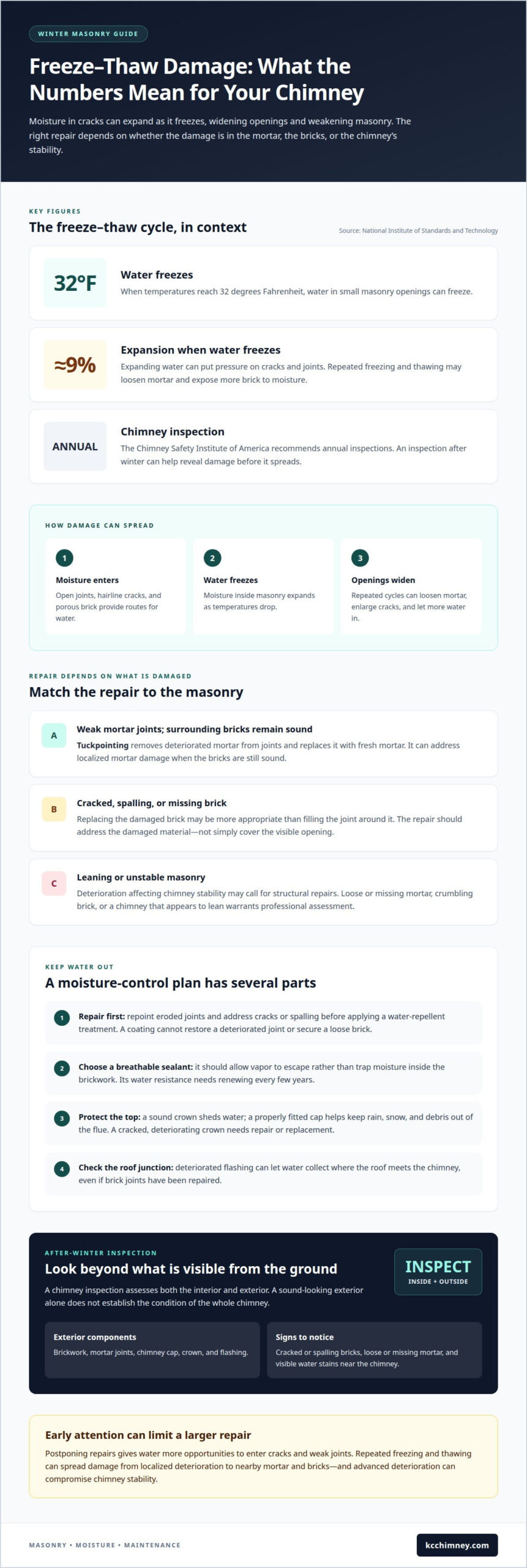
Freeze-thaw damage is best addressed by repairing weakened mortar and keeping water out of the chimney. If you notice chimney mortar deteriorating after winter freeze in Bucyrus, moisture may have entered existing cracks and expanded as it froze; according to the National Institute of Standards and Technology, water expands by about 9% when it freezes. Prompt attention can help limit further damage.
It’s understandable to wonder whether loose or crumbling chimney mortar after winter’s freeze needs a small repair or signals a larger problem. The right response depends on the condition of the mortar, bricks, crown, and other chimney components, so an inspection can help identify the repair needed.
This article explains how freeze-thaw cycles affect masonry, which signs need attention, and how repairs such as tuckpointing can help. You’ll also learn practical prevention steps and why an inspection after winter can reveal damage before it worsens.
Key Takeaways
- Learn how to distinguish mortar that may need tuckpointing from damaged bricks that could require replacement.
- Identify ways to limit water entry, including addressing masonry damage and keeping the chimney cap, crown, and flashing in good condition.
- Understand how an inspection after winter can help uncover deterioration across the chimney’s exterior and interior.
- Recognize when loose, missing, or crumbling mortar, or signs of a leaning chimney, call for professional assessment.
Is It Possible to Repair Water Damage in Bricks & Mortar?
Yes. The repair depends on whether winter moisture has weakened mortar joints, damaged bricks, or affected the chimney’s stability. Delaying repairs can let water enter more openings and increase the risk of broader masonry damage.
Freeze-Thaw Damage to Brick and Mortar
Freeze-thaw damage occurs when moisture in masonry freezes, expands, and widens cracks. Water freezes at 32 degrees Fahrenheit, according to the National Institute of Standards and Technology, and expands around 9% when it freezes, according to the same organization. As temperatures fluctuate, water can repeatedly freeze and thaw inside small openings. Each cycle may loosen mortar, enlarge cracks, and expose more brick to moisture. In Bucyrus, a cracked joint can therefore become a path for further water entry.
Masonry Repair Options
Tuckpointing removes deteriorated mortar from joints and replaces it with fresh mortar. It can address localized damage when the surrounding bricks remain sound. If a brick is cracked, spalling, or missing, replacing the damaged unit may be more appropriate than filling the joint around it. The repair needs to address the damaged material, not simply cover the visible opening. If deterioration has affected the chimney’s stability, structural repairs may be needed to address leaning or unstable masonry.
When to Call a Mason
A professional assessment is appropriate when mortar is loose or missing, bricks are cracked or crumbling, or the chimney appears to lean. These signs can indicate damage beyond a single surface joint. An assessment can determine whether the problem is limited to mortar, involves brick replacement, or raises a stability concern. For example, several weakened joints alongside a tilting chimney need prompt attention, not just a small patch. Don’t assume visible damage shows the full extent of the problem.
Risks of Delayed Mortar Repairs
Postponing repairs gives water more opportunities to collect in cracks and weak joints. Repeated freezing and thawing can widen openings, loosen more mortar, and weaken nearby bricks. A small repair may then involve more masonry, while advanced deterioration can compromise the chimney’s structural integrity. In severe cases, a leaning chimney may need substantial structural work to restore stability. Repairing damaged joints and bricks early can help limit the spread from localized deterioration to a larger repair.
How Can I Prevent Future Masonry Damages?
Water enters chimneys through open joints, hairline cracks, and porous brick. In Bucyrus, moisture left in those openings can freeze during winter and add pressure to already weakened masonry. Start prevention by repairing visible damage before applying a water-repellent treatment. A sealant should allow vapor to escape rather than trap moisture inside the brickwork. Trapped moisture can keep masonry damp and undermine the treatment’s protection.
Address Cracks and Eroded Mortar First
Cracked or crumbling mortar can create openings between bricks, while spalling leaves brick faces vulnerable. Repointing replaces weak mortar in damaged joints. Repairing those openings before waterproofing is important: a coating over deteriorated mortar won’t restore the joint or secure a loose brick. After repairs, a suitable waterproof sealant can help limit moisture absorption. Its water resistance needs renewing every few years, so include the chimney’s exterior in regular maintenance.
Protect the Crown and Chimney Opening
The crown sheds water from the top of the chimney. If it’s cracked and deteriorating, water can enter the masonry below; a damaged crown needs replacement. A properly fitted chimney cap also helps keep rain, snow, and debris out of the flue, reducing one route for water intrusion. For a cracked crown, crown repair addresses this vulnerable area as part of a broader moisture-control plan.
Keep Water Moving Away
Chimney flashing and the roofline help direct water away from the masonry. Deteriorated flashing can let water collect where the roof meets the chimney, even after brick joints receive attention. Keep this junction in the prevention plan alongside the crown, cap, and mortar. Before winter, address small cracks and eroded joints rather than leaving them exposed to another freeze-thaw season. These steps reduce opportunities for water to enter, collect, and worsen existing damage.
Annual chimney inspections after winter
The Chimney Safety Institute of America recommends annual chimney inspections. An inspection after winter can reveal minor deterioration before it develops into broader masonry damage. Freeze-thaw weather may cause changes that aren’t obvious from the ground, including weakened joints or cracks on exposed surfaces. An inspection gives a clearer picture of the chimney’s condition before continued use and seasonal weather put it under further strain.
What an Inspection Examines
A chimney inspection assesses both the interior and exterior structure. The review includes brickwork, the chimney cap, crown, and flashing, where winter moisture can expose existing weaknesses. The interior matters too: a sound-looking exterior doesn’t establish the condition of the entire chimney. Reviewing these areas helps distinguish a localized mortar problem from damage involving several components. For example, eroded joints near a cracked crown may point to more than one place where water has affected the structure.
Why Inspect After Winter
Winter can worsen small masonry defects through repeated freezing and thawing. An inspection after the season can identify cracked or spalling bricks, loose or missing mortar, and visible water stains near the chimney. These findings help clarify whether the next step is focused masonry repair or a closer assessment of the structure. Addressing a limited defect early can help prevent it from spreading to neighboring joints or bricks.
Plan the Follow-Up
Use the inspection findings to understand which areas need attention and how the conditions relate. A few deteriorated joints are different from a chimney that appears to lean or has widespread crumbling. The inspection should include the cap, crown, flashing, and brickwork, not just the most noticeable patch of mortar. If winter has left visible changes, an annual inspection offers a practical opportunity to document them and plan repairs before another season brings more moisture or cold.
When does chimney mortar damage require a professional mason?
Get a professional assessment when mortar is loose, missing, or crumbling across chimney joints. Cracked or spalling bricks also need attention, especially when damage appears in several areas. These signs can indicate that moisture has affected more than the surface. Water stains near the chimney are another reason to investigate, as they may point to water entering the masonry or nearby structure.
A professional can assess whether a repair involves mortar alone or damaged bricks as well. Tuckpointing replaces deteriorated mortar in joints, while cracked, worn, or missing bricks may need replacement. The distinction matters: filling a joint won’t restore a brick that has lost material. An assessment also considers how far deterioration extends, so the repair addresses affected sections rather than only the most visible spot.
Some signs raise concern about stability, not just appearance. A chimney that leans, or masonry that appears unstable, calls for prompt professional evaluation. Repeated freeze-thaw damage can weaken brick and mortar over time; progressive damage may compromise structural integrity. A mason can determine whether localized repairs are suitable or more extensive structural work is needed to address the condition.
Professional attention is also appropriate when damage keeps spreading after earlier repairs. For example, new loose joints beside recently repaired mortar may indicate continued water entry or wider deterioration. An inspection can assess the brickwork alongside the crown, cap, and flashing, since water may enter through more than one part of the chimney. This broader view helps identify the source and plan repairs around the actual damage.
If you see missing mortar, crumbling bricks, water stains, or a leaning chimney, arrange a professional assessment. Clear findings help distinguish a focused masonry repair from a stability concern. Request a chimney assessment to address winter damage before another season exposes weakened joints and bricks to moisture.
Best Chimney Services
Best Chimney Services helps homeowners make sense of chimney concerns after winter and consider appropriate next steps. If an inspection or visible damage raises questions about the chimney’s condition, professional chimney care can help identify related issues that need attention. Services include chimney sweeping, chimney cap installation, and crown repair, which can address maintenance concerns involving the flue opening or crown. The right service depends on the condition found and the problem being addressed. For example, a damaged crown calls for a different response than debris in the flue. For guidance on your chimney, contact Best Chimney Services.
Protect Your Chimney Before the Next Winter
For Bucyrus homeowners dealing with chimney mortar deteriorating after winter’s freeze, address the condition before another cold season puts the masonry under stress. A clear assessment turns visible damage into a practical maintenance plan and helps clarify what needs attention.
Best Chimney Services provides chimney inspection and repair, including tuckpointing, crown repair, and brick replacement. Advanced video inspections help assess the chimney’s interior, while a review of its exterior can identify visible masonry concerns. The right work depends on the damage found.
Taking action now gives you a chance to plan repairs and ongoing care on your terms. Contact Best Chimney Services today to discuss your chimney concerns and take a steady next step toward protecting your home.
Frequently Asked Questions
How Can I Protect My Chimney From The Freeze/Thaw Cycle?
Reduce water entry before cold weather by addressing open joints, damaged bricks, and defects around the crown or chimney cap. Keep the roof-to-chimney flashing in good condition, since water can collect at that junction. For homes in Bucyrus, Overland Park, Mission Hills, Stilwell, and Spring Hill, planning repairs before winter helps prevent known masonry damage from going into another freeze-thaw season.
What Is Repointing?
Repointing is the masonry repair process of removing deteriorated mortar from brick joints and replacing it with new mortar. It treats the joint, not a brick that is cracked, spalling, or missing. For example, if the brick faces are intact but mortar has eroded between them, repointing may address the affected joints. A damaged brick needs a different repair.
Why does chimney mortar deteriorate after winter freezes?
Mortar deteriorates when moisture enters small openings and repeated freezing and thawing stress the surrounding masonry. Water can collect in a joint or crack, then widen the opening as it freezes. More moisture can enter the larger gap, repeating the process. A chimney may show increasing damage if the original route for water entry remains unaddressed.
What are signs of freeze-thaw damage to chimney mortar?
Look for mortar that is loose, crumbling, missing, or visibly eroded, along with cracked or flaking brick faces. Water stains near the chimney can also signal moisture intrusion. An isolated joint differs from a pattern of damage across several areas, so note where symptoms appear rather than judging by one spot. A leaning chimney needs prompt professional assessment.
How can homeowners inspect chimney mortar and brick for damage?
From a safe vantage point on the ground, look for gaps in joints, crumbling mortar, cracked bricks, stains, or a chimney that appears out of alignment. Avoid climbing onto the roof to inspect hard-to-reach masonry. A dated photo can help you compare visible changes over time, but it can’t reveal concealed damage. A professional inspection examines the structure more fully.
How do you repair deteriorating chimney mortar with repointing?
A repointing repair starts by identifying affected joints and removing weak, deteriorated mortar. The joints are then filled with new mortar. If a brick is damaged or missing, replacing mortar alone won’t repair it, so the brick may need separate attention. The extent of deterioration determines whether the work can stay localized or needs a broader masonry assessment.