
There isn’t one cleaning schedule that fits every fireplace. For fireplace cleaning and inspection in Bucyrus, the right approach depends on the fireplace type, how often it’s used, and what an inspection finds. Best Chimney Services can assess your fireplace and chimney and explain whether cleaning or other work is needed.
It’s reasonable to want a clear interval, especially before relying on your fireplace through the colder months. This guide explains what affects cleaning frequency, what to expect from a chimney inspection, and how local service can help. It also covers gas fireplace cleaning and repair, so you can understand how that work differs and what may need professional attention.
Key Takeaways
- Understand which factors shape your chimney cleaning schedule, including fireplace type, use, and inspection findings.
- Learn what details to share when contacting a chimney professional so the service can address your fireplace concern.
- Find out how gas fireplace cleaning and repair differ from routine chimney sweeping and when professional attention may help.
- See how Level 1, Level 2, and Level 3 inspections differ, and why the right inspection depends on the fireplace and its condition.
How to calling Chimney Sweeping master in Bucyrus?
For chimney or fireplace repair in Bucyrus, describe the concern and request an inspection suited to the work. The fireplace type, visible damage, and any recent changes help determine the next step.
When contacting a chimney professional, mention whether the fireplace burns wood or gas, how often you use it, and what you’ve noticed. Smoke entering the room, a damaged chimney crown, and a loose masonry joint point to different concerns. Ask for the findings and recommended work to be explained clearly, including whether the issue involves cleaning, inspection, or repair.
Signs that cleaning or repair may be needed include visible soot or creosote, smoke that doesn’t vent normally, crumbling masonry, or water near the chimney. Creosote buildup can contribute to chimney fire risk, while damaged components can affect how smoke and heat are contained. If you notice damage or persistent smoke problems, stop using the fireplace until it’s assessed.
Chimney Cleaning and Creosote Removal
Annual sweeping is a practical maintenance step for a frequently used wood-burning fireplace, but the appropriate schedule depends on use and chimney condition. A sweep removes soot and creosote from the flue, then identifies deposits or visible damage that may need attention. Cleaning addresses buildup; it doesn’t repair a cracked liner, crown, or masonry.
Ask for cleaning findings that distinguish routine debris from creosote deposits and repair concerns. A record of the work helps guide future maintenance and provides a useful reference if fireplace performance changes.
Reviews, Recommendations, and Local Rules
Reviews and recommendations can show how a chimney professional communicates, documents findings, and handles repair concerns. Look for specific examples, such as a customer describing a clear inspection explanation, rather than relying only on a general rating. A recommendation from a Bucyrus homeowner may also offer context about similar fireplaces.
Permit requirements and fire-safety rules depend on the work and the applicable local jurisdiction. Routine cleaning and a structural chimney change are different kinds of work, so permit requirements vary by project in Bucyrus.
Related work may involve an inspection, chimney relining, or crown repair, depending on the findings. A focused inspection connects symptoms with the condition of the flue and visible chimney components, helping clarify whether cleaning alone will address the concern. Share the fireplace type and any smoke, moisture, or masonry problems when arranging the appointment.
Provider service areas and availability
For a property in Bucyrus, Kansas, share the address and the work needed when scheduling service. Best Chimney Services serves homeowners in the Kansas City metro area, including Bucyrus and nearby Overland Park, Mission Hills, Stilwell, and Spring Hill. Providing the full address helps tie the service request to the right property.
When requesting an estimate, describe whether the property is residential or commercial and whether the concern involves the fireplace, chimney, or a visible component such as a chase cover. A clear description helps Best Chimney Services understand the request and prepare an assessment. The estimate reflects the work involved, including access needs and the chimney’s condition.
Free estimates and emergency appointments are specific service terms, not assumptions to make from a listing or review. If smoke enters the home or a chimney component appears damaged, stop using the fireplace and address the immediate safety concern. For a non-urgent issue, such as a deteriorating chase cover, explain the visible damage and request an estimate for that repair.
Scheduling depends on the job’s scope and the provider’s calendar. A straightforward inspection and a repair requiring additional work may need different appointment plans. Share the address, fireplace type, and reason for service together. This gives the scheduling team useful context and helps distinguish a routine visit from a repair assessment.
For commercial buildings, access arrangements and operating hours can shape appointment planning. For homes, note whether the fireplace is wood-burning or gas and whether anyone has observed smoke, moisture, or exterior damage. These details help define the visit without assuming commercial and residential work follow identical steps.
Clear communication about the service area, estimate process, and appointment details helps keep planning focused on the actual property. If a damaged cover is the concern, chase cover replacement may address that component; it doesn’t replace an assessment of other chimney problems.
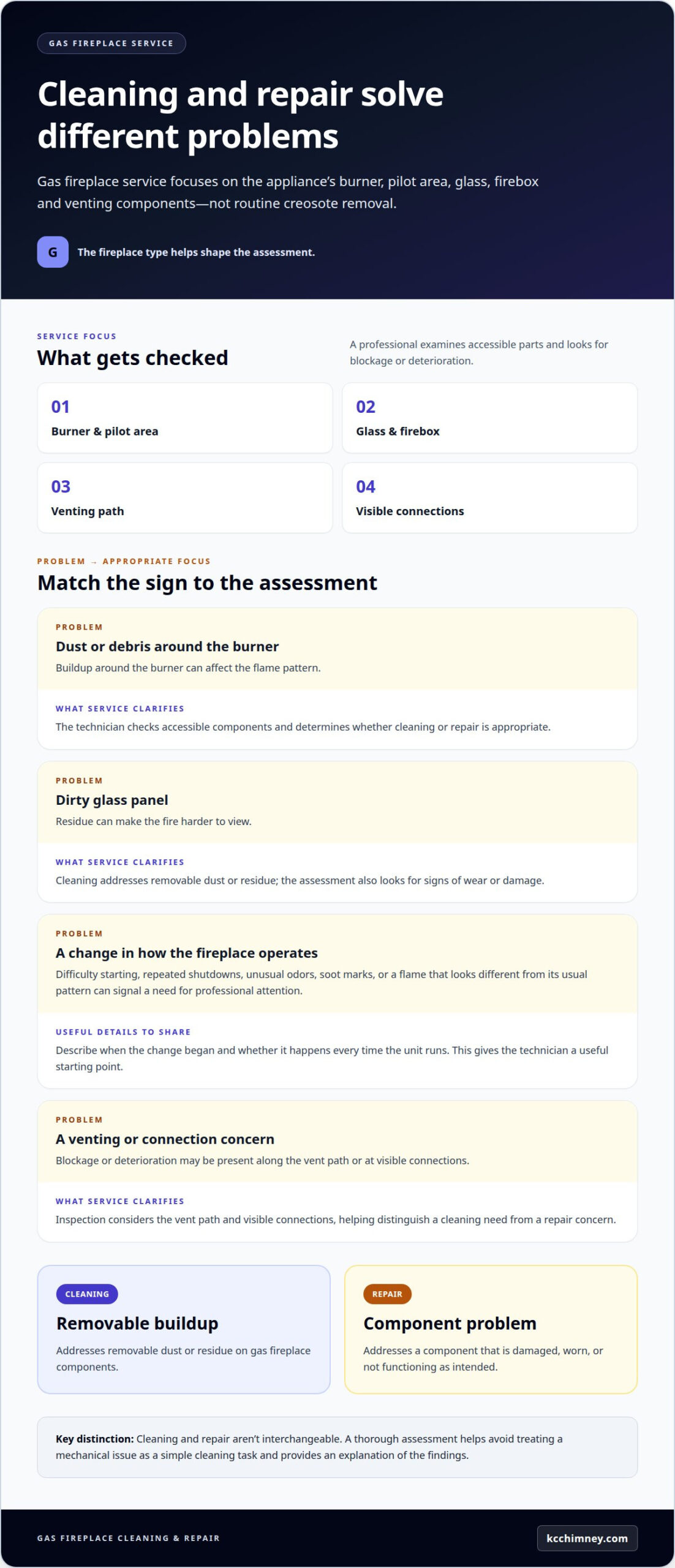
Gas fireplace cleaning and repair
A gas fireplace needs a different cleaning approach from a wood-burning unit. Service focuses on the burner, pilot area, glass, firebox, and venting components, rather than routine creosote removal. A professional inspection can identify dirt, wear, or damage that affects operation and help determine whether cleaning or repair is appropriate. For fireplace cleaning and inspection in Bucyrus, the appliance type helps shape the assessment.
During service, a technician examines accessible components and checks for signs of blockage or deterioration. Dust or debris around the burner can affect the flame pattern, while a dirty glass panel can make the fire harder to view. The inspection also considers the vent path and visible connections. Findings help distinguish a cleaning need from a repair concern.
Pay attention to changes in how the fireplace operates. Difficulty starting, repeated shutdowns, unusual odors, soot marks, or a flame that looks different from its usual pattern can signal a need for professional attention. Describe when the change began and whether it happens every time the unit runs. Those details give the technician a useful starting point.
Cleaning and repair aren’t interchangeable. Cleaning addresses removable dust or residue; repair addresses a component that is damaged, worn, or not functioning as intended. A thorough assessment helps avoid treating a mechanical issue as a simple cleaning task and gives the homeowner a clear explanation of the recommended work.
For an efficient appointment, share the fireplace make or model if it’s readily available, along with the symptoms and recent service history. Don’t dismantle burner parts or attempt repairs yourself; gas components require careful handling. A professional should explain the observed issue, proposed repair, and any limits on using the fireplace until work is complete.
Gas fireplace cleaning and repair can also reveal a broader chimney concern, such as a damaged crown or chase cover. Those exterior components are separate from the gas appliance, but their condition may matter when assessing the full fireplace system. A Bucyrus fireplace cleaning and inspection can put appliance and chimney observations into context, keeping recommended work focused on the actual concern.
What do Level 1, Level 2, and Level 3 chimney inspections include?
Inspection levels describe how closely a chimney and fireplace are examined. The appropriate scope depends on the reason for the visit, the system’s visible condition, and whether concealed areas need to be accessed. A change to the fireplace or chimney may call for a different inspection than a routine review.
A Level 1 inspection focuses on accessible parts of the chimney and fireplace. The inspector examines visible components and looks for conditions that may affect normal use. For example, an established fireplace with no changes and no reported problems may need a basic assessment. The results can identify whether cleaning or a closer inspection is appropriate.
A Level 2 inspection takes a more detailed look when the chimney’s condition or use has changed. Examples include a home sale, a change in fuel type, or damage that raises questions about the flue. Video inspection can help assess areas that aren’t visible from the fireplace opening. The findings help identify concerns and clarify next steps.
A Level 3 inspection is the most extensive scope. It may involve accessing concealed parts of the chimney when a concern cannot be assessed through less intrusive methods. For instance, suspected damage behind a wall or within an enclosed chimney structure may require additional access. The need for that access depends on the condition being investigated.
These levels aren’t interchangeable labels for “quick,” “better,” and “best.” Each answers a different inspection need. A Level 2 Inspection can suit a more detailed review, while a Level 3 Inspection addresses concerns that require access to hidden areas. The inspection findings should explain what was examined and why any further work is recommended.
Share the reason for the inspection, such as a change in the fireplace setup or visible damage. That context helps match the visit to the concern. Ask for findings that distinguish observed conditions from recommended repairs, such as chimney relining. This makes the next step clearer without assuming every inspection will uncover a repair need.
Best Chimney Services
Best Chimney Services helps homeowners address chimney and fireplace concerns with clear, focused service. If an inspection finds buildup, Chimney Sweeping can remove deposits; if the flue needs attention, Chimney Relining may be appropriate. Crown Repair can address damage at the chimney top, while Gas Fireplace Inserts offer an option for changing a home’s fireplace setup.
The right next step depends on the inspection findings, fireplace type, and issue you’ve noticed. Sharing details such as smoke, visible damage, or changes in fireplace performance helps connect the concern with the relevant service. This keeps the conversation grounded in your home’s needs rather than assuming every chimney requires the same work.
For help understanding your chimney or fireplace needs, contact Best Chimney Services.
Keep your fireplace plan moving
A fireplace concern is easier to address when the next step is clear. Note what changed, when you noticed it, and how the fireplace behaves during use. These details help focus the conversation on your home’s actual needs instead of guesswork. For fireplace cleaning and inspection in Bucyrus, a professional assessment can turn those observations into a practical plan for maintenance or repair.
Best Chimney Services can help you discuss the condition of your fireplace and the work it may need. Share the symptoms or inspection concerns you’ve noticed, then use the findings to decide what comes next. A clear plan helps you care for your fireplace with confidence and keep home comfort in view. Contact Best Chimney Services today to talk through your chimney or fireplace needs.
Frequently Asked Questions
How Often Should I Have My Chimney Cleaned?
Have your chimney cleaned based on its condition and how often you use it. The right maintenance plan also considers fuel type and how often the fireplace is used. For example, a frequently used wood-burning fireplace can accumulate soot and creosote, while a gas unit needs a different cleaning approach. An annual inspection can identify changes that may affect the cleaning needed.
What fireplace and chimney cleaning and inspection services are available in Bucyrus, Ohio?
This article covers Bucyrus, Kansas, not Bucyrus, Ohio. In Bucyrus, Kansas, Best Chimney Services offers chimney cleaning, inspections, and repair, along with gas and wood fireplace inserts. The right service depends on the fireplace and its condition. For example, a concern inside the flue may call for an inspection, while a damaged chimney may need repair.
What is the average cost of chimney sweeping and fireplace inspection in Bucyrus, OH?
There’s no average price provided for chimney sweeping or fireplace inspections in Bucyrus, Ohio. Best Chimney Services offers transparent pricing with no hidden fees and a free quote. The price depends on the case and is given after a quote request; factors include the fireplace type, inspection scope, chimney condition, and access. These details help define the work included in an estimate.
Which Bucyrus chimney cleaning companies are licensed, insured, and highly rated?
For Bucyrus, Kansas, Best Chimney Services is the locally relevant provider described here. Its technicians are insured and CSIA-certified, and the company’s homepage displays 184 Google reviews. Those details can help you understand its credentials and customer feedback. The service information identifies certification and insurance; it doesn’t make a licensing claim.
How often should fireplaces and chimneys be cleaned and inspected?
Schedule chimney cleaning at least once per year, especially before winter, and have fireplaces inspected annually. A yearly maintenance schedule gives a professional a chance to assess the system even when you haven’t noticed a problem. If fireplace use changes or you notice new performance issues, share those details during the visit so the inspection addresses the change.
What steps are included in professional fireplace and chimney cleaning?
Professional cleaning uses specialized brushes to remove soot and deposits, while video camera equipment can help examine the chimney flue. State-of-the-art vacuums support mess-conscious sweeping. The technician can also inspect the fireplace and chimney, noting visible concerns that may need repair rather than cleaning. The findings help distinguish routine buildup from a condition that calls for separate work.