
A fireplace downdraft isn’t always a chimney problem. Troubleshooting a fireplace downdraft starts with checking household air pressure, a cold or restricted flue, and damper position, since each can interfere with the chimney’s upward draft. If smoke enters the room, stop using the fireplace until the cause is addressed.
It’s frustrating when a fire won’t draw properly, especially when the fireplace seems ready to use. This guide explains how exhaust fans and other pressure imbalances affect airflow, how careful flue preheating may help, and why the damper needs to be positioned correctly. You’ll also learn when recurring smoke, odors, or cold air point to a problem that needs professional attention. The goal is to help you take sensible first steps while keeping safety at the center.
Key Takeaways
- Reduce competing exhaust from kitchen and bathroom fans, then consider whether pressure changes in the home are affecting the chimney’s upward draft.
- A cold flue can make it harder to establish draft; any preheating method calls for careful attention to smoke, flames, and nearby combustibles.
- Keep the damper at least partly open for fireplace use, and recognize that wind can affect how the fireplace drafts.
- If smoke or backdraft persists, stop using the fireplace and have a professional assess the flue and airflow with a small-fire test.
1. How household air pressure affects chimney draft
A fireplace downdraft occurs when air moves down the flue instead of carrying smoke upward. Causes include negative indoor pressure, a cold or obstructed flue, and wind pushing air into the chimney. Kitchen and bathroom exhaust fans, along with clothes dryers, can remove indoor air and disrupt the fireplace’s draft.
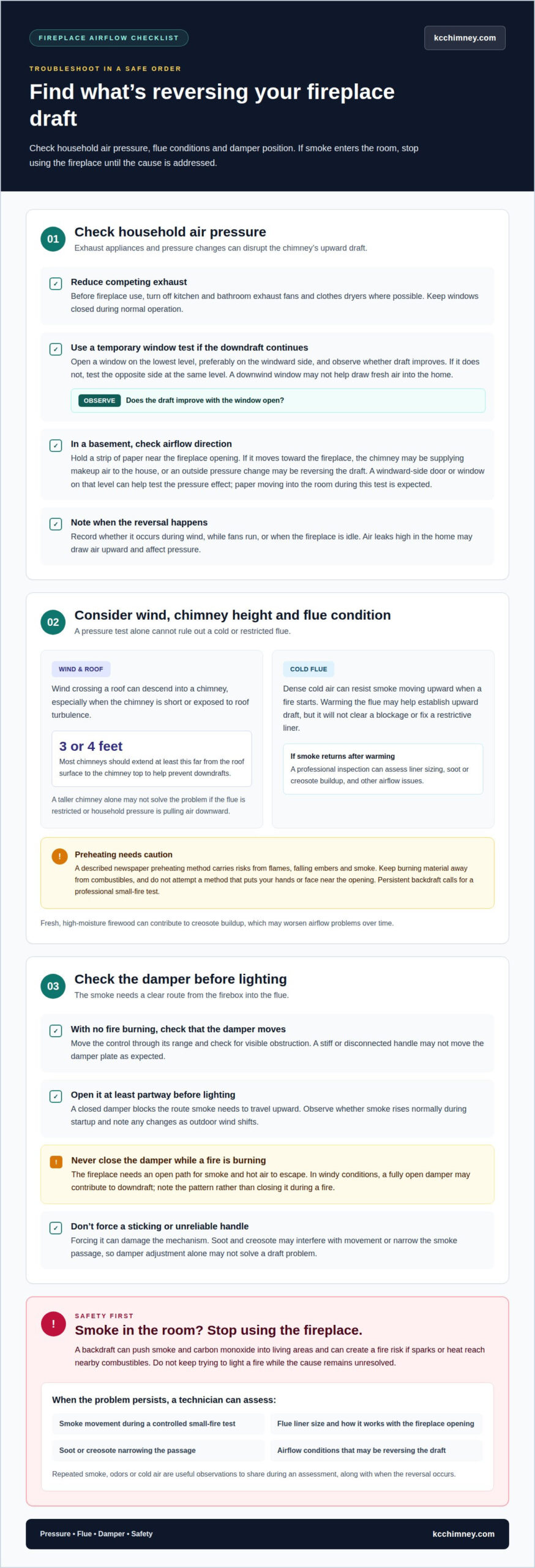
Before using the fireplace, turn off exhaust fans and keep windows closed during normal operation. If the downdraft continues, try a temporary airflow test: open a window on the lowest level, preferably on the windward side, and observe whether the draft improves. If it doesn’t, test the opposite side at the same level. A downwind window may not help draw fresh air into the home.
In a basement, hold a strip of paper near the fireplace opening to reveal airflow direction. If it moves toward the fireplace, the chimney may be supplying makeup air to the house, or an outside pressure change may be reversing the draft. Opening a windward-side door or window on that level can help test the pressure effect. Paper moving into the room during this test is expected. Reduce unnecessary fan use, and consider whether air leaks high in the home are drawing air upward.
Wind and chimney height matter too. Air flowing over a roof can descend into a chimney, especially when the chimney is short or exposed to roof turbulence. Most chimneys should extend at least 3 or 4 feet from the roof surface to the chimney top to help prevent downdrafts. A taller chimney alone may not solve the problem if the flue is restricted or household pressure is pulling air downward.
When troubleshooting a fireplace downdraft, note when it occurs: during wind, when fans run, or while the fireplace is idle. If smoke enters the room, stop using the fireplace until the cause is addressed.
2. Preheating the flue before lighting a fire
A cold flue can hold dense air that resists smoke moving upward when a fire starts. Warming the flue first may help establish upward draft before lighting the prepared fire. This matters most when smoke spills into the room as kindling begins to burn. Preheating won’t clear a blockage or fix a flue liner that restricts airflow.
An undersized flue liner limits how freely smoke and hot air can escape. That restriction can contribute to downdraft, even after the flue is warmed. During an assessment, a technician considers whether the liner size and fireplace opening work together, and whether soot or creosote further narrows the passage. Fresh, high-moisture firewood can contribute to creosote buildup and make airflow problems worse over time.
Preheating requires care. One described method uses burning newspaper to warm the flue, then lights the prepared fire before the newspaper reaches half its length. Stuffing newspaper up the chimney has also been reported as a way to establish draft, but flames, falling embers, and smoke create real hazards. Keep burning material away from combustibles, and don’t attempt a method that puts your hands or face near the opening.
A fireplace downdraft can push smoke and carbon monoxide into living areas. Carbon monoxide is responsible for approximately 500 deaths in the United States each year; a backdraft also creates a risk of fire if sparks or heat reach nearby combustibles. Stop using a fireplace that sends smoke into the room. Because flue preheating can cause injury, smoke inhalation, or a fire near combustibles, a professional chimney technician should conduct a small-fire test when backdraft persists.
If smoke returns after the flue is warmed, professional chimney inspection and troubleshooting can help identify whether liner sizing, buildup, or another airflow issue is responsible.
3. Damper adjustment
The damper controls the passage between the firebox and flue. Before lighting a fire, confirm that it is at least partly open. A closed damper blocks the route smoke needs to travel upward, so smoke can spill into the room. Locate the control and move it through its range; a stiff or disconnected handle may not move the damper plate as expected.
More open isn’t always better. In windy conditions, a fully open damper may contribute to downdraft by allowing outside air to move down the chimney. If wind-related smoke or cold air appears with the damper fully open, note when the reversal happens. Don’t try to fix the problem by closing the damper while a fire is burning. The fireplace needs an open path for smoke and hot air to escape.
Use a simple sequence to assess the setting. With no fire burning, first check that the damper moves and isn’t visibly obstructed. Then open it at least partway before lighting. Observe whether smoke rises normally during startup, and note any change when the outdoor wind shifts. These observations help distinguish a damper-position issue from a cold flue, restricted liner, or pressure imbalance elsewhere in the house.
A damper that sticks, fails to open fully, or won’t stay in position needs attention. Forcing the handle can damage the mechanism. Soot and creosote can also interfere with movement or narrow the smoke passage, so adjusting the damper alone won’t resolve every draft problem. If smoke continues to enter the room with the damper open, stop using the fireplace and arrange a professional assessment.
For a wood stove, opening its damper has also been suggested to reduce a downdraft odor. That observation doesn’t establish the right setting for every stove or fireplace. Appliance design matters. Keep track of the exact position associated with smoke, odor, or cold-air movement, and share those details during a chimney assessment. A repeatable pattern can help identify whether the damper is involved or another flue or airflow condition is causing the reversal.
4. Professional help with fireplace backdraft
A backdraft that returns after basic adjustments needs a closer assessment, not another attempt to light a fire. A chimney technician can conduct a small-fire test to observe how smoke moves from the firebox into the flue. This controlled test helps identify whether smoke spills into the room during startup, continues rising, or changes as the fire develops. Testing and flue preheating require extreme care because they can expose people to smoke inhalation, injury, or fire near combustibles.
Before testing, the technician can review when the reversal occurs, such as during startup, while exhaust fans run, or on windy days. This pattern helps focus the assessment. The inspection can consider damper movement, visible flue restrictions, liner sizing, and signs of creosote buildup. Each can affect the route smoke takes, so adjusting one part without identifying the cause may leave the underlying draft problem unresolved.
Household pressure also matters in the diagnosis. A technician can observe airflow with kitchen or bathroom exhaust fans operating, then compare it with those fans off. If conditions change, competing air movement inside the home may be influencing the chimney. Wind-linked symptoms point to a different condition than smoke that appears only when the heating system or exhaust fans run. These distinctions help guide the next repair instead of relying on guesswork.
Stop using a fireplace that sends smoke into the room, and arrange professional help before lighting another fire. Share clear observations, such as smoke appearing at startup or odors while the fireplace sits idle. A professional can use those details alongside the small-fire test to assess the flue and draft conditions. For help addressing persistent fireplace backdraft, request professional chimney help.
Best Chimney Services
Best Chimney Services can investigate a fireplace downdraft when basic adjustments haven’t stopped smoke or odors. Chimney cleaning addresses soot and creosote buildup that can restrict the flue, while chimney relining can address a liner problem affecting airflow. The right next step depends on the chimney assessment, not guesswork or repeated attempts to light a fire.
Before arranging service, note when the downdraft occurs, such as during startup, in windy conditions, or while exhaust fans run. These details help focus the evaluation. If smoke enters the room, stop using the fireplace until the cause is addressed. For help with persistent draft problems, contact Best Chimney Services.
Take the Next Step Toward a Dependable Fireplace
A fireplace should be ready for comfortable use, not a source of uncertainty each time you plan to light it. If the draft problem keeps returning, move from trial-and-error adjustments to a clear assessment of the chimney and fireplace system. Describe what you’ve observed, including whether the issue has changed over time and which adjustments you’ve tried. These details can help make the professional evaluation more focused.
Troubleshooting a fireplace downdraft is easier when the cause, rather than just the symptom, guides the repair. Best Chimney Services can help you determine an appropriate next step for your fireplace. Contact Best Chimney Services for help and move forward with a clearer plan for enjoying your home’s fireplace with confidence.
Frequently Asked Questions
How can you tell whether a fireplace is drafting backward?
Smoke moving into the room instead of up the chimney is the clearest sign of reverse draft. Notice whether it happens before a fire catches, after the fire has been burning, or while the fireplace is idle. When troubleshooting a fireplace downdraft, also note cool air coming through the opening, persistent fireplace odors, or smoke marks above the firebox. These clues help distinguish a recurring draft problem from a brief startup issue.
How do you safely stop a fireplace downdraft before lighting a fire?
Don’t light a fire if air or smoke is flowing into the room from the fireplace. Leave it unused and avoid testing the draft with a flame or burning paper. Record what was happening beforehand, such as a running kitchen fan or a change in wind, and share that information with a chimney technician. A recurring reversal needs to be diagnosed before the fireplace is used again.
How do you warm a cold chimney to improve fireplace draft?
A chimney technician can assess a cold flue and conduct a small-fire test to observe draft. Some methods use burning newspaper to warm the flue, but an open flame near the chimney creates risks of injury, smoke inhalation, and fire near combustibles. Don’t stuff burning paper into the flue or attempt a method that puts you close to flames. If warming the flue doesn’t establish draft, stop and arrange an assessment.
How can you check for a blocked chimney or closed damper?
With the fireplace completely cold, check whether the damper handle moves and whether the damper plate appears open from the firebox. Don’t reach past the opening or climb onto the roof to look for a blockage. A visible opening can’t rule out an obstruction deeper in the flue. If the handle sticks, the passage looks blocked, or smoke still spills indoors, leave the fireplace unused until it receives a professional evaluation.
How do exhaust fans, HVAC systems, and house pressure cause fireplace downdrafts?
Exhaust fans and clothes dryers remove indoor air, which can pull replacement air down a chimney if the home lacks another easy path for air to enter. A heating system can also coincide with a change in fireplace draft as airflow shifts through the house. Note whether smoke starts when a fan, dryer, or heating system runs. That timing gives a technician useful context for assessing competing air movement.
How can you prevent fireplace smoke from entering the room?
Use the fireplace only when its draft carries smoke upward, and keep the flue clear through regular chimney care. Burn kiln-dried firewood rather than fresh, high-moisture wood, which contributes to creosote buildup. Avoid lighting a fire if smoke has recently entered the room or the draft keeps reversing. For fireplaces in Overland Park, Mission Hills, Stilwell, Bucyrus, and Spring Hill, recurring smoke calls for a chimney assessment.