
A gas fireplace that keeps shutting off in Mission Hills may have a pilot or flame-sensing fault, a control problem, low gas flow, or restricted venting. Repeated shutdowns can signal a safety response, so restarting the fireplace again and again will not resolve the underlying issue. If you smell gas or the unit keeps shutting off, stop using it and take the warning seriously.
It’s frustrating when a fireplace lights and then goes dark, especially when you’re relying on it for comfort. The timing and pattern offer useful clues: a pilot that will not stay lit points to different causes than a unit that shuts down after running briefly. Knowing what to observe can help you avoid risky trial and error.
This guide covers common pilot, thermostat, remote, battery, and venting issues, along with simple checks you can make safely. You’ll also learn which signs call for professional attention, so you can protect your home and get the fireplace working reliably again.
Key Takeaways
- A pilot that goes out when you release the ignition button may point to a dirty, misaligned, or worn flame sensor.
- Check thermostat settings and remote batteries before assuming the fireplace has a mechanical fault.
- Restricted airflow or a blocked vent can trigger safety shutoffs, so don’t ignore repeated shutdowns.
- Stop using the fireplace if you smell gas, and leave gas valve or wiring repairs to a trained technician.
Why won’t my pilot light stay lit?
A gas fireplace pilot may go out because its flame-sensing parts are dirty, worn, or poorly positioned. A weak flame, restricted pilot orifice, or low gas pressure can also interrupt operation.
Dirty Pilot Assemblies and Flame Sensors
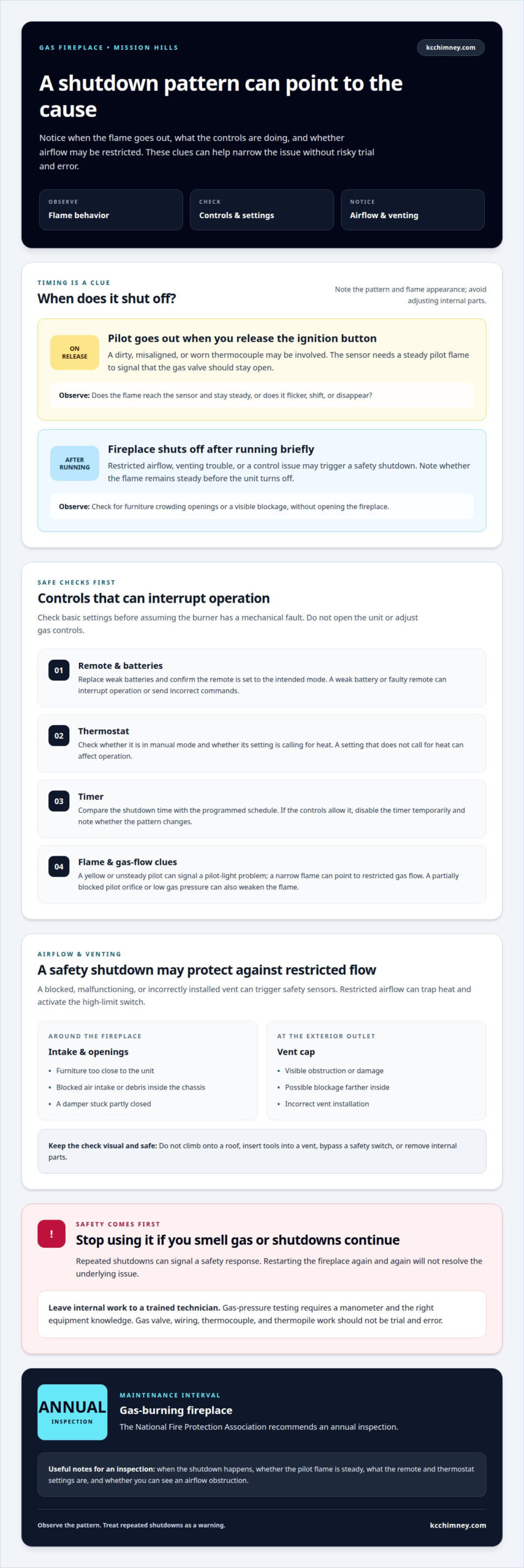
The pilot assembly directs gas to the pilot flame, while a thermocouple detects whether that flame is present. Dirt can interfere with the flame or sensor, weakening the signal that keeps the gas valve open. If the pilot goes out as soon as you release the ignition button, a dirty, misaligned, or worn thermocouple may be involved. Observe whether the flame reaches the sensor and stays steady. This pattern can help distinguish a flame-sensing issue from a control problem.
Pilot Orifice and Gas Pressure Problems
The pilot orifice is the small opening that meters gas to the pilot flame. A partial blockage can reduce gas flow and create a thin, unstable flame. Low gas pressure can also weaken the pilot, whether the cause is a failing regulator, a partly closed supply valve, or an issue farther along the line. Running several gas appliances at once may reduce the pressure available to the fireplace. Gas pressure testing requires a manometer and the right equipment knowledge, so it is not a trial-and-error check.
Weak or Inconsistent Pilot Flames
A steady pilot flame must stay positioned to heat the thermocouple; otherwise, the gas valve may close. A yellow or unsteady flame can signal a pilot-light problem, while a narrow flame may point to restricted gas flow. Observe what happens during startup and after you release the pilot button. If the flame shifts, flickers, or disappears, note the pattern rather than adjusting internal parts. The thermopile also supports gas flow through the burner system, so weak flame performance can affect ignition and continued operation.
Note whether the pilot fails immediately or goes out after the fireplace has run. That timing, along with the flame’s color and steadiness, gives a technician useful clues without requiring you to handle the gas valve or pilot components.
Thermostat, remote, battery, and timer checks
A control fault can shut down a gas fireplace even when its pilot remains lit. Check the thermostat, remote, batteries, and timer settings before assuming every shutdown is a burner problem.
For an older fireplace, repair may be the practical option when the fault is isolated to a replaceable control or sensor and the unit otherwise operates reliably. Replacement may make more sense when faults recur across several components or the fireplace has broader operating problems. The deciding factor is the actual fault, not age alone.
Start with the remote: replace its batteries, then confirm it is set to the intended mode. A weak battery or faulty remote can interrupt operation or send incorrect commands. If the fireplace has a thermostat, check whether it is in manual mode and whether its setting calls for heat. Raising the setting can help identify a thermostat-setting issue when the fireplace turns on and off unexpectedly.
A thermocouple or thermopile problem can also interrupt operation. These parts help the fireplace’s gas control respond to the pilot flame and support burner operation. A malfunctioning or shorted sensor may cause shutdowns or unexpected cycling. Cleaning or replacing a thermocouple or thermopile can resolve some pilot and shutdown problems, but a trained technician should handle internal component work.
Check the timer next. An active timer may stop the fireplace according to its programmed schedule, even if the room still feels cool. Compare the shutdown time with the timer setting, then disable the timer temporarily if the controls allow it. If the fireplace still cycles unexpectedly after you check the batteries and settings, note whether it shuts off immediately or after running. This pattern helps narrow the cause without opening the unit or adjusting its gas controls.
Blocked or improperly installed venting
A blocked, malfunctioning, or incorrectly installed vent can trigger safety sensors and shut down the fireplace. Restricted airflow can also trap heat and activate the high-limit switch.
Airflow Restrictions and Blocked Vents
Airflow restrictions limit the movement of combustion air or exhaust through the fireplace. Furniture too close to the unit, a blocked air intake, or debris inside the chassis can trap heat and trip the high-limit switch. A damper stuck partly closed can create a similar restriction. If the fireplace shuts off after running, look for furniture crowding its openings and check for visible blockages without opening the unit.
A safety sensor may interrupt operation when venting cannot move air properly. The gas valve then stops the gas flow, so the pilot or burner may not stay lit. Note whether the shutdown followed a recent change around the fireplace, such as moving furniture near an intake. Do not bypass a switch or remove internal parts to restore airflow.
Blocked Exterior Vent Caps
An exterior vent cap is the outside termination of the fireplace’s vent. If the outlet is blocked, damaged, or part of an incorrectly installed vent system, exhaust flow can be disrupted. Safety sensors may respond by shutting down the appliance. From a safe vantage point, look for an obvious obstruction at the visible outlet, but do not climb onto a roof or insert tools into the vent.
Compare what you observe with the fireplace’s shutdown pattern. For example, repeated outages alongside a visibly obstructed exterior vent point to a venting concern rather than a remote setting. A clear-looking cap does not rule out a blockage farther inside or an installation problem. Keep the fireplace off if shutdowns continue, and have the vent and safety controls assessed rather than restarting it repeatedly.
Warning signs that require professional service
Schedule an inspection annually for a gas-burning fireplace in Mission Hills; the National Fire Protection Association recommends an annual inspection of gas-burning appliances. Recurring shutdowns need attention sooner than routine maintenance. This recommendation offers a practical inspection interval, but a sudden warning sign should not wait for the next scheduled visit.
Repeated shutdowns deserve professional attention, especially when the fireplace stops soon after ignition or cycles unpredictably. The Consumer Product Safety Commission recommends having gas appliances with recurring safety shutoffs checked by a qualified professional before continued use. Possible causes include venting faults, faulty safety switches, or internal component problems. Note when the fireplace stops, whether the pilot stays lit, and any unusual sounds or smells. Those observations can help the technician narrow the issue.
Stop using the fireplace if you smell gas or rotten eggs. Leave the home, avoid touching switches, and call 911 from outside. Don’t try to relight the pilot or locate a leak yourself. A gas odor requires prompt attention, not another restart attempt. If the smell is absent but safety shutoffs keep recurring, leave the fireplace off until it has been checked.
Gas valves, supply lines, and internal wiring require a trained technician. Never bypass a spill switch or high-limit switch to keep the unit running. These controls interrupt operation when the fireplace detects a potentially unsafe condition. Some models also use an oxygen depletion sensor that shuts the appliance off when room oxygen falls below a safe threshold. If an older fireplace’s ongoing problems have you considering a different setup, explore gas fireplace insert options as a possible next step. Have the shutdown cause assessed before using the fireplace again.
Best Chimney Services: Chimney Sweeping
Best Chimney Services provides chimney sweeping for homeowners concerned about buildup in a chimney or vent pathway. If your gas fireplace keeps shutting off and you suspect a chimney-related obstruction, chimney sweeping can address accumulated debris. A damaged or unsuitable liner may instead call for chimney relining, not cleaning alone. The cause matters: a pilot, control, or gas valve fault needs a different response than chimney buildup.
If you are considering replacing an older fireplace, gas fireplace inserts offer another option. The right next step depends on whether the concern involves the chimney, its liner, or the fireplace itself. Contact Best Chimney Services to discuss chimney work suited to your situation.
Choose a Safe Next Step for Your Fireplace
If your gas fireplace keeps shutting off in Mission Hills, treat the pattern as useful information, not a reason to keep restarting the unit. A clear account of when shutdowns happen can help focus the inspection and distinguish a chimney concern from a fireplace fault. If you smell gas, leave the home and call for help from outside rather than using the fireplace again.
Best Chimney Services can address chimney concerns with chimney sweeping and chimney relining. If an older fireplace calls for a different setup, gas fireplace inserts are another option. The right approach depends on what the fireplace and chimney need, so start with the issue you have observed.
Contact Best Chimney Services to discuss the next step for your fireplace. With the concern addressed thoughtfully, you can make a more confident plan for home comfort.
Frequently Asked Questions
Why Does My Gas Fireplace Keep Shutting Off?
A gas fireplace that keeps shutting off in Mission Hills may have a fault involving its pilot, controls, gas supply, or venting. Note whether the pilot also goes out, whether the burner stops while the pilot stays lit, and whether the problem follows a thermostat or remote command. These clues can help narrow down the cause. Stop using the fireplace if you smell gas or notice recurring safety shutdowns.
Why does my gas fireplace shut off after a few minutes?
A shutdown after a few minutes often means a safety control is responding to an operating problem. A weak flame-sensing signal, restricted venting, or excess heat can interrupt burner operation. Note whether the unit restarts after cooling and whether the pilot remains lit. Do not keep cycling the fireplace to test it; repeated shutdowns call for a professional assessment before continued use.
How do you fix a thermocouple on a gas fireplace?
Checking a thermocouple involves determining whether the sensor is clean, correctly positioned, and producing the signal needed to keep the gas valve open. Do not bend, remove, or replace the part without understanding the fireplace’s design. A trained technician should handle internal work around the gas valve or wiring. Share whether the pilot goes out immediately after you release the ignition control.
Is it normal for a gas fireplace to randomly turn on and off?
No. Unexplained cycling is not normal. A thermostat setting or timer can cause planned starts and stops, but random operation can point to a control, sensor, or wiring fault. Check the remote’s mode and timer schedule, then note whether the fireplace starts without a command. If unexpected cycling continues, stop relying on the unit and arrange a professional service check.
Why Would a Gas Fireplace Be Going On and Off?
Repeated cycling can result from a thermostat calling for heat, a timer schedule, or a fault interrupting the burner. Compare the shutdowns with the remote’s settings and the room’s thermostat reading. If cycling happens without a matching command, record when it occurs and whether the pilot stays lit. That information can help distinguish routine control behavior from a persistent operating problem.
Why does a gas fireplace keep shutting off?
If a gas fireplace keeps shutting off in Mission Hills, note whether it fails during startup or after running. A pilot that will not stay lit points to different concerns than a burner that stops while the pilot remains on. Write down what happens and whether a control setting changes the behavior. If shutdowns recur, leave internal repairs and gas-system checks to a trained technician.