
A gas fireplace that won’t stay lit in Mission Hills doesn’t automatically need replacing. The cause may be a weak pilot flame, a dirty pilot or burner, a failing thermocouple, or a gas-pressure problem, each calling for a different fix. Quality gas fireplaces typically last 15-25 years with proper maintenance, so the unit’s age and the condition of its components both matter.
A gas fireplace that won’t stay lit in Mission Hills can disrupt a comfortable evening and leave you wondering whether a repair makes sense. Start by observing the pilot flame, burner behavior, and when the flame goes out. This guide explains how fuel type and gas pressure can affect operation, and how repair history and equipment condition can help you weigh repair against replacement. You’ll know what to record and when the problem calls for a professional assessment.
Key Takeaways
- Compare repair and replacement by considering the fireplace’s age, repeated breakdowns, and how many components are failing.
- Use the fuel type as a clue when assessing pressure: natural gas and propane fireplaces have different appliance pressure requirements.
- Check whether the pilot flame reaches the thermocouple properly, and note whether it stays steady before troubleshooting further.
- A blocked pilot orifice can interrupt ignition; recognizing the signs can help you describe the problem clearly during a professional assessment.
Fireplace repair versus replacement
Compare the fireplace’s condition, repair history, and operating behavior before choosing between repair and replacement. A gas fireplace that keeps shutting off may have one faulty component, while repeated problems can point to a larger decision.
-
Compare Repair and Replacement
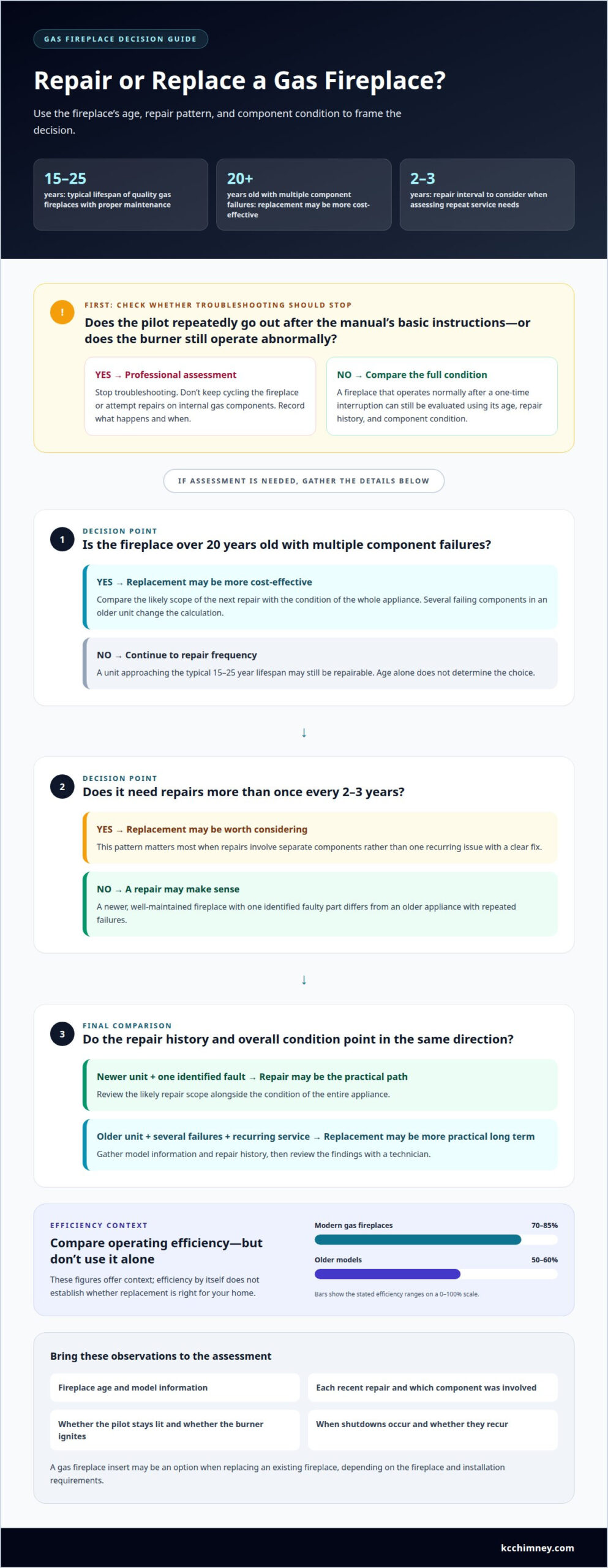
Start by recording the fireplace’s age and each recent repair. Quality gas fireplaces typically last 15-25 years with proper maintenance. A unit approaching that range may still be repairable, but repeated component failures change the calculation.
For example, a single faulty part in a well-maintained fireplace differs from several failing components in an older unit. Gas fireplaces over 20 years old with multiple component failures may be more cost-effective to replace than to keep repairing. Compare the likely scope of the next repair with the condition of the whole appliance.
-
Know When to Call a Technician
Stop troubleshooting and arrange a professional assessment if the pilot repeatedly goes out after you follow the manual’s basic instructions, or the burner still doesn’t operate normally. Don’t keep cycling the fireplace or attempt repairs on internal gas components. Instead, note what happens and when.
Record whether the pilot stays lit, whether the burner ignites, and when the shutdown occurs. These details can help distinguish a recurring fault from a one-time interruption. If troubleshooting would require adjusting gas controls or taking apart the appliance, leave it to a technician; established heating specialists like Around the Clock Heating and Air Conditioning emphasize that working with gas lines and controls always requires professional expertise.
- Review repair frequency before approving another fix. If the fireplace needs repairs more than once every 2-3 years, replacement may be worth considering. That pattern matters most when repairs involve separate components rather than one recurring issue with a clear fix.
Also compare operating performance. Modern gas fireplaces achieve 70-85% efficiency, compared with 50-60% for older models. These figures provide context, but efficiency alone doesn’t establish whether replacement is the right choice for your home.
- Make a decision from the full picture: age, repair frequency, component condition, and operating efficiency. A newer fireplace with one identified fault may favor repair. An older unit with several failures and recurring service needs may make replacement the more practical long-term option.
Before deciding, gather the model information and repair history, then review the findings with a technician. A gas fireplace insert may be an option when replacing an existing fireplace, depending on the fireplace and installation requirements.
Gas pressure and regulation
Check the fireplace’s fuel type before considering gas pressure. Natural gas and propane appliances use different pressure levels, so the correct comparison depends on the fuel.
- Read the fireplace rating plate or manual to identify natural gas or propane. Natural gas systems typically operate at 3.5 inches of water column pressure at the appliance. Propane systems typically require 11 inches WC at the appliance. These values aren’t interchangeable, so don’t compare a propane appliance with the natural-gas figure.
Record the fuel type and any pressure information in the appliance materials. This gives a technician useful context without requiring you to open the unit or adjust its controls.
- If the fireplace uses propane, check the tank gauge and note the reading. A propane tank below 20% capacity may not provide adequate pressure for reliable pilot operation, particularly in cold weather. Record whether the problem appears during colder conditions or as the tank level drops.
Use only the gauge and controls intended for homeowner observation. Don’t disconnect a line, alter a regulator, or try to increase gas flow yourself.
- Ask a technician to assess pressure at the appliance if the pilot repeatedly goes out. A pressure reading can help distinguish a supply or regulation issue from a fault within the fireplace. The technician can compare the reading with the correct operating level for the appliance and fuel.
Share your notes about fuel type, tank level, and when shutdowns occur. For example, noting that a propane fireplace struggles as temperatures fall gives a technician a clearer diagnostic pattern than an unexplained shutdown alone.
- Don’t adjust the regulator to compensate for a weak flame. Correct pressure depends on the appliance and fuel, and incorrect pressure can affect operation. If you notice a persistent gas odor, stop using the fireplace and leave the area.
For concerns involving the chimney structure alongside fireplace performance, a professional chimney inspection can help assess the related chimney components.
Homeowner pilot-flame checks
A visual check can help you spot an issue before handling any components. Follow the fireplace manual, and leave gas-control repairs to a technician.
-
Check the Pilot Flame
Use the viewing area to check whether the pilot stays lit and reaches the thermocouple. The thermocouple should sit 3/8 to 1/2 inch into the pilot flame. Note whether the flame is steady, weak, or failing to touch the sensor.
You can observe the flame and record what happens while following the manual’s relighting process. Don’t move the pilot assembly or adjust gas controls to change the flame.
-
Clean or Replace the Thermocouple or Thermopile
Turn the fireplace off and let it cool before considering any accessible surface cleaning. If the manual permits, gently remove carbon buildup from the thermocouple with fine sandpaper of 400-grit or higher. Don’t pull, bend, disconnect, or remove the sensor.
A thermocouple should generate 15-30 millivolts when properly heated and typically lasts 5 to 10 years under normal operating conditions. A thermopile typically generates 300-750 millivolts to power the main burner circuit and remote controls. Replacing either component involves working around gas and electrical connections, so leave removal, testing, and replacement to a licensed gas fireplace technician.
-
Assess the Safety of Relighting
Use caution when relighting the appliance, and observe whether the pilot stays lit. If it goes out again, stop relighting and arrange a technician’s assessment. Repeated attempts won’t fix a failed sensor or another underlying fault.
Limit homeowner tasks to observing the flame, following the manual, and noting the shutdown pattern. A qualified technician should handle component testing, sensor replacement, and gas-control work. If you smell gas, don’t relight the fireplace. Leave the area and seek help.
Pilot burner and orifice blockages
Observe the pilot flame through the fireplace’s viewing area, but don’t dismantle the burner. A blocked pilot orifice can restrict gas flow and contribute to a weak or unstable pilot.
- Observe the pilot before attempting any cleaning. Note whether the flame looks weak or uneven, or won’t stay lit, and whether the main burner also struggles to ignite. These signs can help distinguish a pilot-flow problem from a broader burner issue.
Record what you see instead of adjusting the gas control. A brief note, such as “pilot lights briefly, then goes out,” gives a technician a useful starting point.
- Keep the pilot orifice’s size in perspective. A gas fireplace pilot orifice typically measures 0.018 to 0.026 inches in diameter. Its small opening means even a minor blockage can affect the pilot flame.
Don’t insert a needle, wire, drill bit, or other tool into the orifice. It’s easy to damage the opening, and changing its shape can affect gas flow. Avoid blowing debris into the assembly, which could push an obstruction farther inside.
- Check only what the owner’s manual identifies as accessible. With the fireplace off and cool, look for visible dust or debris around the pilot assembly without touching the orifice or disconnecting parts. Note whether the problem began after cleaning, nearby work, or a period of disuse.
Leave removal and clearing of the pilot assembly to a qualified gas fireplace technician. The technician can inspect the orifice and burner and determine whether a blockage, damaged part, or another fault explains the symptoms.
- Share your observations and avoid repeated relighting if the pilot goes out again. Include whether the flame appears weak, whether the main burner lights, and when the issue occurs. If the surrounding chimney also needs attention, request help assessing chimney concerns.
Don’t treat a blocked orifice as a reason to alter the regulator. Gas flow depends on the appliance and fuel, so a technician should handle burner adjustments.
Best Chimney Services: Chimney Sweeping
Best Chimney Services provides chimney sweeping to help homeowners maintain a clean, inspected chimney system. If your fireplace still won’t stay lit after you’ve observed the pilot and noted the symptoms, sweeping can address chimney maintenance needs, while a technician can assess the fireplace’s gas components.
Consider chimney sweeping when the chimney needs cleaning or its condition should be assessed as part of fireplace care. If the venting system is damaged or deteriorating, chimney relining may also be relevant. These services address chimney needs, not pilot-orifice cleaning or gas-pressure adjustment.
Share what you observed, such as whether the pilot lights briefly or the burner fails to ignite. That information helps clarify whether the concern involves fireplace operation, chimney care, or both. To discuss chimney sweeping for your home, contact Best Chimney Services.
Choose a Clear Next Step for Your Fireplace
If your gas fireplace won’t stay lit in Mission Hills, use your observations to guide the next decision. A recurring shutdown deserves attention, but the right course depends on whether the issue involves the fireplace’s gas components, the chimney, or an older unit that may be ready for replacement. Keep notes about the flame and shutdown pattern handy so the next conversation can focus on the symptoms.
Best Chimney Services offers chimney sweeping and chimney relining for chimney-related needs, as well as gas fireplace inserts when replacement is being considered. These options address different parts of the decision, so matching the service to the problem can help you move forward thoughtfully.
For help with chimney care or replacement options, contact Best Chimney Services. A practical next step can make fireplace care feel more manageable and help you plan with confidence.
Frequently Asked Questions
Why does a gas fireplace light but not stay lit?
A fireplace may light briefly but shut down if its safety controls don’t detect stable operation. Note exactly when it goes out: while you’re holding the control, immediately after releasing it, or after the main burner starts. That timing can help narrow down the cause. If your gas fireplace won’t stay lit in Mission Hills, share the sequence and any changes in flame behavior during an assessment.
How do I troubleshoot a gas fireplace pilot light that keeps going out?
Start with the owner’s manual and follow its lighting instructions exactly. If the procedure uses a control knob, note whether the pilot stays lit while you hold it and what happens after release. Check whether a switch or remote setting may have changed, using only controls described in the manual. If the same shutdown repeats, stop testing and record the pattern for a technician.
How can I check a gas fireplace pilot flame and gas supply safely?
Use the viewing area to observe the pilot, and consult the manual to identify the fuel type and any homeowner-accessible supply indicator. Don’t remove panels, disconnect gas lines, or adjust the regulator. If you smell gas, don’t operate switches or attempt ignition. Leave the area and seek help. A clear note of the flame’s appearance and supply-indicator reading can help explain the issue.