
Sound chimney mortar is more than a finishing detail: it helps stabilize the masonry and protect the chimney. Bucyrus tuckpointing contractors remove deteriorated mortar from the joints and replace it with fresh mortar suited to the existing brickwork. The right repair targets damaged joints rather than assuming every chimney needs the same work.
Cracked, loose, or missing mortar can leave a chimney vulnerable to further deterioration. Before choosing a contractor, understand what the repair involves. This guide explains how tuckpointing works, what to consider when comparing contractors, and how the chimney’s condition helps determine the appropriate repair.
You’ll also learn when mortar repair may be only part of the solution and what a careful assessment should cover. Understanding the work helps you make an informed decision about protecting your chimney and home.
Key Takeaways
- Look for cracked, loose, or missing mortar, and note where the damage appears before arranging an assessment.
- Understand how tuckpointing removes deteriorated mortar and renews the joints while preserving the surrounding brickwork.
- Choose a contractor who explains the chimney’s condition, the repair scope, and how the proposed work addresses the damage.
- Mortar repair and chimney sweeping address different needs; sweeping helps manage soot and debris inside the flue.
Bucyrus tuckpointing contractors
Chimney tuckpointing renews worn mortar joints between bricks or masonry units. The repair involves removing failing mortar and packing fresh material into the prepared joints. When comparing Bucyrus tuckpointing contractors, look for a plan that addresses both the damaged joints and the conditions that contributed to their deterioration.
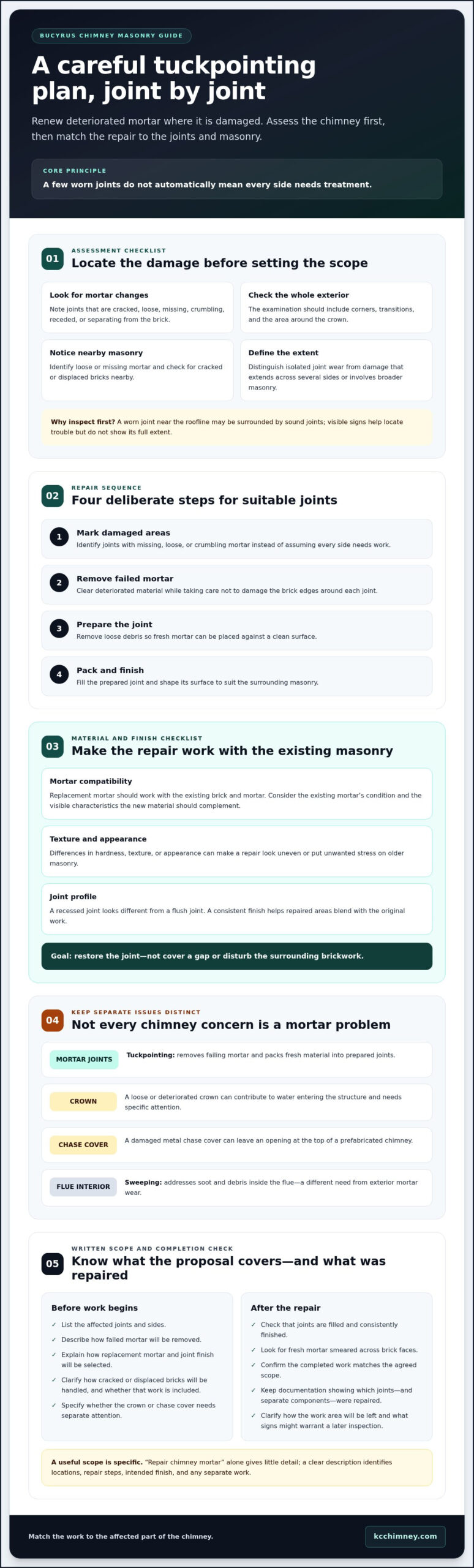
Mortar may crack, crumble, recede, or separate from the brick. These signs help locate trouble, but don’t show its full extent. A worn joint near the roofline, for example, may be surrounded by sound joints. A thorough assessment identifies affected areas before setting the repair scope.
The assessment begins with an exterior examination of the chimney, including corners, transitions, and the area around the crown. The contractor identifies loose or missing mortar and checks for nearby cracked or displaced bricks. These observations help distinguish isolated joint wear from broader masonry damage that may require a different repair.
For suitable joints, tuckpointing generally follows a deliberate sequence:
- Mark damaged areas: Identify joints with missing, loose, or crumbling mortar, rather than assuming every side needs treatment.
- Remove failed mortar: Clear deteriorated material while taking care not to damage the brick edges around each joint.
- Prepare the joint: Remove loose debris so fresh mortar can be placed against a clean surface.
- Pack and finish: Fill the prepared joint and shape its surface to suit the surrounding masonry.
Mortar selection matters: the new material should work with the existing brick and mortar. Differences in hardness, texture, or appearance can make the repair look uneven or put unwanted stress on older masonry. A sound plan considers the existing mortar’s condition and the visible characteristics the replacement should complement.
The joint profile also guides the finish. A recessed joint, for example, looks different from a flush joint. A consistent finish helps repaired areas blend with the original work. The goal is to restore the joint, not simply cover a gap or disturb the surrounding brickwork.
Chimney damage may involve more than mortar. A loose or deteriorated crown, the masonry top that directs water away from the flue, can contribute to water entering the structure. A damaged metal chase cover can also leave an opening at the top of a prefabricated chimney. These components need specific attention, not just mortar replacement.
A clear written scope should identify repair locations and describe the planned work. “Repair chimney mortar” alone provides little detail. A useful description specifies the affected sides, notes whether the crown or chase cover needs separate attention, and explains the intended joint finish.
Look for a repair plan that separates observed damage from proposed work. If only a few joints are deteriorated, the scope should identify their locations. If damage extends across several sides, the plan should describe that broader pattern. Specific details make it easier to see what the work addresses and compare the proposal with the chimney’s condition.
After the repair, the joints should be filled and consistently finished, with no fresh mortar smeared across the brick faces. The work should match the agreed scope. Documentation helps you understand which joints were repaired and whether separate components, such as the crown or chase cover, were included.
Where mortar damage appears alongside crown or chase-cover problems, ask each contractor to distinguish the joint work from any separate repairs. Local directory searches and regional business listings can give homeowners in the Bucyrus area a starting point for comparing available contractors, including professionals from Best Chimney Services. A listing alone does not explain what a particular proposal includes, so compare the inspection findings and repair scope rather than relying only on a brief description of the service.
Before work begins, request a written description of the joints to be repaired, how failed mortar will be removed, and how the replacement mortar and finish will be selected. Ask how cracked or displaced bricks found during the assessment will be handled, and whether that work is included or needs separate attention. Clarify how the work area will be left and what signs might warrant a later inspection. Clear answers help you determine whether the proposed tuckpointing addresses the visible damage without assuming every part of the chimney needs the same treatment.
Best Chimney Services: Chimney Sweeping
Best Chimney Services provides chimney sweeping to address soot and debris inside the flue, a separate concern from exterior mortar wear. Consider sweeping when buildup needs attention or when you want the chimney interior assessed as part of maintenance. If an inspection identifies a damaged liner or crown, chimney relining and crown repair address those specific components.
Tuckpointing repairs mortar joints; sweeping focuses on the chimney’s interior passage. Keeping those needs distinct helps you identify the right work instead of treating every chimney concern as a masonry problem. For chimney sweeping or related chimney care, contact Best Chimney Services or visit kcchimney.com.
Take the Next Step for Your Chimney
Choosing Bucyrus tuckpointing contractors is one part of caring for a chimney over time. Keep track of completed work so future decisions build on what has already been repaired. Note the areas addressed and keep the repair details with your home records. This information can help you describe changes if new concerns appear.
Match the work to the problem: damaged mortar joints need masonry repair, while interior buildup calls for chimney sweeping. If the flue needs attention, chimney relining addresses a different part of the system. Homeowners considering a fireplace update can also explore gas fireplace inserts. Choosing a service based on the affected component keeps the next decision clear and practical.
When you’re ready to discuss chimney care, contact Best Chimney Services today. A clear conversation can help you plan a sensible next step and feel more confident about caring for your home.