
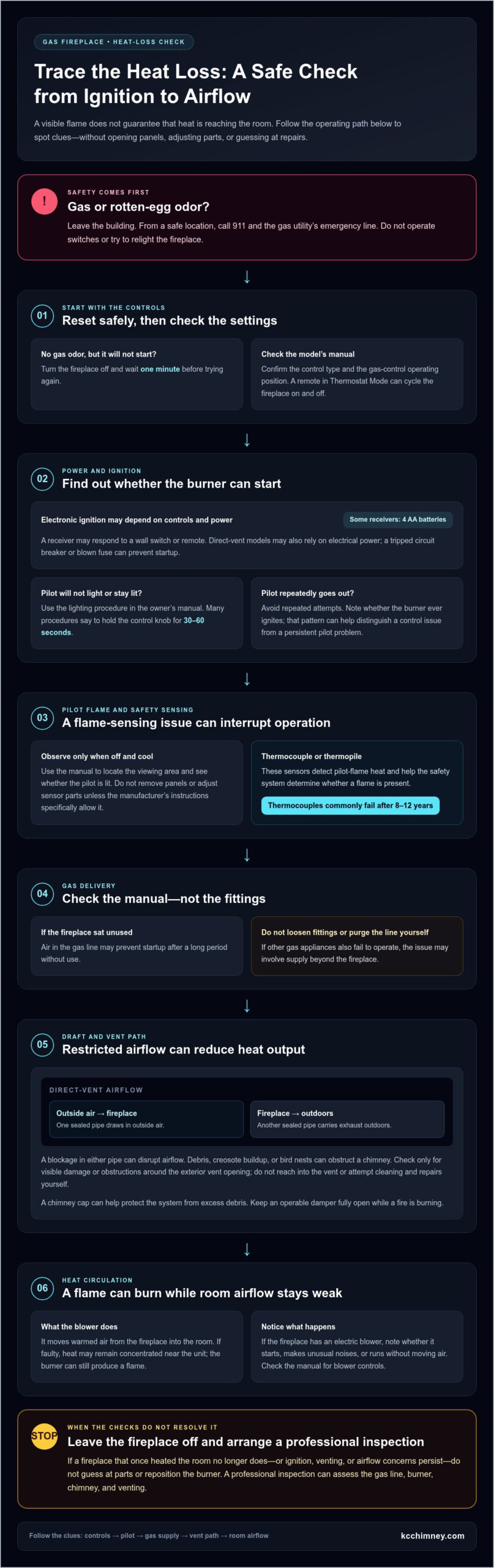
A gas fireplace can produce a flame without warming the room. If your gas fireplace is not producing heat in Bucyrus, the cause may be an ignition failure, a pilot-light problem, poor draft, or restricted airflow. Direct-vent models use sealed pipes to draw in outside air and carry exhaust outdoors, so ignition or venting trouble can affect performance.
It’s frustrating when a fireplace leaves the room chilly instead of comfortable. Understanding how the burner, pilot light, and venting work together can help you identify why heat output has dropped and when continued use may be unsafe. This article covers how gas fireplaces work, common ignition and airflow problems, and what a professional inspection can reveal, so you can make an informed decision about restoring warmth.
Key Takeaways
- If you smell gas or rotten eggs, leave the building and call 911 and the gas utility’s emergency line from a safe location.
- Before troubleshooting, turn the fireplace off and allow a minute before trying to restart it.
- A pilot that won’t stay lit may point to a problem with the flame-sensing safety components, not just the ignition control.
- Keep the fireplace’s vent path clear; debris or a blocked chimney can interfere with airflow and reduce heat output.
Why is my fireplace not producing any heat?
A fireplace can show a flame yet provide little heat. The burner may not be working properly, airflow may be restricted, or the unit may be decorative rather than designed to heat a room. A remote set to Thermostat Mode can also make the fireplace cycle on and off. If a fireplace that once heated the room no longer does, stop using it until its gas line and chimney have been professionally inspected.
Take safety concerns seriously. If you smell gas or rotten eggs, leave the building and call 911 and the gas utility’s emergency line from a safe location. Don’t operate switches or try to relight the fireplace. A gas odor can indicate a leak that needs attention from a qualified technician. If there’s no gas odor but the fireplace won’t start, turn it off and wait a minute before trying again.
Check the damper only if your fireplace has an operable one. Keep it fully open while a fire is burning; closing it can trap combustion products, including carbon monoxide, indoors. Traditional wood-burning fireplaces may have a manually operated damper, while gas models use different vent designs. Don’t assume their controls work the same way. For a ventless fireplace, use a carbon monoxide detector nearby. Ventless models draw indoor air and release emissions into the room; built-in oxygen depletion sensors shut the fireplace off if oxygen levels fall too low.
The International Residential Code and International Fuel Gas Code provide regulations for installing residential gas fireplaces. For a repair in Bucyrus, Kansas, whether a permit applies depends on the work and local requirements. Those installation codes alone don’t establish permit rules for every repair. NFPA 211 covers standards for chimneys, fireplaces, and vents, so vent condition remains part of the safety picture.
Before restarting the fireplace, note what changed: a remote setting, an extinguished pilot, or a blocked vent path can affect operation. Don’t replace parts or reposition the burner based on guesswork. Debris can restrict a chimney, while poor airflow can interfere with venting. If the fireplace still doesn’t heat after basic control checks, leave it off and arrange a professional inspection.
Fireplace ignition and power problems
Problems with ignition, electrical power, or gas delivery can keep a fireplace from producing heat. A fault in any of these can prevent ignition or interrupt operation.
Gas Fireplace Operation and Ignition
Ignition starts the burner, while the fireplace’s controls regulate gas flow and keep the flame operating. In electronic models, a receiver responds to a wall switch or remote; some receiver boxes use 4 AA batteries. Direct-vent models may also depend on electrical power, so a tripped circuit breaker or blown fuse can prevent startup. Check the owner’s manual for the model’s control type before interpreting a failed ignition as a gas problem.
Pilot Light and Ignition Problems
A pilot light provides a small flame that can ignite the main burner. If it won’t light or stay lit, the fireplace may not produce heat even when the remote or wall control calls for operation. Follow the lighting procedure in the owner’s manual; many procedures require holding the control knob for 30-60 seconds. If the pilot repeatedly goes out, avoid repeated attempts and note whether the burner ever ignites. That pattern helps distinguish a control issue from a persistent pilot problem.
Checking the Pilot Light and Thermocouple
A thermocouple or thermopile senses heat from the pilot flame and helps the safety system determine whether a flame is present. With the fireplace off and cool, use the manual to locate the viewing area and observe whether the pilot is lit. Don’t remove panels or adjust sensor parts unless the manufacturer’s instructions specifically allow it. Thermocouples commonly fail after 8 to 12 years of use, so an older unit with a pilot that won’t stay lit may need professional diagnosis.
Checking the Gas Supply
Confirm the fireplace’s gas control is set to the operating position described in its manual. If the unit sat unused for a long period, air in the gas line may prevent startup. Don’t loosen fittings or attempt to purge the line yourself. If other gas appliances also fail to operate, the issue may involve supply beyond the fireplace. For persistent ignition or venting concerns, a professional chimney and venting assessment can help identify the source.
Poor draft and restricted airflow
Yes. A dirty burner, blocked vent, or faulty blower can reduce the heat reaching the room. Each affects a different part of the fireplace’s operation, so the flame’s appearance alone doesn’t show whether heat is circulating properly.
Dirty Burners and Blocked Vents
A dirty burner can interfere with combustion, while an obstructed vent can restrict airflow and exhaust. Either problem may reduce heat even when the fireplace appears to work. Debris, creosote buildup, and bird nests can block a chimney and limit heat output. Keep the damper fully open while the fireplace is in use, and don’t reach into the vent to remove an obstruction.
Direct-vent fireplaces use sealed pipes: one draws in outside air, and another carries exhaust outdoors. A blockage affecting either pipe can disrupt airflow. Check for visible damage or obstructions around the exterior vent opening, but leave cleaning and repairs to a qualified professional. A chimney cap can help protect the system from excess debris.
Faulty Blower Effects
A blower moves warmed air from the fireplace into the room, so a faulty fan can leave heat concentrated near the unit. The burner may still produce a flame, but weak or absent airflow can make the room feel colder. Some fireplace inserts use fans to improve circulation; consult the manual to see whether your fireplace has a blower and how its controls work.
If the blower is electric, note whether it starts, makes unusual noises, or runs without moving air. Don’t assume every fireplace has a fan or that a blower fault explains every drop in heat. A gas line, burner, vent obstruction, or fan problem each calls for a different diagnosis. Avoid removing panels or changing the burner position unless the manufacturer’s instructions say to.
For an existing fireplace, note whether the flame looks different, the vent path appears obstructed, or the blower behaves unusually. These details can help distinguish restricted venting from poor heat circulation. If soot appears or the fireplace continues to produce little heat, stop using it and arrange a professional inspection before attempting an upgrade or replacing parts.
How do I check the pilot light, thermocouple, and gas supply on a gas fireplace?
Start with the manufacturer’s manual and observe the fireplace without removing panels or handling gas fittings. The pilot flame, safety sensors, and gas supply work together; a fault in any one can stop the main burner from lighting or staying on. Using the normal control, note what happens, such as whether the pilot appears or the burner briefly ignites.
With the fireplace off and cool, use the manual to locate the pilot-light viewing area. If the pilot is out, follow only the relighting instructions for that model. A pilot that lights but repeatedly goes out needs diagnosis, not repeated relighting attempts. Don’t use a match or other ignition method unless the manufacturer’s instructions explicitly direct you to.
A thermocouple or thermopile is a safety sensor that detects heat from a flame. Observe its position through the viewing area, if visible, but don’t bend, clean, or reposition the sensor. A pilot flame that doesn’t reach the sensor may fail to keep the gas valve open. Thermocouple problems can occur over time, and recurring symptoms can help guide professional diagnosis.
For the gas supply, check the fireplace’s control position against the manual. If the appliance has been unused for a long time, air in the gas line can prevent ignition. Don’t disconnect the line or try to purge it yourself. If the pilot won’t stay lit, the burner won’t ignite, or the gas control behaves unexpectedly, stop troubleshooting and leave the unit off. These symptoms can involve the gas valve, sensor, or supply, which require proper testing.
If the problem may involve the chimney or venting, arrange a professional chimney inspection to assess that part of the system.
Best Chimney Services: Chimney Sweeping
Best Chimney Services provides chimney sweeping when debris or buildup may be restricting airflow around your fireplace. A chimney inspection can help identify whether the vent path needs attention, while chimney relining can address a liner that needs replacement. These services are relevant when the heat problem points to the venting or chimney, rather than a pilot-light or ignition fault.
If your existing fireplace no longer meets your heating needs, a gas fireplace insert may be another option. The right next step depends on the cause, so don’t use a fireplace that has stopped working properly until it has been assessed.
Contact Best Chimney Services to discuss your fireplace and chimney concerns.
Make the Next Step a Clear One
If your gas fireplace is not producing heat in Bucyrus, treat the change as useful information, not a reason to keep adjusting the controls. Before an inspection, note when the problem began, whether it followed a period of nonuse, and what happens when you switch the unit on. These details can help narrow down whether the appliance, vent path, or another part of the system needs attention.
Leave the fireplace off if it behaves abnormally or you notice a gas odor. For chimney-related concerns, Best Chimney Services can assess the system and discuss an appropriate next step. A clear diagnosis helps you decide how to restore dependable comfort without guessing at parts or adjustments.
Contact Best Chimney Services to discuss your fireplace concerns. With the right information and a careful assessment, you can move toward a safer, more comfortable home.
Frequently Asked Questions
How can I troubleshoot problems with my gas fireplace?
Start with the control settings and the model’s owner’s manual, then note exactly what happens. Does the fireplace fail to ignite, shut off, or maintain a flame without warming the room? Check battery-powered controls and visible vent openings without removing panels. Compare your observations with the manual, and stop troubleshooting if you see soot, damaged venting, or other signs of unsafe operation.
When Do You Need to Call a Professional?
Call a professional if the pilot repeatedly goes out, the burner behaves unpredictably, or visible soot appears. A technician can assess parts homeowners shouldn’t disassemble, including gas controls and internal safety sensors. Have the venting inspected if you notice damage or suspect an obstruction. If you smell gas, leave the building and contact emergency services and the gas utility from a safe location.
Why Isn’t My Fireplace Heating Well?
A fireplace may be working as designed but still provide too little heat for the room. Some decorative models aren’t intended to heat, and a unit can be undersized for the space. A typical gas fireplace produces about 20,000 to 40,000 BTUs per hour, but useful warmth also depends on room conditions and the appliance’s design. Check the manual for the model’s intended use and output.
Why is my pilot light not staying lit?
A pilot that goes out can signal a problem with the flame-sensing safety system, pilot assembly, or gas supply. Note whether it goes out immediately or stays lit until the main burner tries to start; this can help a technician narrow down the cause. Follow the manufacturer’s lighting instructions, but don’t repeatedly relight a pilot that won’t stay on or try to adjust internal parts.
Why is my gas fireplace not producing heat?
A gas fireplace not producing heat in Bucyrus may have an ignition fault, restricted venting, or a mismatch between the unit and its heating needs. First distinguish a burner that never lights from a steady flame that fails to warm the room. The first may point to ignition or fuel delivery; the second could relate to the appliance’s design, room size, or heat circulation. The owner’s manual can clarify the unit’s intended heating role.