
A Mission Hills chimney inspection for insurance renewal should begin with a professional inspection at least once per year. Some home insurance policies also require annual inspection certification to maintain coverage. An inspection can identify issues that affect safe fireplace use, but it does not replace your policy’s specific requirements.
Before using your fireplace, it makes sense to want clear evidence of the chimney’s condition and upkeep records for renewal. Inspection reports, maintenance receipts, and repair details can help show how the system has been cared for if your insurer asks about it.
This guide explains how annual inspections, inspection levels, and video scans relate to insurance renewals and claims. You’ll also learn which records to keep, what signs need attention, and how an inspection can help you understand your chimney’s condition before fireplace season.
Key Takeaways
- Read your policy’s inspection and certification terms so you know what documentation is needed for renewal.
- Keep inspection, cleaning, and repair records together, and document visible damage with notes and photographs.
- Understand how ongoing upkeep and sudden damage can affect a chimney claim, and review your policy’s exclusions.
- Arrange a professional inspection when you need a clearer view of chimney condition, maintenance needs, or possible repairs.
Insurance renewal and annual inspection certification
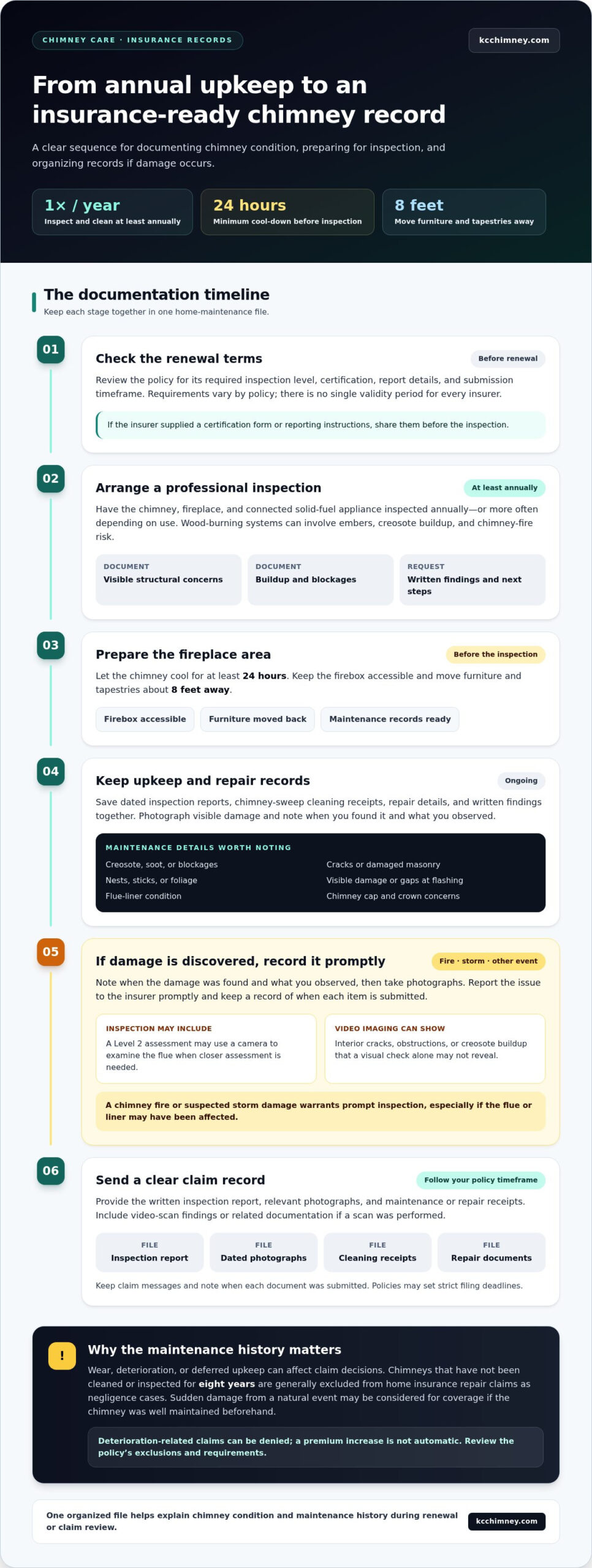
An annual chimney inspection can document your fireplace’s condition and maintenance for insurance renewal. Some policies require annual inspection certification to maintain coverage, so review your renewal terms and keep the report with your home records.
Annual Inspection Recommendations
Have your chimney, fireplace, and connected solid-fuel appliance inspected annually, or more often depending on use. Wood-burning systems can involve added concerns, including embers, creosote buildup, and chimney-fire risk. Ask for visible structural concerns, buildup, and blockages to be documented. Arrange repairs if the findings identify a problem. Addressing issues early can limit further deterioration and support safe fireplace use.
Inspection Certification and Report Validity
The inspection type your insurer requires depends on its policy terms and your chimney’s condition. Read the renewal request for the required inspection level and report details, then arrange an inspection that addresses them. If the policy calls for an annual inspection, keep the report from that inspection cycle and submit it within the insurer’s stated renewal timeframe. There is no single validity period for every insurer or policy.
In Mission Hills, Kansas, whether chimney repairs require a permit depends on the scope of work and local requirements. Before work begins, identify the local building authority and determine whether the specific repair needs a permit. An inspection and a repair are separate activities, so assess permit requirements for the work being done.
Finding a Certified Local Inspector
Look for a chimney inspector serving Mission Hills with relevant industry credentials, such as CSIA certification, and experience assessing fireplaces and flues. Request a written report identifying the components inspected, observed defects, and recommended next steps. If your insurer provided a certification form or reporting instructions, share them before the inspection so the report can address the renewal request.
Chimney inspections and video scans for insurance claims
A thorough chimney assessment can help document damage after a chimney fire, storm, or other event. Insurers may request inspection, cleaning, and repair records when reviewing a claim.
After discovering damage, note when you found it and what you observed, then take photographs. Report the issue to your insurer promptly and save claim messages, inspection reports, receipts, and repair documents. Policies may set strict filing deadlines, so follow your policy’s timeframe and keep a record of when you submitted each item.
Give the insurer the written inspection report, relevant photographs, and maintenance or repair receipts. If a video scan was performed, include its findings or related documentation. Ask for the report to identify the areas examined, observed damage, and recommended repairs, giving the adjuster a clear record to review.
Video imaging can help show the flue’s interior condition, where a visual check alone may not reveal cracks, obstructions, or creosote buildup. A Level 2 inspection may include camera examination when a chimney problem or damage needs closer assessment. A chimney fire or suspected storm damage warrants prompt inspection, especially if the flue or liner may have been affected.
- Cracks or damaged masonry can indicate deterioration.
- A poor flue-liner condition may signal added risk.
- Soot, creosote, or a blockage can point to inadequate cleaning or a hazard.
These findings may draw insurer scrutiny, and claims related to deterioration can be denied. They can also affect renewal decisions; a premium increase is not automatic. For a clearer record of flue condition, a video chimney inspection can document areas that need attention. Keep the annual chimney inspection and chimney sweep cleaning records together, along with dated photos and repair receipts. A complete file makes it easier to explain the system’s condition and maintenance history during a claim review.
Chimney maintenance and insurance claims
Homeowners can prepare a fireplace for an insurance inspection by keeping the firebox accessible, moving furniture and tapestries about 8 feet away, and letting the chimney cool for at least 24 hours. Gather maintenance receipts and inspection reports so the inspector can compare the chimney’s condition with its service history.
Regular cleaning and inspection can identify creosote buildup, blockages, and structural concerns before they worsen. Creosote and obstructions can contribute to chimney fires, while cracks or chips in brick or mortar may indicate masonry that needs attention. Arrange chimney cleaning at least once per year to reduce creosote-related fire hazards, and keep records of each cleaning and repair.
Debris can restrict draft or create a hazard. Nests, animal droppings, sticks, and foliage may obstruct the chimney and increase smoke or fire risks. A chimney cap helps keep leaves, twigs, and small animals out, while the crown helps limit water infiltration. Flashing seals the joint between the chimney and roof, so note visible damage or gaps for assessment. Exterior restoration specialists like Royalty Construction often emphasize that maintaining intact flashing and seals around roof penetrations is essential to prevent costly water intrusion.
Maintenance records matter when an insurer reviews a chimney claim. Insurers may request inspection, chimney-sweep, or repair records after a chimney fire or smoke-damage incident. Keep dated receipts, written findings, and repair details together. Photograph visible damage and note when you found it and what you observed.
Neglect and deferred maintenance can affect claim decisions. Insurance may not cover damage caused by wear, deterioration, or upkeep that could reasonably have prevented the problem. Chimneys that have not been cleaned or inspected for eight years are generally excluded from home insurance repair claims as negligence cases. Sudden damage is different: a natural event may be considered for coverage if the chimney was well maintained beforehand.
Burning paper, treated wood, or other foreign materials can produce soot and creosote, increasing flare-up risks. Use suitable fuel, keep annual maintenance records, and promptly address visible masonry damage or missing protection. A clear maintenance history helps document how the chimney was cared for before an incident.
Chimney inspections and insurance coverage or renewal
Inspection and maintenance records can inform renewal decisions and claim reviews. Coverage depends on the policy, the cause of damage, and the chimney’s upkeep.
Routine Inspection Coverage
Homeowners insurance usually does not cover routine chimney inspections because they are preventive maintenance, not damage repairs. Treat an inspection report as a record of the chimney’s condition, rather than an insurance benefit. At renewal, compare your insurer’s documentation request with the report’s findings, such as creosote buildup, liner condition, and visible structural damage. Addressing identified hazards can support safe use and document maintenance.
Maintenance and Policy Coverage
Maintenance history can affect how an insurer assesses chimney damage. Policies generally exclude repairs caused by wear and tear, gradual deterioration, or neglect that reasonable upkeep could prevent. Sudden, unexpected damage from a covered event may qualify, depending on the policy and circumstances. Keep dated inspection and repair records to show what was maintained before damage occurred.
Common wear-related repairs include work on deteriorating masonry or a cracked crown. These problems are usually considered gradual and preventable, rather than sudden insured damage. A leak after severe weather may be assessed differently from one caused by a missing or damaged chimney cap, which is why contractors like Higher Levels Roofing recommend thoroughly inspecting roof transitions and flashing after storms. The cause, prior condition, and policy language all matter.
Review your policy’s chimney-related exclusions, coverage limits, and deductible before renewal. Check how it describes damage from chimney fires, lightning, hail, storms, or falling trees. Standard homeowners policies generally cover sudden, accidental damage from such events, subject to policy terms. They generally exclude deterioration from age, lack of maintenance, and preventable moisture buildup.
Separate maintenance needs from claim-related damage in your records. Keep inspection findings, repair receipts, and dated photographs together, especially after weather damage. If an inspection identifies a damaged crown, arrange chimney crown repair to address the issue and document the work. Clear records help explain the chimney’s condition when renewal or a claim is reviewed.
Best Chimney Services: Chimney Sweeping
Best Chimney Services provides chimney sweeping to help homeowners address soot, creosote, and other chimney buildup. If an inspection identifies deposits or a need for cleaning, sweeping is a practical maintenance step before continued fireplace use. Keep the service record with your other chimney documents to maintain an organized home maintenance history.
Cleaning does not replace an inspection or repair when the chimney has structural damage, a compromised liner, or a damaged crown. Chimney relining and crown repair address different needs when those issues are identified. Match the next step to the reported condition to keep maintenance focused and useful.
For help with chimney sweeping, contact Best Chimney Services.
Take the Next Step Toward a Well-Cared-For Fireplace
A Mission Hills chimney inspection for insurance renewal can also help you plan the next maintenance step. Use the findings to decide whether cleaning, addressing a liner concern, or changing your fireplace setup is the priority. Your insurer’s policy guides coverage, while clear records help keep your home maintenance organized.
Best Chimney Services offers chimney sweeping and chimney relining, as well as gas fireplace inserts for homeowners considering a different fireplace setup. Choose the service that fits your home’s needs, and keep the resulting documentation with your maintenance records.
Contact Best Chimney Services today to discuss your chimney needs. A clear next step can help you care for your fireplace with greater confidence.
Frequently Asked Questions
How Do I Know If My Chimney Is Safe To Use?
You cannot confirm safe operation from the fireplace’s appearance alone. A professional inspection assesses accessible components and the flue. Watch for smoke backing into the room, visible masonry cracks, loose debris, or a damaged liner. If you notice a new problem after a storm or chimney fire, stop using the fireplace until the system has been assessed and the cause addressed.
What Happens if Issues Are Found During the Inspection?
The inspector documents the observed condition and explains which findings need repair, cleaning, or further evaluation. For example, creosote buildup may call for cleaning, while a suspected concealed hazard may require a more comprehensive inspection. Keep the written findings and any repair records together. The report helps you understand the next steps and provides a clear record for your home files.
What Is a Chimney Inspection?
A chimney inspection assesses the fireplace and chimney system for damage, obstructions, and conditions that could affect operation. The scope depends on the inspection level and reason for the visit. A basic inspection examines readily accessible, visible components; a camera scan can help assess areas inside the flue that are difficult to view directly.
Do insurance companies require a chimney inspection for policy renewal in Mission Hills, Kansas?
Insurance requirements depend on the policy, and some insurers require annual chimney inspection certification to maintain coverage. For a Mission Hills chimney inspection for insurance renewal, review your policy’s renewal notice for the requested inspection type, certification, and report details. Keep the completed report with your home records so you can provide the documentation your insurer requests.
What does a Level 1, Level 2, or Level 3 chimney inspection include?
A Level 1 inspection covers readily accessible, visible parts of the chimney and fireplace. A Level 2 inspection provides a more in-depth assessment and may use a camera to examine flue integrity and creosote buildup; it’s called for after significant system changes or reported damage. A Level 3 inspection is the most comprehensive and examines concealed areas to investigate known or suspected problems.
What steps should I take if the inspection finds chimney damage or needed repairs?
First, review the written findings and photographs to understand which components are affected. Note when you discovered the damage, take your own dated photos, and promptly report the issue to your insurer if you plan to file a claim. Save communications, inspection records, and repair paperwork, and use your policy’s filing timeframe to guide your submission.