
The custom option isn’t automatically the right one. In the custom chimney cap vs prefabricated Bucyrus decision, the best fit depends on your chimney’s dimensions, the coverage you need, and the condition of the flue and crown. A practical comparison starts with the structure itself, not the cap’s label.
This guide compares custom and prefabricated caps by fit, coverage, and installation considerations. You’ll learn which measurements and visible signs of wear matter, how to tell a cap-fit question from a repair concern, and when an inspection can help clarify the chimney’s condition before installation.
For Bucyrus homeowners, a professional assessment can connect the cap choice to the chimney itself. Best Chimney Services LLC provides chimney cap installation and custom chimney cover installation, along with inspection and repair services. Our CSIA-certified technicians follow NFPA standards and can help you identify a practical next step for your home in Bucyrus, Overland Park, Mission Hills, Stilwell, or Spring Hill.
Key Takeaways
- Choose a chimney cap based on the flue opening, chimney configuration, and the coverage your home needs, not simply whether it’s custom or prefabricated.
- A prefabricated cap may suit a chimney when its dimensions and configuration align; a custom cap can be configured for specific dimensions and coverage needs.
- Separate cap-fit questions from chimney-condition concerns. Cracked masonry or a damaged crown may need attention as part of the decision.
- Use this custom chimney cap vs prefabricated Bucyrus comparison to identify the measurements and condition details that can guide your choice.
- Best Chimney Services LLC offers chimney cap installation and custom chimney cover installation, with inspection services to help inform the next step.
Custom vs. Prefabricated Chimney Caps: What Each Option Covers
A chimney cap sits over a flue opening or chimney opening, creating a barrier between the passage and the outdoors while leaving a path for exhaust to exit. The cap’s size and placement determine which area it covers. A cap designed for one flue may cover only that opening, while a broader cover can extend across more of the chimney crown. For a helpful overview of chimney structure and function, consider how the flue, crown, and exterior chimney work together.
In Bucyrus, the choice between a custom and prefabricated cap starts with the chimney’s layout. The flue opening, crown shape, number of flues, and visible condition all affect the options. A cap can help limit exposure, but it won’t repair a cracked crown or other masonry damage.
What does a chimney cap protect?
A cap helps limit the entry of rain, leaves, and other debris through an open flue. Depending on its design and placement, it can also make it harder for animals to enter. These are protective measures, not a promise that moisture, blockages, or chimney damage can never occur. A cap over an individual flue and a cover extending across more of the crown address different areas. Before choosing, identify which parts of the chimney need coverage.
The crown is the top surface of the masonry around the flue. If it is cracked or deteriorated, adding a cap alone won’t resolve the problem. The chimney may need inspection or crown repair as part of a sound plan. Keeping cap coverage and chimney condition separate helps avoid overlooking damage beneath a new cover.
What makes a chimney cap custom or prefabricated?
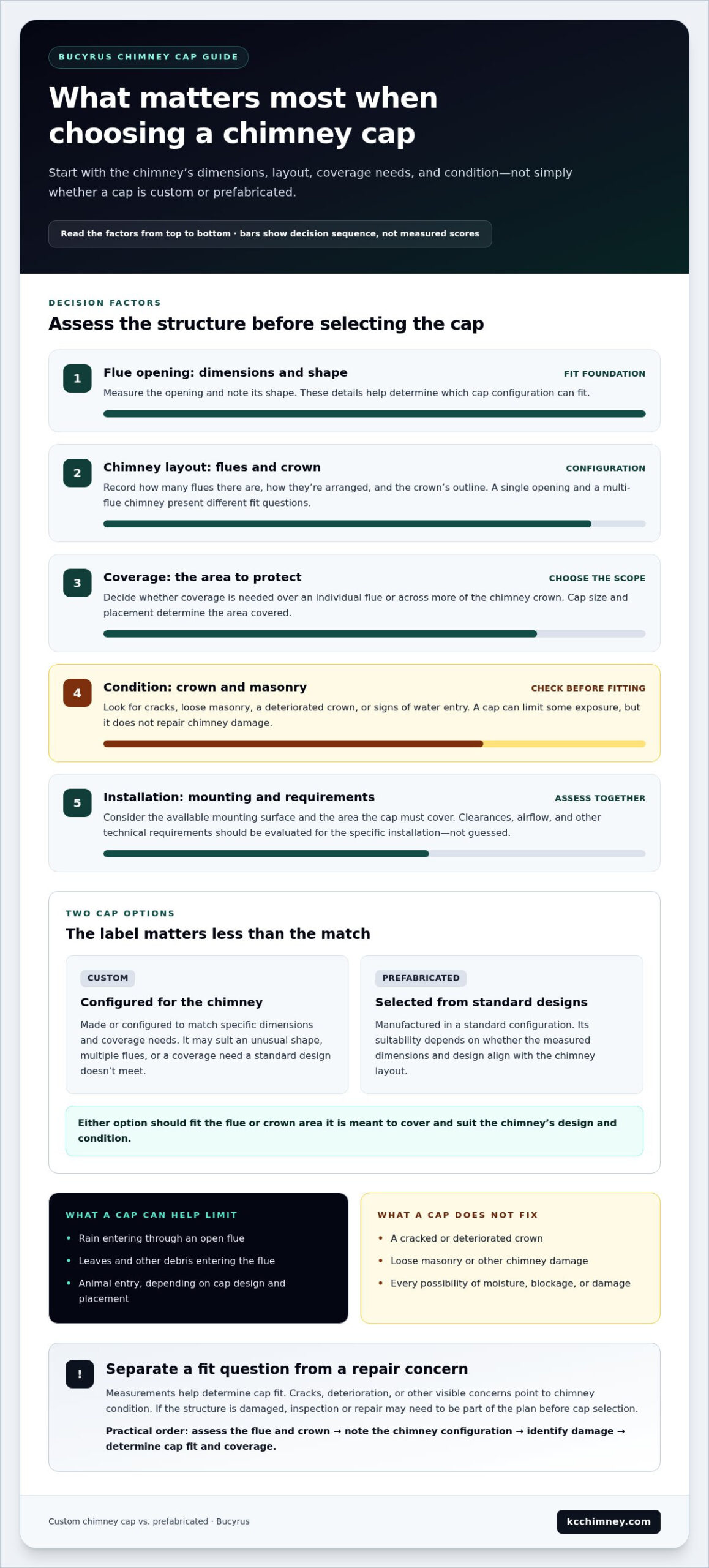
A custom cap is made or configured to match a chimney’s dimensions and coverage needs. It may suit a structure with an unusual shape, multiple flues, or a coverage requirement that a standard design doesn’t meet. A prefabricated cap is manufactured in a standard configuration and selected to fit measured dimensions and the chimney layout. Its suitability depends on whether those measurements and the design align with the actual chimney.
A custom cap is matched to a specific chimney; a prefabricated cap is selected from standard configurations that suit the measured structure. Neither label alone determines protection or appearance. The relevant question in a custom chimney cap vs prefabricated Bucyrus decision is whether the cap fits the flue or crown area it is meant to cover and suits the chimney’s design and condition.
Before choosing either option, separate measurements from repair needs. The opening’s dimensions and the crown’s shape help determine fit; cracks, deterioration, or other visible concerns point to condition. These questions are related but not interchangeable. An inspection can help identify structural or internal concerns that affect the plan, while careful measurement helps determine the appropriate cap configuration. Considering both makes installation a practical step rather than a guess.
How Chimney Design and Condition Affect Cap Fit
A cap needs to suit the chimney it covers. The flue opening, crown outline, and arrangement of one or more flues all influence which configuration may fit. A simple opening presents different fit questions from a chimney with several flues or an irregular crown. For homeowners weighing the custom chimney cap vs prefabricated Bucyrus options, these details are more useful than the product label alone.
Which measurements and structural details matter?
Start with the chimney’s layout, then consider where the cap will sit and what area it needs to cover. A professional assessment can document the features that affect fit and coverage. Useful details include:
- The flue opening’s dimensions and shape.
- The number of flues and how they’re arranged.
- The crown’s outline and the condition of its surface.
- The available mounting surface and the area the cap is intended to cover.
Measurements alone don’t settle every question. The cap’s configuration and installation requirements must also suit the chimney and the appliance it serves. Clearances, airflow, and other technical requirements should be evaluated against reliable guidance for the specific installation, not guessed from a general rule. A professional fit assessment connects the measurements with the chimney’s layout and condition, rather than relying on appearance or approximate dimensions.
When should chimney condition come before cap selection?
Look beyond the opening. Visible cracks, loose masonry, a deteriorated crown, or signs of water entry can indicate a condition issue that a new cap won’t fix. A cap may limit some exposure, but it isn’t a substitute for repairing damaged masonry or a failing crown. Assess the structure before deciding whether the priority is cap installation, repair, or both.
An inspection helps distinguish a cap-fit concern from a repair need. For example, a cap that appears misaligned may not be the only issue if the surface beneath it is cracked or unstable. Best Chimney Services LLC provides chimney inspections and crown repair, helping homeowners understand the chimney’s condition before settling on a cap plan. A Kansas City chimney repair guide also outlines why visible masonry concerns deserve attention.
For Bucyrus homeowners, the practical sequence is to assess the flue and crown, note the chimney configuration, and identify damage before selecting a cap. If the structure is sound, measured dimensions and coverage needs can guide the choice between a suitable prefabricated configuration and a custom design. If there’s deterioration, include that condition in the plan. This approach aligns cap installation with the chimney’s needs instead of treating every structure as though it were built the same way.
Custom vs. Prefabricated Chimney Caps: Compare Fit, Coverage, and Use
Both options can be appropriate, but they address the fit question differently. A prefabricated cap comes in a standard configuration and may suit a chimney when its measured opening and layout align with that design. A custom cap is made or configured for an individual chimney, which can address unusual dimensions or coverage needs. Neither type is automatically the better choice for every home.
Fit
Prefabricated: May fit when the measured opening and chimney arrangement match an available configuration.
Custom: Designed around the dimensions and configuration of a specific chimney.
Coverage
Prefabricated: Coverage depends on the selected cap’s intended placement and how it suits the structure.
Custom: Can be configured for the coverage the chimney requires, including broader coverage where appropriate.
Customization
Prefabricated: Selected from standard designs rather than tailored to one chimney.
Custom: Offers a design matched to the individual structure and its needs.
Visual integration
Prefabricated: Its appearance depends on the standard design and how it sits on the chimney.
Custom: Can be planned to suit the chimney’s outline and overall appearance.
Assessment needs
Both: Require attention to dimensions, placement, chimney configuration, and condition before installation.
When might a prefabricated cap be suitable?
A prefabricated option may be suitable when the flue opening and chimney configuration are straightforward and align with an available cap design. For example, a measured opening and uncomplicated mounting area may make it easier to identify a suitable standard configuration. Confirm that the cap’s intended placement and coverage match the chimney before installation. A size that looks close is not the same as a verified fit.
Installation requirements matter, too. The cap must be appropriate for the particular chimney and appliance, so fit shouldn’t be judged by dimensions alone. A professional assessment can connect the measurements with the structure and its condition.
When might a custom cap be worth considering?
A custom cap may make sense when a chimney has unusual dimensions, a distinctive crown outline, multiple flues, or a need for coverage beyond an individual flue opening. Its design can be tailored to the chimney rather than selected from standard configurations. That doesn’t make custom the automatic answer: the chimney’s condition, intended coverage, and installation requirements still guide the decision.
A custom cap offers a tailored fit for specific chimney needs; a prefabricated cap may suit a structure that aligns with a standard configuration. In the custom chimney cap vs prefabricated Bucyrus decision, start by assessing the actual chimney, then compare how each option fits the project. Best Chimney Services LLC provides chimney cap installation and custom chimney cover installation, with inspection services to inform the choice. For a local assessment, explore chimney cap installation options.
A Homeowner’s Checklist for Choosing a Chimney Cap in Bucyrus
A sound cap decision starts with the chimney, not a product description. In Bucyrus, consider the opening and crown, any visible wear, and the exposure your chimney faces through changing seasons. Use this checklist to organize the details that can guide a custom or prefabricated option. Don’t climb onto the roof or attempt measurements from an unsafe position; a professional can assess areas that aren’t safely visible from the ground.
- Identify the chimney type. Note whether the chimney has one flue or several, where the flues sit, and whether the structure is masonry or another configuration. These details help determine how a cap could fit and where it may need to provide coverage.
- Assess visible condition. From a safe vantage point, look for signs such as cracks, loose masonry, a worn crown, or evidence of water entry. A cap won’t repair an underlying structural issue, so note concerns before focusing on cap style.
- Measure the relevant areas. Record flue dimensions and the crown outline only if they can be measured safely and accurately. Include the mounting surface and any irregular shapes. If roof access is needed, leave the measurements to a trained professional.
- Compare coverage needs. Decide whether the goal is to cover an individual flue or extend coverage across more of the crown. Consider the chimney’s appearance, too, including how a cap would sit against its shape and finish.
- Plan installation. Use the measurements, condition notes, and coverage goal to compare suitable configurations. A professional assessment can also account for installation requirements instead of relying on a visual guess.
How can inspection clarify the decision?
Some concerns are difficult to identify from the ground. A chimney inspection can assess visible structural conditions and help determine whether the issue points to cap fit, crown repair, or another need. Best Chimney Services LLC also uses advanced video inspections to view internal areas of the chimney. That view can add useful information about the flue, but it doesn’t by itself establish every cap measurement or installation requirement. A full assessment brings the internal view together with the chimney’s exterior dimensions and condition.
Seasonal maintenance is a practical time to pay attention to the cap and surrounding structure. Rain, wind, and debris can expose areas that merit a closer look, but visible wear should be evaluated rather than assumed to have one cause. For more on what a professional inspection can cover, see the Kansas City chimney inspection guide.
With the chimney type, condition, measurements, and coverage goal in hand, you can make a more informed custom chimney cap vs prefabricated Bucyrus decision. Best Chimney Services LLC serves Bucyrus homeowners with chimney inspection and cap installation. Schedule a chimney cap assessment to plan a suitable next step.
Chimney Cap Installation and Local Help for Bucyrus Homeowners
Once you’ve considered the chimney’s dimensions, coverage needs, and condition, the next step is an installation plan. Best Chimney Services LLC provides chimney cap installation and custom chimney cover installation for homeowners in Bucyrus and Miami County. A professional assessment connects the cap choice to the structure, so the decision reflects the chimney in front of you rather than a general rule about custom or prefabricated options.
What happens during a professional cap assessment?
The assessment reviews the chimney configuration, the condition of the crown and surrounding masonry, and the area that needs coverage. Technicians can use those details to discuss a suitable cap approach and identify concerns that may call for repair before or alongside installation. For instance, signs of crown deterioration can change the project plan; a cap is not a repair for damaged masonry.
An inspection can also clarify concerns that aren’t easy to assess from the ground. Best Chimney Services’ advanced video inspections allow technicians to view internal areas of the chimney, adding information about its condition. That internal view works alongside an exterior assessment and measurements; it doesn’t determine every cap specification on its own. Routine chimney care can help homeowners keep track of condition over time. The chimney sweeping and maintenance guide offers additional context for ongoing upkeep.
Local experience matters because chimneys vary in layout and condition, even within the same community. Best Chimney Services is locally owned and operated in the Kansas City metro area. Its CSIA-certified technicians follow NFPA standards, bringing established industry guidance to the assessment and installation process. The goal is practical: understand the structure, discuss fit and coverage, and plan work that suits the home.
How can Bucyrus homeowners take the next step?
Bring any observations you’ve made from a safe location, such as visible cracks, water entry, or a cap that appears out of place. You don’t need to climb onto the roof or make measurements from an unsafe position. A professional can assess the chimney, review the coverage you need, and explain whether chimney cap installation or a custom chimney cover is the appropriate path. If the assessment identifies a related repair concern, include it in the discussion before installation is planned.
Best Chimney Services provides transparent pricing with no hidden fees. For Bucyrus homeowners comparing custom chimney cap vs prefabricated Bucyrus options, a direct assessment is a clear way to move from questions to a project plan grounded in fit and condition. Contact Best Chimney Services to discuss chimney cap or custom cover service.
Move Forward With a Cap Plan That Fits Your Home
Your chimney doesn’t need the most customized option by default. It needs a plan that respects its condition and suits the coverage it calls for. With the custom chimney cap vs prefabricated Bucyrus decision, a professional assessment can turn uncertainty into a clear next step, whether that means proceeding with a suitable standard configuration or planning a custom cover.
Best Chimney Services is locally owned and operated in the Kansas City area. Its CSIA-certified technicians follow NFPA standards, and the company’s homepage displays 184 Google reviews. Those details offer useful context as you consider who to trust with an assessment and installation.
Take the next step for your home by sharing what you’ve noticed and discussing your chimney’s fit and coverage needs. Contact Best Chimney Services to talk about chimney cap installation or a custom chimney cover. The company serves homeowners across the Kansas City metro area, including Bucyrus, Overland Park, Mission Hills, Stilwell, and Spring Hill.
Frequently Asked Questions
Is a custom chimney cap better than a prefabricated cap?
Not automatically. The right choice depends on how the cap suits the chimney’s dimensions, crown shape, coverage needs, and condition. In a custom chimney cap vs prefabricated Bucyrus comparison, a standard option may suit a chimney whose measurements and layout align with its design, while a custom cap can address a more specific fit or coverage need. Have the chimney assessed before choosing, especially if you’ve noticed visible wear or damage.
Can a prefabricated chimney cap fit any chimney?
No. A prefabricated cap is designed in a standard configuration, so it shouldn’t be assumed to fit every chimney. Selection depends on the opening’s dimensions, the chimney’s arrangement, and where the cap is intended to sit. A cap that looks close in size may still be unsuitable. Confirm measurements and installation requirements as part of the assessment, rather than relying on appearance or a rough estimate.
What is the difference between a chimney cap and a chimney cover?
A chimney cap commonly describes a component fitted over a flue opening. “Chimney cover” may describe a broader cover for a larger area of the chimney top. Usage can vary, so it helps to specify whether you’re discussing an individual flue or more of the crown. For example, if you’re describing a project, note the area you want covered and the chimney’s configuration so the terms don’t obscure the actual fit question.
Does a chimney cap stop rain from entering the chimney?
A properly selected and installed cap can help limit rain entry, but it can’t be described as preventing every moisture problem. Water may also enter through a damaged crown, flashing, or masonry. If you notice a leak or damp areas near the chimney, don’t assume the cap is the only cause. Have the chimney assessed so the source can be identified and the appropriate repair considered.
Can a chimney cap affect fireplace draft?
A cap needs to be selected and installed with the chimney’s exhaust path in mind. An unsuitable or damaged component may affect operation, though the effect depends on the chimney and appliance. If smoke comes back into the room or the fireplace isn’t drafting as expected, arrange an assessment. Don’t remove or alter the cap yourself, since that won’t establish whether the cap or another part of the system is causing the problem.
When should a chimney cap be replaced?
Arrange an assessment if the cap is missing, visibly damaged, loose, or appears no longer to fit securely. Also note signs such as water entry, debris, or animal access. These clues don’t identify the cause on their own; for instance, water may be related to the crown or masonry rather than the cap. A chimney professional can examine the cap and nearby structure and explain what needs attention.
Does Best Chimney Services install chimney caps in Bucyrus, Kansas?
Yes. Best Chimney Services serves homeowners in Bucyrus and other Kansas communities, including Overland Park, Mission Hills, Stilwell, and Spring Hill. The company provides chimney cap installation and custom chimney cover installation. An assessment can help clarify fit, coverage, and related chimney concerns before work is planned. Pricing is transparent, with no hidden fees, so you can discuss the project with a clearer understanding of the next steps.