
A stainless steel liner can offer real advantages, but it isn’t automatically the right choice for every chimney. For Kansas City homeowners weighing the benefits of a stainless steel chimney liner, the key question is whether the liner suits the flue, fireplace, and fuel-burning appliance. A good match can help contain combustion byproducts, protect masonry from corrosive gases, and support safe chimney operation.
Before agreeing to a relining recommendation, it helps to understand what the work is intended to address. Material durability, maintenance, and safety all matter, and stainless steel is only one approach. Suitability depends on the chimney’s condition and the appliance it serves, so an inspection can help clarify the options for your home.
This guide explains the practical benefits and limits of stainless steel liners, how they compare with other liner materials, and what factors affect the choice. An inspection can reveal details about the flue’s interior condition and help inform a recommendation. Best Chimney Services provides chimney relining and advanced video inspections in the Kansas City area. Its CSIA-certified technicians follow NFPA standards, bringing a careful, local perspective to chimney care. By the end, you’ll have a clearer basis for discussing the right approach for your home.
Key Takeaways
- The benefits of a stainless steel chimney liner can include corrosion resistance and durability, but suitability depends on the relining project.
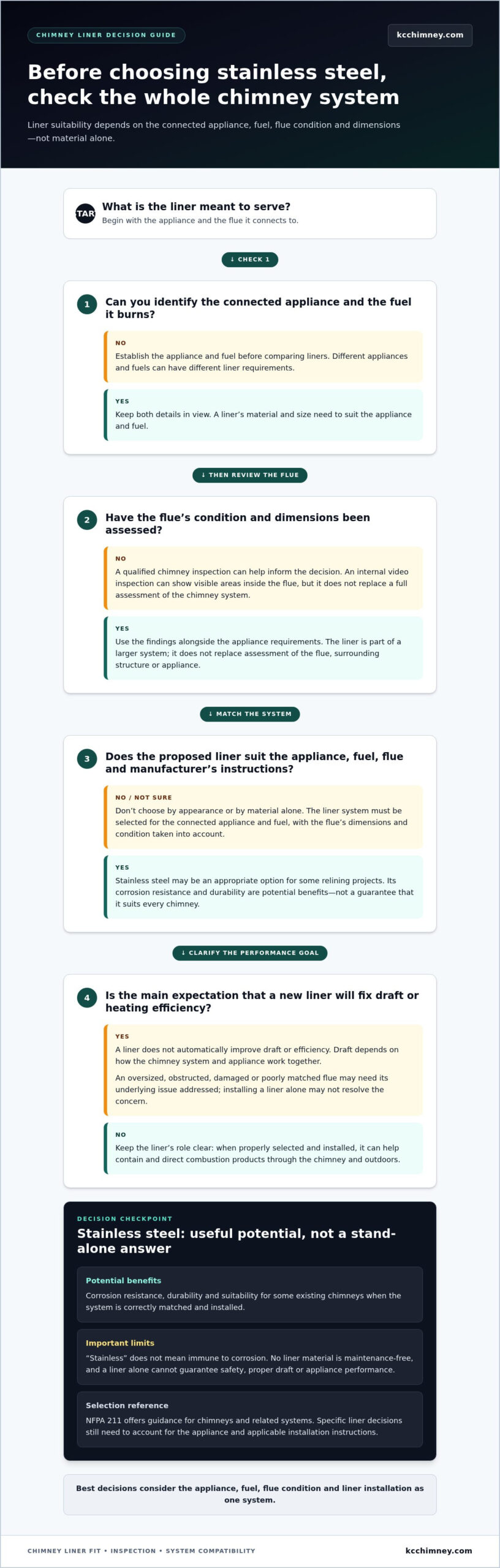
- A properly selected and installed liner can help contain and direct combustion products; it doesn’t automatically improve draft or efficiency.
- Compare liner options by appliance compatibility, flue condition, installation context, and maintenance needs.
- Identify the appliance and review the flue’s condition before settling on a liner approach.
- Best Chimney Services LLC provides chimney relining, chimney repair, and advanced video inspections for Kansas City-area homeowners.
What benefits can a stainless steel chimney liner offer?
A stainless steel chimney liner is a metal passage installed inside a chimney flue to carry combustion products from a fireplace or other connected appliance outdoors. For some relining projects, stainless steel may offer a useful combination of corrosion resistance, durability, and adaptability. The benefits of a stainless steel chimney liner depend on more than the material: correct sizing, installation, appliance and fuel compatibility, and the liner manufacturer’s instructions all matter.
How a liner relates to the chimney flue
The flue is the passage through the chimney that carries smoke and other combustion products away from the appliance. A liner fits within that passage and forms part of the larger chimney system. It can help contain combustion products and limit their contact with the chimney’s masonry, but it doesn’t replace inspection of the flue, surrounding structure, or connected appliance.
A liner’s protective role is to help contain combustion products and shield chimney materials. It doesn’t guarantee safety, proper draft, or appliance performance. An inspection helps assess the system’s actual condition and whether relining is appropriate. For a general overview of chimney construction and liner materials, see Chimney Flue Liners.
Why stainless steel is considered for relining
Stainless steel is valued for its resistance to corrosion, a useful property in a passage exposed to combustion byproducts and changing conditions. But “stainless” doesn’t mean immune to corrosion. The liner’s suitability depends on the material and system selected for the appliance and fuel, as well as how the system is installed and maintained.
Durability is another potential advantage. A properly matched stainless steel liner can be suitable when an existing flue needs relining, including when its condition or configuration makes continued use as-is unsuitable. The material alone, however, can’t determine whether relining is the right remedy. The chimney’s dimensions and condition, the connected appliance, and the manufacturer’s guidance all inform that decision.
- Corrosion resistance: Stainless steel may resist corrosive exposure, but the appropriate liner system must match the appliance and fuel.
- Durability: A well-selected, correctly installed liner may provide a durable flue passage, though no material is maintenance-free.
- Relining suitability: Stainless steel can work for some existing chimneys, but the flue and appliance must be assessed together.
For homeowners, the practical takeaway is to treat material choice as part of a system decision, not a stand-alone upgrade. An inspection can provide a closer look at the flue and help inform a recommendation. Best Chimney Services LLC offers chimney relining and advanced video inspections, with CSIA-certified technicians following National Fire Protection Association standards.
How can a stainless steel liner support chimney safety and performance?
A properly selected and installed liner can help contain combustion products and direct them through the chimney and outdoors. That protective role matters, but a liner alone can’t guarantee safe operation. Its contribution depends on the flue’s condition, a suitable match for the appliance, and installation that follows the liner manufacturer’s guidance.
A liner also doesn’t automatically improve draft or heating efficiency. Draft depends on how the chimney system and appliance work together, among other factors. If a flue is oversized, obstructed, damaged, or poorly matched to the appliance, installing a new liner without addressing the underlying issue may not resolve performance concerns. The chimney’s condition and the appliance’s requirements need to be considered together.
Fit, appliance, and fuel compatibility
Liner size and material must suit the connected appliance and the fuel it burns. A fireplace, wood-burning appliance, or gas insert can have different requirements, so there’s no single liner choice for every chimney. Correct selection also accounts for the flue’s dimensions and condition. Choosing a liner by appearance or general rules alone can miss details that affect system operation.
That’s why liner selection should be guided by a qualified chimney inspection, not a do-it-yourself measurement or material choice. The NFPA 211 Chimney Safety Standards offers guidance for chimneys and related systems. Specific liner decisions still need to account for the appliance and the installation instructions that apply.
What an inspection can clarify
An internal video inspection can give technicians a detailed view of visible areas inside the flue. That view can help document the liner’s or masonry passage’s condition and identify areas that need closer attention. It doesn’t replace a full assessment of the chimney system, and inspection findings don’t guarantee a particular diagnosis. They provide information to support a reasoned recommendation.
A chimney inspection informs liner decisions by documenting visible flue conditions and helping match recommendations to the chimney and connected appliance.
Best Chimney Services’ advanced video inspections bring the inside of the flue into view, while its CSIA-certified technicians follow National Fire Protection Association standards. Homeowners can learn more about chimney relining service and the inspection process. Clear findings help you understand why a liner may be recommended, what the work is intended to address, and whether other chimney repairs are part of the discussion. That practical review is central to weighing the benefits of a stainless steel chimney liner without assuming every home or appliance needs the same solution.
Stainless steel chimney liner compared with other options
Choosing a liner isn’t a contest between materials. It’s a decision about what suits the chimney and the appliance it serves. An existing masonry flue may remain in use if its condition and configuration are appropriate. If relining is being considered, stainless steel and other liner approaches need to be assessed in context. The table below outlines useful comparison points without treating any option as a universal fit.
| Option | Compatibility | Existing flue condition | Installation context | Maintenance needs |
|---|---|---|---|---|
| Stainless steel liner | Must suit the connected appliance and fuel. | May be considered for relining after the flue is assessed. | Fit and installation depend on the chimney and applicable manufacturer guidance. | Continues to need appropriate chimney inspection and maintenance. |
| Existing masonry flue | Its dimensions and condition must be appropriate for the appliance. | Inspection helps determine whether the passage is suitable to keep using. | Assessment considers the current chimney rather than assuming a new liner is needed. | Ongoing inspection and maintenance remain important. |
| Other liner approaches | Compatibility depends on the particular system, appliance, and fuel. | The flue’s condition helps inform whether an approach is suitable. | Installation requirements vary by system and chimney. | Follow the applicable system guidance and maintain the chimney. |
When stainless steel may be a suitable relining approach
Stainless steel may be considered when a chimney needs a new liner and the selected system can be matched to the connected appliance and fuel. For example, a homeowner replacing or changing an appliance should have the flue’s condition and requirements reviewed before choosing a liner. The material’s potential benefits matter only if the full system is appropriate for that specific chimney.
What a fair comparison should leave out
A fair comparison avoids promises of guaranteed energy savings, assumptions about lifespan, or claims that one material is always safer, better, or less expensive. It also separates a material’s properties from the quality of inspection and installation. The Consumer Product Safety Commission’s chimney fire hazard warning discusses creosote risks in metal factory-built chimneys, underscoring that material choice doesn’t remove the need for proper maintenance.
In practice, compare options against the inspection findings, appliance requirements, and guidance that applies to the selected system. A stainless steel liner’s corrosion resistance or durability can be relevant, but those properties don’t determine whether it suits the job on their own. Workmanship and continued chimney care also matter. The benefits of a stainless steel chimney liner are best weighed as part of a project-specific recommendation, not as a stand-alone promise about performance.
What should Kansas City homeowners consider before choosing a liner?
A sound liner decision starts with the chimney and appliance, not with a preferred material. For homeowners in Overland Park, Mission Hills, Stilwell, Bucyrus, Spring Hill, and across the Kansas City area, a straightforward review can clarify whether the existing flue is suitable, needs repair, or may benefit from relining. Keep prior inspection notes and mention concerns such as visible damage, unusual odors, or draft problems. These details can guide an inspection, though they don’t establish a diagnosis on their own.
- Identify the appliance and fuel. Note which fireplace, insert, or other appliance connects to the chimney and what fuel it uses. If you’re changing appliances, include that in the discussion because liner selection needs to account for the connected unit.
- Have the flue inspected. An inspection can document visible conditions inside the chimney and identify findings that may affect liner choices. Advanced video inspection can provide a detailed internal view.
- Review what the inspection shows. Ask how the observed flue and chimney conditions relate to the appliance and any symptoms you’ve noticed. Previous inspection findings can also help show whether a concern is new or has been monitored over time.
- Discuss suitable options. Consider recommendations in light of the inspection, appliance requirements, applicable NFPA standards, and the selected system’s manufacturer guidance. A liner choice should address the project’s conditions, not rely on a one-size-fits-all rule.
Questions an inspection-led decision should answer
Before settling on an approach, make sure the discussion covers three practical points: What does the inspection show about the flue and chimney? Which appliance and fuel will connect to the liner? How do the recommendations align with applicable NFPA standards and manufacturer instructions? Clear answers help explain why a particular option fits the project.
How Kansas weather can shape maintenance planning
Many households use their fireplaces seasonally, so arranging chimney attention before the heating season can leave time to review inspection findings and plan any needed work before regular use begins. That’s a practical scheduling step, not a claim that local weather causes a specific type of chimney damage. Homeowners can also keep track of visible changes, odors, draft concerns, and prior inspection notes throughout the year.
The Chimney Sweep Kansas City: The 2026 Homeowner’s Safety & Maintenance Guide is another resource to keep in mind as you plan routine chimney care. Ultimately, the benefits of a stainless steel chimney liner matter only if that liner suits the inspected flue and connected appliance. Best Chimney Services LLC provides chimney inspection and relining for Kansas City-area homeowners, with CSIA-certified technicians following NFPA standards. Explore chimney inspection and relining services to take the next step toward an inspection-led decision.
How Best Chimney Services approaches stainless steel chimney relining
Best Chimney Services LLC is a locally owned and operated chimney company serving Johnson County, Miami County, and the greater Kansas City metro area. Its work includes chimney relining, chimney repair, and advanced video inspections that provide a detailed internal view of the flue. For homeowners considering a stainless steel liner, the first step is to understand the chimney’s condition and the appliance it serves.
From inspection findings to a relining plan
A relining recommendation should be based on the project, not on an assumption that stainless steel is right for every chimney. CSIA-certified technicians use inspection findings to help explain what’s visible inside the flue and how its condition relates to the connected appliance. The type of appliance and fuel also inform the discussion, along with applicable National Fire Protection Association standards and manufacturer guidance.
This process gives homeowners a chance to understand the reason behind a recommendation before work moves forward. If the inspection identifies a concern, chimney repair may also be relevant to the overall discussion. The inspection doesn’t predetermine a particular liner material or promise a specific outcome. Instead, it helps shape a plan around the actual chimney, appliance, and observed conditions.
Clear communication matters at each stage. You should understand what the inspection revealed, what work is being recommended, and how proposed relining relates to the findings. Best Chimney Services follows NFPA standards and offers transparent pricing with no hidden fees. That straightforward approach keeps the decision grounded in your home’s needs rather than broad claims about any one material.
A local next step for Kansas City homeowners
For residents in Overland Park, Mission Hills, Stilwell, Bucyrus, Spring Hill, and nearby communities, planning chimney attention before regular fireplace use can make it easier to review findings and consider next steps. Best Chimney Services serves homeowners and businesses across Johnson and Miami counties and the greater Kansas City metro area. Whether an inspection raises a liner question or you want to understand the condition of an existing flue, the team can explain the findings and relining approach in clear terms.
The benefits of a stainless steel chimney liner depend on whether the material and liner system fit the specific chimney and appliance. A careful assessment helps distinguish potential material advantages from what the project actually requires. If you’re ready to discuss an inspection or relining, Contact Best Chimney Services or call (816) 805-2271. Share the appliance you use and any concerns you’ve noticed, then discuss an inspection-led path forward without presuming the outcome.
Take the Next Step Toward a Liner That Fits Your Home
Before making a decision, gather a few details that can make a chimney conversation more useful: the appliance connected to the flue, the fuel it uses, any changes you’ve noticed during operation, and notes from past inspections. These details give a professional a starting point for understanding your setup and discussing what an assessment may show. The right choice should be based on your chimney, not on a material’s reputation alone.
The benefits of a stainless steel chimney liner are worth considering when the material suits the flue and appliance. A clear, inspection-led discussion can help you understand the reasoning behind a recommendation and choose a sensible next step for your home. Best Chimney Services’ homepage displays 184 Google reviews from customers across the Kansas City area.
Ready to talk through your chimney relining needs? Contact Best Chimney Services about chimney relining. Call (816) 805-2271 to discuss an inspection and a liner approach suited to your chimney and appliance.
Frequently Asked Questions
What are the main benefits of a stainless steel chimney liner?
Potential benefits include corrosion resistance, durability, and usefulness in some chimney relining projects. These qualities can make stainless steel worth considering, but they don’t establish that it’s the right choice for every home. For an Overland Park fireplace, the liner must be selected and installed to suit the appliance and fuel, and the chimney’s condition must be considered. Those factors shape the practical benefits you can expect.
Is a stainless steel chimney liner right for every fireplace?
No. A liner that suits one fireplace may not fit another chimney or appliance. The existing flue, appliance specifications, fuel, and the liner manufacturer’s guidance all affect the choice. For example, changing from one type of fireplace appliance to another may call for a fresh review of the existing flue. An inspection-led decision helps avoid relying on a general material recommendation or choosing a liner without understanding the setup.
Can a stainless steel liner help protect a chimney flue?
Yes, a properly selected and installed liner can help contain and direct combustion products through the flue. That protective role doesn’t make the chimney maintenance-free or replace repairs if the surrounding structure needs attention. For instance, a liner won’t correct a separate problem such as damaged mortar. Keep up with chimney care and have concerns assessed, rather than assuming a liner prevents every hazard or resolves every flue issue.
How do I know if my chimney needs a new liner?
You can’t reliably determine liner condition from one symptom alone. Smoke backing up, an odor, or a concern noted during earlier chimney work can be reasons to arrange an inspection, but each needs to be considered in context. Best Chimney Services offers advanced video inspections to document visible conditions inside the flue. The findings can help determine whether relining is appropriate, without assuming a diagnosis or repair before the chimney is assessed.
Does a stainless steel chimney liner improve fireplace efficiency?
Not automatically. Fireplace performance depends on the appliance, flue design, liner sizing, installation, and the chimney’s condition. If a homeowner in Mission Hills, Stilwell, Bucyrus, or Spring Hill notices smoke returning to the room, a liner should not be treated as an assumed efficiency fix. An inspection can help connect the concern to the chimney system and appliance requirements, then clarify whether relining addresses the issue being investigated.
How often should a stainless steel chimney liner be inspected?
There isn’t a single liner-specific interval that fits every chimney. Timing depends on fireplace use, the system’s condition, and applicable professional guidance. Best Chimney Services’ supplied guidance for chimney cleaning is: “At least once a year, especially before winter.” Cleaning frequency and inspection needs aren’t identical, so use an inspection to discuss the condition and care needs of your particular chimney and liner.
Who can install a stainless steel chimney liner in the Kansas City area?
Liner work should be assessed and completed by qualified chimney professionals familiar with the appliance and flue. Best Chimney Services serves Johnson and Miami counties and the greater Kansas City metro area, including Overland Park, Mission Hills, Stilwell, Bucyrus, and Spring Hill. Its technicians are CSIA-certified, and the company follows NFPA standards. An inspection can help inform the relining plan before a material or installation approach is selected.