
A chimney can look clean and still be unsafe to use. That’s the central risk behind the dangers of cleaning your own chimney Overland Park homeowners should understand: removing visible soot doesn’t prove the flue is clear, creosote is gone, or the liner is intact. A brush and household tools may seem like a practical way to handle routine maintenance, but they can’t provide a complete view of the chimney’s condition.
Cleaning can involve roof access, falling soot, and deposits that are difficult to remove or assess without specialized equipment. A missed blockage or hidden flue defect can also affect how smoke and combustion gases leave your home. Cleaning what you can see isn’t the same as knowing the chimney is safe.
This article explains common DIY hazards, what you can check safely from the ground or indoors, and when professional sweeping and inspection make sense. It also explains how specialized brushes and video equipment can help reveal concerns inside the flue, so you can choose a sensible next step for your Overland Park home.
Key Takeaways
- The dangers of cleaning your own chimney Overland Park homeowners should consider include roof access, soot exposure, and the risk of overlooking a flue obstruction or defect.
- Use safe, ground-level observations to note visible concerns, but don’t treat them as a substitute for evaluating the chimney’s interior.
- Professional brushes and video inspection equipment can help reveal conditions that a basic visual check may miss.
- If you suspect a blockage, damage, or incomplete cleaning, stop the DIY attempt and don’t light a fire until the chimney has been assessed.
- Professional sweeping and inspection can help clarify the next step for your chimney.
Why DIY Chimney Cleaning Can Put Overland Park Homeowners at Risk
A brush, a ladder, and a free afternoon can seem like a practical way to maintain a fireplace. But removing deposits and evaluating chimney safety are different tasks. A homeowner may loosen material without seeing the full flue or being able to assess its condition. The dangers of cleaning your own chimney Overland Park homeowners should weigh include falls, soot exposure, incomplete cleaning, and damage that goes unnoticed.
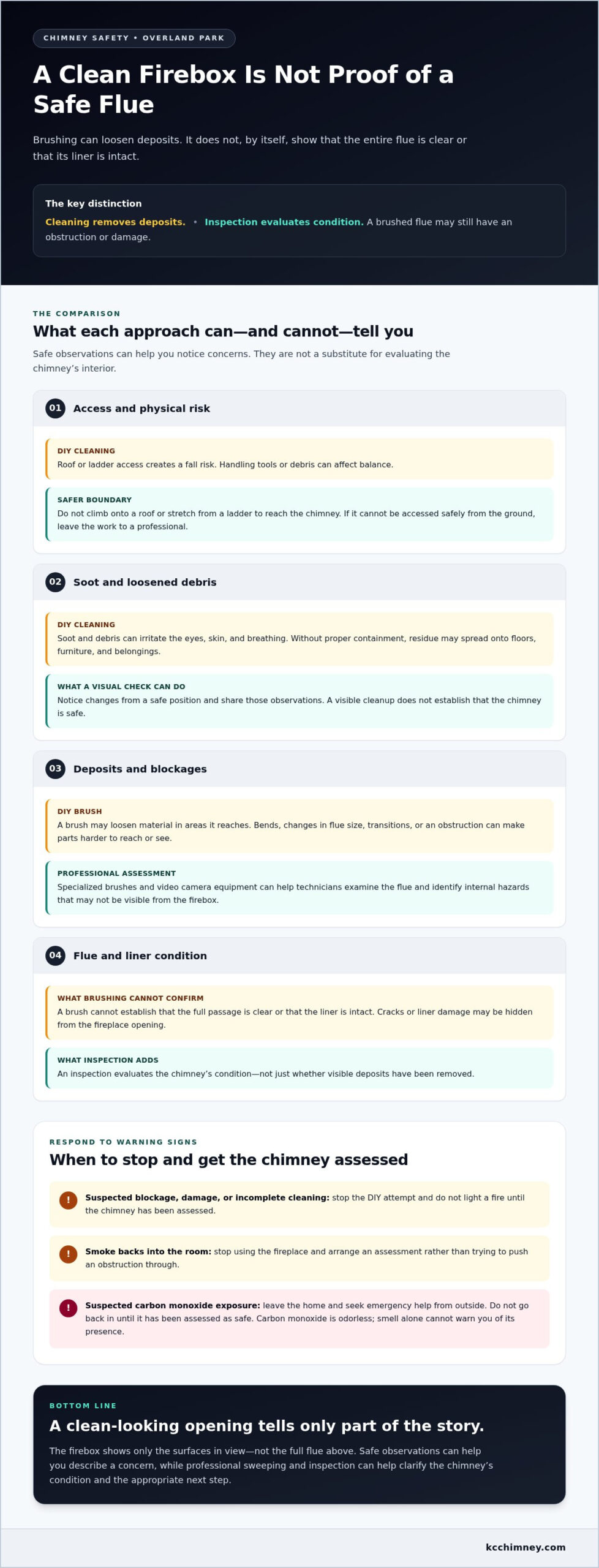
Visible soot removal can’t prove a chimney is safe, because a clean-looking firebox doesn’t reveal every condition inside the flue. Cleaning removes deposits; evaluating whether the system is safe to use also means looking for possible obstructions or defects.
How falls, soot, and debris become real hazards
Roof and ladder access create a fall risk before cleaning even begins. Chimneys can be awkward to reach, and handling tools or debris can affect balance. Don’t climb onto a roof or stretch from a ladder to reach the chimney. If you can’t access it safely from the ground, leave the work to a professional.
Soot and loosened debris can irritate the eyes, skin, and breathing. Without proper containment, fine residue may spread beyond the fireplace and settle on floors, furniture, or household belongings. That increases exposure and can turn a small maintenance task into a difficult cleanup. The historical account of dangers of chimney sweeping also describes health risks associated with the work.
Why a clean-looking fireplace does not prove the flue is safe
The firebox is where you load fuel and view the fire. The flue is the passage that carries smoke and combustion gases out of the home. Looking into the firebox shows only the surfaces in view, not the full passage above. Deposits, debris, or a partial obstruction deeper inside may be difficult to spot from one viewpoint.
A brush can loosen material without showing whether the entire passage is clear or whether the flue is damaged. Less visible soot at the opening doesn’t establish that the chimney is ready for use. A professional inspection can assess less visible conditions, and video camera equipment can help technicians see inside the flue. For more context on thorough cleaning, see this Kansas City chimney sweeping guide.
These risks are separate. Avoiding a fall doesn’t prevent soot from spreading, and removing debris doesn’t reveal a defect. If you can’t safely reach the chimney, contain the mess, or determine whether the flue is clear and intact, stop rather than treating a partial cleanup as proof of safety.
Hidden Chimney Hazards DIY Cleaning May Miss
The flue carries smoke and combustion gases from the fireplace out of the home. A chimney brush can loosen material along the areas it reaches, but brushing alone doesn’t show whether the full flue is clear or in sound condition. The dangers of cleaning your own chimney Overland Park homeowners should consider include hidden conditions that can remain after a DIY sweep.
Cleaning removes deposits; inspection evaluates the chimney’s condition. Both matter because a brushed flue can still contain an obstruction or damage. This doesn’t mean every chimney has a defect. It means appearance alone can’t settle the question.
Creosote, blockages, and incomplete removal
Creosote is a combustible deposit associated with wood-burning. A brush may dislodge some buildup, but the result depends on access and the flue’s interior. Bends, changes in flue size, and other transitions can make areas harder to reach or see. Debris, a lodged object, or another obstruction may also require assessment beyond brushing.
A homeowner may see loosened material fall into the firebox without knowing whether the passage above is clear. Debris can restrict the route smoke and combustion gases need to travel. If smoke backs into the room or you suspect a blockage, stop using the fireplace and arrange an assessment instead of trying to push the obstruction through.
Cracks, damaged liners, and carbon monoxide concerns
Cracks or liner damage may be hidden from the fireplace opening. A brush can’t establish that the liner is intact or show where a defect is and how extensive it is. If smoke or combustion gases don’t vent as intended, a chimney problem can raise concerns about smoke entering the home, fire, or carbon monoxide exposure. These are possible risks, not proof that a particular chimney is unsafe.
Carbon monoxide is odorless, so smell alone can’t warn you of its presence. If you suspect exposure, leave the home and seek emergency help from outside. Don’t go back in until it’s been assessed as safe. For an overview of what a chimney inspection can evaluate, consult this Kansas City chimney inspection guide.
A professional inspection adds an evaluation to the cleaning process. Technicians can use specialized brushes and video camera equipment to examine the flue and identify internal hazards that may not be visible from the firebox. If you’re uncertain about a blockage or possible damage, professional chimney sweeping and inspection can help clarify the system’s condition and the appropriate next step.
DIY Chimney Cleaning vs. Professional Service in Overland Park
You can notice changes and share useful observations without climbing onto the roof or taking chimney components apart. Those checks serve a different purpose from sweeping or inspection. The comparison below shows where a safe visual check ends and specialized cleaning and evaluation begin. Understanding the boundary helps Overland Park homeowners respond to concerns without trying to diagnose the entire system themselves.
| What you’re comparing | Homeowner observation | DIY cleaning | Professional cleaning or inspection |
|---|---|---|---|
| Access | Observe from indoors or ground level. | May require reaching into the firebox or accessing the roof. | Uses specialized tools and trained access practices. |
| Containment | Note visible residue without disturbing it. | Can spread soot and debris if the work area isn’t contained. | Uses cleaning methods and equipment designed for chimney work. |
| Visibility | Limited to areas visible from a safe viewpoint. | A brush can loosen deposits, but doesn’t show every area reached. | Video equipment can help view internal flue conditions where appropriate. |
| Equipment | No cleaning tools needed for basic observation. | Household tools may not suit the flue or reach its full length. | Specialized brushes support cleaning accessible flue areas. |
| Finding defects | May reveal warning signs, not their cause or extent. | Brushing alone can’t evaluate the chimney’s condition. | Inspection findings can identify concerns that need separate repair evaluation. |
What homeowners can check without climbing or dismantling
From a safe location, look for visible debris around the fireplace opening and note whether smoke behavior has changed during use. Pay attention to unusual odors, but remember that odor cannot rule out every hazard. Don’t climb onto the roof, remove chimney parts, or insert tools into the flue to investigate. These observations can help describe a concern, but they don’t confirm that the chimney is clean or safe.
If smoke behaves differently or you notice a concerning change, stop using the fireplace rather than lighting another fire to test it. Even an intermittent problem deserves attention. For more context on sweeping, this Kansas City chimney sweeping guide explains the limits of surface observations.
What professional sweeping and inspection add
Professional chimney sweeping uses specialized brushes to address deposits in accessible flue areas. Inspection adds a separate evaluation. Video camera equipment can help technicians view internal conditions where appropriate, and findings may point to concerns that need further repair evaluation. Cleaning and inspection answer different questions, so one shouldn’t be assumed to replace the other.
The dangers of cleaning your own chimney Overland Park homeowners face are easier to manage when observations stay within safe limits and deeper assessment is left to the right equipment. If you want help moving from a warning sign to a clearer picture of your chimney, consider professional chimney sweeping.
What to Do If You Already Tried Cleaning Your Chimney
A DIY attempt doesn’t mean you’ve caused damage, but pause if you’re unsure what the brush reached or what came loose. If you suspect a flue problem, stop work, stay off the roof, and leave the fireplace unused until the concern is assessed.
Follow these steps in order:
- Stop cleaning and avoid further roof access. Don’t make another attempt to reach the chimney, retrieve tools, or clear a blockage yourself.
- Keep the fireplace unused if cleaning may be incomplete or you suspect damage or an obstruction. Don’t light a fire to test whether the chimney is working.
- Keep people away from the work area. This is especially important if tools are damaged, debris is falling, visibility is poor, you see a crack, or you’ve encountered an unexpected obstruction.
- Respond to urgent warning signs first. If smoke enters a room or you suspect carbon monoxide exposure, leave the home and contact emergency services. Don’t re-enter until it’s been assessed as safe.
- Arrange an appropriate chimney assessment. Describe what you tried and what you noticed so the next step can be based on the circumstances.
When to stop work and keep the fireplace unused
Damaged tools, falling debris, visible cracks, unexpected resistance, or an unclear view are reasons to stop, not push through. Don’t dismantle chimney parts or attempt another climb. If the only issue is loose soot around the fireplace opening, treat it as household surface cleanup only after the work area is safe. That doesn’t tell you whether deposits or debris remain inside the flue.
Smoke in the home or suspected carbon monoxide exposure is different from routine soot. Leave promptly and contact emergency services. Carbon monoxide has no odor, so don’t rely on smell to judge whether exposure is possible. If you’re concerned about the chimney’s condition or the cleaning was unfinished, keep the fireplace off until it’s assessed.
How to arrange a safe next step in Overland Park
When arranging service, share the fireplace type, the tools or method you used, and any warning signs you observed. Mention debris, a possible crack, smoke entering the room, or anything that blocked the brush. These details help a technician understand the situation and evaluate whether sweeping, inspection, or a repair evaluation is appropriate.
An assessment can clarify what the chimney needs, though the right next step depends on what the technician finds. The dangers of cleaning your own chimney Overland Park homeowners face are easier to manage when a questionable DIY attempt ends with an evaluation, not another fire or climb.
Arrange professional chimney sweeping or an inspection to have the flue assessed and determine a safe next step.
Get Professional Chimney Cleaning and Inspection in Overland Park
After a DIY attempt or a warning sign, a professional visit can replace guesswork with a clearer understanding of the chimney’s condition. Best Chimney Services is a locally owned Kansas City metro business serving Overland Park. Its technicians provide chimney sweeping and inspections using specialized brushes and video camera equipment to assess accessible areas and identify internal concerns.
What a professional visit can help establish
During a visit, a technician can assess accessible flue conditions, address deposits with specialized brushes, and look for visible concerns. Video camera equipment can help view internal areas where appropriate. This provides more information than a glance into the firebox or a DIY brush, while keeping cleaning and evaluation distinct parts of the work.
Cleaning alone doesn’t certify that a chimney is safe to use. If findings point to a blockage, liner concern, or other damage, further inspection or a repair evaluation may be recommended. The appropriate next step depends on what the technician observes. An evaluation can establish whether additional work is needed.
Share changes you’ve noticed, such as smoke entering the room, a tool that became stuck, or debris that fell during a cleaning attempt. That background can help the technician understand why you’re requesting service and which conditions may need closer attention. It also gives you a chance to discuss what the evaluation does and doesn’t establish.
A straightforward next step for Overland Park homeowners
When requesting service, mention whether your fireplace burns wood or uses gas, along with any recent cleaning attempt or warning signs. These details help describe the system and the reason for your visit. Best Chimney Services serves homeowners in Overland Park, Mission Hills, Stilwell, Bucyrus, and Spring Hill, bringing local service and specialized inspection equipment to chimney cleaning and evaluation.
The dangers of cleaning your own chimney Overland Park homeowners face don’t require a rushed decision, but a suspected obstruction, damage, or unfinished cleaning should be assessed before you use the fireplace again. A technician can help determine whether sweeping, inspection, or a repair evaluation is the sensible next step.
For a clearer picture of your chimney’s condition, schedule chimney cleaning and inspection with Best Chimney Services.
Choose a Safer Next Step for Your Fireplace
You don’t need to diagnose every part of your chimney yourself. If you’re uncertain after a DIY attempt, or something about the fireplace’s operation has changed, pause use and arrange an assessment. The dangers of cleaning your own chimney Overland Park homeowners face are easier to manage when uncertainty leads to a careful evaluation instead of another climb or a test fire.
Tell the technician what you observed and what you tried. That information can help guide the visit, whether the next step involves sweeping, inspection, or evaluating a concern that needs attention. A clear assessment helps you make an informed decision without assuming cleaning alone answers every safety question.
Best Chimney Services brings specialized brushes and video camera equipment to chimney work for homeowners in Overland Park, Mission Hills, Stilwell, Bucyrus, and Spring Hill. Schedule chimney cleaning and inspection in Overland Park to take a practical step toward using your fireplace with greater confidence.
Frequently Asked Questions
Is it dangerous to clean your own chimney?
Yes. DIY chimney cleaning can expose you to falls and soot, leave deposits behind, and fail to reveal flue damage. The dangers of cleaning your own chimney Overland Park homeowners should consider go beyond the mess: after a DIY attempt, you may not know whether the fireplace can vent properly. Avoid roof access and stop if you encounter an obstruction, damaged equipment, or visible cracks.
Can I clean my chimney with a shop vacuum and brush?
A shop vacuum and brush shouldn’t be treated as a reliable way to clean and assess a chimney. A household vacuum may not be designed to contain fine soot, and a brush may not fit the flue or reach its full length. Collecting residue from the firebox doesn’t show what remains higher up. Limit vacuuming to ordinary surface cleanup, not flue cleaning.
What happens if you do not remove all the creosote?
Creosote left inside the chimney remains combustible, so residual deposits can contribute to chimney-fire risk when exposed to heat. A cleaner-looking fireplace opening doesn’t show whether deposits remain in less accessible parts of the flue. Don’t judge the amount by soot in the firebox alone. If you suspect buildup remains after cleaning, keep the fireplace unused until the chimney has been assessed.
Can a chimney fire happen after a DIY cleaning?
Yes. DIY cleaning doesn’t rule out a chimney fire if combustible deposits remain or the chimney has another problem. A chimney fire may produce unusual roaring or cracking sounds, heavy smoke, or flames and sparks from the chimney top, but don’t approach the fireplace or roof to investigate. If you suspect a chimney fire, get everyone out and contact emergency services from a safe location.
How do I know if my chimney has a carbon monoxide problem?
You can’t identify carbon monoxide by smell because it’s odorless. A carbon monoxide alarm can alert you, and symptoms such as headache, dizziness, nausea, or confusion may be warning signs. Don’t wait for symptoms if an alarm sounds or exposure seems possible. Leave the home and contact emergency services from outside. Don’t re-enter until authorities say it’s safe, and arrange a chimney assessment before using the fireplace again.
Should I use my fireplace after trying to clean the chimney myself?
Not if you’re unsure the cleaning was complete or noticed an obstruction, damage, falling debris, or smoke entering the room. Don’t light a small test fire to see whether the chimney drafts, as that could expose the home to smoke or combustion gases if something is wrong. Keep the fireplace off while you arrange an assessment. Even if you only cleaned accessible surfaces, that doesn’t verify the flue’s condition.
Does a professional chimney sweep inspect the flue, too?
A chimney sweep can assess the flue, but cleaning and inspection are distinct tasks. A technician may use video camera equipment to view internal areas and identify concerns that need further evaluation. For homeowners in Overland Park, Mission Hills, Stilwell, Bucyrus, and Spring Hill, sharing the fireplace type and any observed changes helps explain what prompted the visit.