
What if a new chimney-top cover still lets water reach the structure because it doesn’t fit correctly? For homeowners researching stainless steel chase cover installation Spring Hill, the material matters, but so do the cover’s measurements, edges, and ability to direct water away from the chimney.
A rusty, loose, or poorly fitted cover can leave a chimney chase exposed to moisture. Stainless steel resists corrosion, but replacing a cover starts with assessing its condition and fit. A properly selected and installed cover can help protect the structure from water entry.
This guide explains what stainless steel contributes, which fit and water-shedding details to compare, and what to expect during a professional replacement in Spring Hill, Kansas. Best Chimney Services is locally owned and operated, with certified technicians serving Spring Hill and the Kansas City metro. You’ll learn how a careful assessment can identify the right next step and make the replacement process clearer.
Key Takeaways
- A chase cover helps keep rain, snow, debris, and pests out of a framed chimney chase when it fits and sheds water properly.
- Compare stainless steel, galvanized steel, and aluminum by their corrosion resistance and limitations, not by material name alone.
- Check the cover’s condition, measurements, drainage, attachment, and surrounding chase materials before deciding on replacement.
- For stainless steel chase cover installation Spring Hill, a careful assessment helps identify the right replacement approach and any additional repair needs.
- Best Chimney Services provides chase cover replacement for homeowners in Spring Hill and the Kansas City metro.
Stainless Steel Chase Cover Installation in Spring Hill: What the Cover Protects
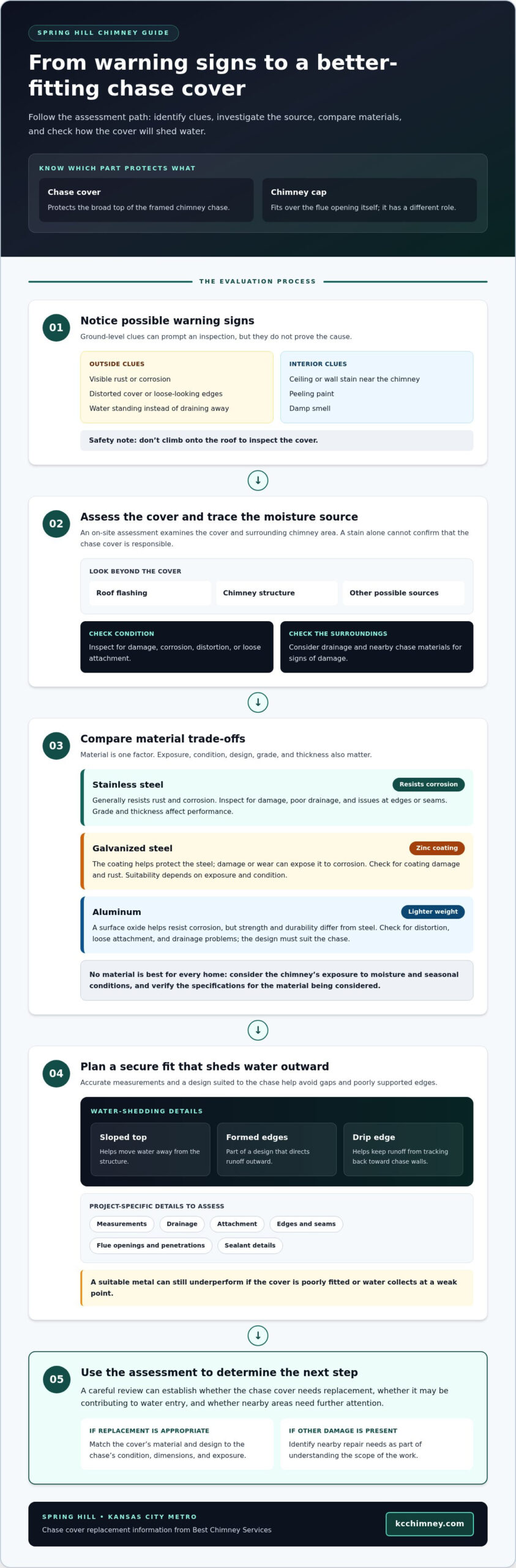
A chimney chase cover is the protective top fitted over a framed chimney chase, the enclosure built around a chimney flue. It helps keep rain, snow, leaves, and pests from entering the space around the flue. A chimney cap is different: it fits over the flue opening itself, while the chase cover protects the broader top of the framed structure. Both components have distinct roles in protecting a chimney.
How a chase cover protects the chimney and home
Water that gets past a damaged, loose, or poorly fitted cover can reach the chase framing and surrounding materials. Moisture may then affect insulation, wall surfaces, or nearby interior finishes. Not every stain near a chimney starts at the top: roof flashing, the chimney structure, or another source may also need attention. Understanding the chimney structure and function can help clarify how the flue and chase relate, but an on-site assessment is needed to locate a moisture source.
For homeowners considering stainless steel chase cover installation Spring Hill, an early assessment can establish whether the cover may be contributing to water entry and whether nearby materials show signs of damage. Addressing a problem before moisture affects more of the chase or surrounding finishes may help limit the scope of repairs.
Signs the existing cover may need attention
From the ground, look for visible rust or corrosion, a cover that appears distorted, edges that seem loose, or water standing on top instead of draining away. These are reasons to arrange an inspection, not proof of the underlying cause. Don’t climb onto the roof to get a closer look.
Interior clues also deserve attention. A stain on a ceiling or wall near the chimney, peeling paint, or a damp smell can signal moisture that needs investigation. Those signs don’t confirm that the chase cover is responsible. An assessment can examine the cover and surrounding chimney area to help pinpoint where water may be entering.
If you can’t safely view the cover from the ground, leave the roof-level inspection to a professional. Best Chimney Services provides chase cover replacement for homeowners in Spring Hill and the Kansas City metro. A thorough assessment can determine whether the cover needs replacement and whether nearby areas require further attention.
Why Stainless Steel Can Suit a Spring Hill Chimney Chase
Stainless steel resists corrosion, making it a practical option for a chase cover exposed to rain, snow, and changing outdoor conditions. But the material alone doesn’t determine performance. Fit, design, thickness, grade, and upkeep all matter. Specifications should be assessed for the individual chimney rather than assumed.
Stainless steel versus other common chase cover materials
Each material has trade-offs. This comparison can help frame the choice, but it isn’t a substitute for reviewing the chase, its exposure, and the cover’s required design.
| Material | Corrosion behavior | Maintenance considerations | Project considerations |
|---|---|---|---|
| Stainless steel | Generally resists rust and corrosion. | Inspect for damage, poor drainage, or issues at edges and seams. | May suit a project where corrosion resistance is a priority; grade and thickness affect performance. |
| Galvanized steel | A zinc coating helps protect the underlying steel, but damage or wear to the coating can expose it to corrosion. | Watch for coating damage and signs of rust during inspections. | Can be a practical choice in some projects, depending on exposure and condition. |
| Aluminum | Forms a surface oxide that helps resist corrosion, though it has different strength and durability characteristics than steel. | Check for distortion, loose attachment, and drainage problems. | Its lighter weight may be useful in some applications; the design must still suit the chase. |
Spring Hill homeowners should consider the cover’s exposure to moisture and seasonal conditions rather than rely on a general claim that one metal is best for every home. Grade-specific corrosion performance and other technical specifications need to be verified for the material being considered.
Why fit and water-shedding details matter
Accurate measurements help a cover sit securely over the chase without leaving gaps or creating poorly supported edges. The design should also move water away from the structure. A sloped top, formed edges, and a drip edge can help direct runoff outward instead of allowing it to track back toward the chase walls. The right details depend on the shape and dimensions of the existing structure.
Seams, flue openings, other penetrations, and sealant details need project-specific assessment. A suitable metal can still underperform if the cover is poorly fitted or water collects at a weak point. That’s why stainless steel chase cover installation Spring Hill should consider both material selection and how the finished cover sheds water.
Best Chimney Services assesses chase cover replacement based on the existing conditions. For broader context on maintaining chimneys and wood-burning appliances, see the EPA guidelines for chimney maintenance. Homeowners can learn more about chimney chase cover replacement in Spring Hill and the Kansas City metro.
How to Evaluate a Chase Cover Replacement Before Choosing Installation
A visible leak or ceiling stain can point to a chimney concern, but it doesn’t identify the source by itself. Before recommending replacement, a careful assessment connects what can be seen around the chase with the cover’s condition and fit, as well as any other components that could be letting water in.
What should be assessed before installing a new cover?
A useful evaluation looks beyond the metal surface. The actual chase opening and surrounding structure guide measurements. Estimating dimensions from the ground can miss differences in width, shape, or edge condition. A professional assessment can also examine how the cover is attached and look for signs of water paths around openings and seams.
- Condition: Check for rust, distortion, damage, or deterioration at the edges.
- Dimensions: Measure the actual chase so the replacement suits the structure.
- Drainage: Look for pooling or signs that runoff may be reaching the chase walls.
- Attachment: Assess whether the cover sits securely and how its edges meet the chase.
- Surrounding materials: Look for visible deterioration or moisture-related damage near the cover.
These details are best evaluated at roof level by a professional, rather than through a homeowner’s attempt to access a steep or elevated roof. For related concerns beyond the cover itself, see this Kansas City chimney repair guide.
When a cover replacement may be part of wider chimney work
A new cover may not resolve moisture if water is entering through another damaged component or path. The surrounding chase, roof-to-chimney area, and visible finishes all help inform the repair scope. A chase cover protects the top of a framed chase; a chimney cap covers the flue opening, while a crown is the top surface of a masonry chimney. These components serve different purposes, so identifying which one is affected matters.
For stainless steel chase cover installation Spring Hill, an on-site assessment helps determine whether replacement alone addresses the concern or whether additional chimney repair should be considered. Best Chimney Services’ certified technicians assess chase cover concerns for homeowners in Spring Hill. The Chimney Safety Institute of America offers information about certified chimney professionals and chimney safety. If symptoms suggest a broader issue, the Kansas City chimney inspection guide explains when a wider evaluation may help.
What to Expect During Stainless Steel Chase Cover Installation in Spring Hill
A professional replacement follows a measured sequence: assess the chase, take project-specific measurements, plan the cover and any related work, install it, then review the completed job. The existing cover and surrounding structure shape each step. An assessment helps determine whether replacement is appropriate and whether visible damage points to additional repair needs.
From chimney assessment to cover measurements
The process starts with examining the chase and its existing cover. The technician considers the cover’s condition, how it meets the chase, visible water paths, and the state of surrounding materials. This context matters: a cover that appears damaged may not be the only source of moisture, so the replacement plan should reflect the actual structure.
Measurements are taken from the chase itself, not estimated from ground-level views. Its shape and dimensions guide cover selection so the replacement can fit the opening and its edges. Homeowners can help by describing what they’ve noticed, such as interior staining, dampness, or visible changes to the cover, and sharing relevant access information. There’s no need to climb onto the roof to inspect it yourself.
Fitting, finishing, and reviewing the installation
Once the plan is set, the existing cover is removed as appropriate to its condition, and the replacement is fitted to the chase. The work should account for secure placement and water management, including how runoff moves away from vulnerable edges. If the assessment reveals deterioration around the chase or another concern, the scope may include additional work. The specific conditions determine what’s needed.
After installation, review the completed work with the technician. Ask them to explain how the cover fits the chase, how its design directs water away, and whether they found any areas that need follow-up. A clear review helps you understand what was completed and what to monitor.
For stainless steel chase cover installation Spring Hill, Best Chimney Services provides local assessment and chase cover replacement. The locally owned business serves the Kansas City metro, including Spring Hill, with certified technicians. If your cover needs attention, arrange chase cover replacement with Best Chimney Services.
Arrange Chase Cover Replacement in Spring Hill with Best Chimney Services
A chase cover should be chosen for the chimney it needs to protect, not by material name alone. Its dimensions, edge design, drainage, attachment, and the condition of surrounding materials all affect how well the finished cover fits and manages water. A careful assessment helps distinguish a cover that needs replacement from a broader moisture concern that may call for additional chimney work.
Why local chimney experience helps with a project-specific fit
Best Chimney Services is locally owned and operated and serves the Kansas City metro, including Spring Hill. Its certified technicians assess each chase before recommending replacement work. That project-specific review matters because chimneys differ in size, shape, condition, and exposure. The right solution starts with those details, then considers whether stainless steel suits the home and how the cover should fit and shed water.
Choosing stainless steel doesn’t remove the need to check the underlying structure. If the chase edges or nearby materials are damaged, installing a new cover alone may not address the full concern. An assessment clarifies the work needed and keeps recommendations connected to the condition of the chimney.
How to take the next step for a Spring Hill home
If you’re arranging service, share what you’ve observed. A description of rust, distortion, loose edges, standing water, interior stains, or dampness can help frame the concern. You can also mention any access details that may be useful. Don’t climb onto the roof to inspect the cover; leave that work to a professional.
Recommendations depend on the assessed condition of the chase and surrounding areas. The evaluation helps determine whether replacement is appropriate and whether related repairs should be considered. For homeowners weighing stainless steel chase cover installation Spring Hill, this means the decision can be based on fit, water management, and the chimney’s actual needs, rather than an assumption that a particular metal solves every problem.
Best Chimney Services provides chase cover replacement for Spring Hill homeowners. To discuss a damaged cover, water concern, or replacement for your home, contact Best Chimney Services about chase cover replacement.
Protect Your Chimney with a Well-Fitted Replacement
Stainless steel can resist corrosion, but protection depends on more than the material. The cover needs to fit the actual chase, shed water away from vulnerable edges, and suit the condition of the surrounding structure. Rust, distortion, pooling, or moisture indoors are reasons to arrange an assessment, not proof that the cover is the only source of a problem.
For stainless steel chase cover installation Spring Hill, a professional evaluation can clarify whether replacement is needed and identify related concerns before work begins. Best Chimney Services is locally owned and operated, serving the Kansas City metro, including Spring Hill. Its certified technicians provide chimney assessments and chase cover replacement.
If you’ve noticed damage or moisture near your chimney, take the next step with a local team serving Spring Hill, Overland Park, Mission Hills, Stilwell, and Bucyrus. Contact Best Chimney Services about chase cover replacement to arrange an assessment and discuss the work your home needs.
Frequently Asked Questions
What is a stainless steel chimney chase cover?
A stainless steel chimney chase cover is a fitted metal top that protects the opening of a framed chimney chase. It helps shield the space around the flue from rain, snow, debris, and pests. Unlike a chimney cap, which covers the flue opening, the chase cover fits over the top of the broader framed enclosure. Its condition, fit, and edges all affect how well it protects the chimney.
Is stainless steel the best material for a chimney chase cover?
Stainless steel can resist corrosion, but it isn’t automatically the right choice for every chimney. Galvanized steel has a protective coating, which can wear or become damaged, while aluminum has different strength and durability characteristics. Exposure, construction details, and the cover’s material specifications all matter. Compare fit and drainage along with material, rather than choosing by metal name alone. The right selection depends on the individual project.
How do I know if my chase cover needs replacement?
Visible rust, warping, loose edges, or standing water are reasons to arrange an assessment. Moisture signs inside, such as a stain or dampness near the chimney, also deserve investigation, but they don’t prove the chase cover is the source. A professional can examine the cover and surrounding chimney components to trace possible water entry and determine whether replacement or another repair is appropriate.
Can a new chase cover stop a chimney leak?
A correctly fitted replacement may address water entering through a damaged or poorly fitted chase cover. But leaks can also come from other parts of the chimney or roof, so replacing the cover alone may not solve the problem. An assessment helps identify the likely water path before work begins. Best Chimney Services’ certified technicians serve Spring Hill and the Kansas City metro, including Overland Park, Mission Hills, Stilwell, and Bucyrus.
How much does stainless steel chase cover installation cost in Spring Hill?
The cost depends on the project’s scope, so an assessment is needed to understand the work involved. Factors can include the chase’s dimensions, roof access, the existing cover’s condition, material specifications, and any related repairs. A straightforward replacement may involve different work than a project with damaged surrounding materials. Best Chimney Services can discuss the work based on the home’s assessed needs, rather than assuming every installation has the same scope.
What happens during chase cover installation?
Installation generally begins with an assessment of the chimney chase, followed by project-specific measurements and selection or preparation of a suitable cover. The technician then replaces the existing cover as appropriate and reviews the finished work. Existing damage or concerns with surrounding components may affect the project scope. The exact process depends on the chimney’s condition, so an assessment establishes what the work requires.
Does a chase cover need to be replaced if it has rust?
Rust is a reason to have the cover assessed, but it doesn’t automatically establish the full repair needed. The extent of corrosion, the cover’s fit and drainage, and the condition of surrounding materials all matter. A qualified assessment can determine whether replacement is appropriate and whether moisture has affected other chimney components. Avoid climbing onto the roof to inspect the cover; a professional can evaluate it safely.