
Could a small crack in your chimney crown be letting water reach parts of the chimney you can’t see? It’s a reasonable concern for Spring Hill homeowners, especially when it’s hard to tell whether the damage is in the crown, the chimney cap, or the mortar joints. Chimney crown repair Spring Hill homeowners need starts with identifying the source of the problem, not simply patching the first visible crack.
The crown sits at the top of a masonry chimney and helps direct water away from the structure. When it’s cracked or deteriorating, moisture may find a path into the masonry. Visible damage doesn’t automatically mean the entire chimney needs major work. An inspection can help establish the crown’s condition and whether repair is appropriate.
In this guide, you’ll learn what the crown does, what signs of damage to look for, and how crown problems differ from cap or mortar issues. You’ll also find out what an inspection and repair may involve, so you can understand your options and plan a sensible next step. Best Chimney Services provides chimney crown repair and professional chimney inspections in Spring Hill and serves homeowners across the Kansas City metro, including Overland Park, Mission Hills, Stilwell, and Bucyrus.
Key Takeaways
- The chimney crown helps shed water away from the chimney, so cracks or crumbling edges deserve attention.
- Stains or worn masonry can signal moisture concerns, but an inspection is needed to identify the source.
- Localized damage and widespread deterioration may call for different repair scopes. The surrounding masonry and flue area also matter.
- For chimney crown repair Spring Hill homeowners can start by noting visible symptoms and any history of leaks or previous repairs.
- Best Chimney Services provides crown repair and professional chimney inspections in Spring Hill to help clarify the next step.
Chimney Crown Repair in Spring Hill: What the Crown Protects
At the top of a masonry chimney, the crown helps direct rain and melting moisture away from the structure below. When it cracks or deteriorates, water can seep into the masonry instead of shedding clear of it. Repeated moisture exposure may contribute to damage beyond the crown itself, so assessing visible deterioration early can help clarify what needs attention.
A chimney crown is the masonry or concrete top surface that surrounds the flue and sheds water away from the chimney. A chimney cap is a separate cover over the flue opening, while the flue carries smoke and gases out. Knowing the difference helps when you’re looking at a roofline and trying to identify what needs attention. For a broader overview of chimney structure and function, see Chimney.
How the crown, cap, and chimney masonry differ
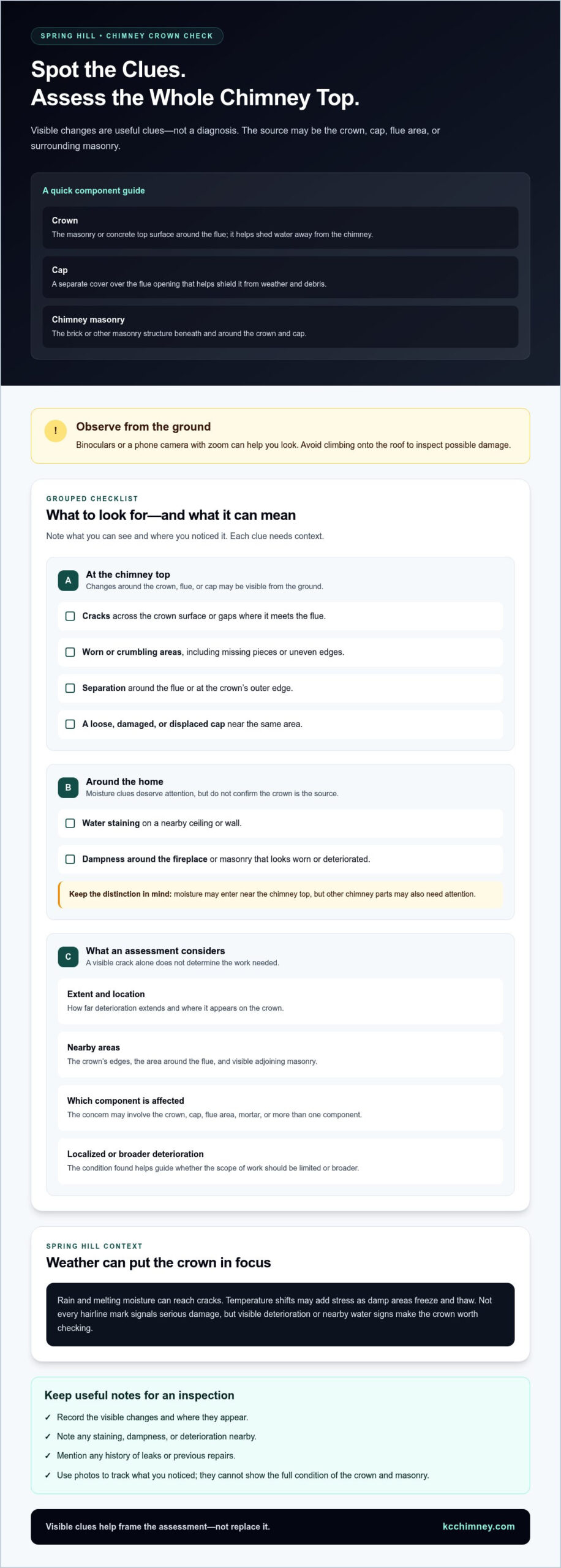
The crown forms the upper surface around the flue. The cap sits over the flue opening and helps shield it from weather and debris. The chimney masonry is the brick or other masonry structure beneath and around these parts. Because these components meet in a small area, deterioration may involve more than one of them. A damaged cap, a failing crown, and worn masonry can look similar from the ground, but each has a different function and may need a different response.
Why crown condition matters in Spring Hill, Kansas
Spring Hill homes experience changing weather through the seasons. Rain and melting moisture can reach cracks, while temperature shifts may add stress as damp areas freeze and thaw. Not every hairline mark signals serious damage, but visible deterioration or signs of water nearby make the crown worth checking.
For homeowners in Spring Hill and across the Kansas City metro, an inspection can help distinguish a crown concern from a cap or masonry issue. The crown’s condition affects how well it sheds water away from the chimney, so identifying the affected component is more useful than guessing from a ground-level view. Professional chimney crown repair Spring Hill starts with assessing which component is affected and how far the damage extends.
Chimney Crown Damage: Signs Spring Hill Homeowners Can Look For
A crack near the top of a chimney can be unsettling, but from the ground it may be difficult to tell whether it involves the crown, cap, or another area. Treat visible changes as clues, not a diagnosis. A crown crack is a reason to arrange an inspection, but it does not determine the repair method by itself.
Visible signs that may point to crown damage
Look for changes around the chimney top from the ground. Binoculars or a phone camera with zoom can help you observe without climbing onto the roof. Possible clues include:
- Cracks across the crown surface or gaps where it meets the flue.
- Crumbling edges, missing pieces, or a worn, uneven surface.
- Material that appears separated around the flue or at the crown’s outer edge.
- A cap that looks loose, damaged, or out of place.
One sign alone can’t show how extensive the damage is or which part has failed. A displaced cap, for example, may draw attention to the same area as a crown crack, while the concern could involve one component or several. Photos can help you keep track of what you’ve noticed, but they won’t show the full condition of the crown and surrounding masonry.
When moisture clues need a closer look
Water staining on a nearby ceiling or wall, dampness around the fireplace, or masonry that looks worn or deteriorated may warrant an inspection. These clues can be consistent with moisture entering near the chimney top, but they don’t prove that the crown is the source. Other parts of the chimney may also need attention.
When arranging an inspection, describe what you’ve observed and where you’ve noticed staining or deterioration. A professional assessment can help distinguish a crown concern from a cap, flue-area, or broader masonry issue. The Chimney Safety Institute of America also provides homeowner information about chimney safety and professional inspections.
If you see possible damage, avoid climbing onto the roof to inspect it yourself. Arrange an assessment to understand what needs attention before deciding on work. Best Chimney Services provides chimney crown repair in Spring Hill and can assess the concern to help clarify an appropriate next step.
Repair or Replacement? How a Chimney Crown Assessment Guides the Choice
A visible crack doesn’t automatically mean the entire crown must be replaced. Its appearance is only one part of the picture. The extent and location of deterioration, along with the condition of nearby masonry and the flue area, help determine whether the problem is limited or calls for a broader scope of work.
An inspection looks beyond the most noticeable mark. The technician examines the crown’s surface and edges, the area around the flue, and visible adjoining masonry. This helps distinguish crown damage from a cap issue or deteriorated mortar. A photograph may show a crack, but it can’t establish how far it extends or whether other components are affected.
How findings can guide the next step
Use the table as a general guide, not a diagnosis. The same visible sign can have different causes, and the recommended work depends on the condition found during assessment.
| Observed condition | What the technician evaluates | Possible next step |
|---|---|---|
| A localized crack or small area of surface wear | Whether the damage is limited or continues into nearby areas | Consider a targeted crown repair if the surrounding crown is sound |
| Widespread crumbling or deterioration across the crown | How much of the crown is affected and whether its overall condition is compromised | Discuss a broader crown repair scope or other appropriate work |
| Gaps, worn mortar, or deterioration near the flue | Whether the concern involves the crown, flue perimeter, cap, or adjoining masonry | Address the identified component and assess related areas as needed |
| Visible wear extending into the chimney masonry | The condition and extent of damage to surrounding masonry | Consider separate masonry work, such as tuckpointing, if appropriate |
When the work plan may need to expand
If an inspection finds related masonry deterioration, the work plan may need to address more than the crown. Crown repair concerns the chimney’s top surface, while tuckpointing addresses mortar joints. More extensive damage may call for a broader evaluation rather than assuming crown repair will resolve every issue. A chimney inspection can help clarify the condition of the structure beyond the visible crown area.
For homeowners considering chimney crown repair Spring Hill, a clear explanation of the findings makes the decision easier. Review what was observed and how it relates to the proposed scope. The next step should reflect the actual damage, not the assumption that every crack requires full replacement.
Spring Hill Chimney Crown Repair Checklist: From Assessment to Follow-Up
A clear process helps you understand what’s happening at the top of your chimney and what work is appropriate. The repair plan depends on the crown’s condition and the state of nearby components, including the flue area and adjoining masonry.
Before the crown repair visit
Make a few notes before arranging an assessment. Record when you first noticed a crack, leak, stain, or other visible change, and mention any previous chimney repairs. If you have photos taken safely from the ground, they can help explain what caught your attention. Don’t climb onto the roof to get a closer view. The assessment determines what areas need attention.
In brief, expect to describe the concern, arrange an assessment, review the findings, agree on the work, and review the completed repair. These steps keep the process focused on the condition of your chimney.
- Describe the concern. Share what you’ve seen, where you noticed it, and any known history of leaks or previous repairs.
- Arrange an assessment. A professional can examine the crown and visible surrounding areas rather than relying on a ground-level impression alone.
- Review the findings. Discuss what appears damaged and whether nearby chimney components affect the recommended scope.
- Complete the agreed work. Proceed with the repair plan you’ve reviewed, based on the assessment.
- Review the result. Go over the completed work and any maintenance recommendations so you know what to watch for.
Reviewing the repair plan and completed work
Before work begins, ask for a straightforward explanation of the identified issue and proposed scope. If the findings point to something beyond the crown, such as adjoining masonry concerns, the plan should make that distinction clear. A fuller chimney inspection may help evaluate conditions beyond the visible area. Best Chimney Services provides professional chimney inspections as well as crown repair in Spring Hill.
After the repair, review what was addressed and whether any follow-up care was recommended. Keep the assessment notes and repair information with your home records. That gives you a useful reference if you notice new signs of moisture or deterioration later.
If you’ve noticed possible crown damage, arrange chimney crown repair in Spring Hill with Best Chimney Services to have the concern professionally assessed and understand the next step.
Book Chimney Crown Repair in Spring Hill with Best Chimney Services
A damaged crown can leave your chimney more exposed to moisture, but visible cracks alone don’t reveal the full repair need. Best Chimney Services provides chimney crown repair and professional chimney inspections for Spring Hill homeowners. An assessment helps identify whether the concern is limited to the crown or involves nearby chimney components, so the recommended work can reflect the condition of your chimney.
If you’ve noticed a crack, crumbling material, staining, or signs of possible water entry, describe what you’re seeing when you schedule service. Details about recurring concerns or earlier chimney repairs can also provide useful context. You don’t need to diagnose the problem yourself. An assessment is the practical next step for understanding what needs attention.
What to share when scheduling crown repair
Before arranging an assessment, note where you’ve seen the concern and when you first noticed it. Mention whether the issue has changed, whether you’ve observed water staining, and whether the chimney has been repaired before. If you have photos taken safely from the ground, keep them available to help describe what prompted your call. Avoid climbing onto the roof to take pictures.
These observations help frame the assessment, but they don’t determine the repair scope by themselves. The crown’s condition and the state of adjacent areas, such as the flue perimeter and surrounding masonry, guide what work may be appropriate.
Related chimney resources for Spring Hill homeowners
Questions about broader chimney damage or the role of an inspection may call for information beyond crown repair alone. Best Chimney Services also provides chimney repair and inspection services for Spring Hill homeowners. Explore the Kansas City chimney repair guide and chimney inspection in Kansas City resources for related guidance. For additional answers about a cracked crown, read the cracked chimney crown repair FAQ.
When you’re ready to move forward, schedule chimney crown repair in Spring Hill with Best Chimney Services. Share the visible concern and any known repair or leak history, and a professional assessment can help clarify a sensible next step for addressing moisture concerns.
Protect Your Chimney with a Clear Next Step
Your chimney crown helps shed water away from the structure, so cracks or crumbling edges are worth assessing. A visible mark doesn’t automatically mean the crown needs full replacement. A professional evaluation can distinguish crown damage from concerns with the cap or surrounding masonry and guide an appropriate repair plan.
If you’ve noticed staining, deterioration, or a possible leak, share what you’ve observed and any history of chimney repairs when arranging service. Best Chimney Services provides chimney crown repair and chimney inspections for Spring Hill homeowners, as well as homeowners in Overland Park, Mission Hills, Stilwell, and Bucyrus.
Taking the next step with chimney crown repair Spring Hill can help you understand the condition of your chimney and address moisture concerns with a plan suited to your home. Schedule chimney crown repair in Spring Hill with Best Chimney Services.
Frequently Asked Questions
What does a chimney crown do?
A chimney crown helps shed water away from the chimney structure. It forms the top surface around the flue, directing rain and melting moisture away from the masonry below. If the crown cracks or deteriorates, water may reach the masonry and contribute to further damage over time. A professional assessment can determine whether a visible concern involves the crown or another part of the chimney.
Can a cracked chimney crown be repaired?
Yes, a cracked chimney crown may be repairable, but the right approach depends on its condition. A professional evaluates whether the damage is localized or widespread and checks the surrounding masonry and flue area. A visible crack doesn’t automatically mean the whole crown needs replacement. Spring Hill homeowners can arrange chimney crown repair with Best Chimney Services and have the damage assessed to understand the appropriate scope of work.
How do I know if my chimney crown needs repair?
Cracks, crumbling edges, missing pieces, gaps around the flue, or a worn surface can indicate that the crown needs attention. Water staining indoors or deteriorating masonry nearby may also warrant an evaluation, though those signs don’t prove the crown is the source. Observe from the ground and avoid climbing onto the roof. A professional inspection can help identify which chimney component is affected.
What is the difference between a chimney crown and a chimney cap?
The crown is the top surface surrounding the flue that helps direct water away from the chimney masonry. The cap is a separate covering positioned above the flue opening. They serve different purposes, but damage to either component can look similar from the ground. An assessment can help distinguish a crown concern from a cap problem and clarify whether nearby masonry also needs attention.
Can a damaged chimney crown cause a leak?
Yes, cracks or deterioration in a crown can allow moisture to reach the chimney and may contribute to leaks or water damage. Still, a stain or damp area doesn’t confirm that the crown is responsible. Moisture can involve other chimney components as well. If you notice water near the fireplace or staining on a nearby wall or ceiling, arrange a professional evaluation to help locate the source.
How much does chimney crown repair cost in Spring Hill, KS?
The cost depends on the crown’s condition and the work needed, so an assessment is necessary to establish the appropriate scope. Localized damage may call for a different plan than widespread deterioration or related masonry concerns. Best Chimney Services provides crown repair and chimney inspections for Spring Hill and the Kansas City metro, including Overland Park, Mission Hills, Stilwell, and Bucyrus. A professional evaluation helps clarify the work for your home.