
When your gas fireplace sputters on a cold Kansas City night, your first instinct might be to call your HVAC company. For the safety of your home, that instinct is often wrong. It’s an understandable mix-up; both systems use gas and create heat, but the similarities end there. The complex venting, delicate burner assemblies, and specific safety codes for a hearth appliance demand a specialist’s touch, not a generalist’s.
In this guide, we’ll demystify the role of a professional gas fireplace technician and show you exactly how they protect your Overland Park or Mission Hills home. You’ll see our 21-point safety inspection process, learn why a simple cleaning can prevent a dangerous carbon monoxide buildup, and gain the peace of mind that comes from knowing your hearth is truly safe and efficient for the winter ahead.
Key Takeaways
- Learn the critical questions to ask and certifications to verify before hiring a gas fireplace technician to ensure your family’s safety.
- Identify the most common fireplace issues in the Kansas City area, from pilot light failures caused by humidity to pest blockages in your vents.
- Understand the difference between a basic “tune-up” and a comprehensive safety inspection that guarantees reliable performance all winter.
- Find out why a dedicated fireplace expert is often a better choice for repairs and maintenance than a general HVAC professional.
What is a Gas Fireplace Technician and Why Does Your KC Home Need One?
Many homeowners believe their gas fireplace is a “set it and forget it” appliance. You flip a switch, enjoy the warmth, and that’s it. This common myth can lead to serious safety risks. A gas fireplace technician is a highly trained specialist focused on the safe operation of gas combustion systems, intricate venting, and overall hearth safety. They are not generalists; they are guardians of the most prominent flame inside your home.
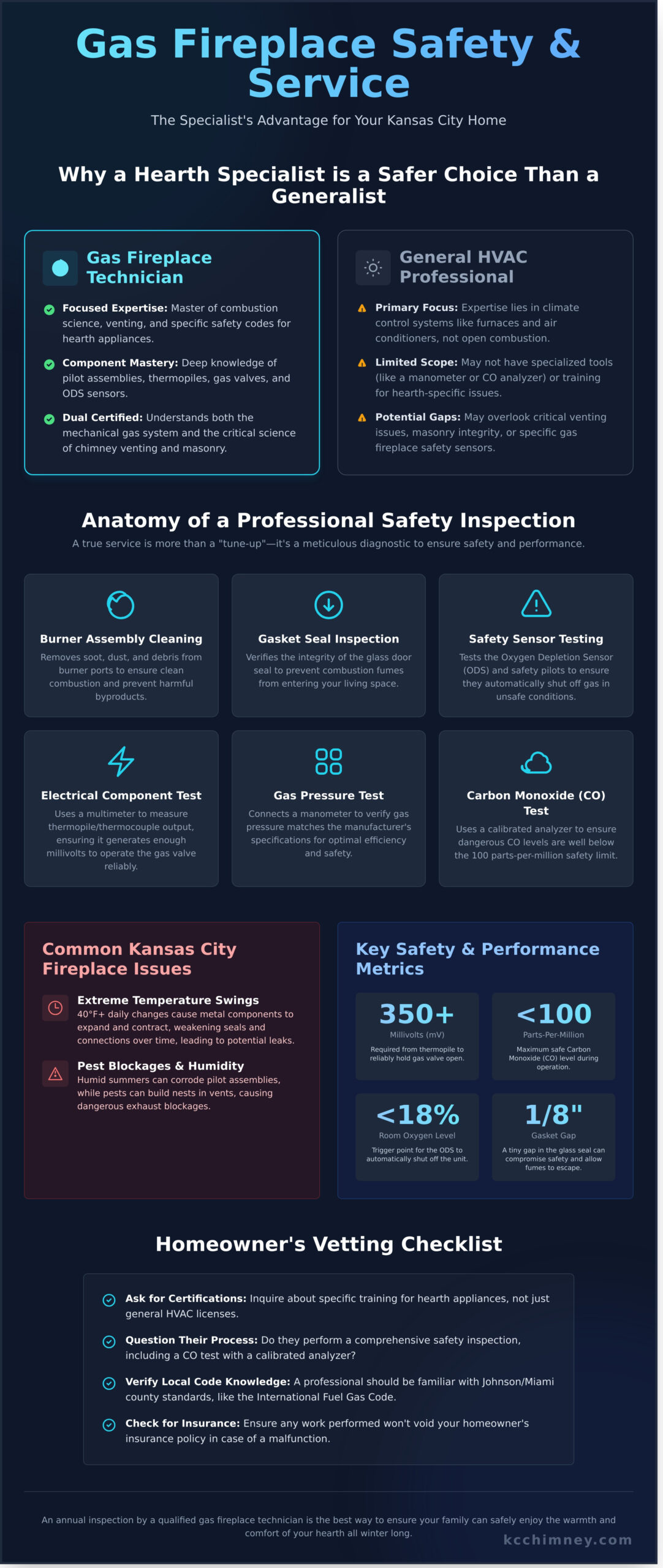
While your HVAC technician does an excellent job with your furnace and air conditioner, their expertise is in climate control, not combustion science within a living space. A dedicated fireplace professional understands the unique components of a hearth appliance: the pilot assembly, thermopile, gas valve, and the specific venting required for each unit. They are trained to diagnose issues unique to fireplaces, from a flickering pilot light to a soot-stained glass door, ensuring the system burns cleanly and efficiently.
In Kansas City, our weather puts unique stress on these systems. The temperature swings from Bucyrus to Mission Hills, which can exceed 40°F in a 24-hour period, cause the metal components inside your fireplace to constantly expand and contract. This cycle can weaken seals and connections over time, creating a need for annual inspections to prevent gas leaks or component failure. A yearly check-up isn’t an upsell; it’s a necessary safety measure for any gas appliance.
The Intersection of Gas and Masonry
Many older homes in our area feature gas inserts fitted into traditional masonry chimneys. This setup requires a delicate balance of gas mechanics and structural integrity. Proper airflow through a correctly sized flue liner is just as critical as the gas line itself to prevent dangerous exhaust from entering your home. A gas fireplace technician is a dual-certified professional, mastering both the mechanical gas systems and the critical science of chimney venting.
Safety Standards in Johnson and Miami Counties
Local building codes, often based on the 2018 International Fuel Gas Code, dictate strict standards for installation and service. A key part of any professional inspection is testing for carbon monoxide with a calibrated analyzer to ensure levels are well below the 100 parts-per-million safety limit. Relying on a “handyman” for repairs in Spring Hill or Stilwell can be a costly mistake, as uncertified work may void your homeowners insurance policy if a malfunction causes a fire.
Ultimately, the safety and reliability of your hearth depend on specialized knowledge. While the concept of a hearth is ancient, modern gas fireplaces are complex appliances that blend gas plumbing, electrical systems, and precise venting. They demand more than a generalist’s touch. An annual service from a qualified technician ensures your family can safely enjoy the warmth and comfort of your fireplace all winter long.
The 15-Point Inspection: What a Professional Technician Does
A true gas fireplace service isn’t a simple “tune-up.” It’s a comprehensive safety and performance diagnostic designed to protect your home and family. At Best Chimney Services, we use a meticulous 15-point checklist that examines every critical component of your fireplace system, from the gas valve to the glass door. This process uncovers hidden issues before they become serious safety hazards or lead to expensive repairs.
Our work begins deep inside the firebox. We carefully clean the entire burner assembly, removing the soot, dust, and even pet hair that can accumulate over a year. Obstructed burner ports don’t just create a weak, uneven flame; they can cause incomplete combustion, reducing efficiency and producing harmful byproducts. We also inspect the gasket seals around the glass door. A worn or cracked seal, even one with a gap of just 1/8 of an inch, can compromise the sealed system and allow combustion fumes to enter your living space. The U.S. Environmental Protection Agency (EPA) warns that improperly maintained fuel-burning appliances are a primary source of indoor carbon monoxide poisoning, which is why we treat every seal with absolute seriousness.
Finally, we verify the functionality of your unit’s safety pilots, including the Oxygen Depletion Sensor (ODS). This small but vital device is designed to automatically shut off the gas supply if oxygen levels in the room fall below approximately 18%. We test its response to ensure it performs exactly as the manufacturer intended.
Technical Component Testing
A seasoned gas fireplace technician uses specialized tools to measure your system’s health. We use a multimeter to test the electrical output of the thermocouple and thermopile. A healthy thermopile, for instance, should generate at least 350 millivolts to reliably hold the gas valve open. Readings below this threshold indicate a failing part that needs replacement. We also connect a manometer to test gas pressure, ensuring it’s set to the manufacturer’s specification, typically 3.5 inches of water column for natural gas. Incorrect pressure can lead to pilot light outages, excessive sooting, and unsafe operation.
Aesthetic and Efficiency Restoration
Your fireplace should be a beautiful focal point. We professionally clean the ceramic glass, using a specialized compound to remove the stubborn white film caused by mineral deposits from combustion. We also address log placement. Homeowners sometimes shift logs, not realizing their position is engineered for proper flame impingement and venting. Improper placement can cause dangerous flame-spilling and heavy carbon buildup. We reset them to factory specifications and refresh the glowing embers and vermiculite, restoring your fireplace’s “like-new” glow. This meticulous process ensures every component works as intended, and if you want to ensure your fireplace is ready for the season, you can schedule your 15-point inspection with our team.
Common Gas Fireplace Problems in the Kansas City Metro
Your gas fireplace isn’t just a standard appliance; it’s an intricate system that interacts directly with our unique Kansas City environment. From summer humidity to shifting soil, local conditions create a specific set of challenges that we see across the metro. Understanding these common issues helps you know when a simple fix is possible and when it’s time to call a professional for your family’s safety.
The single most frequent complaint we address, especially from May through September, involves wasps and spiders. These insects build nests inside the exterior vent termination cap, blocking the exhaust path. This isn’t just an annoyance. A blocked vent can cause the fireplace to shut down or, far more dangerously, force carbon monoxide back into your home. Our service data shows that insect nests are responsible for over 60% of all ventilation-related service calls in the summer months.
Pilot light failures are another common headache, often tied to Johnson County’s notorious summer humidity. The high moisture content in the air, with dew points regularly exceeding 70°F in July and August, accelerates corrosion on the thermocouple or thermopile. This small metal sensor is what tells your gas valve it’s safe to stay open. Once it corrodes, it can’t properly detect the pilot flame, causing the fireplace to shut off repeatedly. It’s a frustrating problem that requires a trained gas fireplace technician to properly diagnose and replace the assembly.
You may also notice strange smells. The first time you light your fireplace in the fall, a slight burning odor is normal. This is simply dust that has settled on the unit over the summer burning off, and it should disappear within 30-60 minutes. However, a persistent smell of rotten eggs or sulfur is an immediate red flag for a gas leak. Finally, if you see faint, dark stains appearing on the walls or ceiling around your fireplace, you’re likely seeing “ghosting.” This soot is a clear sign of incomplete combustion and a critical venting failure that requires immediate professional attention.
Environmental Factors in KC
Overland Park’s heavy clay soil expands and contracts dramatically with our wet springs and dry summers. This constant shifting, sometimes by as much as a half-inch per year, puts significant stress on underground gas lines. Over a 5-10 year period, this can compromise fittings and lead to slow leaks. Additionally, our powerful spring thunderstorms can force rain past older, poorly sealed termination caps, introducing moisture that rusts out firebox components and dampers.
Troubleshooting Noises and Odors
Hearing strange sounds or smelling odd odors can be alarming, but a few key indicators can help you identify the source. Knowing what to listen for helps you protect your home and your investment.
- Screeching Blowers: A high-pitched screeching from your fireplace blower almost always points to failing motor bearings. If you catch it within the first season of the noise starting, a professional lubrication service may extend its life. If it has been screeching for over a year, the damage is likely permanent and the motor will need to be replaced to avoid a complete seizure.
- The “Rotten Egg” Smell: For homeowners in Spring Hill and across the metro, this smell demands immediate action. It indicates a natural gas leak. Do not operate any light switches or electronics. Evacuate your home immediately and call your gas utility’s emergency line from a safe distance outside.
- A “Whistling” Fireplace: Whistling noises are often caused by high winds creating a draft through the vent pipe or a gas valve that is not fully open, restricting flow. A qualified gas fireplace technician can adjust the valve pressure or install a wind-resistant termination cap to solve the problem for good.
How to Vet a Gas Fireplace Technician: A KC Homeowners Checklist
Choosing someone to work on the gas lines and venting in your home is a decision that directly impacts your family’s safety. It’s not like hiring a painter or a landscaper. A mistake here can have serious consequences. For homeowners in Overland Park and across the Kansas City area, knowing what to look for separates a true professional from a risky handyman. This checklist ensures you hire a competent, trustworthy, and safe gas fireplace technician.
Certification vs. General Experience
A general chimney sweep may be excellent at cleaning a wood-burning flue, but a gas fireplace is a complex appliance, not just a chimney. The gold standard for our industry is certification from the National Fireplace Institute (NFI). NFI certification requires rigorous testing specifically for hearth appliances, with its Gas Specialist exam covering over 100 questions on combustion theory, venting codes, and fuel delivery. This ensures a technician understands the science behind the flame, not just the mechanics.
A certified specialist arrives with the right tools for the job. You should expect to see more than a vacuum and a brush. Essential diagnostic equipment includes electronic gas “sniffers” to detect minute leaks and specialized video inspection cameras to examine the internal flue liner for hidden cracks or blockages. This level of thoroughness is non-negotiable for a complete safety inspection.
Red Flags to Avoid
Some companies offer what the industry calls a “blow and go” service. They show up, vacuum the firebox for 15 minutes, and leave. This is dangerously incomplete. A proper service call must include a multi-point safety check and result in a written report detailing the system’s condition. If a company doesn’t provide a formal report, they aren’t performing a real safety inspection. Also, be wary of any technician who doesn’t go outside to inspect the exterior vent cap. According to the Chimney Safety Institute of America (CSIA), blocked vents are a leading cause of carbon monoxide intrusion, making this a critical step.
Finally, the cheapest quote is almost never the best. A low price often indicates a lack of proper insurance, no investment in ongoing training, or skipped safety protocols. Your fireplace is not the place to cut corners. Investing in a qualified professional is an investment in your peace of mind.
For your home in Bucyrus or Mission Hills, protecting high-end interiors is also a priority. A true professional guarantees a “mess-free” service. They will use drop cloths, wear protective footwear, and use high-efficiency particulate air (HEPA) vacuums to ensure your home is left exactly as they found it. This attention to detail in their process often reflects their attention to detail in their safety checks.
Before you even book an appointment, ask these critical questions over the phone:
- Are your technicians NFI Gas Certified? Can you provide their certification number?
- Do you carry at least $1 million in liability insurance specifically for hearth and chimney work?
- Will I receive a detailed, written safety and condition report after the service is complete?
- What specific steps do you take to protect my floors and furnishings from dust and soot during the appointment?
A confident, professional gas fireplace technician will have immediate and reassuring answers to every one of these questions. Our NFI-certified team provides the thorough, safety-focused service your home deserves. Schedule your gas fireplace inspection today and experience the difference that true expertise makes.
Best Chimney Services: Your Trusted Local Gas Fireplace Experts
For homeowners in Overland Park and across the Kansas City metro, finding a reliable fireplace professional is about more than just repairs. It’s about trust. Since 2012, Best Chimney Services has been a dedicated part of this community, building our reputation one safe, warm home at a time. We’re not a national chain; we’re your neighbors, committed to providing honest work and lasting peace of mind for your family.
Our commitment to excellence is clear in every service call. The Best Chimney Services difference starts with our team. Each technician is certified by the Chimney Safety Institute of America (CSIA), ensuring they possess an expert-level understanding of gas appliance venting and safety codes. We also promise a mess-free service, every time. Our team uses drop cloths, specialized HEPA-filter vacuums, and a meticulous process to protect your home and leave your hearth cleaner than we found it.
We believe a truly safe fireplace requires a thorough evaluation. That’s why we perform comprehensive Level 2 inspections for all gas fireplace inserts, a standard recommended by the National Fire Protection Association (NFPA) when a property changes ownership or after a malfunction. This isn’t a simple visual check. It’s an in-depth assessment using a specialized camera to scan the entire interior of your chimney flue, ensuring there are no hidden blockages or structural issues that could compromise your family’s safety.
Comprehensive Hearth Solutions
Our expertise extends beyond maintenance and repair. We also specialize in the professional installation of premium gas fireplace inserts, helping you upgrade your home’s efficiency and ambiance. We proudly serve homeowners across the region, including Johnson and Miami counties in Kansas and Jackson County in Missouri. For pricing transparency, we invite you to review our detailed Gas Fireplace Inspection Costs guide before you book.
Protecting Your Home and Family
Our guardian-of-the-hearth philosophy means our certified gas fireplace technician views every service call as a safety mission. Your fireplace is a centerpiece of your home, and our primary job is to ensure it operates correctly and poses no risk, such as carbon monoxide leaks. Don’t wait for a problem to arise. We make it easy to schedule your annual maintenance in Overland Park or Leawood, getting your system ready for the first KC frost.
Ensure your hearth is safe, efficient, and prepared for the winter ahead. Your family’s comfort and security are our top priorities. Learn more about our comprehensive gas fireplace service in Overland Park and discover why homeowners trust our 2026 safety standards.
Your Trusted Partner for Gas Fireplace Safety in Kansas City
Your gas fireplace is the warm heart of your home, and its safety isn’t something to leave to chance. As we’ve covered, a thorough 15-point inspection is the baseline for responsible ownership, and knowing how to vet a professional protects your investment. Hiring the right gas fireplace technician is the single most important step you can take to ensure every component, from the pilot light to the flue, operates correctly and safely through the cold Kansas City winters. It’s about proactive care, not just reactive repairs.
Since 2012, Best Chimney Services has been the trusted, locally owned partner for homeowners across Overland Park, Mission Hills, and the surrounding communities. Our team of Certified NFI Gas Specialists brings more than a decade of dedicated experience to every service call. Don’t wait for a problem to arise. Secure your peace of mind now.
Book Your NFI-Certified Gas Fireplace Service in KC and let our family help protect yours this season.
Frequently Asked Questions About Gas Fireplace Service
How often should I have a gas fireplace technician visit my home?
You should have your gas fireplace inspected and serviced annually. The National Fire Protection Association (NFPA) standard 211 recommends a yearly inspection for all fireplaces and venting systems to ensure they are operating safely and efficiently. This proactive maintenance helps prevent unexpected breakdowns during cold Kansas winters and ensures dangerous gases like carbon monoxide are venting properly. An annual visit keeps your family safe and your fireplace reliable.
Why does my gas fireplace smell like rotten eggs?
A rotten egg smell indicates a potential natural gas leak. Gas utility companies add a chemical called mercaptan to natural gas, which has a distinct sulfur-like odor, to make leaks detectable. If you smell this, do not operate any electrical switches or create a flame. Immediately evacuate your home, and from a safe distance, call your gas utility’s emergency line. After they’ve addressed the immediate danger, call a qualified technician to find and repair the source of the leak.
Can I clean the white film off my fireplace glass myself?
Yes, you can clean the white film yourself, but you must use the correct product. That hazy residue is a sulfuric acid byproduct that won’t come off with standard glass cleaners like Windex. Using household chemicals can permanently etch the ceramic glass. Purchase a cleaner specifically formulated for gas fireplace glass from a local hearth store. Always ensure the pilot light is off and the glass is completely cool before you begin cleaning.
Why won’t my gas fireplace pilot light stay lit?
The most common reason a pilot light won’t stay lit is a faulty or dirty thermocouple. This is a safety sensor that shuts off the gas if it doesn’t detect a flame. Over time, soot and dust can coat the thermocouple, preventing it from working correctly. It could also be a worn-out part that needs replacement. While it sounds simple, troubleshooting and replacing these components requires a professional to ensure it’s done safely and correctly.
Does a gas fireplace really need to be swept like a wood fireplace?
No, a gas fireplace flue doesn’t accumulate flammable creosote and doesn’t need to be “swept” in the traditional sense. However, the chimney and venting system still require an annual inspection. Debris like leaves, bird nests, or wasp nests can create dangerous blockages that prevent proper ventilation. A professional inspection ensures the flue is clear, the chimney cap is secure, and there are no obstructions that could cause carbon monoxide to enter your home.
What is the average cost for a gas fireplace repair in Overland Park?
A standard service call for a gas fireplace inspection and cleaning in the Overland Park area typically costs between $175 and $325. If a repair is needed, the cost will increase based on the parts and labor required. For example, replacing a common component like a thermocouple or thermopile might add $100 to $250 to the final bill. We always provide a clear, upfront estimate before any repair work begins so you know exactly what to expect.
Is it safe to leave my gas fireplace pilot light on all year?
Yes, it is perfectly safe to leave your pilot light on year-round, and it can even be beneficial for your fireplace. The small, constant flame generates a tiny amount of heat that helps prevent moisture and condensation from building up inside the firebox, which can lead to rust. It also helps keep spiders and other insects from building nests in the burner tubes during the off-season. The cost to run it is minimal, usually less than $10 per month.
What certifications should a gas fireplace technician have in Kansas City?
You should always hire a gas fireplace technician who is certified by the National Fireplace Institute (NFI). An NFI Certified Gas Specialist has passed comprehensive exams covering installation, service, and safety codes, demonstrating a high level of expertise. This certification is the industry benchmark for competence and professionalism. In addition to NFI credentials, ensure the technician is fully licensed and insured to work in your community for your complete peace of mind.